Quick link to Shawna’s post, to which may I just say, “Yeah!!” Everybody should read this.
http://writermomof5.wordpress.com/2009/02/02/patience-what%e2%80%99s-that/
Quick link to Shawna’s post, to which may I just say, “Yeah!!” Everybody should read this.
http://writermomof5.wordpress.com/2009/02/02/patience-what%e2%80%99s-that/
My current WIP is a YA historical novel, about a young girl in 1913 Chicago. This is the first time I’ve written a historical story, and I was very intimidated, when I started, at the idea of all the research I’d be doing.
Okay, I’m still a bit intimidated.
I cleared off an entire bookshelf for the history books, and I’m working my way through them. Yes, the Internet is out there, and it’s full of fascinating and incredible information. What I’m really loving, though, is burying myself in a book with the depth and layers of a specific subject or theme.
When I started on this path, I expected I’d be reading for facts, specific details I would need to flesh out the world I’m writing about–to make that world real for my readers (and me). And I’m finding those–although the ones I know I need are making me dig and the ones I had no idea I’d want are jumping out at me!
What I hadn’t thought about was how full a picture I’d get of a place and time, of the people who were moving along the streets and stopping to talk and making changes, small and big.
For the past couple of weeks, I’ve been reading Twenty Years at Hull-House by Jane Addams. Addams was one of the founders of one of the biggest, if not the biggest, settlement houses in the country–in Chicago. My MC will get involved with the settlement movement in the city, so I’ve been reading up on it a lot. Addams’ book has been on my shelf for several months–for the same reason, pretty much, that I hadn’t read Donald Maass’ book for so long. Someday, I’ll learn.
I read Hull-Houseyears ago in college and remembered only that it was the most boring book of the year. Now I just shake my head at the things “They” expect 18-year-olds to read and connect with. Yes, the book is very densely written, and Addams has a seriously convoluted style. This is why it’s taking me so long to read–I have to back up frequently and restart a sentence or a paragraph. Even then, depending on how much she’s referring to politics or events I don’t know about, I don’t always get the point she’s making.
But, oh, I’m learning. I’m finding out the goals of the settlement houses, and the dreams of their founders and residents. I’m getting solid, concrete visions of the people around Hull-House, the families and the children and, oh, the women! I’ve found a couple of wonderful facts that either fill in a gap or are sending me down a new path I needed to find.
The best, though, is what I didn’t expect. I’m getting to know Jane Addams. At 18, in college, if I’d been able to understand this book, I’d have respected the woman who wrote it, even admired her. Now I get to like her. Yes, she was incredible, amazing, even awe-inspiring in dedication to the things she believed in. She was also, though, warm, generous, and funny–in a way that smiles with us as we chase our own ideals. The energy of trying something new, the passion of commitment, the sometimes head-pounding dead-ends–she sees them all. She can laugh at her young self and still respect that woman she was–even as she made mistakes. She’d rather have had regrets than never have tried.
I would have liked to invite Jane Addams over for tea.
Do you do research for your stories? What magic have you discovered?
I think I’ve talked here before about how, in The Critiquer’s Survival Guide, I’m making up excerpts from “not-so-good” books, to use as examples. (I also have excerpts from real books, but those are for the better examples!) Anyway, today I was playing with a bit of text for a pretend self-help book called Overcoming Your Writing Fears. I didn’t have to come up with a lot of words, just a few paragraphs. I sat for a few minutes, thinking & imagining, and the muse answered my call.
The wicked, evil muse who sounded an awful lot like some vicious, boot-camping, pep-talking villain, the kind with a get-over-it attitude and butt-kicking motivation technique.
This is NOT me. Okay, it was kind of fun to write, and I think it’ll stay in the book, but it also started me thinking about how (and why) I really deal with my writing fears. To be honest, this is a relatively new question for me. Call me cocky, but for years I pretty much wrote along, thinking I was a decent-to-good writer, learning my craft and putting words on the page. Then, as I started getting “closer” to the real thing, to submitting to agents, to getting contracts, to sending some of those pages off to an editor–the fear started to show up.
It’s not a fear of whether I can write. It’s, not much, anyway, a fear that I can’t write well. It’s pretty much a fear/worry that I will keep writing and writing and never “make it.”
Which is pretty silly, when you think about it, considering The Critiquer’s Survival Guide is scheduled to come out this fall. 🙂
Silly, or not, the fear is real. As are all our anxieties about our skill and “success.” So how do I deal with it?
Well, mostly I try to be kind to myself, but not too kind. I don’t beat myself up for the days I make less progress, and I don’t try to press-fit myself into the computer chair with a big shoe horn, when it’s clear the shoving will only be painful. But when I take a break, especially if that break is from fear, I try to make that time useful. I get up and exercise or I tidy up some of the mess in the house that’s been driving me crazy. (This is different from procrastinating by cleaning–if I’d been doing that, the mess wouldn’t be there in the first place!)
And I bring myself back. I try very hard not to spend more than one day, other than the weekend, away from SOME kind of writing. I know that the best way to make progress on a manuscript is to keep it at the front of your mind, and every 24-hours that you are not working on it is another layer down in your brain that you have to go down to dig it up. And because I know that staying away from the writing never feels good; it just feels frustrating and tense and makes me angry at myself. Even the fear is better than that.
That’s pretty much the how. The why–the reason I try and work through (or with) my writing fears–is perhaps even more important. When I look at the problem, when I face the fact that I am afraid and worried and too full of doubt, I have to ask my question. And that question is: With all this, will you, can you stop writing?
There is only one answer to that question for me: No.
So, if I’m going to write–and I am going to write–then I have to come back, fears or not, to the novel or the picture book or the nonfiction project. Because that’s the only way I’m going to get the flip side of that fear–the delight, the magic, the power.
I’m not alone in this fear, and neither are you. Here are a few more posts on the subject, some words from a few more writers.
And another post popped up today (Thursday)–must be that time of the year!
What are your writing fears? How do you handle them, to make sure you keep moving forward on whatever your writing path may be?
Tonight, my son drew a name from the hat tupperware to see who would get a copy of Donald Maass’ Writing the Breakout Novel or Writing the Breakout Novel Workbook.
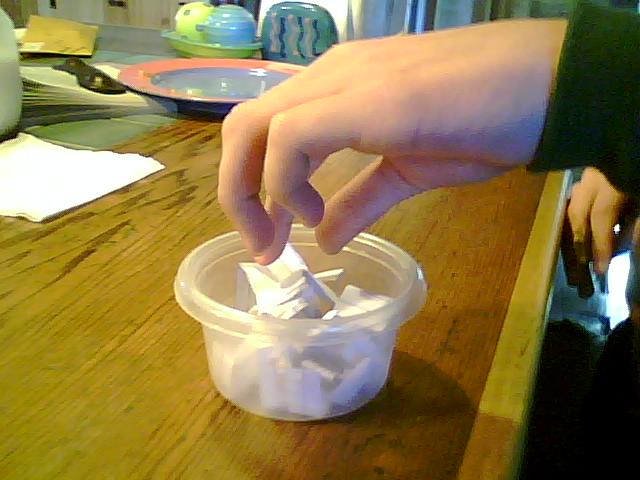
And the name he pulled out is….LISA SCHROEDER!
Lisa, would you like Maass’ book or his workbook? Send me the answer and your snail mail address at
beckylevine at ymail dot com
I’ll get the book out to you ASAP.
Congratulations! And, to everybody else, thanks for playing!
Just a quick note to point you to a writing contest Writer’s Digest is holding for Valentine’s Day. The prize is a $250.00 shopping spree in their bookstore–you could go CRAZY! And they don’t care about your mood–mushy or gloomy, they’ll take the entry. 🙂
Thanks to Jane Friedman for the info.
And don’t forget to come by on Tuesday and see if you’re the winner in my contest. I’ll draw the name Monday evening and post the info by noon (California time!).
Good luck!
Before I forget, if you haven’t entered my contest for a copy of Donald Maass’ Writing the Breakout Novel, there’s still time. Just leave a comment for that post, and I’ll add your name to the pot.
For the past week, I’ve been running around like the proverbial decapitated chicken. Today was the first time in too long that I had several hours to sit in my office and get a large chunk of work done. I set myself a goal for the day (made it!!) and got to work.
In other words, I did Butt In Chair (B.I.C.).
We’ve all heard the phrase. On a good day, we love the acronym and feel proud of how disciplined and productive we are. We even add F.O.K.T. (Fingers on Keyboard Typing) to our commitment.
On a bad day, we pretty much want to send the chair and the keyboard through the window.
This may be because we’re stuck on a too-narrow definition–the one that says B.I.C means typing away, putting words on the page, and sending those pages to the printer.
Today, I MAYBE typed 100 words.
My B.I.C. time was spent thinking. I was working on the next stage of The Critiquer’s Survival Guide. I have an interesting task to do while I write this book, and that is to create a very small sample of each genre for which I discuss critiquing. I’m using excerpts from real books, too, but those are for the good example. I couldn’t very well pick up a novel I thought was “not-so-good” and then write, publicly, about why I thought it didn’t work. So I’m making up those not-so-good examples.
Today was my day to pick topics. Even though I only have to write a page or two for each, I knew that–if I didn’t have a plan ahead of time–I’d hit a major stumbling block each time I started writing a new chapter. And stumbling blocks can pretty much triple that B.I.C. time!
How did I spend my B.I.C. hours? I thought. I scribbled ideas in a notebook, thought about my life and experiences, any things I might be a semi-expert on (to write something purposefully bad, you pretty much have to write it decently first). I closed my eyes and visualized, dipped into my memories and my opinions.
And then I typed a word or six.
There are days I don’t even come to my desk for B.I.C. Opening a chapter file—new or existing–can be deadly for brainstorming plot events or developing characters. You look at the empty page, or at the words you’ve already written, and you get stuck. You have no idea where to start the scene, or you’re frozen at the idea of changing any of the words you’ve already written.
For big thinking, I do B.I.C. in my rocking chair. Usually, it’s tucked away in a corner of my office. My husband and son drop into it occasionally for a chat. But when I don’t know where I’m going, when I have to explore concept stuff, I pull the chair out. I put a blank notepad next to me, with a pen, and get a cup of hot tea to sip on. And I rock.
The ideas come. Without a CPU, monitor, or keyboard anywhere nearby.
I’ll admit. As soon as I’ve got the thoughts, I’m back at the desk chair. I don’t trust my notepads or my brain to keep things straight. Everything goes into a computer file and gets printed out to the appropriate binder–my one-stop containment center. But it all starts in that rocking chair.
Be careful what chair you pick on any given day. Use B.I.C., but don’t let it use (or abuse) you. Writing is so many more things than just writing. You wear multiple hats as an author, and you need just as many places to wear them.
What’s your favorite chair, and how do you use it for writing?
This week, I’ve been reading Donald Maass’ book Writing the Breakout Novel. I just finished skimming through the last few chapters, which provide a sort of overview about some specific plot styles, theme, and a bit about publishing. Since I’m getting ready to dig into plotting a first draft of my WIP, I was more interested in the material about crafting and writing that draft.
And I got plenty of that in the last few days. True confession time: I tried to read Maass’ book a couple of years ago, and it just didn’t get me. I was actually annoyed by what I thought he was saying, and frustrated with his perspective that his was the absolutely right way to do things.
When I picked up the book last week, to try again, I felt like someone had substitutedcompletely new, different pages. This time around, I was slapping myself on the forehead, shouting “Duh!” and agreeing with everything Maass says.
I’m pretty sure that, last time, it was me, not the book–where I was with my writing and the project I was working on.
This next book that I’m starting has the potential for all the things Maasstalks about: plausibility, inherent conflict, originality, and gut emotional appeal. It’s the potential part, though, that I’m welcoming Maass’ help with. Because, in the book, he talks not only about how important all these element are, but HOW you can get them into your story. He hands out questions to ask about our books, what to do when we don’t find the answers we want (or any answers at all!), and techniques for basically deepening every piece of your story.
Maass talks about characters and tension and subplots–all the things that, when done well enough, give your story the layers it needs to catch the reader and keep them hooked–to the very end. He shows you why NOT pushing yourself doesn’t work, not for this particular story or for your writing skills.
When I first dipped into this book, I thought Maass’ angle was all on the selling success of the book. Again–what was I reading? He emphasizes over and over again how his advice and information are about the craft, and he’s right. Yes, he thinks following this advice will give a writer more chance of “breaking out,” whether that means selling more copies of a book than ever before, hitting the NY Times bestseller list, or simply succeeding in making an agent love your project. He doesn’t make any guarantees, though, and he wants us to try his techniques because we love writing and because we want to be better at it.
He’s got me pegged.
How about you? I haven’t run a contest yet at this blog, and today seems the place to start. It’s Martin Luther King Jr’s birthday, a time for giving and support. And tomorrow the whole country starts off in a new direction, on a strong, hopeful path. I want to celebrate.
So…leave me a comment about this post, between now and end-of-day Monday, January 26th. I’ll draw a name on Tuesday, and the winner will get their choice–a copy of Writing the Breakout Novel OR Writing the Breakout Novel Workbook, also by Maass. I’ll be buying my own copy this week! 🙂
One more pointer–this one for kids’ writers–to another blog, and then I’ll be back next week with a writing book review.
This announcement of incredible generosity comes from the Shrinking Violet Promotions blog:
fAiRy gOdSisTeRs, iNk announces its 2nd Annual SCBWI Summer Conference Scholarship!
FGI is offering a $1500 scholarship for a SCBWI member to attend the August 2009 conference in Los Angeles. The 2008 scholarship to Linda Lodding of the Netherlands.
To apply for the 2009 scholarship, submit a 250-word, double-spaced essay describing what you hope to accomplish by attending this year’s summer conference. Send your essay to: fairygodsistersink@yahoo.com
The application deadline is April 15th, 2009. The winner will be notified May 15th, 2009.
fAiRy gOdSiStErS, iNk. is a small, benevolent squadron of Santa Barbara children’s book authors who believe in the magic of passing forward lucky breaks, bounty, and beneficence, as so many have done for us. We are: Thalia Chaltas, Mary Hershey, Valerie Hobbs, Robin LaFevers and Lee Wardlaw.
If you would like to share some fairy dust of your own to help send a writer to the 2009 Summer Conference, FGI welcomes your donations!
For more information about the grant and/or making a donation, please visit the FGI website (which will be up and running any day now! We promise!) at http://www.fairygodsistersink.com.
And I checked, www.fairygodsistersink.com is up and running!
Can you see me? Feebly waving an arm at you all, while I prop myself up against the wall? No, it’s not that bad! 🙂
I’m just being silly. I feel pretty great, actually, because I just sent the first (of two) chunks of The Critiquer’s Survival Guide off to my editor at Writer’s Digest. Happy Dance! But, yes, it’s a bit of a wimpy Happy Dance, because I am feeling just a tad brain fried. I was on deadline without any problem, but I did hit that adrenaline high that comes along with any “Do it NOW!” kind of focus. And I did stay up just a tiny bit late a night or two along the way.
So you’re not getting much of a blog today, but I did want to point you over to Jane Friedman’s post from last Tuesday. She’s talking about the series of “Webinars” that Writer’s Digest is starting this year. She lists the ones that are coming soon and gives a brief description of what you can do if you sign up for one.
This is the one I liked:
Why am I interested, you ask? Besides the fact that these sound very cool? Well, because the current plan is for ME to do one of these webinars for the critique book. I’LL be the presenter that people can talk to. VERY exciting. Me, who has only been out of the morass of dial-up connectivity for a few months!
Anyway, check them out. I’ll be thinking and planning about all this, after I finish writing.
Yes, of course, my list assumes that you are working with supportive, encouraging, and skilled critiquers. That’s my wish for you, and that’s a big goal you should be shooting for. You should also, though, be remembering your part of the whole, and making sure you’re shouldering that commitment.
 Becky Levine