Posted in Friday Five, Research

Friday Five: MORE Things I’ll be Researching

Here’s the thing about the research bucket. It’s like Mary Poppins carpetbag–never really empty.

I said back here that, in my second draft, I want to be able to weave in a lot of the history I need for the story. So I’ve spent a lot of time the past few months doing the kind of research I need to get closer to the plot–checking out realities and possibilities. I dug far enough into things to be pretty sure that, yes, one of my characters can have an automobile; yes, another can have a job in the beauty industry; yes, my MC can be the daughter of an immigrant; yes, her little brother can play with toy trains. And I’ve been tossing ideas into my plot, based on those green lights.

This week, I’m starting to flesh out the plot and then, hopefully, to put things into a sequence that may, as a starting point, make sense. I’m using Scrivener and filling out scene cards with basic information–which characters are in the scene, where do they go and what do they do, what’s the main conflict and why…that stuff. And I’m also including a list of specific questions I need answers to…for that scene.

This 2nd draft is going to be a lot of stops and starts. (That’s okay…remember my word for 2011? Peace!)

Anyway, during my plotting sessions with Scrivener, I’ve already come up with way more than 5 things I’ll be researching. So for today’s post, just the tip of the iceberg.

1. In 1912, who were the kids that were still in high school? I know that a lot more kids were going to and finishing high school by this time, but there were still plenty having to quit to get jobs, to help out at home, or just because the family didn’t see a reason for them to be going on. I want to have some idea of what the mix was that were still there, in the classrooms, learning for…learning.

2. Did American Flyer sell accessories for their wind-up model trains? Would a “train kid” have little houses and depots and trees and cows? (Don’t laugh: some British train companies modified their models for sale in America by adding cow catchers to the front!) And what would those accessories be?

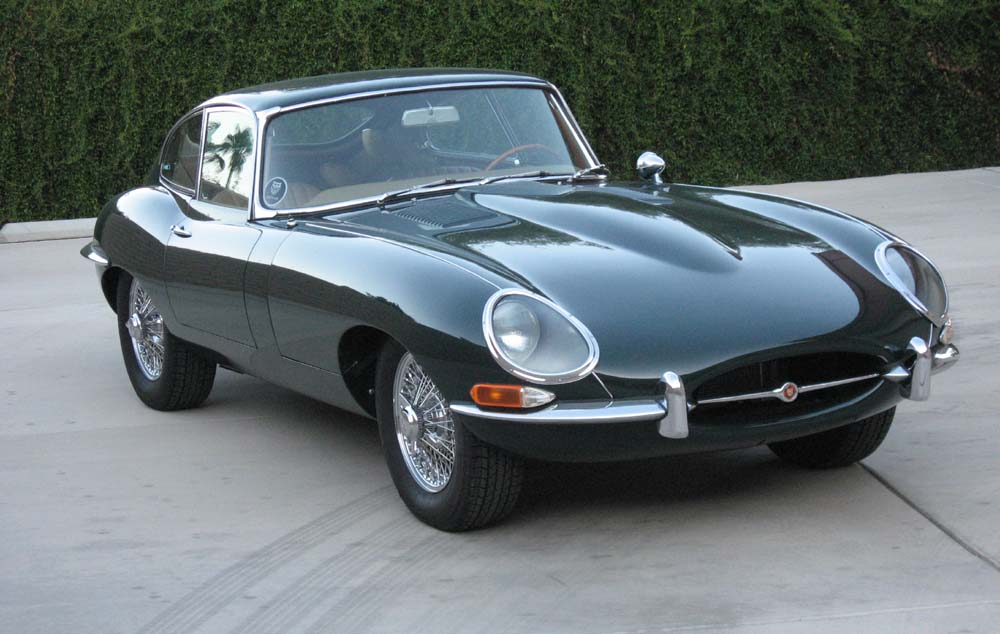
3. What specific automobile will Caro’s not-yet-maybe-never-boyfriend own? What did it look like, feel like, smell like? And how much trouble is he going to get into when they…Never mind. You’ll have to wait for that one.

4. What kind of injury, in 1912, would put someone at potential risk for death and, if they survived, leave the chance they wouldn’t walk again. I have a doctor friend who will be getting a LOT of questions, and then I’ll have to read up on this stuff in 1912. Oh, yeah, that’ll be fun.

5. What needle craft did German-Jewish immigrant women do–those of the age to come to American in the late 1800s? Knitting? Lace-making? Some kind of embroidery? This is one it would be very nice to have a time machine for–I’d just zip back to Berlin in those  years and talk to some of my great-something-aunts. As it is…more reading!

Whether you’re working on a historical novel or not, what are some of the questions you’re wondering about for your WIP? Drop them in the comments–you never know when someone will have an answer. And if not, it’s fun to see some things we don’t have to hunt down ourselves!

Posted in Book Reivew, YA Historical Fiction Challenge

YA Historical Fiction Challenge: BLACK STORM COMIN’

For my first read in the 2011 Historical Fiction challenge, I started off by breaking one of my own specs. In the post where I announced that I’d take part, I said, “I’m going to try and focus my search on books with protagonists who are at least 16 years old, at the older end of the YA spectrum.”

Oh, well.

The thing is that, in Black Storm Comin’, Diane Lee Wilson has totally achieved what I am looking/hoping for in the older books. She’s removed the safety net.

Too often, I think, historical fiction for kids and teens places its heroes in dangerous situations, very realistic to the times the authors are writing about, and then…somehow…make those situations feel not dangerous. I think there are various ways this happens–the hero has a powerful adult around for support; the hero doesn’t actually live IN the world where the danger exists and can pretty much escape as needed;  the point of view never gets close or deep enough to show real threat or real fear; the hero’s story gets overwhelmed, and cushioned, with too many details of the historic setting. Whatever the cause, I frequently find myself frustrated with a story that somehow takes me away from the actual pain and hardship I should be feeling.

Not so in Black Storm Comin’.

Colton Wescott may be only twelve, but he is moving through a world in which twelve can and does mean carrying a man’s life on his shoulders, a man’s responsibilities, and definitely without that safety net. The story starts as Colton and his family are traveling with a wagon train on the way to California–at the tail end of that wagon train, because Colton’s mother is black and his father is white, and nobody really wants them there. His mother is “in bed” in the wagon, with her newborn baby, and his father is jittery and nervous, so much that he accidentally shoots Colton with a blast from his shotgun and takes off–fleeing both the consequences and his family. Colton and his next-oldest sibling, ten-year-old Althea, immediately and literally become the adults in the family, barely getting the wagon and their very-ill mother to an outpost with a doctor. And getting them there with just about no money.

That’s when Colton sees the advertisement for Pony Express riders. The idea of becoming a rider pulls at him, both for the money and for the chance to ride–to fly, really–over the land he’s been plodding across for weeks now. His decision is complex, layered with the worry that what he’s really trying to do is desert his family, just as his father did, and with the added complication that he’s light-skinned enough to pass for white–which will let him apply for the job–but the rest of his family is not. He worries that keeping the secret is betraying them, and something in himself. Still, he is an adult, and there are too often, in an adult life, no real choices. He applies for and takes the job.

And what a job. If life as not-quite teenager in 1860 is hard, you should try life as a rider for the express. Colton is assigned the route–you can’t really call it a road, or a trail, or anything other than a direction the horses know by heart–over the Sierras into California. Just as winter sets in. Wilson is a fantastic author; she takes Colton along that route twice. The first time is to set us up for knowing how miserable it is, to show it to us in detail, with the horse barely making it up the mountain and small, skinny Colton barely staying on that horse’s back. The second time is the time of real urgency, with a specific life-or-death letter that Colton must get through. Each pass has its own tension–from the near-impossible physical test and from the urgency of Colton’s task, and each–again–gives no way out for Colton, no extra or unrealistic shelter or aid. Each time, it is Colton and the horse, and that’s it.

As it would have been.

Yes, there are people who help Colton. There are adults who help him get a job that he is, historically, too young to hold, and people who care for him when he is badly injured. The thing is, though, the help is at a par with what any adult would have gotten and comes with nothing extra for him because he is so young. And any aid Colton receives is countered by the help he doesn’t get, from his loving but fatalistic mother, from the old prospector who would all too quickly give away Colton’s secret–just for the fun of it, from the father who definitely does not swoop back into the story at the darkest moment and save the day. All the people in the story are well-drawn, but one of the best secondary characters is Althea, who is thrust into the same role as Colton and given no chance to ride like the wind, to get away from the dreary reality of keeping her mother alive and her younger sister at least safe and fed.

Childhood is not always a safe place, even today, and the best realistic stories, modern or historical, are the ones that do more than talk about that on the surface, that show the weight kids and teens carry, that show the battle they have just to survive.

Diane Lee Wilson has told such a story. Beautifully.

Posted in New Year's Day

2011…A Year I Didn’t Schedule

2011.

I’m old enough now to be an age I didn’t think too much about when I was young. Oh, yes, I pictured things in my future (what worrier doesn’t?). I thought about being a grown-up writer; I thought about falling in love and getting married; I thought about being a mother; I thought about having my own house. But–on my virtual-imaginative calendar–all those things happened at some magically young date somewhere in my twenties (Well, okay, the writing part was going to be BIG before I got that old!) and maybe my thirties.

I’m not sure what I thought I’d be doing in my forties.

More writing, at the very least. 🙂

I think, when I was young, visualization was about goals, very specific ones that would be defining achievements. Moments. And I’ve had those goals and those moments and, happily, am still having them. But now, I think, life looks more like a continuum (thank goodness), and visualization seems to me more about the how than the what.

Some people around the blogs have been picking words for their 2011 year. I kind of like that concept, but have never really tried it out for myself. This year, the first time I let my brain skitter in that direction, a word popped up into my mind.

Peace.

Yes, obviously, this kind:

But also my own peacefulness. I look at everything I’m doing, at everything that’s happening with my family, and I don’t want to give any of it up. Let’s face it, I kind of want to add a few more things. Jordan Rosenfeld says it beautifully with her New Year’s post, A Year of Spaciousness.

What I don’t want is this:

So…peace. 🙂

In 2011, I resolve to move forward on my writing path. I will make progress on my YA historical and my picture book. I’ll listen to new story ideas and drop them into folders. I’ll take steps to knock on (and hopefully open) doors so that I can write more nonfiction for kids and teens. I’ll keep critiquing with my critique partners and editing for clients. I’ll keep reading. I will do all this while enjoying the rest of the world–my husband and son, my home, my friends. And I will breathe and take breaks and stop–if not to smell any actual roses–definitely to look around me and see what is being wrought.

The thing about not having planned a year is that you can let it unroll, walk along it, and see what it brings.

Happy 2011 to you all.

Posted in Uncategorized

Things You WON’T See Happen in 2011

I know–never say “never.” So, if that’s true, any or all of the items on this list might just show up to surprise me in the next year. But…let’s say I’m skeptical!

Sometime next week, you’ll my “resolutions” (they’re never very firm, more like Fimo clay that hasn’t yet been baked in the oven), but today I thought I’d do a fun list of unlikelies. So here you are:

1. I won’t be invited to participate on Dancing with the Stars. If I had those kinds of connections, don’t you think I’d already have done a spot on What Not to Wear?!

2. I will not suddenly grow a green thumb and start growing exotic plants and flowers all over my hillside. My apologies to all the deer that would love to munch them.

3. Martha Stewart won’t ask me to blog about my cleaning and decorating tips.

4. My husband will not sign up for Facebook.

5. You won’t see me driving one of these.

Hey, if the universe is going to play a trick on me, I want to make sure it has the right material!

6. I won’t buy a trampoline.

7. Nobody will hire me to teach a yoga class.

8. I will not bring home a Great Dane puppy. No matter how cute they are.

9. I won’t sing a duet with Joan Baez. Not with her actually in the room.

10. I won’t stop doing the happy dance about my writing milestones.

See you all in the New Year!

Posted in Uncategorized

This Year’s Xmas Present

Warning: This post will be a little mushy.

We had a great Xmas. We went to my sister-in-law’s house, out in the high dessert, which mean long drives down and up Highway 5, but also great views of desert landscape littered with Dr. Seuss trees. I stayed lazy while others went out on photo shoots and geocaches, talked with my nieces, played Trival Pursuit, and ate a LOT of candy and cookies.

And I got many wonderful presents.

I want to talk about one in particular.

In case you can’t see it well, it’s a bear fetish from a very cool shop in town, one that sells lots of Native American art. I’ve drooled over these bears for years, but they were one of those things I just wasn’t going to buy for myself (I know, silly!). In my head, I think this little bear was something I would never have. Only, until Xmas morning, I hadn’t realized that.

My son bought this for me. His high school is an open campus (oh, yes, he does love that fact!), and the store is within easy walking distance. I had never mentioned to him how much I loved these fetishes or the bears in particular, although I do have another little pottery bear that a friend got me years ago. Without me knowing, he bought the bear and brought it home. When I saw the wrapped box under the tree, I was sure it was something he’d built or written or drawn, which–obviously–would have been great and made me happy. My imagination never went anywhere near the bear.

When I opened the box, the tears just about came. I flashed through amazement and delight and gratitude and pride and shock. And then happiness. And these words came out of my mouth:

“This bear is going to get me an agent.”

Huh? What was THAT about? Okay, yes, I know what that wish is about, but what did it have to do with the bear?

It took me a day or so to put it all together. And here’s what I finally understood…The bear is about possibility.

The bear is something I was never going to get. And yet–here it was.

It’s been a long year. You all know the feeling. You keep writing and making progress and trying not to look at the calendar and think how long it’s been or how long it’s still going to be. And you know, deep down, that you’re going to be doing this no matter what, because you love it and there’s nothing else like it.

But still…sometimes the feeling of possibility starts to fade.

Until something happens to bring it back. Like your son goes out on his own and buys you the thing he didn’t even know you really wanted. And gives it to you on Xmas morning.

I’ve been thinking about my New Year’s post, which you’ll see soon. And it’s going to be a lot more upbeat than it might have been. Because I’ve remembered that, whatever does happen in 2011, agentwise or otherwise, the year will contain possibility. And that’s the important thing.

Posted in Uncategorized

Slow Traffic Ahead…

Thought I’d toss a post up and let you all know that I haven’t (yet) and don’t plan to vanish from the face of the earth, but…this blog may be quiet for the next week or so.

Hey, it’s Holiday Time!

It’s not like we’re unbusy around here. The last of the presents have been pretty much bought and/or created and, yes, wrapped. The house is being cleaned, friends are visiting, food is being cooked, family will be visited. Exercise is being achieved. And all the other important vacation things are being done–books are being read, TV is being watched, couches are being laid upon, and eyes are being rested.

How’s that for passive voice?

There is not much writing being done. Unless, of course, you count to-do lists, grocery lists, and labels for those wrapped xmas presents. And you know what? This week I do count those!

Sometimes, the recharge is as important as the progress. Important to the progress.

So just stopping by to wish you all a wonderfully relaxing (and–if you want it–productive) time. Eat cookies, listen to holiday music, and enjoy!

Posted in Friday Five

Friday Five: Five Things I’ll Be Doing Over Break

Today is the last day of son’s school for two weeks. Is there happy dancing going on? Oh, you bet. Here are a few things I’ll be doing while he sleeps till noon, probably does a LITTLE homework, and catches up on guitar strumming and web-comic reading.

1. Getting another draft of my picture book out to my critique group. (Yes, I promised!)

2. Doing a little last-minute shopping and wrapping the last of the presents.

3. Thinking about my sister-in-law’s Coffee Toffee Bars.

4. Contemplating my first Power-Point presentation.

5. Being amazed that we are really heading into 2011. And wondering about/imagining what the year will bring.

Posted in Historical Fiction, Research

Following a Research Path & Arriving at Story

I’m thinking, not even too optimistically, that I’m going to be ready to start the second draft of my WIP somewhere on or about 1/1/11. Sounds auspicious, right? I feel like I’ve got a handle on most of the characters–on what they want and, a bit, about how that’s going to weave into, conflict with my hero’s path. The mother has become MUCH meaner and nastier (which will make Terri Thayer VERY happy), and she’s on the way to really messing with my MC’s life. I want to spend a bit more time on the father (who obviously has to be more than just a sweet, gentle do-nothing of a guy) and then get some notes down on the scene ideas.

For this draft, though, I want to weave more of the history. Yes, some details will wait for later revisions, but–for the first draft–I felt like I was writing in a desert (which Chicago is NOT) and, by the end, that was driving me nuts. In not a good way. So I want to be able to feel myself and Caro truly in the place and time as I write forward. Which means I’ll also be doing a LOT of reading in the next few weeks. And, as I’ve said before, that reading is not just about facts; it’s about story.

I thought I’d show you one bit of the path I took yesterday, as I read books about model electric trains, specifically those made & sold by Lionel in the early 1900s. Here are the basic steps.

1. A couple of weeks ago, I revisited Caro’s younger brother, Abe, who had done pretty much nothing in the first draft, other than whine and demand an expensive violin. I decided I didn’t want to go with the violin, partly because I wasn’t looking forward to researching music (yes, I think you do need to have some interest in the stuff you’re going to have to read about). Also, though, the violin thread was putting a lot of focus on Abe & money, and there’s already another money thread going on and, really, that was just too much money. So I played and rambled around the Internet and my mind and realized–Toy Trains. I want this kid to be younger, to be pretty happy at home the way it is (of course that will change) and to be the kind of puttering little boy who likes to lay out the track and run the trains.

2. I did some research and found out that, yes, Virginia, there were model electric trains on the market by 1910 (close to my story’s year).

3. I checked my library and found plenty of books about model trains, specifically some cool-looking ones about the Lionel company. I put a couple of those books on hold.

4. The books came and I started reading about the company and the trains, for the relevant years.

5. I found out that 1) Electric toy trains were BIG. 2) Electric toy trains were EXPENSIVE. 3) Although Lionel mostly always did trains, they also came out with a Racing Automobile set in 1912.

6. I pretty much had these reactions: 1) Cool! 2) Hmm…maybe even Blech. 3) Aha!

7. I went back to my story with this information and made the following adjustments. 1) Abe does not have an electric train (the family is not THAT comfortably off), but he SO wants one. 2) He’s going to have some other train toys–probably clockwork ones that have been around, marketwise, for a while and (I think) were not as expensive. (Obviously, more research needed, and-yes-another book is on hold at the library). 3) Abe’s older brother Daniel has bought (unknown to the rest of the family) the Racing Automobile set for Abe’s birthday present. Which complicates things wonderfully, because Daniel bought the set BEFORE getting in a bad car accident himself and with money he really shouldn’t have, as far as his parents are concerned (also tied to cars and racing and gambling–ooh!). And how bad is Abe going to feel, do you think, playing with a toy race car when his brother is barely walking and may never get to drive an automobile again? Hmm? Hmm? 🙂

8. Made a note to myself to figure out the small plot problem this has created, which is that I have been planning that MC has a new camera that she received for HER birthday and, really, two birthdays as the cause in cause-and-effect is too many.

Threads and layers and twists. THIS is how research ties into story.

Posted in Uncategorized

It’s Amazing What You Can Forget

Last week, Jennifer R. Hubbard blogged about writers making the decision to stop working on a particular project. I thought it was a good post, and particularly interesting because Jenn talks about having files “full of projects that I took through a few chapters or a few drafts, but then abandoned” (if, as she clarifies, abandoned can mean very possibly picking up the project again, at some unpredictable point in the future). This was interesting to me, because–as my first thought was–I have no projects that I abandoned by choice, because I actively decided I was not writing that project.

I have lots of stuff from the years before I was what I consider truly committed to doing this writing thing, but really–those were stopped from fear or laziness or just not writing–not from me consciously saying “No, not now.” And I do have a drawer-for-now novel, one that got me close to agents but, so far, not one who really wanted it.

But I don’t have (Foreshadowing: Or so I thought) any that I thoughtfully stopped writing.

Except, I do. And I remembered it this morning when I was emailing with a critique partner about the post.

I have the book that I worked on for years, that I essentially got nowhere on. It is a mystery novel, and my process for it  was essentially to write a chapter, send that off to my critique group, wait until the critque-group meeting (because how could I write forward until I heard what they had to say–yikes!), get their feedback, revise that chapter, write the next, send it off to my critique group, wait… You can see the picture. Every now and then I’d get an idea about the beginning, go back, and start over. Multiple times.

Eventually, I fell in love with an idea for my first kids’ book and slid that mystery into a box. To be honest, with a lot of relief and not much regret. I told my critique group that I wanted to try out this kids’ book instead and–here was a clue–they pretty much encouraged me to make the change. Yes, they were (and are) supportive, but I think they also had the same feeling about that first book, that it and I were going nowhere together.

So, yes, it was the right project to put away.

What about the ones that shouldn’t be put away. Jenn talks about trusting her gut–and, yes, that’s important. My critique partner & I also talked about how and why we decide to keep going. Because, in every project, there will be a moment when you hate it. When you don’t know where you’re going, when you look at the timeline this is taking you into the future and you feel like the end of the tunnel is miles and miles and miles away. So why (and when) do you keep going.

Like Jenn said, boredom is bad. Boredom had a lot to do with me being so happy to switch to the kids’ book and let the mystery go. Other feelings, though, are signs that maybe (probably) I need to push on: feelings like frustration, confusion, anger. Those feelings usually come along because there’s something in the story I haven’t figured out–something I really need to know. Well, that need is not just about the moment, about the scene or the character. It’s about me–if I back off and give up on the need, how is that going to make me happy. Whereas, if I grab another ounce of writer-faith and keep staring, keep thinking, keep brainstorming with my critique group, there’s a chance that I will reach understanding, that I WILL find an answer. And, typically, at that moment, what I want to do most is stay with this story.

Through the whole, long, dark tunnel.

Posted in Critique Groups, Thankful Thursday

Thankful Thursday: When to Say “Thanks” to a Critique Partner

It’s a good time to thank your critique partner when:

  • They point out that your first chapter would be a lot more interesting if you started…there (usually a LOT further in).
  • They show you the place they lost track of which character is saying what.
  • They tell you that they laughed out loud three times when they read your scene. Especially if you actually wanted those moments to be funny.
  • They offer to do a final read-through of the whole manuscript (not the first time) when you are ready to query agents. And they promise to mark only things that make them want to scream, “You can’t send it out with THIS!!!!”
  • They circle the six times you wrote “She looked at…” on the same page.
  • They put a smiley face in the margin of your manuscript.
  • They help you brainstorm a plot problem.
  • They celebrate with you–at the end of your first draft, at the end of each revision, when you send your first query letter, when you get a request for more. And so on. You get the point. Lots of celebrations.
  • They make a throw-away suggestion that sets fire to an entirely new, perfect path for your story.
  • They say, “Of course, send four chapters instead of two.”
  • They tell you, gently, that a character is still….a…little…boring. And then they pat your hand and remind you that you can fix this problem.

Okay, I’ve got a bit of a hidden message here, although probably not too hidden. Yes, these are things you want to thank your critique partners for. They’re also things, of course, that you want them to be able to thank you for! Everybody in a critique group wears both hats–critiquer and writer. And, in a strong group, my list barely touches the surface of things to be thankful for.

So, for today–Terri, Beth, Cyndy, and Jana–Thank you!