Posted in Research, Uncategorized, WIP

Friday Five: Chicago Countdown

1. In four mornings, son and I will get on a plane–okay, THREE planes–to Urbana, Illinois, where my older sister & family live.

2. In five mornings, I will hug son good-bye and travel with my sister (in her cool Prius; think she’ll let me drive?) to CHICAGO, where we’re staying for two nights, basically two days, and many, many research stops.

  • Hull-House museum (the ORIGINAL house from which Jane Addams grew the incredible undertaking that was her settlement house.)
  • Chicago History Museum
  • Spertus Museum & Library
  • Chicago Public Library (1913 Chicago Tribune ON MIRCOFICHE!)
  • The house my grandmother lived in until she came to California. We won’t go in, but we will DEFINITELY see the balcony she and her twin sister slept on during hot summers.
  • MAYBE the cemetery where her older sister is buried, the one who died during the big influenza wave. I have some phone calls to make about this one.
  • Macy’s. NO, I’m NOT just going shopping (note the JUST). This Macy’s is in the building that was the original Marshall Field’s department store in Chicago–total glitz and glamor.
  • Who knows WHERE else.

3. We’ll probably eat, too. Any can’t-misses in downtown Chicago? Chicago foods I HAVE to try? Throw recommendations into the comments!

4. In 7 days, we will drive back to Urbana, where I will spend the next few days hanging with nephews (and TOTALLY owning them at Pictionary, thank you very much!) and trying to process all the information I collect in Chicago. Can you say BRAINTWIST? I will also post MANY photos on my blog, assuming I can get them from camera to laptop.

5. In 11 days, I will get back on three planes and come home. In 11 days, it will also be my birthday, and I can’t think of any better way to celebrate than to come back to California, full of history and images and FEELINGS to weave into my WIP.

Excited? Me? Oh, no. 🙂

Posted in Uncategorized

World-Building: Fantasy OR Reality

I used to read SO much fantasy. From the day I discovered Tolkien, I was on the hunt for more elves and wizards, and McCaffrey introduced me to dragons (and fire lizards), and I never wanted to stop. It was, I admit, a habit–the kind that isn’t all that discriminating, but just needs to be fed.

I can’t remember when this pattern decreased. Maybe when I found mysteries? Or when I started reading new middle-grade and YA books about “real” kids? Not sure. I’ve always been ready to dip back in, as books come along–like with Jim Butcher’s Dresden Files and Sharon Shinn’s beautiful YA books. But somewhere/somewhen, the sheer quantity of my fantasy reading dropped.

It may be picking up again. I just read Tamora Pierce’s Melting Stones and I think I’m falling in love again. The characters are wonderful and her prose is just gorgeous. What I really think has hooked me, though, is the world that Pierce has built.

I’ve actually been thinking about world-building lately, because I don’t think it’s justsomething for fantasy and sci-fi writers. In my historical novel, I do have to create the world of 1913 Chicago that my MC lives in. Yes, I have to base this world on true facts, but I need to find the right balance with which to weave those facts into her story. I also need to make sure that I get the right balance between historical details and the specific, particulate of that world in which Caro lives.

So I’ve started thinking about how to do this, and I’m trying to pay attention to the writers who are doing it well. Like Pierce. I’m looking for the way this world-building shows up in, but doesn’t take over, the story. Here’s what I’ve come up with so far:

  • The details/information that are important to the story world are introduced fairly early on. This establishes for the reader where/when we are and that this story is not taking place “here,” or”now” wherever the reader’s here and now might be.
  • Those details are concrete and specific. They are SO shown, not told.
  • The details are woven, not dropped in. They show up in dialog, in action, not simply in internal thoughts or narration. And they are scattered across the scenes and pages, never clumped.
  • The details feel at once alien and natural. In other words, they are called out for the reader so that we see and know them as different from our world. On the flip side, they are taken as almost matter-of-fact by the characters–recognized as, not dull, but every-day or at least familiar.
    To put that badly, but perhaps more clearly, a character does not come into the room, note the pottery bowl and wooden spoon on the table, and say, “Wow! Look at that!”  Instead, they say something like, “Hey, clear your eatingware off the mat, will you?!”
  • In the same vein, special powers or abilities–just like unique personality traits–are not called out, highlighted, for the reader’s attention. It’s the changes in these powers/abilities that seem new and important to the characters, and that’s how they need to feel to the reader.

What about you? Do you world-build as you write? What are your techniques for finding the details, and what are your craft goals for making those details part of your story? I’d love to hear your takes on this! AND any fantasy-author recommendations, as well!

Posted in The Writing Path, Uncategorized, Writing Projects

Sampling: Getting Started with a New Writing Form

For years, I did two kinds of writing. During the day, I wrote software documentation. At night, my alter ego came out (or, too often, just went to bed), and I worked on the mystery I’d been writing for years. Then, life–with its twisty-turny surprises rearranged things, and I stopped being a technical writer and switched over to writing a middle-grade mystery.

Among other things.

I’m in my forties. It took me a while, but I finally realized that “I can’t…” and “I don’t know how to…” are not phrases I want coming out of my mouth too often. Or making their way very far into my brain. I’d rather say “sure,” at least to myself, then go off and learn something new. Like writing a picture book. And writing some biography and history for early elementary-school kids.

Which is probably why I find myself doing a lot of what I call “sampling” this year.

Sampling is what I call the start of my learning process, each time I decide to check out a new form of writing. It’s really just a fancy word for reading, but reading of a very concentrated and purposeful sort. Here are the basic steps:

  • Find out if there are specific examples of the form that you should look at.

    This usually comes into play when you’re writing for a publishers that has a set format, or reading-level, they want you to match. These biography and history books I’ve been looking at come with recommendations for books I should read, before I start writing.

  • Hit the library or bookstore and get a stack of books, either the recommended books or books that fit into the genre you’re exploring. Look for award winners and books that just catch your eye.  

    Pros and cons: The library has due dates, which can mean a structured schedule for you to follow or some hefty late fees! The bookstore costs more (unless those late fees really start to add up), but you get a few resources that you can hang onto for as long as you need and that you can refer back to as often as you need.

  • Read.

    If you’re working in a longer genre–novels or full-length memoirs, you will obviously need to do this over time. If you’re checking out some shorter forms, like me, try to set aside a chunk of time to read through all your books at once. Things like language and structure will seep into your more quickly, I believe, if you read without interruption.

  • Take some notes on the commonalities you’re seeing in the books.

    I noticed today that the biographies I was reading all started with an active sentence about the subject, things like: Daniel flung the ax into the stump. May dropped the last of the blueberries into her basket. Character and action, in an immediate scene.

    In the picture books I’ve been sampling, I’ve seen how short a time we have to set up the start of the story, and how many more words are given to the end crisis and resolution. I’ve found out that the pacing of the mini-problems each picture-book hero must face can be rapid—like a ping-pong battle, or slower—like a lilting folk song.

    When I was reading magazine articles, as research for The Writing & Critique Group Survival Guide, I was amazed at how few words the author had to spare for a hook. Oh, sure, I’d been told that, but I hadn’t seen it.

Where did I first learn this technique? From a creative writing teacher? From a workshop? Nope. I started doing this when I was a new technical writer, when I had an introduction to write and had to say something clear and (hopefully) intelligent about a product I knew very little about. I went to the shelves and pulled off other manuals and read through their opening lines, focusing on what that other writer had pulled out to highlight and what they’d left out as unimportant. I scanned the length of the passages and checked out the voice the author had used.

I sampled.

I know, believe me, that a novel–a picture book, a biography, a magazine article–none of these are software manuals. And I know that truly learning a genre takes much longer than a few hours trying to pull a recognizable structure out of a few pages of words. I also know, though, that that structure is a must-learn, no matter what type of writing you’re trying out. We’re not playing copycat; we’re not working to a formula. We’re learning to get the feel of the thing, both in our brains and coming out the tips of our fingers onto the keyboard.

We’re taking one of the many necessary steps to go forward into something new.

Posted in Promotion, Somebody Else Says, The Writing Path, Uncategorized, Writing Fears

Somebody Else Says: Jo Knowles & Bubble Stampede

Two seemingly very different posts to link you to today. I think, though, that they’re actually pretty strongly connected by being BIG parts of the writing path.

Jo Knowles is a wonderful YA writer. Her Lessons from a Dead Girl is incredible, and Jumping off Swings (Due this August) is high on my to-read list. In her most recent blog post, she talks about how hard it can be to get seriously constructive feedback on your writing and how wonderful it is to remember what you can do with that feedback. A must-read for anyone who knows that discouraged feeling.

http://jbknowles.livejournal.com/319123.html

A year ago, Laura Purdie Salas and Fiona Bayrock created Bubble Stampede, a LiveJournal blog about their upcoming months of promoting their to-be-published books–Stampede!: Poems to Celebrate the Wild Side of School and Bubble Homes and Fish Farts . The year’s posts are definitely worth skimming, but they’ve also just posted a summation of the year-what worked, what didn’t. Lots of valuable insight.

http://community.livejournal.com/bubblestampede/13237.html

Happy Monday. I’ll be back soon with some more of my own thoughts!

Posted in Form, Picture Books, Plot, Structure, Uncategorized, Writing Books

Form: Learning It

Years ago, I read a writing book by Lawrence Block. I’m pretty sure it was Writing the Novel: From Plot to Print. The advice I remember most from this book was that the best way to learn plot was to go out and plot a book. One you liked. By a good writer.

At the time I was working on a mystery novel (for grown-ups), and I did dig a few of my favorite mysteries off the shelf and re-read them and look for the big plot points. I probably didn’t go as far with this as I should have, but (in forgiving hindsight to myself) that book turned out to be the one that dragged on way too long and did nothing to make me happy, and I put it in a drawer when I made the jump to kids’ fiction. Someday, who knows…

Anyway, this week, I’m reading Anastasis Suen’s Picture Writing, and she’s basically giving me the same advice. In her book, she asks writers to storyboard out a few picture books–ones with strong characters. So I went to my shelf.

And just in case any of you are anywhere near being as much of a kids’ book addict as me, I’ll show you my list, so you can ooh and get all nostalgically syrupy for a moment.

Now, obviously, when I talk about form, I’m not talking about a formula. There is no formula, as much as we would sometimes like. But there is form. There is a common structure upon which every book in a genre is built–even if doing the building means taking the familiar shape and twisting or even breaking it.

An example: Suen talks about a big story problem, then three small problems that show the big one. One of the books–Bread and Jam for Frances did have the three problems, although I had to read pretty deeply to identify them to my satisfaction. Another book, though—Miss Spiders Tea Party uses eight small problems to illustrate what’s going wrong. And they both work. Between the identification of the big problem and the ending climax & resolution, the authors give the hero a strong or increasingly bad problems to deal with.

And–here was another fun difference. The Hobans and Kirk handled the last, most critical problem in two very different ways. Remember, this is the problem just before the Climax, so it has to be big, and it has to have impact. In Frances’ story, the Hobans deliver several scenes of Frances not getting any other food than her bread & jam. The authors took their time over the first two problems, but they deliver these scenes in quick succession, not giving Frances–or us–any time to recover between them.

Kirk has taken the opposite route. He gives the first seven problems a two-page spread each (one page of verse & one full-page illustration). The last problem, though, he spreads out over eight pages (four verse and four illustrated). He’s drawing out the problem, raising and dropping Miss Spider’s hopes, and seriously increasing the tension…again, to get us to the climax.

Now, I would never say that writing a picture book is easier than writing a novel. In fact, I’m pretty sure it’s harder, & you’ll probably hear me say that plenty of times in the next year or ten.  But…it is, I think, an easier form to study in this way–simply because there are fewer words in which to hunt for the structure.

Why am I doing this? For the same reason we should all be doing it in whatever genre we’re writing. No, we’re not out to learn that mythic formula. No, we’re not out to play “Copycat the Rich & Famous.”

We’re out to learn everything we can about the form we’re writing. We’re out to make our own books in that form the best that we can.

Posted in Uncategorized

Blog Award: Honest Scrap

A couple of wonderful bloggers have given me blog awards lately. I have to tell you, getting these awards does make me really happy–it feels like such a compliment for something I’m having so much fun with, anyway!  I’ve gotten a couple at my other blog (the more personal, sometimes whiny one at http://beckylevine.livejournal.com), and I’ve happily and quickly passed those along.

Because a few of these hit kind of at once, though, I decided to take a few minutes and actually think about what I’d like to do here, at Moving Forward on the Writing Path, with the awards. And here’s what I’ve come up with. I’m going to:

  • Send warm thanks to the blogger who gave me the award.
  • Talk a bit about what the award means and how we can all, if we want, incorporate the goals of the award into our own blogs.
  • Pass the award onto a few bloggers who I think deserve the award, and who will–I think–be helpful to you all as writers.

Honestly, I’m going to ignore the usual “requirement” of the awards to re-gift the award to a specific number of blogs. Somehow, for me, that feels a bit too much like quantity versus quality. Not that I don’t think there aren’t hundreds of wonderful bloggers out there, but I’d rather highlight a few of the best than overwhelm everyone with too many places to check out at once.

I may play with the other “game rules” a bit, too! And, obviously, I encourage anyone to whom I give a blog award to do the same. 🙂

So that’s my plan! Hope you all think it’s a good one.

Today: the Honest Scrap Award.
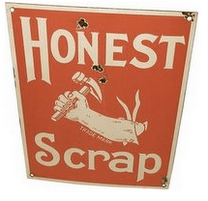
honestscrap

Thank you so much, Shawna at Just Another Day in the Life, for giving me this award.

Here’s what I think about honesty in blogs:

I think one of the fun things about blogging, to be truthful, is the online persona we get to create. Most of us, as writers, often write “better” than we speak. I know I do. My thoughts are more organized, I do better choosing the right words or phrases, and (I think) I’m funnier. At least until (in person) you get to know me a bit more. Is this being honest, though?

I think it is.  By deciding which part of ourselves we are presenting at our blogs, we define ourselves more strongly. When I started my LiveJournal blog, my purpose was to have fun and meet (and learn from) other writers–mostly writers of kids’ books. Boy, did that work! When I moved my website to WordPress and started this blog, I decided I wanted it to have a slightly different function. I wanted the conversations to be more narrowly about writing, the tools and the journey, and I wanted to share the ideas and beliefs I’ve formed about writing with other people. To be “honest,” I wanted to use this blog to do a bit more teaching, to pass on my understanding of how this craft works. Within those two different blog worlds, I do my best to be honest. At my LiveJournal blog, I ask questions and talk about problems that are really challenging me. I’m half venting and half looking for answers from writers more experienced than me. At this blog, I try and give my true opinions about the things I think work, the places we have to push ourselves and the tools we have to use.

Why do I think honesty is important in blogs? Well–if we’re lying or covering up what’s going on in our own writing lives, what good is that? It doesn’t help the people reading our blogs, and it sure doesn’t help ourselves. The best thing about the Internet is that it has widened the circle of our writing community, increased the number of voices we can listen to about how to live this life. Honestly makes the most of this community; anything else is a waste of the connections we’re all making.

I know the rules of this award say I should state 10 honest things about myself, but I’m going to fiddle with that a bit and tell you why/how I think the bloggers I’m passing this on to are worth reading for their honesty.

Susan Taylor Brown at SusanWrites. Susan tells us when it’s going well and when it’s not. She lays out in wonderful, helpful detail the tools she uses to write and teach and how every trial plays itself out. She shares her knowledge and experience with incredible generousity. And if you want honest, and a wonderful story, read Susan’s book Hugging the Rock.

Mary Hershey & Robin LaFevers at Shrinking Violet Promotions. You met them here, and you should make their blog a regular read. They admit all the difficulties for introvert writers in putting ourselves out there, and they hold our hands to walk us through the process of actually doing it.

Vivian Lee Mahoney at HipWriterMama. Vivian is always stretching her understanding of the creative process, talking it out with us in her posts, sharing her successes and her not-so-much-successes. This writing thing is of the utmost importance to her, and she is completely open about the amount of work she puts into it, that we all need to put into it.

Lisa Schroeder at Lisa’s Little Corner of the Internet. Lisa published two booksin 2008. Does she act like it’s easy? Nope–she’s completely honest about the struggles and battles it takes to do this kind of work. Just check out the letters she wrote to herself (and shared on the blog) last week: here and here.

Check these blogs out; put them on your regular to-read list. And let me know about the honesty thing–what place to you think it has (or doesn’t) in your own posts?
Posted in Uncategorized

Newsletter, Anyone?

I’m getting ready to send out my first 2009 newsletter. For those of you who are counting, you’ll know that this is only Newsletter #2 overall! I want to make sure I’m not  inundating people with too frequent or too irritating information, but I’m definitely still playing with how to use this tool.

After this New Year’s edition, I’m pretty sure it’ll be a few months before I put together another. I’d love to hear what you like about the newsletters you get and what, frankly, bugs you. If there’s anything you’d like me to keep you updated on, or any topics you think would be the most interesting, leave your two (or twenty!) cents in the comments.

And if you’d like to get the January edition, click the link under “Sign Up for my Newsletter,” and add your name to my list. You’ve still got a few days. 🙂

I’ll be back in January.  Everybody have a safe and happy New Year’s Eve & Day!

Posted in Uncategorized

Happy Holidays

Merry Christmas to those of you who celebrate it. Happy Hanukkah to those of you who are already in the middle of it. And a wonderful relaxing time of school and work to everybody!

Here’s what I’m doing today.

  • Getting over my cold
  • Baking a Lemon Sponge Pie and a Chocolate Chip Cheesecake (With four people for Xmas dinner this could be considered overkill, but variety and leftovers are never a bad thing!)
  • Tidying my desk (maybe)
  • Reading Girl, Hero by Carrie Jones and loving it
  • Wrapping one more present
  • Thinking about stocking candy
  • Laundry
  • Relaxing

Here’s what I’m NOT doing

  • Writing (except for my blogs)
  • Worrying about not writing (okay, maybe only a little bit)
  • Nagging at any of you to write (I don’t want your brains to implode)

But, boy do I plan on coming back refreshed, OVER this cold, and ready to dig back in.

How about you?

Posted in Uncategorized, Writing Books

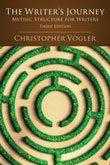
The Writer’s Journey: Start Here

Have you read this book?


You might not recognize the cover. I didn’t at first, because it doesn’t match my copy. Of course, mine is only the second edition. This one’s the THIRD edition. Christopher Vogler’s The Writer’s Journey is like the energizer bunny–it keeps getting printed and printed and printed…

There are plenty of reasons why. First, Vogler has a lot of important things to say. His book is based on Joseph Campbell’s ideas about the hero’s journey, the common storyline in so many myths. Vogler does NOT, as some people seem to fear, advocate writing from a template, a formula. What he does instead is analyze the common elements of all stories, in a way that makes us recognize the patterns and layers we’re all struggling to find in our books and bring to the surface. I have a very specific criteria for a “good” writing book, that I find myself putting it down before I reach the end and rushing back to my story to get all the new ideas onto the page. The Writer’s Journey more than qualifies.

The other big reason is more practical. Basically, if you want to have a discussion about plot, or character, this is your starting point. As an editor, when I talked with a client about what their hero was doing, what the other characters were up to, I’d inevitably find myself talking about Vogler’s book. I’d suggest that, even before they looked at my critique, they should probably pick up a copy of The Writer’s Journey and read it through. This book is also the basis of so many brainstorming sessions I have with my critique groups, whenever we get deep into what our hero is (or isn’t!) doing.  Teachers in writing classes point to Vogler’s book, and The Writer’s Journey is referenced in more other writing books than I have time to count. You need to know what all these people are talking about.

I’ll admit that Vogler hasn’t solved the problem of the story middle for me. And, these days, I’m also pushing Les Edgerton’s book Hooked as a must-read companion to The Writer’s Journey.  Edgerton builds on Vogler’s ideas, and really hits on the kinds of beginnings we need to be writing today. Still, I find myself going back to Vogler’s book time and time again, when I’m stuck, when I’m trying to figure out WHO my hero is and needs to be, when I’m just trying to get a closer look at the layers of my story.

Whether you’re just starting on your writing path, or you’re already treading strongly along it, I recommend dropping this book into your traveling pack.