Blog Posts

Posted in Uncategorized

A Day in the Life

This week, I have three projects to work on.

  • Project A has the highest-urgency level, with an absolute, drop-dead due date of Friday, for which I still need reviews & material from other people involved in the project. So, basically, I can’t really work on it today, but–you know me–I can worry about it!
  • Project B also has a Friday deadline, but it’s one that can be extended, and most of the work is a little bit of steady research and some simple rewriting. I’m easily halfway there. I’m working on Project B today, mostly because I can’t yet work on Project A.
  • Project C is, so far, just a potential. If it has a deadline, I don’t know it, and–truthfully–I don’t know yet whether I will or can do this one. It’s still in the Let’s Talk and Explore stage. So, yeah, I can do a little thinking and a little work, but there’s no commitment and, thus, no real urgency. It is, however, possibly exciting and possibly intimidating. Which means, yes, I can fret about it even while I don’t work on it.

There have been many times in the past when I had one job and, frankly, no real lifeoutside that job. Calm. Steady. And, oh, yeah…boring.

I’m not bored today.

What’s up with your week?

Posted in Uncategorized

And, Again, Why Write for Kids?

Honestly, I’m not sure how to credit this, since it’s all over Facebook by now, including my page. I THINK I got it via someone’s page called “Burning Through Pages,” but I can never tell where things come from out there. It’s just so perfect, though, I’m sharing it here…again. And to whoever started it around, THANK YOU. Pure genius, yes.

How many Harry Potter glasses did kids absolutely have to have. How many wizard hats? Wands? Quidditch broom? And one of my most wonderful memories of books and my son: the time we read Ruth Stiles Gannett’s My Father’s Dragon, and out came the backpack and in went the best we could do, in terms of mimicking all the things Elmer used to outwit the animals. That backpack went everywhere for days! Back even further, when I was a little girl, in love with biographies, and I made a record paper out of binder paper & tape (Thomas Edison) and tied grass on my parents’ fruit trees (Luther Burbank). The imagination is an incredible thing, and the authors who feed it are gifts to us and our kids.

What was the book that got your child dressing up, experiencing that so-intense identification with a character in a book, that need to step into and be part of that story world?

Posted in Thankful Thursday, Uncategorized

Thankful Thursday: Thoughts Inspired by a Niece

Over on Facebook today, one of my nieces made a comment about how it’s just not possible to have your life planned out at her age. She’s a sharp young woman with awesome goals, energy, and commitment; since I’ve known her (okay, maybe since she started walking!), she’s decided she was going to do something, and she’s done it. At her age, I was pretty much deciding, almost every day, that I didn’t want to do…X. Or Y. Or any of the other–*counts on fingers*–23 letters of the alphabet. (Hey, B is for “book,” and I have never chosen against that!)

Plans. Or, as Terry Pratchett’s Nac Mac Feegle say, PLNS. You can’t live with them, you can’t live without watching them go up in smoke.

I used to think that was a bad thing. There are many days when I still do think that’s a bad thing. Usually, though (Beware: It’s a little trite), the more time I spend with yoga and the whole Pay-Attention-to-What’s-Happening-Now-and-Stop-Grasping-for-Something-in-the-Future thing, the more I’m glad that my life has gone the way of the planless. Or maybe the failed plan. I’ve tried not to grasp; however, I have grabbed a few times, when opportunity knocked. In fact, I’ve often pulled it inside and fed it hot chocolate and cookies to make it stay. And most of those opportunistic grabs came from hanging out, watching what was going by, checking in with myself, and–yes, I won’t lie to you–not a little panic.

I’ve been stressed, frustrated, anxious, and irritable. I’ve also been jazzed, engaged, creative, and free. And, I believe, incredibly lucky.

I have no advice for my niece, for any of my nieces or nephews. (I have plenty of advice for my son, although I do try to just trickle tiny driplets at him occasionally, rather than backing up the dump truck and burying him in it all at once!) Lives are so different, and personalities, and what comes at each of us that we can’t control. All I would say is that I’ve made plans and broken plans, written lists and torn them up. And essentially, over time, it’s all been good.

For which I am, yes, very thankful.

Posted in Research, Uncategorized

Open Letter to Anyone Writing a Research Book Just for Me

This post is dedicated to my sister Jenny, the history teacher, who is stunned to find me reading history after all these years and who, I fear, grits her teeth and bites back words every time I reject or whine about a book. Love you, Jen!

Dear History Writer:

I’m back on the research trail, along with honing in on my WIP’s story. Over the weekend, I read a great book about technology and housework and what all those newfangled inventions did and didn’t do for women’s (and men’s) work in the home. (I can now tell you that there were, at one time, gas-powered refrigerators as well as electric ones, but do not ask me to explain the workings of either, or why one took off while the other didn’t!)

And then this morning, I picked up another book, that shall remain nameless, because–even though it’s on a topic I am interested in and that has a lot to do with my WIP, I couldn’t get through it. I tried–reading a few pages at the start of each chapter, skipping through looking for a heading that might be relevant, reading a few paragraphs more here and there…but nope. There might be information in this book that I need, but I can’t keep my brain attached to the words long enough to find out.

Why did I enjoy (and learn from) one book and couldn’t force myself to keep reading the other? Well, the obvious answer would be that the first author is a better writer, but I think there’s more to it than that. So, for anybody out there who’s considering writing history for readers like me–who aren’t their strongest with a nonfiction read, who need to be entertained while they’re being educated, who will leave behind a dry research book for something fictional at the drop of a hat…here’s what I’d like you to be thinking about as you write.

  • Do, please, tell me stories. I can only take so many facts without a breather, without being pulled into something that has plot, tension, character dynamics, and forward movement. No, don’t feel like you have to write a novel for me–I have plenty of those lying around. But bring that information into something with the elements of a novel, if only for half a page. Kay? Thanks.
  • Give me people. Yes, I know there are readers and researchers out there who love diving into pages and pages of government edicts, tables with housing and employment data, maps of population migration, lists of the various ores used in building railroads. And I need some of that, too. But please sprinkle them lightly through your words, as examples, not the entire text of a chapter. And then let me know what it really felt like to live with those statistics, what someone said about them in a letter or diary. Feed my imagination, not just the calculator that is, yes, stored somewhere in the dark recesses of my brain.
  • Weave some humor into your narrative. Make me smile, even laugh. Some of those quotes you’re sharing are ludicrous–I know it and, come on, you know it, too. How could he/she say that with a straight face? And how can you deliver it without at least a tiny well-phrased smirk. Or go the other way. Make me mad, get me pissed off at the nerve of a group, a person, a leader. And let your own anger leak out–just a little trickle, so I know we’re on the same side. So I know you didn’t just type that passage into your manuscript coldly and objectively, not when it’s outrageous enough to break through anyone’s objectivity. Seriously.
  • Draw connections. Yes, I know it’s simplest for you to organize your book by decades, or by geographic regions, or by ethnic groups. And,  yes, that organization makes it easy for me to find the information I most need. BUT…just because your chapters are separated by page breaks, does not mean these people, these areas, these timelines are distinct and isolated from each other. They’re not. One year builds to another; one person’s actions ripple through the lives of others; the events in one state cross the borders into another–even if it takes a while. Share this with me. Show me that you see the threads weaving through it all, and make me aware of the ones I don’ t know yet.
  • If you need an example of the things I’m talking about, I can refer you to a couple of books that were beginning steps of my conversion into reading (good!) history. Pick up Amy Butler Greenfield’s A Perfect Red: Empire, Espionage, and the Quest for the Color of Desire and Laurence Bergreen’s  Over the Edge of the World: Magellan’s Terrifiying Circumnavigation of the Globe. (Note: Don’t eat a big meal before reading the sections about scurvy in Bergreen’s book. And, yes, making me sick to my stomach gets you a gold star, right up there with the whole humor and anger thing.)

That’s all. For today, anyway. Thank you for listening and for, possibly, considering my wish-list as you start writing Chapter 1. I don’t know how far my request will get you in academic circles, or in the lives of those people who live for facts (Hey, some of my best friends are people who live for facts!!), but your efforts will not go unappreciated here, in my world.

Which must count for something.

Yours in research,

Becky Levine

Posted in Uncategorized

And the Winner Is…

The winner in last week’s giveway of The Writing & Critique Group Survival Guide is…

Joyce Moyer Hostetter!

Joyce, I know I SHOULD have your address, but I’ve been so good about cleaning out my inbox lately, it’s gone! Can you email me at beckylevine at ymail dot com and give it to me again. And I’ll get a copy of the book out to you.

Posted in Friday Five, Uncategorized

Friday Five: Random

1. I’m typing this as the most chocolatey-ever cake is baking in the oven. Seriously, I’m waiting for the crash that I’m sure is coming, after I convinced myself that all that batter wouldn’t fit in the pan and better just be eaten.

2. I just told son he should probably get up soon (almost 11:00), so he could eat and be functional before going to take the test for his…DRIVING PERMIT!!!!!

Me? Old enough to have a son who drives? When did this happen?!

3. Spring has hit. I’m loving the warmth and the sunshine, the wearing of shorts and sandles, the blue skies. I’m not so happy about the pollen, but I’m telling myself the snorkiness of the last few days was a small cold. Denial is a powerful thing.

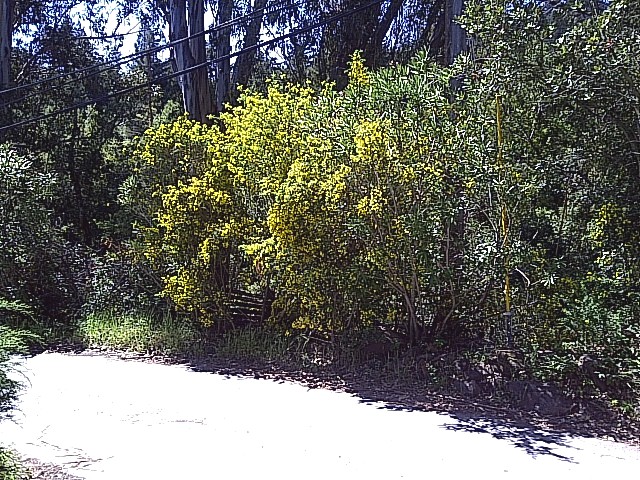
Scotch broom is pretty much covering our mountains.

4. I’ve made serious progress this past week in thinking out my WIP, thanks to Donald Maass ‘ worksheets and my resurgence of stick-to-itivity. I’m accepting that all the time I spent on character, which felt like rambling nebulousity, is paying off, now that I’m in the plot section. Honestly, I still couldn’t explain how one leads to the other, but I can’t argue with the fact that it’s happening on the page.

5. Oh, and I ordered a new research book, ignoring the half-dozen still on my shelf that I haven’t yet cracked open. I’ve been trying to stay away from research while I work on story, but of course one of my characters decided his story brings in a piece of 1910’ish Chicago that I really haven’t delved into yet (unbelievable as that may seem). Plus, somehow, now that I’m finding the story, I’m feeling the urge to do more research. The whole writing-research thing really does seem to be symbiotic. Or parasitic. Take your choice.

Posted in Uncategorized

What it Means to Trust an Author: Jennifer R. Hubbard

I’ve read one of Jennifer R. Hubbard’s books–The Secret Year (read my review here). As I write this post, I’m 33 pages into her second book, Try Not to Breathe. And she’s done it again.

Jenn writes the kinds of books I don’t ever see myself writing. Realistic YA, yes, but even within that genre, she goes with topics that are ones I don’t think I could/would write about. In The Secret Year, Colt and Julia had a secret year together, but the book opens by announcing Julia’s death to the reader. We only learn about that year in the context of Colt’s loss of anything that could have come after. I haven’t read far enough into Try Not to Breathe to give away any spoilers, but here’s the first line from the jacket blurb: “Sixteen-year-old Ryan is fresh out of a mental hospital and trying to figure out how to reboot his life after a suicide attempt.”

Hard stuff. Stuff I often choose not to read, let alone explore in my own writing.

And, yet, when it’s Jenn writing, I’ll pick up the book, and I’ll turn to page one, and I’ll start reading. Even with that blurb.

Why?

Well, I got The Secret Year, because I’d been reading Jenn’s blog. I still read it; it’s one of the most consistently intelligent discussions of writing and reading that I’ve found out there on the Internet. I bought The Secret Year half because I’m always curious about books by people I “know” online, and also because I knew that Jennifer could write. Good, tight writing–whether it’s in a blog, a comment, or a book–carries a lot of weight for me, has a lot to do with what books I choose off the shelf.

Why did I get Try Not to Breathe? Suicide. Again, not something I easily or casually read about. Not an escape-read, not something I can figure will make me laugh out loud, not something for a quick, light afternoon of reading.

I got Try Not to Breathe because I’d read The Secret Year. Because I trust Jenn.

I trust her to:

  • Develop her characters into distinct individuals, not simply stereotypes of people who have “this kind” of experience.
  • Write a story that, while it may have its roots in a starting moment, abig, starting moment, goes far beyond that moment in exploration.
  • Give me things in her characters that I like and that I don’t like, and to do it in a way that the writing terms “heroic traits” and “flaws” are too simplistic.
  • Never toss a word, paragraph, or scene at me that relies on my automatic reaction–she doesn’t rest her writing on the plain fact death or suicide, doesn’t go for the shock-value of just putting that into the book.
  • Push herself past truisms and stereotypes.
  • Explore both characters and character dynamics (which is, ultimately, what I am ALWAYS reading for).

I know Jenn will write a story about people who seriously interest me, who–by just a few pages in–I care about. I’m only 33 pages into Try Not to Breathe. I’m sure bad things are coming. Probably very bad things. But for these people, in this story, because of this writer–I’ll keep reading.

Trust. It’s a biggie.

Posted in Critique Groups, Guest Blogger

Guest Post (and Giveaway): Lani Longshore of Tri-Valley CWC

When I spoke at the Tri-Valley chapter of the California Writer’s Club, I heard about this great base critique group the club had, one that helped the club’s writers get started with critiquing, and then went even further–to help them form their own, smaller break-out groups. I loved this idea then, and I still do. So when Lani Longshore offered to guest-post about the club and her history with its critique groups, I jumped at the idea.

Read Lani’s bio and post below, and don’t forget to enter a comment. I’m doing another giveaway with this post: one commenter will win a copy of The Writing & Critique Group Survival Guide. I’ll draw a name sometime late Sunday and will post the winner on Monday, April 23rd. If your log-in doesn’t link to an email, make sure to leave that email in the comment, so I can find you!

Here’s Lani!

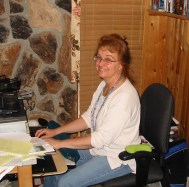
Lani Longshore is a charter member of the California Writers Club Tri-Valley Branch. She and her friend Ann Anastasio created a new literary genre – quilting science fiction – with their novella Death By Chenille (available on Smashwords.com). As well as writing the sequel (When Chenille is Not Enough), she teaches quilting and makes art quilts. Her weekly blog follows her adventures in the sewing room.
The Tri-Valley Writers’ Way to Critique

I am pathetic without a deadline. Writing may be in my blood, but the stories collect like plaque on the arteries unless I have a date circled on the calendar. Years ago I joined a writing circle – a critique group by any other name – but it disbanded when two of the women got full-time jobs and one went back to school.

Eventually, I joined the California Writers Club Tri-Valley Branch. One of the first things the Tri-Valley Branch did was start a critique group. Hector Timourian volunteered to run it. He arranged for us to meet monthly at a Barnes and Noble. The group started with five regulars and a few drop-ins.

Then the group grew. In one year, membership went from five to fifteen. It was becoming unwieldy to discuss so many pages on one night. We posted our work ahead of time, so that the entire meeting could be devoted to commentary rather than reading, but there were still too many people in the group.

As sad as it was to split, we decided that was the only solution. This turned out to be the best thing that could have happened to critiquing at our branch. The first group to spin off was comprised of those of us working on novels.

I joined that first novel group.  We made very few changes to the system that had worked so well in the original group for the first few months. We already had a strong working relationship, so we felt confident we could adapt to changing circumstances. This is exactly what happened, and after two years we are still a productive, committed group.

The original critique group has also adapted. A year after the first spin-off, another novel group was established. The branch recognized the value of training new members to be good critiquers. Now anyone interested in joining a critique group starts with Hector’s. New groups spin off from it when they are ready. Members learn how to give constructive, useful comments under the guidance of experienced critiquers. More important, they learn to accept constructive, useful comments to become better writers.
Posted in Uncategorized

Back at it

From Thursday to Sunday, I had extra time. Time while my son was in Anaheim, totally kicking it with the rest of his jazz band, the symphonic band, the string orchestra, and the choir–who all placed in their competitions. So much so that their high school took home the school award for the whole shebang.

We temporarily interrupt our regular programming to bring you a Mom moment.

Anyway….the thing about having your kid away for a few days AND knowing it’s pretty good odds he’s having a fantastic time, is that you are free to enjoy YOUR time. There’s something about unscheduled days that–even if you spend time sleeping in, time doodling around Facebook, time shopping and eating and movie-ing with your husband–makes it feel like you have so many more hours to spend…writing.

I sat with my historical novel this weekend. I worked through just one-and-a-half of the worksheets in Maass’ Writing the Breakout Novel Workbook, but I went deeper into those worksheets than I have a in a long, long time. I had Scrivener open the whole time, because scene ideas were popping up all over the place, along with connections between different character arcs and various plotlines. Ideas came to me when I wasn’t at the computer, which–honestly–just doesn’t happen to me as much as I’d like.

What did it all do for me? Well, yes, it brought me back to the love state with this WIP.

It reminded me what being relaxed and recharged is really about.

And it brought me back to a stronger level of commitment to this story and, frankly, to my writing.

To putting that butt into the chair and to showing up. Not necessarily to scheduling an hour here and an hour there, or to stressing myself out if that hour doesn’t happen, but to wanting to step into this world of words and hang out. And being open to seeing what comes from it.

Posted in Uncategorized

Friday Five: What’s Up Around Here?

1.  Right now, my son is off in Southern California, (possibly yawning and) playing stand-up bass in a music festival. Jazz band is first on the calendar for the day, and I’m pretty sure they didn’t get into the hotel till 11:00 or so last night. I’m also pretty sure the adrenaline is going to make the lack of sleep irrelevant! Not to mention the fact that, Disneyland is next, this afternoon and all-day tomorrow. Too much fun!

2.  What that means for me is a few long, uninterrupted days of writing. Okay, plus a few errands, a couple of work tasks, and some date-time with my husband. But mostly I’m spending time with my historical YA and Donald Maass’ Writing the Breakout Novel Workbook. Yes, again. Yes, still. Got started yesterday, and am remembering how great it is to be able to just sit for a long stretch, thinking and taking notes, rather than trying to cram brainstorming and illumination into a brief hour here and there.

3. HUGE storm here last night. I tried not to spend too much time thinking about those big buses taking all the band kids down Highway 5 and up and over the Grapevine.

Here’s to good, safe bus drivers! There’s a tree down on our road somewhere, and I’m pretty sure I’ll be without power some time today. Here’s to good, charged laptops! This weather feels an awful lot like that lion March was SUPPOSED to come in like, even though it’s mid-April.

4. I spent time the last two days immersing myself in Robin LaFevers’ Grave Mercy: His Fair Assassin, Book 1,and let me just tell you how happy that “Book 1” part makes me. I love all of Robin’s books, but she has surpassed herself with this one. So many layers. Such an awesome heroine–complex and angry (totally justifiably) and smart and powerful, with just the right amount of flaws and need to change. All smoothly and seamlessly integrated with real history, including a young-teen duchess I would totally support as ruler. Not to mention lots of action. If you’ve been hesitating about this book, don’t–it’s a wonderful read.

5. I’m struggling with finding the right music to work to lately. I’ve got my playlist for the historical, but it’s feeling a bit old (probably a clue about how long this book is taking me to write!), and I’ve been switching around on Pandora with some Electric Blues here, some Folk Rock there, but nothing’s quite making me happy. If you’ve got any new stuff to recommend–something with a strong percussion or bass line, some awesome strong-voiced singers, or just something you’ve discovered this year that you must share, feel free to leave a note in the comments! With my gratitude for the assist.