Blog Posts

Posted in Character, Heroes, Somebody Else Says, Writing Books

Somebody Else Says: Nathan Bransford (and Me) on Redeemability

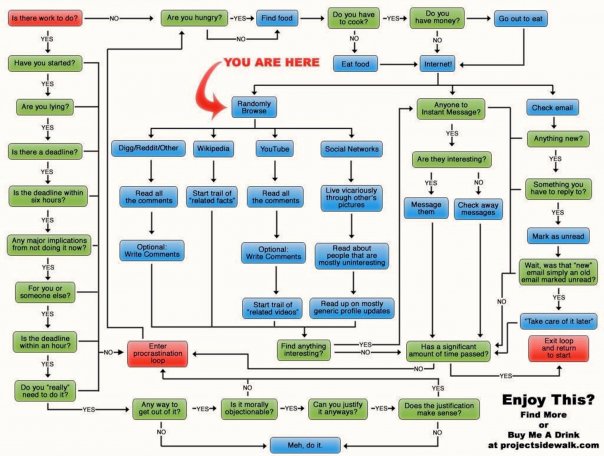
Okay, I know it’s starting to feel like this is a bit of a cheating week for me. First, I the WONDERFUL and BRILLIANT Shrinking Violets guest post for me. (I know how much you all loved that, though, so no guilt here!). Then I resort to a visual image, no words, about my workday, and I didn’t even find that image myself–Nastassja Mills did! And now, I’m sending you over to read Nathan Bransford’s blog.

Still, no guilt. Because Nathan is always worth listening to, and also because I am going to throw my own two cents into the pot here. Nathan’s basically talking about how to make it work that your hero does something horrible or has a pretty nasty flaw. And his basic idea–although he says it much better and in more detail, so you MUST go read the post–is that you do this by redeeming your hero.

What I started thinking about, though, as I read the post is that this implies another need, perhaps. And that would be the need to have our hero do something “bad” to start with. Yes, I’m still buried in Donald Maass’ workbook and theories, but this seems to me to fall under that big umbrella of pushing our heroes past our their limits.

I am having the sense as I think about my fiction WIP and draft out a few early scenes that I’m making my hero pretty darned, well…heroic. That’s okay. In fact, that’s good. Some pretty nasty things happen to her, and she’s going to have to be strong, or to repeat the highest praise I’ve ever heard about any heroine from literaticatkick-ass. But…

She can’t be Wonder Woman. (For one thing, the story is set in Chicago, 1913–in MARCH, and that outfit would be completely inappropriate.)

One of my goal for this character is to find out what she does wrong. It has to, I think, be a necessary wrong and one that is ultimately a critical part of her quest and growth, but it does have to be bad.

What about your heroes? Do they wear cloaks because they’re hiding something? What’s really under that mask? How bad can you make them? And how will you, as Nathan says, redeem them?

Posted in Blogging, Guest Blogger, Marketing, Promotion, SCBWI, Social Networking

Guest Bloggers: Mary Hershey & Robin LaFevers from SVP

Shrinking Violet Promotions is one of my favorite blogs. I discovered it soon after I started blogging, and I’ve been a regular reader since. Mary & Robin are encouraging, enthusiastic, and seriously GET how tough it can be for writers to get out there and market themselves and their books. So, obviously, I was very happy when they accepted my invitation to guest blog here.

Ladies and Gentlemen, pull up a chair, get out your notebooks, and listen up!

PRE-Marketing: Seven Important Things You Can Do Before You Sell Your Book, by the Shrinking Violets, Robin LaFevers & Mary Hershey.

Is it ever too early to start marketing? We’re betting the answer to this question depends on who you ask. Editors, agents, and authors will likely all have different perspectives. And, of those groups, it is likely that it depends on whether you ask an introvert or extrovert.

Robin and I have thought long and hard about this question as it has pertained to our own writing path, and the path of our readers at Shrinking Violets. As a generalization, introverts are more likely to want to remain in the wings until show-time. (Some of us would prefer to stay in the wings beyond that!) 🙂

One of the things to remember about marketing is that it’s really about connecting; connecting to a community of readers or writers or booksellers. As a pre-published author, one of the best things you can do is to begin to build those community relationships. The cool thing about starting before publication is that you will comfortably know these people by the time your first book sale is made, and it won’t feel stiff and in-your-face to mention it to them, it will make sense. The good news is, it’s never been easier. Between blogging and all the social network sites, it’s easy to begin tapping into those communities and building connections.

If it feels more comfortable, start off in those communities identifying yourself as a reader; most writers are avid readers first and foremost, and that can feel like a safer place to start from. Follow librarians’ blogs, “friend” indie bookstores and your favorite authors on MySpace, join book discussions with others about your favorite books. Follow your favorite authors’ blogs and comment, fer gawd’s sake. (They will not know you are there if you don’t comment!) Begin your own blog. At first, you can simply talk about your writing struggles or what you read or the authors and librarians you meet, however, at some point, it can be really smart to create a blogging niche for yourself. Something that guarantees a source of topics for you to talk about and get people coming back to your site.

Cyber Niches can be based on so many different things: Genres, Plotting, Marketing, The Industry, Gossip, Situational (ie: SAHM, writers who are actual teens, etc.), Personal Quirks, “The Call” stories, Rejection Letters, Interviews. Yes, there are lots of blogs with author interviews, but how about one that showcases booksellers or librarians. How about Reporting New Deals, or Six Degrees of Separation in publishing. (For example, did you know that Betty Groban of Houghton Mifflin Harcourt is related to Josh Groban? Or that Jake and Maggie Gyllenthal’s aunt has just published a book?)

The point is to find something that interests you and begin building a community or connections around that. But don’t rely on that alone, be a good community member by participating in other communities as well. Again, the internet makes this easier than ever–and you’ll learn tons while doing it. Promise.

As a community of writing introverts, we also want to be smart and savvy about our work. We want to make sure that we take advantage of every possible opportunity, and we also want to conserve our energy for those activities that give us the biggest bang. We want to make sure that the major proportion of our personal resources goes directly to the work–to creating the best possible book we can. I believe strongly that this in itself is the most powerful marketing activity of all…writing a kick-ass book. Once that has been done, then absolutely–do whatever you can to create buzz–that enigmatic and intangible magic that gets your book into all the right hands and right places.

In the last five years, we’ve all born witness, or heard the tales of unpublished writers that have sold their work based on their mega-blogebrity status. Agents and editors have shopped them from their blog or website and offered contracts. Exciting stuff, for sure, but rare, in our opinion. The bottom line is that agents and editors are not going to come find you. You need to write a book that will find them, and grab them by their editorial lapels.

All right, all right! We promised a list–and here it is! 🙂 🙂

THE OFFICIAL SHRINKING VIOLETS PRE-MARKETING ACTIVITY LIST

  1. Meet your tribe. Get out there and start connecting with other writers. You can find them on-line and at conferences, critiques, schmoozes–follow the trail of writer bread crumbs!
  2. Join a professional writing organization like the Society of Children’s Books Writers and Illustrators (SCBWI), the Romance Writers of America (RWA), or the Mystery Writers of America (MWA). Let the world know that you are serious.
  3. Start doing some karmic networking NOW. Become a volunteer in some reading/writing arena. DO something besides focus on getting yourself published.
  4. Dive into the classics. Read the Newbery, Caldecott, Cybil, Indie Bound award winners. Taste and savor the cream. Know exactly what you are up against. Know what the market buys. Then ignore it and go deep into your own  secret, crazy, unique place and write from there–that’s where YOUR best stuff hides.
  5. Write a fan letter to an author, or editor, or librarian or teacher or bookseller. For no purpose than to celebrate their work and thank them for their contribution to children’s literature. This is not a pitch, but an expression of appreciation with NO hook.
  6. Start designing a website or a blog if you haven’t already. Before you’ve sold something? Yep! Step into the frame of your future. Try it on for size. What would you like it to look like? Have some fun! Use this as a vision for your future. It will draw you there.
  7. Choose one thing slightly outside your comfort zone in the writing field and move toward it. Examples: finding opportunities for public speaking, doing a storytime with children, introducing yourself to the local booksellers, etc.

No matter how many dozens upon dozens of books an author or illustrator may have out–don’t ever forget that we ALL start unpublished. Remember to enjoy the whole of your journey. It’s all rich!
Posted in Contest, E-Launch, Launch Party, Marketing, Promotion

THIS is How to Do an Online Launch

Launch party. What image does that phrase evoke for you? A crowded bookstore with a big, yummy cake? An author up at the front of the room doing a reading? A raffle?

I love book launches. I love to go and hang out with fans and other writers and celebrate a friend’s newest book. In a little less than a year, I hope to be launching my book and having a blast.

I also, though, am thinking about how to market that launch online. I will be doing an e-launch with/through Writer’s Digest, but I also want to make the most of any of my other online resources. So I’m starting to pay attention to how other authors are using the Internet to announce their books and get people hooked.

Cynthia Liu writes for children and teens, and her book Great Call of China has just been released. I went over to her website to check out the launch, and I am MORE than impressed. I’m going to take a few minutes and go through everything, taking notes at every step.

Go take a look yourself!

Posted in Guest Blogger, Promotion

Heads Up: Shrinking Violets Coming Soon

I’ll be blogging for real on Thursday or Friday, but I wanted to throw out a quick note that we’ll have seriously cool guest bloggers here next week. If you haven’t read the Shrinking Violet Promotions blog yet, you’re missing out big time.

And the authors behind the blog, Mary Hershey and Robin LaFevers have generously agreed to share some of their knowledge and experience here. They’ll be blogging about PRE-Marketing: Seven Important Things You Can Do Before You Sell Your Book.

Be there or be SO square! (And meanwhile, scootch over to SVP and catch up on all their other great tips and ideas!)

Posted in Critique Groups, Critiquing, Revising

Critiques: Writing up the Big Stuff

At my workshop last weekend, for the Redwood Writers, I took the participants through a few of the basics of critiquing:

  • Reading the manuscript
  • Writing the critique
  • Presenting the critique 

After a few minutes of my blathering talking, I had them get into groups and practice these basics. Then I critiqued their critique and we talked out a few things.

One of these things was the overall write-up that I recommend doing for every critique. I had some experienced and strong critiquers in the workshop, and this wasn’t something they were all used to doing. They had good reasons–available time and the size of their groups, and I didn’t–I hope–push them too hard to change the critique methods that were working for them.

I did, though, spend a few minutes mulling over why I think this written critique is important.

What I’m talking about here is the summary a critiquer gives the writer–the page or two of clearly written, full-sentence comments about any big problems the critiquer is seeing in the manuscript. These are comments about things like the overall plot, the character development, the clarity of instructions, and the strength of the author’s voice. Yes, of course, the critiquer has marked these problems as they noticed them on the manuscript pages, but this write-up is an extra step.

Here’s why I think this summary is important:

  • Writing it helps the critiquer clarify their ideas. This doesn’t only help the writer, but pushes the critiquer, too, further along the learning curve we’re all on.
  • The summary saves the critique session from being too rambly. If everybody just makes notes on their pages, then reads through them, the critiques are missing the big picture, the birds-eye view of the manuscript. The critiquers end up focusing on the words and sentences, at a time when the writer may actually need to step back from those words and think about bigger concepts for revision.
  • No matter how supportive and respectful a critique is, the feedback can still feel overwhelming & intimidating. It can be hard for a writer to actually “hear” everything the critiquer is telling them, to absorb and understand it all. Having written comments to look at after the critique session can be invaluable to the author.
  • I am an advocate of the Don’t-Revise-Until-You’ve-Finished-the-Draft school of thought. In other words, if I send in a couple of chapters for my critique group to read, I’m going to keep writing. When I get their comments, I’ll read through them, but then I’ll set them aside until I have written all the way through my current draft–at which time, I’ll look at ALL the comments I’ve received and get ready to revise/write the next draft.
    If you also work this way (yay!), it can be weeks, or months, after you receive a critique that you start incorporating it into your manuscript. If you have to go back through 300 pages (times three or four critiquers) and sort through all the line-by-line comments, you’re going to feel lost before you get started. If you have a summary write-up for every chapter, from every critiquer, you have a solid place to start thinking about your revision. You have a way in.

In my book, The Writing Group Survival Guide, I incorporate this step–the step of writing up the big stuff–into the basic procedures for critiquing. If you’re in a critique group, or have been, was this part of your process?

Leave me your thoughts in the comments. 🙂

Posted in Promotion

Somebody Else Says: Online Promotion

I know, I was just here! But there’s some talk going around the blogs that I want to share with you.

Sarah Prineas, author of the wonderful book The Magic Thief, has a couple of posts up about online promotion for kids’ books. Check out the discussion here and here.

And Dana Stabenow, author of dozens of books, including my favorite–the whole Kate Shugak mystery series–is guest-blogging today at Jungle Red Writers. She’s laid out her entire online promotion plan for “Kate’s” latest–Whisper to the Blood. Cool stuff.

What are you doing still here? Go! Read! 🙂

Posted in Conference Report, Writing Conferences

Conference Report: Redwood Writers Three Saturdays

I’m a member of the California Writers Club, a multi-branch club that has members all over the state. One of the northern branches is the Redwood Writers club, which–for the past couple of years–has run a series of mini-conferences over three consecutive weekends. Last weekend, I drove up to Petaluma to participate in the third weekend, giving a workshop on the basics of critiquing a manuscript.

It was a lovely morning. The group was small, but everybody was warm and friendly and energetic. I did my intro talk, then broke my workshop participants into small groups. They read a sample scene, wrote up a critique, and then presented it to each other. I “eavesdropped” on the critiques, then gave them a few minutes of feedback. No, I didn’t tell them whether they were “right” or “wrong” on what they were saying about the scene. Instead, I focused on whether they were digging deeply into the manuscript, how much detail they wrote into their critiques, and how they presented their comments. I had some really strong critiquers in the group, and it was really fun to listen to them share feedback, then interact with them about the methods and styles.

I got there early enough to sit in on the first workshop of the morning–a great talk about memoirs, presented by Susan Bono. Susan is Editor-in-Chief of Tiny Lights journal. The journal has an annual essay contest, and it’s not too late to enter this year’s. The deadline is Valentine’s Day (this Saturday, folks!), and here’s the info you’ll need if you want to submit.

Linda McCabe is the friend who gave me the first connection to the group, and President Karen Batchelor invited me to speak and kept all the organization stuff running beautifully. Linda sat in on my workshop (Thanks, Linda!), and then took gathered me, Susan, and the other presenter–Ransom Stephens–together for a yummy lunch at a Vietnamese restaurant across the street. Ransom told us all what to order, and I had one of the best noodle bowls I’ve ever eaten.

My “students” were my guinea pigs this weekend; this was the first time for my critique workshop. I think it went well, but I hear a rumor of feedback forms, and I’m really looking forward to any comments and suggestions about how I could improve things. It was a weird experience, listening to a critique for the structure of it, instead of the content, but I think it worked well & I can completely see continuing with this workshop at more conferences in the future.

As usual, any time I hang out with other writers, I had a blast and came home totally recharged. I was even fighting a cold and had a party to go to that night, and I had all the energy I needed to get home, do a quick-change from professional to social apparel, and drag my husband onto the dance floor a couple of times. Son: no way! 🙂

Question for all of you.  I’d like to make this type of post a staple of my blog; just a quick, mini-report of conferences and workshops I go to, either as a speaker or an attendee. Confession–I am LOUSY with a camera and actually avoid taking one with me places, so you’re not going to see a lot of photos of famous/not-so-famous people here. (Although check Linda’s blog out later this week; I think she’s going to put up her pics!) So the question is: Do you like reading about conferences, etc? If not, I’ll probably keep the posts going, but maybe shorten them a bit (I say that like it’s so easy for me!). If you’re enthused, I’ll keep filling you in on all the fun stuff. I think conferences are a great place for writers to learn and just commune with each other, and if I can get you guys intrigued, well, all the better! Let me know!

Posted in Books, Reading

Just for Fun: Winter Reading

Hey, all–it’s only Thursday, but for some reason it’s feeling like Friday! We’re having our first cloudy, drippy day in weeks (sorry, all you Nor’easters!), and I’m actually wearing long sleeves. The warm, sunny weather has been great, but it’s boding not well for our summer water supply, so I’m actually pretty happy to have used my windshield wipers this morning.

Anyway, I’m feeling sort of lazy and snug, so I’m not going to bring out the big guns on writing theory today? Instead, how about a little conversation?

Do your reading habits change with the seasons? I always hear about beach reads (may I recommend the entire Princess Diaries series by Meg Cabot?), but what about fireside reads? Couch-under-fleece-blanket reads? Let’s-not-get out-of-bed-yet-in-the-morning reads?

My son has started on the Lord of the Ring series (after I told him he could TOTALLY skip the Tom Bombadil section, because, really, everybody does!). To me, this is a perfect winter read–you’re inside, safe & sheltered, and–even if the power is out–at least you’re not headed toward Mordor. I’ve been doing my research reading with Jane Addams’ Twenty Years at Hull-House, which makes California winters, even in a stinky economy, look pretty warm and prosperous. And I just read a wonderful YA book called Need, by Carrie Jones, which is set in Maine and filled with seriously cold fingers and toes, snowshoe romance, and creepily dangerous pixies. (I fully reviewed Need on my other blog, here.) Yes, it had me looking over my shoulder into the “forest” around our house, as I read late into the night, but I was tucked safe into bed and pretty sure those were coyotes I was listening to.

When it’s cold, do you want to read about somewhere colder? Or do you hunt out palm trees and streaming sunshine, to counter the darkness inside? Share your favorite reads this winter, and let’s pass them around. We’re not done yet–remember, the groundhog saw his shadow!