Posted in Uncategorized

Just a Spoonful of Sugar…

Saturday morning didn’t start so great. I went into the weekend knowing I needed a break from a couple of jobs I’d been doing, but also that I had some other things to get done before I dug into writing again. Jobs I was not feeling all that confident about. So, yes, I woke up just a little cranky.

And then, mid-morning, as I was still in cranky mode, my husband told me to look outside.

It was snowing.

I know, for those of you who have been dealing with mounds of the stuff all winter, not a big deal. Or maybe just not a reason for happiness. But we’ve been in this house over 15 years, and I think we’ve maybe woken up to snow once?

Saturday’s snow didn’t stick at our house. It did keep coming, though, sometimes mixed in with more rain, sometimes, less, for about 40 minutes. I stood and watched it for about 10. It was blobby and soft, little white shapes against a very grey sky.

And all of a sudden, I was in a great mood.

If I have to tie this to writing, I’d say–remember: there is always a reason. When your characters switch gears, when they go from up to down, or vice versa, there is a cause. It has to be solid; it has to be real. But it doesn’t have to be big.

Sunday, of course, my husband had to explore. Did he get out his skis? His snowshoes? His warm boots? Nope.

If you can’t read the sign, the street is named Snow Crest. I don’t know who put up the sign, or when, but this weekend their optimism payed off. And, I’d say, was contagious. I got both my jobs done, relaxedly and happily. And this week, I’ll weave my writing back into my work days.

Wishing all of you a little bit of magic mood-lightener when you need it.

Posted in Friday Five

Friday Five: Notes to Self on a Busy Life

Five things I occasionally need to remind myself about:

1. Everything on your list is something you want to do, or–at the very least–a piece of something you want.

2. You’re the one saying, “Yes.” And you pretty much had a reason for each and every Yes.

3. President Obama has a much bigger to-do list than you do.

4. Too much to do is better, just about every time, than not enough.

5. And, finally, to paraphrase my husband, “You could have this much to do and a butt rash.”

And how’s the craziness in YOUR life going today?

Posted in Picture Books, Thankful Thursday, The Writing & Critique Group Survival Guide, The Writing Path, Uncategorized, Writing Goals

Thankful Thursday: Ideas

I think I’ve talked here before about how I used to be a one-idea person. I had one idea for many years, and I wrote on it and wrote on it and wrote on it and sort of revised, and–honestly–it never went anywhere.

So I was really glad when another idea came along. And that idea turned into a story I write and learned-about-revising on, and that I hope–someday–someone will love as much as I did.

But when I was done, then I was sort of staring out into nothing. No more ideas. And this, as you can imagine, was pretty scary. I’d sort of known this possibility was lurking there all along, especially as I wrote and wrote and wrote on that first book and didn’t have any story characters poking at me, asking for my attention. But I had something I was working on, and so I didn’t let myself worry too much about that something maybe not being enough. Until…it wasn’t.

What changed? A couple of things. Caro called to me from the pages of a history book, demanding a place in a real-life moment. I got the contract to write The Writing & Critique Group Survival Guide, and, in the course of that project, I had to come up with many passages from “fake” stories. I used these passages to show my readers what to look for as they critiqued. When I went to think of a picture book idea, I got one–and it turned out to be one that I didn’t want to be fake. It was a story I wanted to write, for real. That idea turned into the picture book I’ve been working on this year. Which, if not done, is at least well on its way to that point.

Somehow, having two projects to work on seemed to loosen the latch on my idea door–I’m now at the point where I have several I’d love to dig into, when I have time. A friend of mine talks about “princess problems,” and I think having too many ideas fits under that umbrella-so no complaints here!

But…I’ve never been in the position of having to actually think of an idea. (I know, another one of those problems!) And I’ve decided that–guess what? I want to write another picture book. There are a few reasons behind this want:

  • I have figured out that I like writing in this genre.
  • I’ve heard recently that some (all?!) agents want a writer to have several picture books in the done pile before they’ll consider signing that writer. (No, I’m not letting this scare me, but I’m accepting it as a possible market reality.)
  • I like having not just more than one idea, but having more than one project I can actually work on at–basically–the same time. I like switching between the two. The thought of doing that with two novel projects pretty much blows my mind, but I do feel like I’ve been able to make steady progress on this picture book and my YA in the past few months. Which is good.

So…the other night, as I was heading into sleep, I let my brain drift. I don’t even know where I was sending it, just…out there. Maybe I was hoping for a visit from the muse, maybe just reassurance that I hadn’t turned back into a one-idea writer (or at least a one-picture-book-idea writer). I went to sleep without the visit or the reassurance, but I’m learning not to let that stress me out too much.

The  next day, I didn’t worry at it, but…sometime in the afternoon, I opened up a new Scrivener file and popped down the basic idea for, yes…another picture book.

Is it magic? Is it just being open to possibilities? I’ve heard this is the most frequent and challenging question authors hear–where do you get your ideas?

As of today, I have no clue. But I’ll tell you one thing–not knowing is definitely a princess problem.

Posted in Uncategorized

The To-Do List

Many years ago, when I was feeling just slightly overwhelmed with life, someone gave me a piece of very good advice–write it down. Write down all the things that are swirling around in your head and stressing you out. I said, but what if I still can’t get it all done? She said, well, then those things probably weren’t all that important.

Duh! Did I mention I was slightly overwhelmed at the time?

I went out and bought a PDA. And I did just what she said–wrote everything down. Okay, I stylused everything down.

And she was right. It helped. I think this is because, along with all the pressure of thinking we have SO much to do, there comes that fear that we’ll forget one or more of the tasks, and then…you know, the world will stop turning.

Life got more cope-able eventually, but I never did let go of my list habit. Many times, I end up doing just what I was “worried” about–not actually getting to the items on the list. Which, I have found out, is definitely okay. Sometimes the list itself can be just a little scary, but only if I actually let myself stare at it for too long. You know, rather than picking a job and getting it done.

Here’s the big thing about the list–it lets me get my writing in. First of all, yes, I always include my writing on the list. But more than that, the list puts me back into a make-it-work mode. It proves to me that I am right–I have plenty to do. Which means it is time to shift out of my rambly, whatever-pops-up-first-into-my-face methodology into a more organized state of being.

In other words, get back to my fiction-first rule.

This week, I have a pile of non-writing work stuff that I have to plow through, while son’s out of school. Next week, though, when those things are out of the way and we’re back on a more structured schedule, the list still won’t be truly depleted.

That’s okay. Because next week…wait for it:

Fiction comes before taxes. On my list and in real life.

Do you love lists? Hate them? Hang onto them like the life-preserver behind a high-powered speed boat? Here’s to however you make it all work!

Posted in Uncategorized, Writing

Transitioning Between Projects: How Do YOU Do It?

For the past couple of weeks, I’ve been pretty darned immersed in revising my picture book. People talk about which stage of writing a book we like best–early drafts, major revisions, final polishing. I’ll take any and all of those, as long as I get to a point where I can be and am totally immersed in that project. Where I go to bed thinking about it, wake up on the same path, and–whether I react with excitement or nerves–know for certain that this is the fictional world I’ll be stepping into today.

And then came “the end”–at least the end for now. The picture book has hit the email & the snail-mail, on its way to get critiqued by a couple of people in the publishing world. Despite the fact that I’m not querying or submitting yet, there is a wonderful wing-like feeling to thinking about the story out there, being seen, being read. And I’m letting myself enjoy that feeling.

In pretty much every other sense, though, I’m closing the door on the picture book for a while. I won’t be getting those critiques back until April, probably, and I’m going to wait to see what they tell me before I take the book back to my critique group. I’m also not revising a word of the story until then.

Which means, back to the other stuff. Time to shift gears.

In a way, the transition comes at a good time. My son is out of school for a week, which always throws life onto a different schedule. I’ve got some editing to do, along with prepping a few Power-Point presentation for a local SCBWI workshop series I’ll be doing. That’s the plan for the next week. And then, when my son heads back to school, I’ll head back to my historical.

I said that this is a good way to shift, in some ways. In another way, because I pushed these other things out to get the picture book done, they’re going to pretty much take up this week, which means I’ll be away from Caro & Chicago for that much longer. I’ll be away from the segment of my brain that thinks in terms of creating worlds with my own words. Sometimes, when you’re gone too long, the bridge back can look spindly or like it’s missing a few planks.

I’m thinking, to keep that bridge stronger, I’ll be getting back into my research during non-editing/powerpointing time. If I can’t write about Chicago in 1912, I can read about it. And immigrants. And automobiles. And photography. Obviously, research is its own form of immersion.

What do you do when you’re moving from one project to another, or when you’ve had to step away from the fiction altogether? How about sharing some tips in the comments!

Posted in Uncategorized

Friday Five: Around the Blogosphere

I take you today to a few posts that caught my eye, and my imagination, over the past couple of weeks.

1. PJ Hoover lists her top ten reasons to have a writing group (different than a critique group).

2. Beth Revis gives her answer (for now) on the question of how to define success.

3. On a similar thread, lit agent Erin Murphy guest-posted over at Shrinking Violet Promotions about the many different paths to success.

4. Janni Lee Simner coaxes her protagonist to join her on the first steps into Draft 3 of her their WIP.

5. Terri Thayer asked us to share our snow-day stories. Being a native Californian, I had to make mine up. 🙂

Happy Friday, everyone, and here’s to a wonderful weekend.

Posted in Guest Blogger

Guest Post: Teralyn Rose Pilgram on Dealing with the Evil Editor

When Teralyn Rose Pilgrim sent me an email offering to contribute a post here about the evil editor and her techniques for hushing that irritating, sometimes, debilitating voice, I was happy to say, “Yes.” I think this is a problem many, if not all, writers face, and it’s always helpful to hear how someone else handles it.

Teralyn Rose Pilgrim is the author of the unpublished novel Sacred Fire, a historical fiction about the Vestal Virgins of ancient Rome. She blogs at http://teralynpilgrim.blogspot.com/.

Silencing Your Inner Editor

Your inner critic is the cruel voice in your head that points out all your flaws and makes it difficult for you to write. I became intimately familiar with my inner critic during NaNoWriMo when I had to write 2,000 words a day whether I wanted to or not.

Many writers think of their inner critic as a shark. It ruthlessly tears everything they do to shreds. My inner critic is the chick in Mean Girls. You ever meet one of those bullies in high school who criticize everything you do just because it’s fun?

When my inner critic is at the top of her game, I can’t even write a word without hearing her comments. She’ll say, “Seriously? You’re going with that word? A good writer would have phrased it better. OMG, don’t even get me started on how cliché that metaphor is. Ew! What makes you think anyone’s going to like this character?”

How to Silence the Evil Inside

  1. Be mean back. I like to blow raspberries at my inner editor. Sometimes she’ll criticize me and I’ll say, “What do you know? You’re shallow and no one likes you because you’re mean. Go away.”
  2. Be flexible. Writing is as temporary as you want it to be. During the first draft of my book, I never imagined I would delete and add whole chapters, but I did, because writing is infinitely changeable.
  3. Suspend judgment. My inner critic is a lot louder while I’m writing than she is when I’m reading. If you don’t like what you’ve written, wait a good 24 hours and reread it before you decide whether to keep, toss, or change it. Writing is like stew; it’s always better the next day.
  4. Practice writing poorly. I took a writing class where a teacher asked us to write something truly awful, read it out loud to the class, and throw it away. I wrote something bad, and the world didn’t come crashing down. This gave me an elated sense of freedom. I can write whatever I want; good, bad, ugly, whatever.
  5. Recover from reader paranoia. I often imagine someone reading over my shoulder and wondering what on earth I just wrote (especially when I write at work). When I tuck notebooks in a drawer, I worry about people finding them and reading them. I realize now how unlikely that would be. Most writers practically have to beg people to read their work.
  6. Choose good conditions. A friend of mine always said your inner editor goes to bed at 11:00 pm. Playing silly music also helps, because if the singers can make themselves look like idiots, why can’t I?
  7. Ignore. You might think, “If it’s that simple, why doesn’t everybody do it?” It takes a good deal of practice, but sometimes, it really is that simple.
Posted in YA Historical Fiction Challenge

YA Historical Fiction Challenge: Sherri L. Smith’s FLYGIRL

Some books are so good, it’s actually hard to know where to come at them for a truly thoughtful, analytical review. Sherri L. Smith’s FLYGIRL is, for me, one of those books.

My basic review is…WOW.

Okay, I’ll give you a little bit more.

Ida Mae Jones wants to fly. She already does some, on the crop-duster plane that was her father’s before he died, the plane he taught her to fly in, the plane she plans to keep flying after she finds someone who will give her—as a woman—a pilot’s license. Then World War II breaks over the world, takes her brother as a soldier, and offers Ida Mae the chance to do her part and to fly. She may be able to join the WASP–the Women’s Airforce Service Pilots—if she’s willing to live a lie. A big one. She has to be willing to pass as white.

I have read three books in the last month which have characters who choose, for very specific, believable, and important reasons to “pass”—Flygirl, Diane Lee Wilson’s Black Storm Comin’ (see my review here), and Richard Peck’s The River Between Us. I don’ t know if this is a subject that’s becoming more “okay” to write about, or if it’s one of those reading coincidences that do happen. What I do know is that it’s an incredible world to read about, and all these writers handle it beautifully. Smith’s writing is easy and graceful, and yet she continually keeps up the tension by putting us right in the middle of the risks Ida Mae takes by hiding the truth. Risks to her safety, risks to her family, risks to her own self-identity–her core understanding of and belief in the person she knows herself to be.

The best fiction crosses barriers of experience and draws the reader into a world they know nothing about, then make them believe in and understand that world as well as they can without having lived it. Smith has done this. She shows us all the possible paths for Ida Mae; she shows us the choices Ida Mae faces and makes. WWII America carries a great burden of responsibility for having created situations and dangers that pushed people like Ida Mae to lie, and Smith makes that pointedly clear. BUT, at the same time, she has created a hero who, within that era, is also responsible for her own decisions and who recognizes this–a strong hero who is, yes, justifiably frightened and angry and confused, but who in no way plays out a passive role in her own story.

I love Ida Mae Jones. I want to put her in a plane and fly her into the future, even a future beyond today, where she doesn’t have to have this battle–internal and external. And I want to step back into the past with her and be the one person she can trust with the truth, someone who would support her and walk with her and go up in that second seat of the plane and let her fly me wherever she wanted.

One last word–this comes perilously close to a spoiler, but it’s not going to cross the lines. There are certain types of book endings that are seriously hard to pull off (and I’m not going to tell you what those are!). Many authors fail when they attempt this kind of ending, and I get very frustrated when I have to read them. Smith succeeds absolutely and brilliantly.

And, yes, you’ll have to read the book to see what I mean! 🙂

Posted in Critique Groups, Critiquing

Friday Five Critiquing: Ways to Deliver the “Bad” News

We’ve all been there. We’ve read a submission from a critique partner, and we’ve got a lot to say. A lot that isn’t maybe so great and that is not, we’re pretty sure, going to make the writer feel good. Maybe it’s a new member of the group, and you don’t know how they’ll take the feedback. Or maybe it’s a revision from someone you’ve critiqued with for a while, a revision they’re really excited about, and you think it’s just not that exciting. Yet. You’re looking at the manuscript and you’re looking at your notes, and you’re feeling just that little bit sick to the stomach about writing it up and delivering it to the author.

What do you do?

1. Don’t back off. I really believe that, if you avoid telling a critique partner what isn’t working in their manuscript, you’re doing them a disservice. Even if it’s one they might, at some level, thank you for. Implicit in the agreement to critique together is, I think, a request that we do our best, that we catch problems and let each other know about them. At the far end of the spectrum, if you hide your thoughts, you are setting your critique partner to find out about this when it’s too late–when the comments are coming from an agent, editor, or reader of their self-published book.

2. With number 1 said, this doesn’t mean there aren’t ways to gentle/cushion the news. Of course, you’re going to start and end your critique with something positive, but you can do more. First, try to get your mind out of that bad-news mindset. Remember, you’re trying to protect the writer from that perhaps unnecessary rejection down the line. You are giving them a chance to revise and make this book better. You are helping them to identify weaknesses in their writing, weaknesses they can–with learning & practice–get rid of. Yes, most of these methods are, in a way, mind-games we play with ourselves to justify what we’re going to say, but…and here’s the thing: If you can get yourself into that game, then your more positive feeling is going to make its way into your critique and weave hope into the feedback. If you’re a parent, you do this all the time. You see your kid stepping up to something they may or may not be ready for, and you worry. If you let that worry show, your kid gets it. They see your doubt and your stress, and it infects them. If, on the other hand, you’re skilled at tucking that worry away and you open yourself up to the idea that your kid may have found something right and good for them, they’re going to sense that–your belief and faith in their possibilities. Ditto for your critique partner.

3. Don’t worry about covering every problem in your feedback. If it overwhelms you, think about what it’s going to do to the writer. A critique group is about revision, about–I believe–as many revisions as needed. It’s only Super Writer who can make every change a manuscript needs in one draft. Pick two to four things–big things–that you think the writer needs to tackle, elements of the story they should figure out before moving on to the smaller pieces. Is their hero being active enough? Are they using dialogue as effectively as they could? Are they starting the story at the right spot?  Talk about these problems as clearly and helpfully as you can–explain, give examples in the text, make suggestions for figuring out improvements. Let the rest wait.

4. Remember you’re not alone. (Unless you’re just working with one critique partner, and–honestly–this is one of the strong arguments for actually being in a group.) Odds are, you’re not the only person finding big problems in the submission. Your other critique partners may find, or focus on (see #3) different weaknesses than you do, but it’s highly unlikely that you’re going to walk into the next meeting with your not-so-happy-dance comments while everybody else is  popping champagne corks and handing the writer lists of agents to query.

5. Lastly, and this is a biggie, do not carry the responsibility for this manuscript around on your shoulders. It’s too heavy a weight, and–honestly–it’s not yours to bear. Yes, you care about how the writer feels. Yes, you know you’re going to say some things that will be hard for the writer to hear, that may even hurt them. Yes, that’s hard. BUT…it’s their story. It’s their writing path. It’s part of their journey to learn to face the reality of their projects, their skills–to face that and to recommit to making it all better. As long as you have done your best to be kind and respectful (which includes digging deep and sharing what you unearth), as long as you have thought about the way you are phrasing your critique, you have done your part. At some point, you have to let the writer do theirs.

Hugs and chocolate can also be provided.  🙂
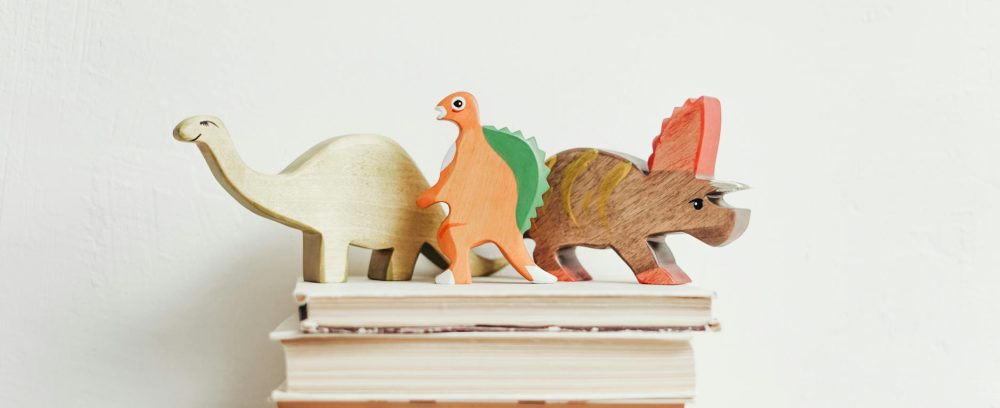
Posted in Uncategorized

The Picture Book: Using Word Count as a Revision Tool

The last couple of days have been a whirl of productivity for me. And, you know, the good kind–where you’re actually happy-ish with the work.

What happened?

Short story: I chopped the picture book in half.

Long story (Because you know I never use just the short story):

Like I said on  Monday, I’ve got a couple of events coming down the line that will give me a chance to get the picture book critiqued. I’ve known all along that it had way too many words (anywhere between 700 and 900, depending on which draft you opened up). I was okay with that, because I know that I am good at cutting and trimming and sharpening, turning a long scene or story into a much shorter one. It’s not a natural talent–I developed it over the three years I worked as a closed-captioner, taking TV and movie dialogue and editing it down to a specific word-per-minute reading rate. Anyway, I knew I could do it, so I wasn’t worrying about doing it…yet.

Until these critiques reared their heads. Because what was the point of submitting a picture book that I knew was too long. That’d be the first thing the critiquer told me, maybe even the only thing. Which would be a total waste. Plus, for one of the critiques, I only get to submit the first 300 words. Before I started this revision, 300 words barely got the reader past the opening.

So I cut. I didn’t take a red pencil and mark up the words I had. Instead, I opened a new file and only typed in the words I thought I could keep. Note I did not say “the words I needed.” Because, honestly, I really didn’t feel like I knew which those were yet. And, yes, I played as I went and moved things around and fiddled with the story . By the end of the day I had a draft that was just over 600 words, with red placeholders where I knew I need something different from what I had. I was still feeling pretty muddled and not confident about what those something-differents might be, but I was pretty happy with that 600+ word-count. I figured that, give or take a very few, this was the number of words I had to work with.

What did I do next? What I always do when I’m trying to learn about a genre–I went to the experts. I hauled a stack of my favorite picture books over to the couch, and I read. I let myself reread some of the older ones, from my childhood–Millions of Cats, Choo Choo, The Story about Ping, but I knew that was more play than work–yes, they’re wonderful, but they don’t have the low word-count or the story form I was looking for.

So I went on to two books that are pretty fantastic and that were published in the last year or so: Linda Urban’s Mouse was Mad and Bonny Becker’s Visitor for Bear. I was looking for a few things:

  • What were the heroes’ goals?
  • In what way did the heroes actively try to reach those goals?
  • What were the obstacles to the heroes’ attempts?
  • What words (and how few) did the authors use to show these story pieces?
  • What words (and, again, how few) did the authors use to increase tension across the story?
  • What information did the authors include and what did they choose to leave out?

These are all questions I have been struggling with in the picture book. Questions that I had been trying to answer by writing and fiddling with too many words. As I read Linda and Bonnie’s books, I did get the starts of some thoughts about how to do it differently, thoughts I played with yesterday. I think the most important thing I got, though, was a reminder that this can be done. A good, strong, funny, what-next, complete story can be written with a very small number of words. And when it’s done well, it’s magic.

I’m not saying yet that I can do it. I’m not Linda Urban, and I’m not Bonny Becker. What I am, though, especially since yesterday–when I got new story ideas, cut more words and added some better ones, strengthened characters, and got my husband to say he could “see the illustrator having fun with this”—is a writer committed anew to this genre and to wanting to find my place in its market.

And did I mention, a writer who finally has a picture-book draft that feels like it might be getting there and that is…wait for it: under 500 words?