Posted in Uncategorized

Things I’m Counting as “Writing” These Days

We all know it. We know “writing” is about so many more tasks than sitting at your computer, or with a notebook, and writing actual words and sentences and paragraphs and pages of that 1st or 2nd or nth draft.

We know it logically.

Still, there’s something in many, if not all of us, that places judgment on those other tasks. It’s not even so much that we get caught up in word-count tallies, I don’t think. I think it’s that we (rightly) associate writing with creativity, and we associate creativity with the new and fresh things that come when our story and prose are on a roll. We don’t always remember that creativity is stepping back and taking a new look at the colors in your painting, the ones you put down on the canvas last week. We don’t always remember that creativity is tasting the soup or the cake batter and thinking about what spice is still missing.

And even when we remember, we sometimes let doubt override the knowledge.

We “should” at ourselves. You should be getting more pages done. You should be getting started on the next draft. You should be in the zone.

Yeah, well, really I should be getting the things done that need to be done. I should be acknowledging that writing, drafting, revisng—it’s is not just typing–it’s organizing, it’s reviewing, it’s questioning, it’s brainstorming, it’s shifting puzzle pieces around and seeing how the fit here…and here…and there. It’s getting back in touch with our story any way we can.

So here’s what I’m counting as “writing” for a while.

  • Getting all the chapters I’ve written into a binder.
  • Organizing and then reading through my critique groups feedback on all these chapters.
  • Adding as many bullets as I want to my Ginormous List of Things That Still Need to Go into This Story.
  • Reading posts like this one by Jennifer R. Hubbard and reminding myself that, if I’m sitting at the computer (or typewriter) with my hands on the keyboard, my brain is expecting me–even telling me–to write, to produce fresh words.
  • Going through my Ginormous List of…with the full manuscript in front of me and using colored pens and sticky notes to scribble things like “Stick brother in here!” and “Ooh! Good place for the big question!”
  • Experimenting with plotting and organizing tools–will it be Scrivener’s scene cards again, or do I want a timeline spreadsheet. Or both.

Yet again, I realize that the book I affectionately refer to as “the one that almost killed me” put a big dent in this understanding for me, an understanding I think I had before the almost killed part. So I need to renew my lessons, rebuild habits I lost somewhere for a while. And that renewal, I think, means reaquainting myself with all the non-writing writing acts.

And perhaps bringing flowers and chocolate to keep that silly “should” voice busy and quiet.

Posted in Uncategorized

A Potpourri of Revision Posts

Okay, so I have six scenes to go in the first draft. My goal for today was three scenes, which would have gotten me down to five left, and I wrote those six scenes, but one was a surprise with perhaps a little magic in it and a possible focus for one story thread when I start revising. So it’s staying for now, but the math says I now have six scenes to go.

Oh, math.

Anyway, I am getting closer to revision, and I’ve been letting the idea of it simmer in my head this past week. I wish I could say I meant “shimmer” there, but I’m actually a little nervous this time around, so “simmer” it is. I thought I’d do a little reading about revision to perhaps lessen the butterflies, and I thought I’d share some posts with you guys.

Here’s some of the treasure I found while browsing around the web.

From Robin LaFevers, two posts. One I basically intruded into her busy world and asked her for, over on Facebook, when I was hoping for some ideas about how to use software/spreadsheets in plotting timelines. The post she linked to is here. And another one here with some great questions to ask yourself before you start revising.

From Chuck Wendig at Terrible Minds, this post is probably more “colorful,” than you’re used to if you visit my blog very often, but it’s very funny and pretty much spot on. (See, in particular, numbers 19 and 23.)

A very detailed, very good revision checklist from Nathan Bransford.

And another great revision post he links to, from Jennifer R. Hubbard, about revision fatigue.

I’m always looking for structure, so I like the to-dos in this post from Kristin Elise.

And some wonderful opinions/processes collected from other authors and posted at The Enchanted Inkspot.

Enjoy. And happy revising!

Posted in Uncategorized

> Five Friday

Okay, I admit it. Sometimes when I can’t think of a good blog topic of my own, I scan the internet for other people’s thoughts to share with you. BUT…this morning, I had just barely opened up my Google Reader when fantastic posts started jumping out at me. So today, be glad you’re getting links to other blogs! And that I let myself cheat on the Friday Five and not bother counting!

  • A few things Jennifer Hubbard was thinking about that, as usual, I spend time thinking about, too.
    Older and Younger
  • Beth Revis interviews Robin LaFevers, whose newest book Grave Mercy I have been raving about since I read it.
    Robin LaFevers interview
  • Alex Villasante talks about how easy (NOT!) it is being out on submission. For the first time. Go, read, sympathize!
    What I Know about Being on Submission
  • Jo Knowles has a wonderful post about actually knowing, truly, where your manuscript is–even if that “where” isn’t yet Done.
    A Little More Work to be Done
  • Ramona DeFelice Long has started a new series of How-To posts. Ramona is a freelance editor as well as a writer, so stop in here at her first post and just keep reading throughout the month.
    A Bold New Blog Plan
  • One of Jennifer Laughran’s usual intelligent, thoughtful posts–this one on reading books by authors we personally dislike or disrespect.
    Reading with the Enemy
  • Jeannine Atkins posts about getting some pretty intense critique feedback. This is, as far as I’m concerned, the courage and strength we all need to have about and for our writing.
    One Hundred Pages
Posted in Uncategorized

What it Means to Trust an Author: Jennifer R. Hubbard

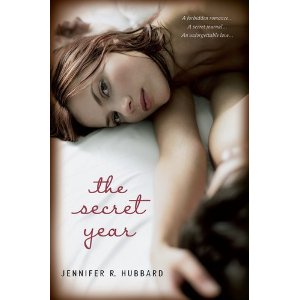
I’ve read one of Jennifer R. Hubbard’s books–The Secret Year (read my review here). As I write this post, I’m 33 pages into her second book, Try Not to Breathe. And she’s done it again.

Jenn writes the kinds of books I don’t ever see myself writing. Realistic YA, yes, but even within that genre, she goes with topics that are ones I don’t think I could/would write about. In The Secret Year, Colt and Julia had a secret year together, but the book opens by announcing Julia’s death to the reader. We only learn about that year in the context of Colt’s loss of anything that could have come after. I haven’t read far enough into Try Not to Breathe to give away any spoilers, but here’s the first line from the jacket blurb: “Sixteen-year-old Ryan is fresh out of a mental hospital and trying to figure out how to reboot his life after a suicide attempt.”

Hard stuff. Stuff I often choose not to read, let alone explore in my own writing.

And, yet, when it’s Jenn writing, I’ll pick up the book, and I’ll turn to page one, and I’ll start reading. Even with that blurb.

Why?

Well, I got The Secret Year, because I’d been reading Jenn’s blog. I still read it; it’s one of the most consistently intelligent discussions of writing and reading that I’ve found out there on the Internet. I bought The Secret Year half because I’m always curious about books by people I “know” online, and also because I knew that Jennifer could write. Good, tight writing–whether it’s in a blog, a comment, or a book–carries a lot of weight for me, has a lot to do with what books I choose off the shelf.

Why did I get Try Not to Breathe? Suicide. Again, not something I easily or casually read about. Not an escape-read, not something I can figure will make me laugh out loud, not something for a quick, light afternoon of reading.

I got Try Not to Breathe because I’d read The Secret Year. Because I trust Jenn.

I trust her to:

  • Develop her characters into distinct individuals, not simply stereotypes of people who have “this kind” of experience.
  • Write a story that, while it may have its roots in a starting moment, abig, starting moment, goes far beyond that moment in exploration.
  • Give me things in her characters that I like and that I don’t like, and to do it in a way that the writing terms “heroic traits” and “flaws” are too simplistic.
  • Never toss a word, paragraph, or scene at me that relies on my automatic reaction–she doesn’t rest her writing on the plain fact death or suicide, doesn’t go for the shock-value of just putting that into the book.
  • Push herself past truisms and stereotypes.
  • Explore both characters and character dynamics (which is, ultimately, what I am ALWAYS reading for).

I know Jenn will write a story about people who seriously interest me, who–by just a few pages in–I care about. I’m only 33 pages into Try Not to Breathe. I’m sure bad things are coming. Probably very bad things. But for these people, in this story, because of this writer–I’ll keep reading.

Trust. It’s a biggie.

Posted in Links

Saturday Six: Links to Share

Lately, I feel like I’m checking in a blogs a lot, but not necessarily posting comments. I know there’s a lot of discussion around about whether blogs are on the way out, and I never know if my pattern is part of a trend or just a piece of my general business? Either way, I know there is still a lot of good stuff out there, and I thought I’d share a few today.

1. First, in case you missed it during the week, a link to my own blog–but to someone else’s post! Annette Dashofy guest-posted here on Wednesday about managing and participating in an online critique group. She’s got great stuff in the post, and if you leave a comment before Sunday night, I’ll enter you in a drawing for a copy of The Writing & Critique Group Survival Guide.

2. Have you been following the Ed DeCaria’s Madness 2012! Poetry Competition? I’ve been popping in and out to see some rounds and give an occasional vote. I’m not a big poetry expert, but when something wows me, well…then I feel like adding my reaction to the count. It’s an amazing concept, I think–each poet gets a random word to build a poem around, and their poem comes up against another poet’s poem, written around a totally different word. Susan Taylor Brown wrote a great post here on dealing with her word and her fears–check it out. I wasn’t sure what page to link to for the contest itself, but here’s the scoreboard for the competition, which does have links to some of the poems. I think! Myself, I’ve just been watching for status updates on Facebook and then following those posts to the poems. Whether or not you’re a poet, I think this is both amazing and fun.

3. I’ve had people see me at the bookmobile, with my (yes, rather largish) stack of books to check out, and sigh that they wished they had time to read that much. Ack. Yes, I get that there’s never enough hours in the day to do all we want, but I also know that nobody in my family would want to live with me if I didn’t get my reading time in. Even so, I totally know what Jennifer R. Hubbard means about the rarity and the delight of just curling up with some reading time, not letting anything else demand your attention or your minutes. And someday, I’m going to get myself away on the kind of reading retreat Debbi Michiko Florence has been scheduling for herself this past year.

4. Until I was scanning my blog roll for links today, I actually missed this post by Nicole at Viva Scriva on getting back to her WIP after a forced “vacation” from it. Oh, so much here that resonates with me this week, plus some of the links that helped Nicole get back on track. Blog links within blog links–that’s what it’s all about today, folks. BTW, if you don’t have the Viva Scriva blog on your reading list, check them out for a few weeks–I’m guessing they’ll be a permanent add.

5. Another post I missed until this morning (okay, maybe I AM skimming too much!) is Jen Robinson’s review of Robin LaFevers‘ new book, Grave Mercy: His Fair Assassin, Book 1. I am a huge fan of Robin’s Theodosia books and enjoy her Nathaniel Fludd books, too. Not to mention I read Robin’s blog posts avariciously for her help with plotting. I haven’t read this new book yet, because if the car works and the creek don’t rise, I’m hoping to go buy my copy (and finally meet Robin!) at her Books Inc signing on April 4th. Jen’s review should give you a good idea, though, about why you want to read this book.

6. Here’s a fun post from Beth Revis, where she polled the members of her debut-authors group, the Elevensies, on the top three things they learned in their first year of publication. There’s a definite thread of letting the things that are out of one’s control be, well…out of your control. And another one on getting that next book started.

Enjoy the links, and enjoy your weekend. Happy writing inspiration to everyone!

Posted in Blogs, Friday Five

Friday Five: Around the Blogosphere

A quick glance around the blogs to see what other people are saying:

  1. Jennifer R. Hubbard with a discussion on Little Women: Jo and Laurie or Jo and Professor Bhaer. Fact: I am now and always have been Team Bhaer.
  2. Because I loved the book but am feeling too lazy to write about it, this excellent review of Kenneth Oppel’s This Dark Endeavor, from Thea at The Book Smugglers.
  3. Beth Revis on being afraid. She says it so well.
  4. I don’t know if you remember KidLit4Japan, the children’s and YA auction that raised over $10,000to help Japan after the earthquake and tsunami? Well, the author who organized and ran the WHOLE THING, Greg Fishbone, has a new book out, the first in his Galaxy Games series–Galaxy Games: The Challengers. Check out Debbi Michiko Florence’s interview with Greg.
  5. Go answer Nathan Bransford’s question: When Do You Let Other People See Your Work? Me, I use early critiques as motivation and thinking-fodder, but I know a lot of writers get nervous about sharing those first drafts. You?

Happy Friday and have a great weekend!

Posted in Uncategorized

Thoughts on Slowing Down from Jennifer R. Hubbard (and Me!)

Jennifer R. Hubbard posted here on taking time off, not pushing quite as hard to always be running. As usual, Jenn’s thoughts are clear and on target, and–as often happens–she hit a chord with me.

I’m not sure at what stage, life gets less busy. I’ve watched my parents since they sold their veterinary practice and–if they’re any indicator–it doesn’t happen during retirement. And, like Jenn says, I’m not sure I want to have fewer things going on in my life. I like the things have going. I want to keep them. Or, possibly, trade one in for another, slightly different variant.

But…

It  has become crystal clear to me that I can’t keep going at full-speed, like I have for so many years. People told me that, as my son got older, I’d start to feel like time with him at home was fading and precious, and I’m sure that has something to do with it. And, yes, stress is bad for my health; yes, it makes me a less pleasant person to be around; no, it doesn’t help me accomplish more.

Here’s the big thing, though: I don’t like it.


I know. Profound.

But it’s taken me some years to get here. I had a quiet teenage life, and some pretty dull twenties. Honestly, as much as I love my son and always have, the baby years were not exactly stimulating for me. (Be careful what you ask for: See Teenage Years, PLENTY Stimulating!). And I think, when I had a chance to “come back,” to step into the life I had that I finally wanted, I went with filling up that empty space and time.

A lot.

As I said, I’m still doing that. I’m writing and editing and marketing and  “housekeeping” (Quotes: The way I do it, I don’t think you can call it the real thing!). I just took on a volunteer position that I hope should to me stepping back into the earning-money work-work world in a year or so. Something I very much want to do.

But, yeah. Things are just going to keep getting busier.

Which, I’m starting to see, means I have to make the slow times happen. I have to let myself actually stop for lunch, with a book (of course). I have to let myself stay with that book for a few minutes after I’m done. I have to remind myself to listen to music and dance (well, sometimes it just happens, okay!). I have to keep doing the yoga and using it to set my state-of-mind to s…l…o…w…e…r for the rest of the day.

Okay, I have to stop using “have to” and remember to switch that to “get to.”

I get to relax.
As Jenn says, it’s a rich life. Let’s enjoy it.


Posted in Blogs

Thankful Thursday: From My Blog Reader

There are times when it’s easy to get overwhelmed by all the information on the Internet, especially when we tell ourselves we’re supposed to be keeping track of it all and applying it to our writing lives.

Um…impossible.

I have a long list of blogs in my blog reader, and on any given day, I can look there & find something to update or instruct me about the latest technology or publishing changes, to motivate and inspire me about the writing life, to reassure me that I’m not the only one wondering what it’s all about.

So just to mention a few of my favorites today and to say thanks…

Obviously, these are just a few of the blogs I check in at every week, but they are definitely some of my staples.

Have any thank-yous to bloggers you’d like to share? Feel free to drop them in the comments.

Posted in Uncategorized

Guest Post: Jennifer R. Hubbard on Keeping Focused

Jennifer R. Hubbard is the author of the young-adult novel, The Secret Year, a lovely book with one of the best portrayals I’ve read of a teenage boy who chooses not to share his feelings. If you want to read a great story and see really strong use of point of view, pick up a copy. Jennifer is also one of the most intelligent bloggers I’ve found to read; her discussions of the writing craft and writing process always get me thinking. She blogs at http://jenniferrhubbard.blogspot.com/ and http://writerjenn.livejournal.com/.

When Jennifer said that she was looking for bloggers to swap posts with, I jumped at the chance. Here’s Jennifer’s post–enjoy!

Keeping Focused

There are millions of writing tips floating around: in books, at conferences, on the internet. Reviewers offer lists of what they want to see more and less of. The market offers its own pressures (Vampires are it! No, werewolves! No, angels! etc. …) A writer can sit down with a head stuffed full of write-every-day/kill-the-adverbs/raise-the-stakes/begin-at-the-beginning/ditch-the-prologue/don’t-go-straight-to-flashback/switch-present-to-past-tense, and so on and so on.

For me, the best use of tips and advice is as a toolbox from which I may, at any time, need to select a tool. Of all the tips floating around, one will be the one I need to hear at that moment; it will help me fix the particular problem in front of me. A week from now, I’ll have a different problem and need a different tool. I concentrate on one thing at a time.

As for the lists of what we should and shouldn’t write about–well, they call to mind the anecdotes writers tell about well-meaning friends who say, “You know what you should write about?” or “I’ve got a great idea for a story!” We all know we can’t write those stories. We write the stories that set off a blaze inside us, stories whose energy will drive us through the long rigorous process of drafting, multiple revisions, critique and review. When too many external voices compete for our attention and we’re no longer sure what to write, we can turn our eyes to the inner flame, and ask ourselves: What lit that spark? What keeps it glowing?

Posted in Point of View, Voice

The Brilliance of Point of View in Jennifer R. Hubbard’s The Secret Year

When I was working on the critique book, I did a lot of research. (You didn’t think it all just poured freely out of my head, did you?) One of the many writing books I read was The Power of Point of View by Alicia Rasley. I’ve always loved books with a strong voice, and I already understood the basic technical pieces of the different points of view a writer can use. As I was reading Rasley’s book, though, I think I really saw, for the first time, how much point of view and voice interact–how much point of view can, in fact, direct and drive the voice.

In Jennifer R. Hubbard’s first novel, The Secret Year, the author puts on the page just what Rasley talks about. She’s created a character in Colt Morrissey who has, before the book even opens, proved himself more than capable of keeping secrets. In fact, Colt is a person, I think, who prefers–if not secrecy, definitely privacy, solitude, and other people with whom he can share silence.

And this comes through in his point of view and voice.

Colt’s voice is not one that grabs you on page one and yanks you in. Instead, it’s reserved and quiet. I don’t want to parade any spoilers, but you can read on the jacket cover that, for the past year, Colt has had a secret relationship with Julia Vernon, who dies suddenly early on in the story. As I started reading, I was thinking that Colt wasn’t having the reactions to Julia’s death that I would expect. It didn’t take many more pages before I realized that, no, Colt–the narrator–wasn’t sharing those reactions.

Some authors, some stories, would have Colt erupt somewhere in the book, would show the surface he presents to the world as a tight self-control that had to give. Colt does have his moments of extra pain, and they are intense and tense. He makes mistakes–choices that aren’t so great—based on his continued connection to and confusion about Julia.  Hubbard doesn’t take the easy way out, though. She doesn’t take Colt down the expected path and give him release. Because, really, release is not Colt’s way. And it is very probably not what he needs.

The voice of this narrator is a controlled one, but it’s a control that’s natural, not false. Colt’s point of view of the world is one that stands a bit outside, looking in quietly at all the action and talking, happy to be near it, but not needing to be of it. He acts from this point of view, doing a lot of quiet thinking and choosing people who understand his need for solitude. Yes, Colt can be pushed out of this point of view by seeing a friend hurt, or by needing a bit of extra problem-solving help, but never far out of it.

And, as I’ve said, Colt’s point of view directs his narrative voice. Honestly, there were times when I was frustrated with Cole, when I wanted him to tell me more, to let me–or one of the other characters–in to help. I am someone who talks out her problems, probably more than much of my family & many of my friends would prefer! Before I opened the book, I knew I was feeling a bit skeptical about the idea of this relationship that went on for a year without either partner talking about it. The skepticism didn’t list.

Hubbard has given Julia a journal, letters “to” Colt in a private notebook, that beautifully shows another side of Julia than even Colt saw. And this journal is totally believable, because Julia is not Colt; she needs some outlet, and the journal lets her keep her part of the secret. Colt, though, needs no journal. I love his surprise when he finds out that it exists–it’s not just surprise at the things Julia wrote, but that she wrote them–that she expressed them. Colt can keep the secret easily, it’s simply an extension of who he is.

If you haven’t found Hubbard’s blog, WriterJenn, take a look. She posts some of the most intelligent thoughts about the writing craft that you’ll find on the web. And if you want to see how that thoughtfulness plays out on the page—in story, characterization, and point of view, pick up The Secret Year.