Posted in Uncategorized

Summer: The Countdown Begins

Here’s what my son’s next two weeks look like:

  • This week-finals, for which I think he’s pretty much prepped. And, I’m guessing, no homework.
  • 8th-grade party.
  • One more weekend.
  • Next week–two days of math games.
  • One day of not-sure-what: do they practice for 8th-grade graduation ceremonies?
  • One day at Great America.
  • Last day of school/graduation.

Here’s what my next two weeks look like:

  • Write
  • Critique
  • Market
  • Pretend the calendar pages aren’t turning any faster

Normally, this time of year, I’m not ready for June. I’m not ready for the shift in schedule that disrupts my writing pattern. I’m not ready for hot weather.

Well, as all of you know who’ve listened to me whining this spring, I’m SO ready for hot weather! And the rest of it.

As my son gets older and, frankly, wants less time with me hanging around, it becomes easier to get my work done and then enjoy the bits and pieces of our days that do overlap. I have a child who pretty much epitomizes the sleeping-in teenager (wonder where he got THAT trait!), so I can turn off the alarm, wake up on my own, and still have plenty of morning time to write. And the other things I need to get done–critiquing and prepping for conference workshops, well…they’ll get done.

If I had a writing goal for this summer that I was brave enough to speak out loud, it would be to finish the draft of this WIP. Looking at that goal, I think it’s a good one. The more I open myself up to dumping those icky first-draft pages into my computer, the sooner I’ll get to revision. So I guess the push this summer will be for me to keep pushing myself–to come back to the computer each morning, throw a semi-thought-out dart at some path for my MC to head down, and write it. My son is heading into high school this fall–I’d love to be heading into a revision at the same time.  Milestones for both of us.

What about you? How does your writing path shift and curve in this next month, and what do you do to keep things on some kind of track? However you make it happen, remember to relax and enjoy some of that vacation feel. I know I’m going to!

Posted in Uncategorized

Friday Five: Library Finds

Believe me, it’s seriously easy to feel like you’re going overboard on the research part of writing a historical novel. On the other hand, it can sometimes take reading (or at least skimming) through several books to get a true sense of the time you’re writing in or to find a single answer to a question that truly impacts your hero’s path. So this morning, I drove back down to the Dr. Martin Luther King branch of the San Jose library and roamed the shelves again. As I headed over to the self-checkout line with my heavy totebag of books, I thought I’d better check if I had too many books. (Yes, I should have thought of this BEFORE I started looking, thank you very much.)

Me: Is there a limit to how many books I can check out?

Librarian: Yes. 100.

NOT A PROBLEM.

So, today, a few of the (hopefully) treasures I brought home:

1. The Positive Image: Women Photographers in Turn of the Century America, by C. Jane Gover

2. Avenues to Adulthood: The Origins of the High School and Social Mobility in an American Suburb, by Reed Ueda

3. The Souls of the Skyscraper: Female Clerical Workers in Chicago, 1879-1930, by Lisa M. Fine

4. Secondary Schools at the Turn of the Century, by Theodore R. Sizer

5. Lines of Activity: Performance, Historiography, Hull-House Domesticity, by Shannon Jackson

Honestly, part of me is saying, “Whee!” and part of me is saying, “Oh, dear.”

Oh, well. Here’s to knowledge!

Posted in Uncategorized

Thanks for the Commas, But…

This is my sister.

http://web.extension.illinois.edu/state/staffdetail.cfm?StaffID=942

I know, no resemblance, right?! Yes, we did (along with our other sister) get mistaken as triplets when we were young. But if you take a look at her bio and see all those references to “Science,” you’ll know we’re far from identical.

She does know how to ask a good question, though. The other day when I posted on Facebook & Twitter for questions about critiquing, Kathy wrote this:

How do you get people to focus on the content of what you’ve written (or forgot to write) rather than just grammar problems? May apply more to nonfiction writing.

This so DOESN’T apply any more to nonfiction than fiction. Most, if not all of us, have gotten very nice critiques where a reader told us they really liked a scene or chapter, but had marked a few places where we had our spelling wrong. Or our commas. And we’ve sat there, feeling okay about the compliments, but being pretty sure that there was plenty wrong with what we’d written. And still wondering what exactly wasn’t working.

There are a few times when it’s fine, even helpful, to mark proofreading and copyediting problems during a critique. You may want to do this when:

  • You know the author is getting ready to send off the writing–either to an agent or editor, or to a website or newsletter, or to the company that’s going to print their self-published book. They want the manuscript to be as professional and clean as possible, and if you can offer a bit of help in that direction, go for it.
  • You see a grammar or style issue that’s turning into a pattern, that the writer is repeating a lot. If you can show the writer what isn’t working and why, even point out the fix, you may be saving them a lot of extra work down the line.
  • If you’re trying to win the author over from the dark side and convert them to the serial-comma side of the debate. (Oh, wait, no, that’s just what I do.)
***

Most of the time, though, a critique is bigger than commas. (Yes, there are things in this world bigger than commas.) For fiction, it’s about things like plot and character and voice. For nonfiction, it’s about structure and organization, clarity of content, whether the humor is just light enough or has moved into overkill. When you hand someone a piece of your writing and ask for a critique, you want them to come back with comments and suggestions and questions that can really help you with the next rewrite.

The first thing you need to do is let your critique partner know this is what you want.  It may sound obvious to you, but there are plenty of people around who really are only looking for a pat on the back, for praise, and your critique partner may have gotten a pretty negative response from one of those people somewhere along the way. Reassure them that you know better than to shoot the messenger, and I’m betting you’ll get something useful out of their read.

Sometimes, however, you’re going to run up against someone who doesn’t have much experience critiquing, who hasn’t yet learned how to dig deep and produce constructive feedback. The best thing you can do in this situation, I think, is hand over a few specific questions with your writing. If you’re working on the opening of your novel, you can ask them if they like the hero yet, if they think the chapter moves quickly enough, if they were caught by the conflict you’ve tried to write. If you’re passing them an article about growing fruit trees, you may want to know if you’ve explained the planting procedure so that it’s interesting and informative. You can ask them to note anywhere they got confused. You can say you’d be happy to hear about any spot where they think an illustration would be helpful.

If you’re in an ongoing critique group, this process can be part of the education your group offers to new, less experienced members–especially if this person is someone whose writing everybody likes and who has shown signs of turning into a strong critiquer, with a little help.  If you’re in a work environment and you’re looking for a fresh set of eyes to check your writing before you publish it, these questions can produce a supportive, constructive back-and-forth between you and a colleague. They can also help you actually figure out which co-worker will–with a little nudge–start giving you back the kind of feedback you want and that you can truly use.

And then, guess what? You’ve got a new critique partner! 🙂

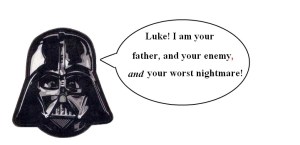
***Thanks to son for the Vader art!

Posted in Uncategorized

Do the Write Thing for Nashville

Mother Nature is at it again, and this time she’s hit Nashville, Tennessee, with more water than the city can handle. Three writers—Victoria Elizabeth Schwab, Myra McEntire, and Amanda Morgan—have a plan. They’ve set up an online auction blog called Do the Write Thing for Nashville, and they’re donating the proceeds of that auction to Flood Relief.

Writers, Editors, and Agents are donating goods and services to the auction. Stop by and take a look. If you’re interested in bidding on a copy of my book, The Writing & Critique Group Survival Guide, along with a first-chapter critique from me, make sure to check the blog on Saturday, May 8th, when it gets listed for the auction.

Thanks to Victoria, Myra, and Amanda for putting all their own time and energy into this and making it so easy for us to do something to help!

Posted in Uncategorized

Friday Five: What’s Happening Out There?

Okay, the blog’s been pretty Becky-centric this week, so for Friday, I’m scanning the blogosphere for interesting news, discussions, and events that are happening between and to others! School starts up again on Monday, so my brain (my middle-aged brain!) should be back firing on most more cylinders!

1. April is National Poetry month, and writers all over the blogs are doing some pretty cool things. If you haven’t checked out Susan Taylor Brown’s blog lately, she’s given herself an incredible challenge–to write a poem a day about the father she never know. Susan’s a friend, and I’m not a poetry expert, but true gut feeling? Every poem I’ve read has been incredible–open, honest, and lovely.

2. Kerrie Flanagan at The Writing Bug talks about the blogging “box” she found herself caught in and warns us that she’ll be busting out soon! How are you feeling about your blog these days?

3. I love this post from Sherrie Petersen about what it’s meant to her to find her critique group.

4. Laurie Halse Anderson has a few posts about MORE proposed library cuts. Page down the blog a ways and catch them all, in order.

5. Jane Friedman at There Are No Rules talks about trying to make “it” all happen.

Posted in Uncategorized

Where Am I Wednesday

Spring Break–no big vacation plans around here, just son and I digging into serious closet & room cleaning, him spending a lot of time in his hammock catching up on books, and he and Dad moving forward on that 8th grade project–a pedal-powered chariot. I don’t have to get up by a certain time in the morning, I don’t have to be out the door to do school drop-off or pick-up, and son’s taking care of a lot of his own meal prep.

This SHOULD equal more time, right? See, this is why I don’t trust math. I’m enjoying the vacation and no-school-commitment things a lot. But…I also feel a bit like this.

Today, so far, I have:

  • Walked with a friend
  • Bought workshop-raffle supplies and mechanical pencils (this time, hopefully, the ones WITHOUT the mysterious-vanishing spell on them) at the office supply store
  • Bought cockatiel food and spraying millet (and, yes, I know why they call it “spraying”) at the pet food store
  • Bought MORE than a trunkful of groceries (symptomatic of the chaos indicator above, in that it’s clearly been way too long since I WENT to the grocery store)
  • Eaten lunch
  • Drank tea (skip this step at your own peril)
  • Put groceries away
  • Helped son sort through books & garner two BIG bags of books for the local used bookstore (AKA “paradise”)
  • Cooked beets. (Whilst resenting society and technology for not yet having simplified my life by developing an already-cooked, already-peeled beet that tastes anything like the real stuff.)
  • Cleaned the kitchen, listening to the end of TWO-Saturdays-ago “Wait, Wait, Don’t Tell Me” episode (note, again, indicator of chaos zone AND serious multi-tasking skills)
  • Blogged (albeit mindlessly)

And now it is almost 3:00 in the afternoon, and I’m getting to work.

But, hey, I’m not sitting outside the middle-school waiting for the carpool!

Posted in Uncategorized

Friday Five: Things I Believe to be True about Bullying

Prompted by the horrifying story of Phoebe Prince, Carrie Jones and Megan Kelley Hall have started a new Facebook page–Young Adult Authors Against Bullying. Either at this page, or on blogs, or anywhere people feel like they can and should speak out, these authors are inviting people to share stories, feelings, and ideas for change.

I’ve joined the Facebook page, and I’ve been reading blogs. I don’t usually use my blog for this kind of focus, but it’s been getting harder and harder for me to just sit here and read and not do or say something. I’ve been lucky–I haven’t experienced much bullying in my lifetime, and the amount my son lived through, he lived through well (I believe, with our help and the help of some teachers) and has come out stronger on the other side of it. (And, yes, as Carrie said on her blog, he’s read what I’m writing & has given me permission to post this.) Does this mean that the little bit I experienced was acceptable? No. Does that mean it’s a good thing for my son to have experienced any at all, because he survived and survived beautifully? It does not. It’s something he shouldn’t have had in his life, ever, at all.

Here are five things I believe about bullying:

1. Bullying has always been around. The internet has given it another forum, one that, I think, makes it easier for the bullying to stay hidden longer, but this kind of cruelty is not new. All this means to me is that we should have learned better by now how to deal with it.

2. Bullying is one of the hardest things in their lives for a kid to talk about. So guess what? Adults have to start the conversation. Adults have to make sure bullying is defined at home, in schools, on the playground before the bullying starts. And they have to define the consequences for the bullies, then make sure those consequences happen. Visibly.

3. Names do hurt. Sticks and stones hurt, too, but they leave clear marks and wounds that an adult can see and respond to. We have to look a lot harder for the hurt that names cause. We have to.

4. Bullying continues. When a bully  has been successful, when no real consequences have been assigned to their actions, they will keep going. And the worst thing about bullying, the reason it hurts so much, is that it doesn’t stop. The person being bullied does not get a break. Think about erosion, water against stone. It’s exhausting.

5. Adults–parents and teachers–need to lower the bar on what bullying means. Too much bullying is given a milder name–“teasing,” “joking,” when none of it is funny. The word bullying has power today–use it. If you think a child you know is going through this, put the word into action–say it out loud in a phone call, send it via email, and then follow-up. Don’t allow anyone to minimize what’s going on, to tell you there’s nothing to do, to ask you to wait for things to blow over. Just don’t.

I’m not sure what this blog post will do. I’m not sure what any of the blog posts, or the Facebook page, will do, but I think they’re important. Because the worse thing any of us can do is be silent.

Posted in Critique Groups, First Drafts, Uncategorized

Thankful Thursday: Another One for the Critique Group

I’ve been writing an icky scene.

No, not one with blood and guts (wait, maybe that’s what it needs!). One where the writing was just dragging along, not flowing, where I was staring at it and knowing that–even for a first draft–it was not making me happy.  In other words, the staring wasn’t helping. And next week is slotted (in my mental writing calendar) for a bit of work on my picture book and a bit more work on some talks I’m getting ready to give. So, you know, it would have been easy just to stall out on this scene, let it sit on the computer, and then–yes–have it be that much harder to face when I came back to it.
Or…  I could push through it, with the unhappiness, get it “done,” and send it out to my critique group, knowing that it’s totally safe to share with them and knowing that I’ll get ideas, thoughts, suggestions…HELP!

And then I got an email from my mom who, as I’ve mentioned here before, is pretty darned wise. She’s been working on her memoir, first through a class at the local community college and then–when funding got cancelled for the class (BOO, HISS!), with the group of people who decided to keep writing together. I’d just given her a basic critique, with a few thoughts about scene structure and showing, not telling, and I know she’d planned to get right back to writing. Turns out, not quite so fast–she’s not only a wise woman, but a very busy one. Anyway, turns out  is the meeting of her group. Here’s what Mom said in her email:

          We’re meeting this afternoon, so I HAD to get something written. 

Ha!

Yes, that is the motivation magic of a critique group. It’s the kind of deadline that, in a strong & supportive group, puts just the right amount of pressure on us–the good kind. The kind that says we’re free to get past the reluctance, distaste, or fear about whatever that current writing piece is–to push through it, get it to some kind of “done,” and send it out.

Free to keep moving forward.

Posted in Uncategorized

BYOF (Fireworks)

I asked my son for a blog topic tonight, and (after I rejected a few ideas that were quite creative, but sparked nothing in my brain), he turned back to reading Harry Potter and the Order of the Phoenix, and tossed over his shoulder “Write about Professor Umbridge.”

You remember Professor Umbridge? She’s the woman from the Ministry of Magic who Fudge sends to take over as Headmistress of Hogwarts, after Dumbledore escapes to avoid being tossed into Azkaban. (Who can blame him? I mean, I doubt they’d let him have any lemon drops there!) Anyway, I started thinking about Umbridge…

  • Mean and nasty
  • Takes pleasure in squelching creative ideas
  • Fears truth
  • Removes art from the walls and replaces with stupid, narrow-minded rules
  • Sees the only true purpose of a pen as its ability to draw blood from the writer
  • Has a shrill, prissy voice that grates on your ear & blocks out more pleasant sounds
  • Makes cats look bad
  • Wears way too much pink

Who is this woman? Let’s face it–she’s your worst nightmare, your inner editor!

She makes Dumbledore wince, sends Professor McGonagall into fits, tortures Harry, confuses Ron, and makes Hermoine so mad she can only sputter. And she makes us worry, slow down, or stop writing.

Luckily, in writing this character, J.K. Rowling has once again given us a gift. She has personalized our inner witch, drawn her so beautifully onto the page that we know we are allowed to hate her, to ignore her, and to send her packing. As a reader, we have no doubt that Umbridge is on the wrong side of creativity, that she doesn’t belong anywhere near Hogwarts, or that it is our Fred & George’s job to tell her off.

In other words, the next time your inner editor tries to shove her way into your writing business, unpack those fireworks (don’t forget the dragon), and set them off under her nose.

Then watch the sparks fly & get writing.

Today’s comments–how do YOU recognize your evil editor in Professor Umbridge? Add to my list, and we can all watch for the signs!

Posted in Uncategorized

Friday Five Poll: What Would YOU Want Me to Talk About

Hey, all–

First, before I forget, don’t forget to check out my review & giveaway of Maggie Stiefvater’s Shiver. Still time to enter!

So…I’m working on some talks for future workshops & conference presentations. The basic idea is that I’ll talk about critique groups and critiquing, but I’m playing with which specific elements to focus on. So I thought, for today’s Friday Five, I’d post a few possibilities and see what you all thought.

If you were coming to hear me speak, which (one or more) of these topics would you pick?

  1. Growing a Critique Group: How to Find, Start, and Run a Productive Group
  2. Sitting on Both Sides of the Table: How to Critique and Be Critiqued
  3. What AM I Supposed to Say?: Developing and Writing a Strong Critique
  4. What Do I Do Now?: Revising from Critique Feedback
  5. Building a Group for the Future: How to Stay Flexible as your Group Changes & Grows

(And obviously, if you have any grammar tips on how to deal with a colon after a question mark, I’m all ears!)

What do you think? If none of these grab you, or something else brilliant pops into your head that you’d like to share, I’d love to hear it. Any and all comments welcome!

Happy weekend-get that book and/or laptop outside into the sunshine!