Posted in Character, Plot, Uncategorized

Making Connections, Deepening Story

When I went away to college many, many years ago, I moved about 5 hours away from home. Not far, probably, compared to some of you, but for the shy kid I was, it was a good distance. It meant that coming home for weekends was not a given, and it meant one miserable trip that involved a city bus to a greyhound bus to another greyhound bus that made 1.32 gazillion stops (I counted!) in Los Angeles and many hours beyond that. And the return trip.

Which is why I was more than grateful that I knew someone at the school from my hometown, someone with whom I could grab an occasional ride up the state.

She was a friend of my older sister’s. She was two years older than I was and, I’d bet, pretty darned close to as shy as me. She drove a car I fell in love with–a 1960-something Mercedes Benz with seats out of a Pullman car and a steering wheel that, if you held onto it 10 & 2, you got a nice yoga stretch.  Anyway, this friend would call me up if she was going home & offer the passenger seat, and I would check with her at holidays to see if she was heading home.

Why am I going on about this? Because this was not just someone I knew, a college-mate I’d met and developed my own, one-to-one relationship with. This was my sister’s friend, the daughter of neighbors that (probably) brought one of their pets to my parents’ veterinary clinic. She was the middle sister, like me, with an older brother we all had crushes on, and a younger sister, as well. If you drew lines between all the people we both connected to, it would look like a spider web of interlacing strands. And, frankly, it was these connections that made it possible for the seriously-shy me to accept (and ask for) rides from this woman and for her to offer. We knew we had something, at least, to talk about for those hours driving along the Pacific Ocean. The connections added layers to our interactions.

Just like in a novel.

I just solved a plot problem tonight. I knew what my MC should do next, but I could see it taking her down a path that would be a problem later. Not a problem for her, but a problem for the story–this one action was going to make her step in and out of just one too many opportunities, with the bouncing out making her feel like a quitter. Which she is not. This has been a stumbling block for me every time I looked down the line at upcoming scenes. Tonight, I worked it out. If the opportunity I set up for has a connection to the next opportunity, a connection with the people involved, then she doesn’t have to quit. Instead, she’ll move forward on that path.

To be more specific, I gave one character another role–which gives that character another link to my hero. Instead of two separate people with whom my hero has to interact, on totally different planes, she now has a single person with whom she interacts on two levels. Deeper. Stronger.

When you’re working with your plot and thinking about paths for your hero, look at who’s hanging around on that path. Are they isolated from each other, or connected? Take two characters who do know each other–who else can you bring into the mix? As you connect, as you braid more lines together, what overlap do you see between worlds? What extra ripples does someone’s action start…in how many ponds? Who opens up to whom and who tells takes on who else? How much more interesting does your story become?

Try mixing things up and take a look. I predict you’ll be pleasantly surprised! 🙂

Posted in Character, Heroes, Plot, Scenes

What Would Caro Do?

Today, I will get closer to Caro, the hero of my YA WIP.

Well, that’s the plan.

I’m still plotting into the middle. I’d say “through” the middle, but not yet feeling that optimistic. And I’m realizing that part of the problem I’m having with the current mish-mash of scenes is that I haven’t honed in enough on my hero’s active goal. I know her emotional goals, but those don’t really drive her choices and actions–not with her knowledge, anyway. When I was plotting my mystery, I could always ask, “What would my hero do to…solve the mystery?” (And then, of course, I’d ask, what someone else could do to PREVENT his solving it!). That MC had a very concrete, active goal to work toward.

I am not going to sit and stare at my computer or out the window until I come up with the equivalent, active goal for Caro. Because, yes, I could do that until the cows came home and, frankly, had a good laugh at my expense. Instead, I’m going to take it scene by scene for a while. And I’ll look at these elements:

  • What did Caro do in the previous scene or few scenes?
  • What were the consequences of those recent actions?
  • How does she feel about what she did and about what happened?
  • Who did she set up a conflict with?
  • What other character has a strong goal at this time?
  • What story element have I not dealt with in, perhaps, too long?

And out of that, I’m going to give myself a kinder, gentler question to answer.  That question will be, “What would Caro do to…solve some problem.”

This problem may not be the one she actually needs to work on at the time. It may turn out to be a problem that, in the end, I (and Caro) decide to throw away completely. It almost certainly won’t, yet, be the problem that is her equivalent of solving a mystery.  Hopefully, though, it’ll be a problem that lets Caro and I move her plot forward and grow a deeper understanding of what it is she truly wants.

What does YOUR hero want? And what step could she (possibly!) take today to achieve that goal?

Posted in Plot

Back to the Drawing Board

Hi, I’m Becky, and I’m a control freak.

Just ask my son. (Okay, on second thought, don’t do that.)

I cannot do it. I tried. I really tried to write scenes out of order. To picture a moment that will happen (maybe? probably?) in my story and write about it. To let go of any structure and just watch the words flow (yeah, right!) onto the page. To put off until later my concerns about why my MC is doing x or y and why she would move on to the next scene to do y or z.

No. Can. Do.

Do you see this?

That’s right. I’m a bit green with jealousy of all you free-formers. Okay, not really. Well, just a little. There are many, many parts of my life where I’d like to be more relaxed, less about peering ahead to see what’s coming, more…okay, I’ll say it–mellow.

On the other hand, I know writing isn’t about doing it the way that works for everybody else. It’s about doing it the way that works for you. Or in this case, me. I hate those jigsaw puzzles that are either all the same color or the same shape. I need some hint of the picture that’s coming and some way of id’ing some of the pieces that will go into it. I need to be able to hold up two pieces and see that there’s a bump to fit in the right-shaped hole. Even if I know, once I start writing again, my muse is going to come along with a paintbrush or a pair of scissors and make big changes.

So I’m plotting again. I’ve got my picture book out to a first reader (Hi, Susan!), and I have this week free to say to Caro, “So what comes next. And why?” And to listen to what she says back.

And it’s making me, yes…a lot more mellow. 🙂

Posted in First Drafts, Getting Organized, Organization, Outlining, Plot, Scenes

Thursday’s Target-A Rainbow of Sticky Notes

Yesterday, I reread Robin LaFevers post on index cards. Then I went out and bought some sticky notes. Two packs. Five colors each.

Because I’m confused.

Not from Robin’s post. From my own plot. Too confused to know what to write next. So I’m trying something that occasionally works for me, but only occasionally–going visual.

My MC has three (maybe four) possible paths. Well, in all likelihood, she’ll follow all the paths somewhere in the story. I think. At the end, though, she has to choose one. I know this. I even know WHICH path she’ll choose. I also know (darn it!) that I can’t just lay these paths out sequentially or in parallel, which is how they’re feeling in my brain right now. No, I have to weave them.

Which means I need connections. Overlaps. Characters with more than one role. Layers.

I know, these come in revision. And I’m still on the first draft. Well, actually, I’m just a bit stalled on the first draft.

I think writer’s block may actually be this kind of stall–and maybe more aptly named writer’s jam. It’s not that I don’t have any ideas. It’s not that I can’t see my MC acting, going places, talking to people. It’s that I have LOTS of ideas, lots of action, people, and places. But they’re all crowded together, like I’ve poured them into one of those cake-icing bags–the ones that narrow down to a tiny hole. And all the ideas are trying to get out that hole…at the same time.

So I’m going to play with my sticky notes today, on my whiteboard, and try to come up with some pattern that shows me what to focus on. What to pull out of the hat next. I’m going to use a different color for every scene on one of those three (four?) paths and then try to move things around. (Yes, I know I said I had 10 colors. Hey, you never know!)  Hopefully, I’ll get THE idea that lets me move forward.

What do you do when you need a “lightbulb moment”?

Posted in First Drafts, Plot, Scenes

Writing Out of Order

Yesterday, I typed up a quick “summary” of my story, for a critique partner who’s coming up today to do some talking & brainstorming. Summary is in quotes there, because, well…there are lots of gaps and “I don’t know yets” along the way.

But what I really noticed missing is any real sequence to the events.

It’s not that my MC isn’t making choices. Much. The thing is, she just isn’t making them very well yet, and she’s not being really good about making them based on what’s going on around her.

Silly girl.

What’s the big thing about a synopsis? Cause and effect. Yep. This happens, SO the MC takes this action, which makes this happen, which causes her to do this. Etc, etc, etc… Also the big thing about the whole story plot.

Not there yet.

In my mystery, much as I love my character’s, the story–even the early drafts–was very plot driven. And it was a plot I knew before I started writing, the story of a crime, a need to solve, and steps to find clues, check out suspects, and–along the way–stay out of trouble with mom and dad. When I ended a scene, I could say, “Okay, what would he do NOW? Where does he need to go? Who does he need to talk to?”  In this WIP, while I know my hero’s need, and I know the big choices she’ll face and make along the way, those questions aren’t quite working yet.

I’ve got a picture in my mind of a later draft, where I do use scene cards. I’ll write the main goal and action of each scene on a card, then think and sort and organize into a nice, tight path with just the right balance of action and character growth. It’ll look something like the perfect hand of gin rummy. Or poker.

Not so much like a game of 52-pickup. 🙂

What about you? How do you play with sequence? How much do you worry about getting it right in early drafts? Or do you step back later, work your magic, and get it all to fly into place?

Posted in Character, Plot

Who is your Hero…Now and Then?

Recently, on Twitter, Susan Taylor Brown tweeted about character traits she was considering for her hero. She tweeted about pairs of traits, because she was contemplating which of each set of two traits was true for this hero. I wish I could remember them now, but what struck me was the very subtle difference between the two qualities. I don’t think this was one of hers, but think about a pairing like “shy/reserved.” Close, similar, but with a difference–an important difference.

Susan’s tweets and staying away from my story for a couple of weeks got me thinking about my hero and who she really is. (Along with who goes why, but that’s the next step.) So this afternoon, I cleaned off the whiteboard, set Pandora to Pat Metheny, and got out the marker. Here’s what I came up with.

whoisshe

I didn’t work in pairs, like Susan did. (I also found nouns, verbs, AND adjectives popping out of the marker & just went wit that.) I broke the story up into who Caro is at/after four big plot points:

  • At the beginning/pre-beginning
  • After the early crisis
  • After the secret reveal/revelation
  • After the ending crisis (for Caro, “the march”)

Still, even without consciously thinking about pairs of character traits, I did end up with words that “go together.” I started out by thinking she was determined at the beginning, then realized she might not get there until after the first crisis. Even then I realized there was a difference between determined in the 2nd column and focused in the 3rd. I added narrowly to remind myself that she’s heading into a bit of tunnel-vision here. Which goes with furious. Originally, I had anger in that 3rd column, but realized she has plenty to be angry about already in the 2nd column, and she’d better be amping up in response to that revelation.

  • anger/fury
  • determined/focused

Yep. Trait pairings. Contrast, change, growth. What’s on your list?

Thanks, Susan!

You can follow Susan on Twitter at http://twitter.com/susanwrites.

Posted in First Drafts, Plot, Scenes

Keeping an Eye on the Carrot

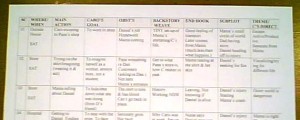
This week, and this weekend, I’m plotting my WIP. I’m trying to get as far as I can before Monday, when I’ve promised myself I’ll start actually writing. Here’s what I’ve been working on the past few days. I say “based,” because over the years, I’ve come to realize what categories of info I need to focus on before I write.

st01

The table is based on Martha Alderson’s Scene Tracker, which you can see in her book, Blockbuster Plots,  or her other products. Of course, this plot session comes after a lot of research, working my way through Donald Maass’ Writing the Breakout Novel Workbook, and just…thinking. This is the chart, though, that I’ll use to move myself forward (I hope!) through the first draft.

In case you can’t read the headers, I at least think about these things for each scene:

  • Where and when the scene takes place
  • The main action(s) of the scene
  • The MC’s goal–her scene goal, what she wants to accomplish then and now
  • Any obstacles to that goal and who’s putting those obstacles in the MC’s path
  • What part of the backstory I should/could weave in
    This column is new for this book, because the past plays a huge part in the present, and I’m working hard not to just dump it in, but place it, in small drips, where it really belongs.
  • The “end hook”–how I visualize the scene ending, with a pull for the readers to turn the page
    This is another new column. Partially, this is to remind me about cliff-hangers, but it also helps me think about points of high conflict for each scene.
  • Any subplots I can bring into the scene
  • Theme/MC’s Direction toward or away from her goal. Theme is Martha’s column title, and I like to keep it in, because–even if I don’t get anywhere close to plotting in my theme, the column keeps it present in my mind where, hopefully, it simmers. I’ve included, in this same column, whether–by her actions–my MC is stepping toward or away from her goal. Somehow, in my mind, this has become connected with theme. We’ll see!

I let myself be pretty loose with this–it’s almost more of a brainstorming tool than an actual plotting chart. Some of the cells get seriously tall and skinny, as I dump random possibilities and connections into them. The thing to remember, hard as it can be, is that the goal here is almost a kind of anti-perfection. There is too much I don’t, and can’t know, until I start writing–until I’ve finished writing the first, and subsequent drafts. I want to use the info in this chart as a series of guideposts, not as a straight-jacketed path.

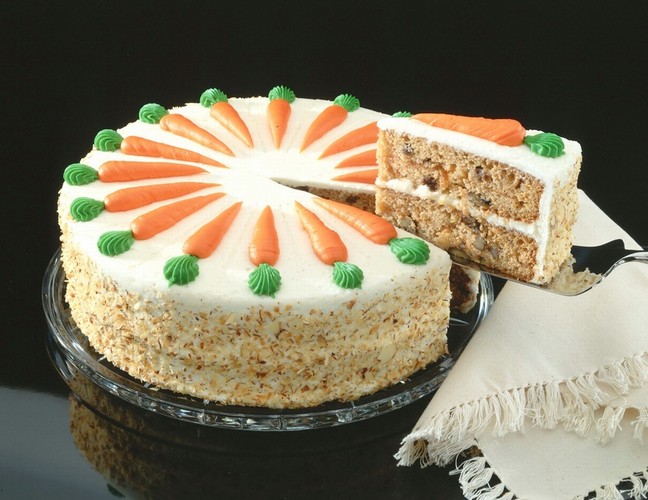
So, when I find myself worrying too much about whether my character would do this or that, what piece of history she’ll be interacting with, or even what the weather would be like, I focus on the carrot.  The one that’s dangling out in front of me, coaxing me to keep moving forward.

That carrot is that, the more quickly I plot, the more guideposts I’ll be giving myself, the more of that first mess of words I’ll be able to get onto the page, into the computer. I’ll be able to write my first draft with speed, energy, and excitement. And I’ll have room to make some of those magical discoveries as I go.

So, as you plot, keep an eye on your carrot, whatever it may be. Figure out what it is, get a picture in your mind, and write toward it.

Mine, just so you know, looks a lot like this.

carcake

Posted in First Drafts, Getting Organized, Outlining, Plot, Research, The Writing & Critique Group Survival Guide

When the Itch Hits

Do you scratch it?

I’ve been talking a lot online about the research & planning I’m doing for my YA historical novel. It’s been going great. I’m learning tons about my characters, about their wants and their conflicts, about their back-story and their future. I know there’s more I can learn.

Except I’m itching to put all this aside and get writing.

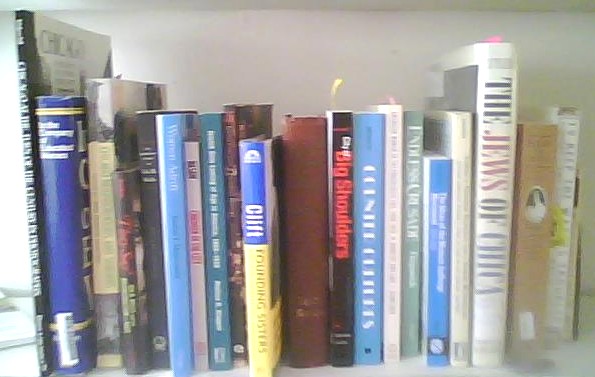
I promised told myself I would finish Donald Maass’ Writing the Breakout Novel Workbook before I started writing. I said I would do a bit of plotting before I dug in. There are at least a third of these

researchbooks

that I haven’t read yet, and more I need to add to the shelf.

I can hear you all now. “Just write it!”

And here are your very good reasons:

  • I’ll learn more about your characters as you draft their stories.
  • The plot will change no matter how much time I spend on it.
  • I’ll narrow down my research needs as I write.
  • If I do too much planning, I’m putting handcuffs and chains on my muse.

Yep. So I’m going to write.

Soon. I’m still learning from Maass, but I’m giving myself permission to go a bit more quickly through his worksheets. I’m putting a few more tags on pages that need to wait until I have a draft to revise. And I’m letting myself relax away from the research a bit, so I can keep my actual characters at the forefront of my brain, instead of too many historical details/facts. And, since I still will have revisions to do on the critique book, I’m telling myself that any plotting I do has to be fit in between those changes. I’m not allowed to put the writing off, just because the whole outline isn’t complete and comprehensible.

When? I’m thinking June. A few other writing friends have first drafts looming, and we may all hit the keyboards together.

I’ll be MORE than ready.

So when do you start? What’s your comfort zone between knowing any/all of your story and needing to get those people on the page and moving? I’d love to hear how you do the balancing act?

Posts may be a bit thin on the ground the next few days–we’re in the middle of spring break over here. I’ll be back in force next week, though, and I’d love to start doing a little more talk about critiquing and critique groups. So if there’s a topic you’re “itching” to dig into, let me know that, too!

Posted in Form, Picture Books, Plot, Structure, Uncategorized, Writing Books

Form: Learning It

Years ago, I read a writing book by Lawrence Block. I’m pretty sure it was Writing the Novel: From Plot to Print. The advice I remember most from this book was that the best way to learn plot was to go out and plot a book. One you liked. By a good writer.

At the time I was working on a mystery novel (for grown-ups), and I did dig a few of my favorite mysteries off the shelf and re-read them and look for the big plot points. I probably didn’t go as far with this as I should have, but (in forgiving hindsight to myself) that book turned out to be the one that dragged on way too long and did nothing to make me happy, and I put it in a drawer when I made the jump to kids’ fiction. Someday, who knows…

Anyway, this week, I’m reading Anastasis Suen’s Picture Writing, and she’s basically giving me the same advice. In her book, she asks writers to storyboard out a few picture books–ones with strong characters. So I went to my shelf.

And just in case any of you are anywhere near being as much of a kids’ book addict as me, I’ll show you my list, so you can ooh and get all nostalgically syrupy for a moment.

Now, obviously, when I talk about form, I’m not talking about a formula. There is no formula, as much as we would sometimes like. But there is form. There is a common structure upon which every book in a genre is built–even if doing the building means taking the familiar shape and twisting or even breaking it.

An example: Suen talks about a big story problem, then three small problems that show the big one. One of the books–Bread and Jam for Frances did have the three problems, although I had to read pretty deeply to identify them to my satisfaction. Another book, though—Miss Spiders Tea Party uses eight small problems to illustrate what’s going wrong. And they both work. Between the identification of the big problem and the ending climax & resolution, the authors give the hero a strong or increasingly bad problems to deal with.

And–here was another fun difference. The Hobans and Kirk handled the last, most critical problem in two very different ways. Remember, this is the problem just before the Climax, so it has to be big, and it has to have impact. In Frances’ story, the Hobans deliver several scenes of Frances not getting any other food than her bread & jam. The authors took their time over the first two problems, but they deliver these scenes in quick succession, not giving Frances–or us–any time to recover between them.

Kirk has taken the opposite route. He gives the first seven problems a two-page spread each (one page of verse & one full-page illustration). The last problem, though, he spreads out over eight pages (four verse and four illustrated). He’s drawing out the problem, raising and dropping Miss Spider’s hopes, and seriously increasing the tension…again, to get us to the climax.

Now, I would never say that writing a picture book is easier than writing a novel. In fact, I’m pretty sure it’s harder, & you’ll probably hear me say that plenty of times in the next year or ten.  But…it is, I think, an easier form to study in this way–simply because there are fewer words in which to hunt for the structure.

Why am I doing this? For the same reason we should all be doing it in whatever genre we’re writing. No, we’re not out to learn that mythic formula. No, we’re not out to play “Copycat the Rich & Famous.”

We’re out to learn everything we can about the form we’re writing. We’re out to make our own books in that form the best that we can.

Posted in Plot, Scenes, The Middle, Thinking

Plotting the Middle–One Attempt to Find a System

I don’t know about you, but my brain does strange things in the early stages of thinking about a novel. Many of those things are strange in a good way. Others, not so much.

Lately, as I spend time with my current WIP, I’ll be immersed in some wonderful, creative brainstorming about my hero or another character or a setting, and my mind starts going off in tangents about scenes that need to happen or about the big, dramatic choices my hero will have to make by the end. Fun things like that. And then, all of a sudden, I’ll have one of two thoughts. They are:

  • I have WAY too many actions/events that have to happen in the middle of this story!
  • How in the WORLD am I going to find enough actions/events to fill up the middle of this story?!

Note: Exclamation points denote panic.

Double Note: Yes, I realize those thoughts are extreme opposites. Donald Maass would love me as a character.

The point, today, is that I did spend a little time the other day thinking, again, about how to plot out that middle. How to find a way to place it–as a craft element–somewhere between a dense, overcrowded mess and a gapingly empty maw. And here’s what I came up with.

I’m getting a pretty good idea of what both the beginning and the ending of this story need to be doing. As I work, my brain goes back and forth between those two points, thinking about how they connect and what layers they share.  And I’m making myself slow down a bit and think about ways to weave those threads through the middle.

Here’s an example. Let’s say I’m writing a story about a tortoise and a rabbit. No, let’s call that second character a hare. The hare challenges the tortoise to a—okay, you know the story. You’re probably thinking it’s a pretty simple plot (which makes for a good example!), but there are a few layers here. We need to show the hare’s speed, and its cockiness, and its lack of manners. We need to show the tortoise’s slowness, its confidence, and its style.

Let’s take one set–speed and slowness.

In the Beginning, speed is strength and slowness is weakness. By the End, the tortoise has reversed that valuation–slowness can be power and strength may not be so good over the long haul. (Sounds like an ode to my running, but let’s not go there.) Obviously we can’t just snap our fingers and have that change happen–that’s wishful thinking, not storytelling.

We need two or three plot points in the Middle to make the change happen.  And this is where I’m taking a few minutes, to ask myself, “What could those plot points be?” And for each thread I think about, I’m making a quick list of possiblities…like this:

  • The hare could laugh at the tortoise and all the other animals for being slow.
  • The tortoise could stop in the middle of the race to help a young animal that is hurt or lost.
  • The other animals could have a meeting and decide to help the tortoise.
  • The elephant could fill up its trunk with water from a nearby lake, then flood the path so the tortoise could swim the race.
  • The bees could magically polinate a nearby field of poppies into bloom, so the hare would fall asleep–oh, wait, that’s another story.

Anyway, you see the point. Each of these possibilities could (I’m not necessarily saying should!) be a scene in the story. In sequence, they show the progression from the hare being the one with power, to the tortoise earning the strength and support of friends and turning the tables on his long-eared antagonist. Et voila, some of your middle is filled.

What do you think? Is this a possible tool to help make that middle less scary, less intimidating? Do you have techniques you use to plot your way across the void? I’d love to hear them, because–whatever may or may not work–I’m pretty sure I’ll be trying them all in the next few months!