Blog Posts

Posted in Secrets

The Power of a Secret

I’m just reading Mary E. Pearson’s The Miles Between. It’s a fun read, less intense than Pearson’s last book, The Adoration of Jenna Fox. There’s something, though, that Pearson does in both books–beautifully.

She gives her MC a secret.

In The Adoration of Jenna Fox, the secret is a biggie. A BIGGIE. I’m only about 2/3 through The Miles Between, so I don’t know whether the secret that Des, the MC in The Miles Between, is carrying is as big in itself. I do know that the secret carries, for Des, as much weight as Jenna’s does for her. And I know that Pearson uses both secrets to carry tension through out both stories.

How to do that?

Here’s what I’m coming up with.

  • Know that secret perfectly. Know every detail, how every person involved impacted that secret and was impacted by it.
  • Don’t let your MC know the whole secret at the start. Leave a surprise for her. Otherwise, when you get to the end, the reader will get a discovery, but your MC won’t. And I’m pretty sure that will make the moment fall flat.
  • Know your MC’s understanding of that secret. If she knew about “it” when it happened, how did she sit it. As the story opens, what is her understanding of/interpretation of that secret? How many of the actual facts of that secret is she aware of. And what will her view of it be at when the story ends. (I’m guessing you could/should leave her reaction to learning the whole truth)
  • Make your hints concrete. Honestly, pet peeve here, but nothing drives me more crazy (as a reader and an editor) than vague hints about something we don’t know. That’s just being vague about vague. Find a way to slip in something solid, without giving away the secret. Just enough to make the reader say, “Ooh,” and “Hmm,” and try to add together all the little specifics you’ve given them and figure out what’s coming. And then feel deliciously happy that they can’t yet, but still know it’s coming.
  • Craft the right moments to place the hints. Yes, the hints have power of their own–they can take a happy moment and turn it dark; they can take a seemingly normal day and fill it with suspense. But you can’t just write a scene, remember that your readers need a reminder of the secret, and drop in the hint. The hint has to arise from the actions and interactions in that scene, at that moment. It has to connect with what your character is doing, saying, and thinking. If you know that it’s “time” for a hint, but the scene you’re writing doesn’t support it…rewrite the scene. My guess is you’ll give it a lot more power when you do.

To see solid examples of what I’m talking about, I really recommend reading either or both of these books. As I said, Jenna’s story is incredibly intense and Des’ has a very different pace. So I think reading both would be the way to go, see how the secret thing is handled in two very different stories. I have a secret I want to weave into my WIP, and my plan is to go back to both of these books & really take apart what Pearson is doing. (Jordan reminded me with her comment below that I wanted to ask for any other examples you’ve got for books that do the secret thing. I’d love to hear any other titles.)

Then I’ll see if I can come even close to doing it as well. 🙂

Posted in Organization, Writing Space

What Do YOUR Filing Cabinets Look Like?

I have two types in my office. The two-drawer ones are simple, metallic-white. One holds the printer and the other holds up an end of my desk. I also have two beautiful wooden, four-drawer models, where I tend to store the things I don’t need to dig into quite as often.

And that’s it. That’s my organization system.

Ha. I’ve also got some lovely swamp land in Florida to sell you.

Let’s move on around the room. Next to the tall filing cabinets is what I basically call “The Library Shelf,” meaning this is where books (hopefully) go to when they’ve been read & need to get BACK to their library home. Does it work? Well, good intentions count for something, right? A few of these shelves are also filled with some great, sturdy cardboard boxes from Ikea–where I store things like manilla folders, envelopes, etc. Other than the file type, I have no drawers in my office, so the overflow (okay, some of it) goes here.

The back wall is mostly bookshelves, thanks to Target and my wonderful husband. At one end of that wall, though, is my whiteboard. I bought it at a second-hand office-supply store (aka Dream World for any author). I use it, but not often enough. Right now, it’s got the basic plot arc of my novel up-with lots of questions underneath. When I’m finished with this draft, I’m hoping to use it (with sticky notes) to do something like Robin LaFevers does here, with index cards. (Beautiful, isn’t it?)

Next wall, just a big window, with a futon in front of it, for when guests show up. And some tall narrow shelves that started out organized, but now look like two tall towers of the proverbial “junk drawer” style. Mostly I can ignore the junk because of the great view in the window–our courtyard with lots of greenery inside and gorgeous, tall eucalyptus trees outside.

On the wall I’m facing, more bookshelves. While the books behind me are all my kids’ novels and mysteries, the shelves I face hold my working books. All my writing books and, these days, the research books as well.

When they’re not on my desk, on top of a filing cabinet, or strewn across that futon.

Oops–I forgot the corner. It’s, well…let’s just say a picture is worth a thousand words.
 binderscomp

Yes, those are binders. But why, you may be asking, do you need binders if you have filing cabinets. Beautiful, tall, wooden filing cabinets.

I could give you all sorts of reason. Binders are portable; they can go to the coffeehouse or a critique session. I can see the binders easily & remember what I’ve got out there. Nothing else will really fit on that corner shelf; paperbacks tend to just fall out the back.

The real reason is probably not that good. I suspect it’s just…mood.

Yep. There are times in my life where I feel like organizing in files and times when I feel a strong pull toward binders. I suspect that each of those times is driven by the fact that whatever system I HAVE been using is now overcrowded and overwhelming. So I switch gears and develop a new method. Until that system…well, you get the point.

No, it’s really not that bad. I’m pretty sure that, for the number of balls I’m juggling projects I’m working on these days, my organizational skills are adequate, if not superlative. I do know, and appreciate, that I am lucky to have my writing space, with all it’s shelves, windows, and books. I’m sure that over the years, I’ll keep changing and playing with how I store my work, how I keep immediate projects in front of me and past/future presents in their own space.

For today, I’m happy with boxes, binders, and filing cabinets. And, you know, a few not-too-teetery stacks here and there. And there. And there.

How about you? What organizational tools or styles do you use? Which are your favorites, and which are just temporary, until the organization fairy comes with her magic wand to straighten everything out?

Posted in Research

Research: What Do You Need & How Do You Find It

heIn about a month, I’m hopping on a plane to Illinois. I’ll drop my son with his cousins (Oh, yeah, he’ll SO miss me. Not.) grab my sister for a couple of days, and head north to Chicago.

It’s research time.

My YA WIP is set in Chicago. In 1913. In March. Well, summer is just a better traveling time, and my sister swears she’ll be my reader for weather stuff when the book is done. So, we’re going.

Is this the perfect time to go? Probably not. Would it be better if I’d finished at least one draft of the novel? Most likely. Do I live a life of nothing but writing and leisure, with a townhouse in Chicago and a private jet to take me there anytime I want, not to mention a butler to make all the arrangements? Oh, sure.

None of us do. As writers, we work with the schedule we have, get in as much book-reading and online research as possible, then carve out the hours we can to go and do the live research. For my MG mystery, which is set in Santa Cruz, this meant I wrote as much as I could, then drove over the hill to explore settings, take photos, and talk to a few people.

This time around, I get to cram all that into a couple of days. Whee!

Anyway, I’m thinking about research & how to get ready for the trip, so thought I’d find a few links about writers & research and share them with you. 

 Go crazy. And have a great 4th of July!

Posted in Blogging, Promotion, Social Networking

Our Time Online: Where Do You Think We’re Headed?

Okay, guys, I know I’m spending a lot of time on this lately, but I had an in-person conversation today with some other writers, and the questions we raised are churning away. And I’d really like to hear what you all think.

Basically, we started out talking about Facebook fan pages. Which I have not really explored. We took a look at some and talked about what they seemed to be doing, and here’s where my brain went:

“Blogs are going away. Webpages are going away.”

I know, huge leap. And obviously none of this is happening overnight. But I am wondering if we’re in another of those transition times, when the online world–and how people use it–is shifting. Yet again.

Here’s an example of what I’m talking about. A few years ago, webpages were the main place readers went to connect with a writer. They were the primary tool that writers used to get to know their circle, whether it be other writers, agents & editors, or potential readers.

Then blogs came along. And blogs became cool, primarily, I think, because they were less static than a webpage. You could go to someone’s blog every few days (some, every day) and read something new, find out something “fresh.” Newer blogs, like this one, are basically a blog with a webpage attached. It means I can have the “static” info up there for people who don’t know anything about me, along with changing content every few days.

And now?

I’ve talked about the people I’m “meeting” on Facebook and Twitter. I’ve also “met” people on blogs, and I definitely still go to someone’s blog FROM FB and Twitter if I think their updates are fun or interesting.

But I don’t spend a lot of time at those blogs. I add all I can to my LiveJournal feed, and I check in with them as often as possible, and I try to leave comments. And I try to keep my own blogs at least semi-interesting and informative.

After looking at these Facebook fan pages, though, I’m feeling like they have an awful lot of the same features that my blog/website do.

Are these FB pages the replacement? And how long will it be before Twitter has the equivalent. (Frankly, that might already exist without me knowing!) Are we moving, again, away from one use of the Internet and onto another?

So, I have a few specific questions that I’m hoping you’ll help me with. I’m not a Yes or No kind of person, so I’d love it if you just dumped your thoughts in a comment, random or otherwise. And I hope everybody who stops by will look at the comments, for the info everybody is leaving there.

  • Where do you make your first online “acquaintance” with an author or reader these days?
  • Do you spend as much time reading and commenting on blogs as you used to? How do you think your blog-reading pattern has changed.
  • Where do you go to find information about an author?
  • What do you enjoy about blog reading?
  • What do you enjoy about Twitter and/or Facebook?
  • Have you played with following any author Fan pages. What do you think of the process/experience?
  • Where do you think your online community has its strongest base?

Comments are OPEN!

Posted in Blog Award

Love Ya Award: More Blogs for You to Check Out

Last week, K.M. Weiland at WordPlaypresented me with the Love Ya Blog award. Thanks, K.M. for including me in your list!

Love_Ya_Award-795570

Here’s the definition of the award:

The “Love Ya” Award states: These blogs are exceedingly charming. These kind bloggers aim to find and be friends. They are not interested in self-aggrandizement. Our hope is that when the ribbons of these prizes are cut, even more friendships are propagated. Please give more attention to these writers. Deliver this award to other bloggers who must choose to pass it on and include this cleverly written text into the body of their award!

I like to add a few new blogs to your possibilities when I pass on one of these awards. On the other hand, some of the “old” blogs I read so fit this award that…well, you’re going to get a mix in this list!

My “Love Ya” awards for the week go to:

Enjoy! And if you feel like passing on the award at your blog, leave a link to it in the comments and we can all share.

Posted in Social Networking

Twitter Update: My Latest Thoughts

Okay, raise your hand if you knew, when you read this post, that I’d say this:

Twitter is growing on me. And, no, not like mold.  🙂

Honestly, it’s still not my favorite social networking place. My brain chemistry is still happier on Facebook, with the layout of the page and the way you can follow comments directly off the original update.

But I’m getting better at skimming through the tweets. I don’t feel, anymore, like like I’m only seeing stuff I’m not interested in and missing the tweets I really want to read. Just to get a little scientific here, maybe it’s one of those ways I can stretch my brain “muscles,” carve some new synaptic paths–which, you know, is always good. If painful.

And there are some interesting things going on out there at Twitter. Here’s what I’ve seen so far.

  • I mentioned that I’d heard there were more agents and editors on Twitter than on Facebook. So far, this seems to be very true. Obviously, this doesn’t mean we writers jump all over them, but it’s interesting to hear what they’re saying to us and to each other. Also, agents do send out tweets that they’re open for questions–which does give us a chance to find out some specific info we’ve been wondering about.
  • This week, Jessica Faust and Kim Lionetti of the Bookends agency are doing twitter-pitch contests. They look like a LOT of fun. And let’s face it–really good practice. You’ve got a couple more days, and you can find out the details here.
  • Mary Hershey and Robin LaFevers of Shrinking Violet Promotions are trying out Twitter for a month. They’re challenging some of us to turn the tables a bit–instead of tweeting about what we’re doing, to tweet a question to everyone else about what theymight be doing. The other day I asked people what their favorite character in their WIP was doing, and I got some great answers.
  • There’s an interesting site called TweetChat. They set up occasional “conversations” on a specific topic. I believe there’s a weekly (?) poetry chat, and I stopped by once for an interview (where a moderator and everybody else tweeted their questions) with my friend Susan Taylor Brown. It was a bit chaotic, but fun, and I’d like to try a few more.
  • Follow Friday. I’m just gathering a few names to do this one tomorrow. Every Friday, tweeters (I refuse to call us twits!) send out a few ids of people they enjoying following on Twitter. It’s a nice way to check out other people you might want to follow, and it’s one of those good Sally-Field moments, too, when you see your id in someone else’s FF.
  • Retweeting. I do like this one. If someone tweets a thought or a link that you like or find interesting/helpful, you can retweet it. (If you download Tweetdeck, which I prefer to the Twitter page, there’s a button that makes this REALLY easy.) Basically, it means that the people who are following you will get to see the tweet, check out the link, even if they’re not following the person who originally posted it. It’s a nice feature–it means I get to see some good tweets I might miss, and it gives me a chance to “introduce” people to each other.

There are still a few weird things about Twitter. I’d still LOVE to find an app that threads the conversations for me–that shows updates and all subsequent comments in the same place. If you hear of anything like that, puh-lease send me a note!

I’ve got things set up so my tweets go automatically to Facebook. I like this–saves me retyping. BUT it happens automatically with my retweets as well, which gets confusing on Facebook. I’ve passed on a few announcements of someone else’s success or good luck, only to have my Facebook fans congratulate ME!

A few weeks ago, I started getting a LOT of what I call “icky” followers. Some of them were people who have nothing to do with writing or other things I’m interested in–the Twitter equivalent of the door-to-door salesperson asking me if I want to buy a dozen eggplants. (Note: I could be a vegetarian if I only liked vegetables!) But others were definitely gross, porn-type tweeters. Okay, no, I’ll call them twits. They weren’t tweeting to me, but they were showing up on my Followers page. The Followers page is where other people can go and see who is following you, in case there’s someone they might like to add to their own list. For me, this mostly means other writers are coming to see who’s following me. And then they would get, yes…ick.

If this happens to you, there is a way around it. There’s an option on the first page of your Twitter settings called Protect My Updates. If you check this box, then you get an email telling you someone has asked to follow you. You then have the option to accept them or decline them. There is a potential downside to this that Susan Taylor Brown (a social-networking guru, as well as a wonderful writer) was telling me about. She’s going to send me a note later describing how that all works, and I’ll update the post. So stop back in for the full story! UPDATE! So I went back & forth with Susan a few times–because she’s a VERY patient teacher (check out her online social-networking class here), and I am not the most fast student on this stuff. The basic thing seems to be that, when you protect your updates, you are creating an additional step for someone to follow you–some people may not bother, which might lose you followers. Also, they can’t see your updates when they go to your profile, so they can’t get an idea of the kinds of things you’re tweeting about. Same possible result–people may decide it’s not worth the effort/chance to follow you.  I can’t tell if that’s been happening to me or not. I am still getting people asking to follow me, and I’ve only said no to a couple–really just the eggplant salespeople! But, obviously, I wouldn’t know if people were passing me by. I know I’m supposed–in terms of promotion–to be in this for the numbers, but it’s hard for me to think that way, so I’m not too worried. Susan suggests also that these “icky visits” may go in waves, so I may try unprotecting for a bit every now and then and see if it makes a difference.

Finally, I found a couple of recent posts about the actual USEFULNESS of Twitter.

As a side note, I’ve personally had a couple of experiences on Twitter AND Facebook that have proven to me these are places I need to be. They may or may not lead to anything concrete, but I’ve gotten opportunities from both that I would not have gotten without being out there.

If you’re looking for me, I’m still at http://www.facebook.com/beckylevine and http://twitter.com/becky_levine.

Posted in Character, Conflict, Scenes, Tension

Amping Up Character Tension

This summer I will turn forty-mumble-mumble years old. At this time in my life (says the old, wise one), I have built up a community (or a tribe, as my friend Terri Thayer calls it) of friends with whom I am comfortable and happy, and who help me keep my life interesting and my brain active. When we get together, there’s lots of talking back and forth, sharing of family stories, and laughter. I feel connected and supported.

And if you wrote us into a scene of your book, your readers would be yawning and heading off for a nap. (Well, okay, not right away–we are pretty funny.)

There just isn’t a lot of conflict.

Yes, we’re realistic. Unfortunately, that’s not enough when you’re writing a scene in a story. You need emotion, tension, and some serious problems to deal with. And the characters can’t just be talking about problems; they need to be experiencing some. At that moment.

How do you add conflict to character interaction?

  • Give your characters conflicting goals. I’m not just talking about their big, story goals, but their goals for the scene. What does each of them want right there and then, and where do the goals clash?
  • Add a third character to a scene. Remember how, when your child was small, you were wary of setting up a “triangle” playdate? Guess why. The goals/needs of two people have equal weight. A third person can pick a side, making the scale off-balance. They can give supremacy to one person and put the other on the defensive. Nice!
  • Give one character authority over the other. Bosses, parents, teachers, venture capitalist—they hold the power and can “make” another person do something they don’t want. Anger and resentment, much? Go for it.
  • Weave in a secret. If you want complicated dialog, with some tension, let one character know something the other doesn’t. Are they using it to bribe the second character? Are they desperate to keep that character from finding out? Does the second character suspect the secret? Push/pull…conflict.
  • Add a deadline. People with all the time in the world to talk, accomplish something, or make a plan can, well…take all that time. They can be relaxed, chit-chatty, patient. If they’ve got five minutes to make a decision, though, and they don’t even have all the facts they need—they get rushed, impatient, frustrated, and argumentative. Can you hear the dialog?

We all know the “rule”–no scenes with characters sitting around a table at the coffeehouse, talking. Frankly, I’m okay with a scene (or maybe two) like this, if it doesn’t send the story, or me, into a slump of slow-pacing, frivolous dialog, and happy friendship. As much as I want that in my own life these days, I do not want it in the books I’m reading. Or writing.

Neither do you. 🙂

What do you do to make your characters less happy with each other, more at odds? Leave a comment and share the tip!

Posted in Critique Groups

Commitment, Persistence, & Downright Stubbornness

This post is dedicated to Terri, Beth, & Cyndy–thanks for keeping me on your calendar, guys!

Summer is here. For so many of us, this means a shift in structure, in organization. Even if you are working full-time, there may be a vacation coming up, with plans to make, shopping & packing to do. If you have kids, they may hit the camp circuit, but there’s still more free-time to fill and maybe more driving them around from place to place. If you’re like me, you’re happy to have a child who sleeps in, but you’re also wanting to spend more time with your kids, since that’s what summer is for.

In the midst of this, we all face the struggle to stick to our writing, to keep on track with a current project. Still, writing can be done at home, in bits and pieces if necessary.

Unless you’re in an online group, critiquing typically means getting out of the house. Even if you do critique online, it can be harder to get to, if you’re on the way out the door to take the kids to the pool, or if you’re dug into the closet-cleaning project you’ve put off all year. As another thing to schedule, perhaps another time-slot for which to find day-care, critique-time may look like something you need to reschedule, or even push away, during the summer.

Try not to let this happen.

If you’re in a strong critique group, you know how important it is to your motivation and productivity. If you let the critique part of your life slip for 10 weeks (or the twelve that some other people’s children seem to have!), your writing will most likely slip along with it.  What if you’ve just spend the last 5 days at Disneyland. Or you’ve spent a week camping in the Blue Ridge mountains. You’ve had a wonderful time, but–of course–you haven’t been doing any writing.

Getting together with your critique partners will remind you not just that you should get back to your project, but that you want to.

What if you’re busy packing. You’ve got that Alaskan cruise to get ready for; the kids need new bathing suits, and you need a good-to-see-you present for the great-aunt who lives in one of the port cities. In the middle of this all, you have a critique session scheduled. For a couple of your chapters.

The feedback you get at that meeting will simmer in your brain while you’re on the cruise, and you’ll come back with a better understanding of that character who should be doing a bit more growing, or that plot point you need to add for more tension.

Even if you aren’t getting as much writing done as you like this summer, your critique sessions will keep that writing present in your mind. If you have nothing to critique, which can happen these months, bring your laptops or notebooks and write. Even if those are the only pages you produce that month, you produced them. You’re that much further along on the path. Even if you spend the time brainstorming with the other writers, about their novels, you’re waking up your brain, spurring it on to think creatively about something other than which sunscreen to buy or how much watermelon the refrigerator will hold.

Do what you can to keep your critique time on the calendar. If you need to reschedule a meeting, reschedule it; don’t cancel. If you need to bring the kids along, think about moving your usual meeting place. Swap the coffeehouse for the bookstore, where each kid can get a book to read and a pastry to eat. Or figure out who has the best video-game system and see about using that for the critique base this summer. (Yes, if Caroline Ingalls had owned a Wii, she’d have let the girls play while she and Pa put up that house!) Ask an older kid to play parent’s helper, and offer a bonus if you don’t get interrupted, and there’s no blood or fire visible by the end of the meeting.

Of course there will be times when a meeting cannot happen. People get sick, or sun-burned. Long-family vacations fill up the weeks. The county fair comes to town. Life happens.

Try, though. You have made a commitment to this group, and it is not just a commitment to be there for the other writers; it is a commitment to be there for yourself. As the title says, be persistent–be stubborn. Challenge yourself to honor your critique time this summer, to keep it as a top priority.

It will pay off. Honest.

Posted in Recharging Your Writing

Input and Output: Sara Zarr, Me, & You

(Note: WordPress does not like me today. It is not letting me put in paragraph breaks. And Cinderella (AKA me!) has to get to the ball and doesn’t have time to argue with the blog!)
In her post today, Sara Zarr talks about the times she needs to switch from output mode to input mode. This rang a real bell with me–it’s something I ran into for the first time as I was finishing up and revising The Writing & Critique Group Survival Guide. This was the first time that I remember feeling so drained from focusing on getting words out, that I needed to take solid breaks and put some words in.
 
When I was working full-time, I think I experienced a variation of this. I would spend my requisite six to eight hours behind my desk, writing explanations and instructions for technical manuals, and then I would come home and try to write fiction. Usually, I’d get a little bit in, but often, the evening would revolve around a long bath, a cup of tea, and reading a good book. Day: Output; Evening: Input. Let me just say, I admire beyond boundaries people who do manage to put in those long work hours and still produce full-length manuscripts, whether those manuscripts are ready for publication or not.
On those days, my brain felt like a sponge. Even the most boring academic “Let me prove my point to you over and over” books felt good in my hands, in front of my eyes. Because they were putting words into my head, instead of asking me to pour them out.
When I stopped working full-time, I was still very busy–I had a bright, active toddler to take care of and, of course, the house/life stuff that fell onto my plate. But…less of that was output. It was in those days that I really started concentrating on my fiction, on getting stacks of pages written, on digging into the feedback from my critique group, on revising. I didn’t just have a bit more output energy; there were days my brain was begging for an hour or two of output mode.
As I was writing the critique book for Writer’s Digest, I was—for the first time in quite a while—writing under deadline. This meant developing an even tighter focus and really spending “school hours” as writing hours—output hours. I was and am determined to keep making progress on my own fiction, so I was doing output to get word-count and revision down on those projects. Which added up to…days that shrieked STOP! Days where I’d lay on the couch, snuggled up with a winter blanket, and pull out a research book for my historical YA WIP.
The last couple of weeks have been divided between wrapping up the school year, socializing with friends and relations (which for an introvert also = output!), and moving on my WIP’s first draft. Today, in between a morning celebration for a friend and an evening party, guess where I found myself? Yep, on the couch. I thought I’d nap, but instead, I stayed awake, eyes front, brain imbibing this:
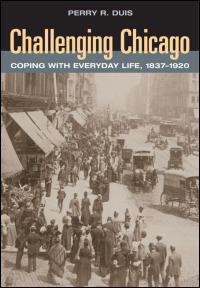
chchicago
Did you know that:
  • The first cable car was invented in San Francisco, California? Think about it–all those hills. As my son says, horses have a lot of shins to get shin splints on!
  • Cable cars didn’t work so well in Chicago. The cables had to be deeper in the ground, to run below the frostline. That meant the grip had to be longer, which meant more break-downs. Plus, you know, all the frozen horse poop (lots of horses still around on the streets) kept falling into the cracks and gunking up the cable.
  • Chicago switched to electric streetcars, which were first developed in Richmond, Virginia. There’s a question for your next trivia game!

I know. Little stuff. But input, input, input. Not to mention, it gets me much more immersed in the world about which I’m writing, which translates into inspiration and motivation to get back to…output!

Sara says for her, input is “Books, music, poetry, movies, and Gabriel Byrne.” 🙂 For me, it’s mostly books, your blogs, and a bit of serious “quiet time.” What about you? How do you recognize when you’re drained of output power? What input helps you recharge?

Posted in First Drafts

The Magic Bracket, or It’s About Story

I have a new friend. It looks like this:

          [

Or, if you look at it with from the other side, more like this:

          ]

Full on, it’s a bit more complex and robust:

         [gobbledygook]

Brackets. Or, if you want to call them by their official writing name, that would be: placeholder. (In the editing life, it’s more often referred to as Important Question or Explanation for Writer to READ!!!!!)

I’ve always liked brackets. They work well for those days when my brain is functioning poorly, when I can’t bring up a word I know I want, or can’t remember whether the handle on the ceiling at The Mystery Spot is inside the first or second doorway. (My son swears they did not move it.)

I’m using them more in this WIP than I ever thought possible. With all the history, I have read, you’d think there would be fewer gaps in the details I can supply about Chicago in 1913. Well, okay, you’d only think that if you were me, hoping against hope! I have names for, wait for it…yes: Four characters. Not counting the parents, who must have first names (and last) in there somewhere. I refer to the young, male possibilities characters as [LI1] and [LI2]. LI=Love Interest.

Don’t even get me started on that.

To another person (i.e., the person I was during the first few days of writing), all these holes might be irritating. Nerve-wracking. Terrifying like having to kayak back to the dock when your glasses are at  the bottom of the ocean. (No, you can’t hear that story today.)

The last couple of days, though, I’m starting to remember the grace of these two little pieces of punctuation. They give me speed. And freedom. They give me permission notto concentrate on the words, which will change, anyway. (And change…and change.)

Instead, I’m thinking about the story. About what needs to happen next, about what each of the characters is thinking about in any given scene, about their reactions to events and to each other. I’m not getting that story down, not yet, but it’s gelling as I write.

And the uses of those brackets are growing. They’re not just for gaps anymore.

They’re for ideas.

They’re for letting me see that this seed of a book will, with work, grow into something strong. Strong enough to be read.

Do you use brackets? Italics? Bright pink font? What do you leave placeholders for, and how do they affect your writing? Chime in!