Posted in Uncategorized

Thankful Thursday: What a Summer

School starts for us (okay, for my son!) in a week and a half. I guess this is pretty late, since so many kids around us, geographically and virtually, have already gone back. Considering that we’re still socked in with fog every morning, and I’m taking a sweatshirt outside for exercise in the late afternoons….well, it doesn’t quite feel like the end of summer.

Oh, I’m ready. And I think my son is, too, as much as a teen can be ready for school to start. But here’s the thing–it’s been an incredible summer. The best I can remember for a loooooooong time.

Now, honestly, I have to give some major credit to the thyroid meds I started taking a year or so ago that seem to have finally kicked in to really give me back the energy I lost somewhere along the way. Quick “sell”: Ladies, if you’re thinking your thyroid might be low, check it out. And be aware that the numbers stated as “okay” aren’t always, that–as my wonderful doctor says–“Different people feel right at different numbers,” and really talk to your doctor about what’s going on. I am a total and complete convert.

Okay, off the med-sell. Basically, I just seem to be at a point in my life where things are coming together. My son has had a good summer too–with all the laziness and creativity and random this-and-thats a kid’s summer should have, I think. Sure, there’s been some boredom, but when I’ve checked in with him, he’s said that that’s a part of how he wants his summer to be. So, okay, then. He’s been doing the teen sleep-in which, combined with my new ability (see above) to wake up happily at six-ish, has meant incredibly productive mornings for me. And then there was the non-heat, which means I’m actually happily functional for walks or board games or necessary errands in the afternoon.

The thing is, I’ve hit some kind of balance between work and, well…life. Even, it seems, between fiction writing and other writing, critiquing, and marketing. So I’m able to enjoy all of them and see the progress that’s happening in most of them.

Will this last? Well, I certainly hope so. I know, though, that life is ups and downs, twists and turns. My son is starting high school in 12 days–which puts us all into a new world. I’ll be doing more speaking and traveling next year. I’ve got to take on a few new things to do with running the business of this writing thing. And there’s a second draft coming sometime in the nearish future. So change is coming, and any one part of it could tip the scales.

But I’m learning, I think, to choose what to add and to be able to merge the new into the old. Somewhere in the last couple of years, I hit the middle-aged mark (calculated, of course, with the base of my grandmother’s ages, who both lived into their nineties, and adding a few more years for generational increase!), and I have to tell you, it’s a pretty good place to be. I’ll write about teens and love it, but I’m not looking for that time-travel machine to take me back there and do it again. (Picture Bill Murray in Groundhog day, but with 15-year-old angst and knowing he’d never get Andie McDowell.)

Summer, for me, used to be the hardest challenge of the year, a time when I felt hard-pressed to find anytime for myself and guilty about feeling that way. It’s gotten easier, of course, the older my son got, but this year, I swear I heard the CLICK of everything coming together. It was a lovely sound.

So, today, I am thankful for a summer that gave me back the ease of vacation, the pleasure of enjoying time off, and a vision of possibilities for the future. And a path into autumn, my favorite season, that isn’t built simply on relief.

Happy Thursday to you all.

Posted in First Drafts

A Little Light at the End of the First-Draft Tunnel

If you’ve been following along, you may know that I’ve been writing the first draft of this WIP a little differently than my “usual” style.  Oh, I plotted…way back sometime in what feels as distant and obscure as the Dark Ages. And, in essence, I’m sending my MC through the places and some of the problems I came up with for that plot. But look at the actual plot? Check out what Caro “should” be doing next? Remind myself of that original plan?

Not this time. I think maybe I did used to write this way, before what I kind of think of as my understanding of the craft and my serious commitment level coming together, but I don’t really remember much of that “process.” This has been, and still is being, an incredibly nebulous, gray, wobbly stage. With, you know, plenty of room for panic.

Still, I try to push the worry away. I listen to Janni Simner a lot, who seems to truly enjoy and relish the “exploratory” draft. I know…really! And I keep writing.

Guess what? Things are happening. Yesterday, I had a great critique session, with lots of positive response to the way my MC is (finally) turning up on the page and to a few scenes I’d written that (yes, finally) are getting into various worlds within 1913 Chicago. The writing is coming more quickly for me, too–I seem to be heading toward the climax and the big choices, and I’m feeling like I can jump from scene to scene without worrying as much about background info and transitions (all of which will ultimately, I’m sure, demand at least some space). I’m loosening up.

And here’s the coolest part. It’s becoming pretty clear to me what I’ll absolutely have to work on before I start draft 2. What’s absolutely missing from this draft. And what would that be, you’re asking? Well…I’ll confess. That would be my antagonist.

I know. How does somebody write almost an entire first draft without an antagonist. Oh, she’s there, don’t worry. She’s just not doing anything yet. Sigh.

Actually, recognizing this is a relief. The lightbulb has gone off sooner than it usually does. After I wrote the first draft of my last book, the “biggie” was the fact that my sidekick was leading all the action and my “hero” was being decidedly unheroic and pretty much sitting back to observe (and, you know, tell the reader all about stuff). The main focus of my second draft was to push him into taking charge of the plot.

So it’s good that, before I’m finished with this draft, I already know what Draft 2 will be about. Yes, I’ll make other changes–I’ll keep weaving in history; I’ll bring Caro’s voice (hopefully) into the earlier scenes), and I’d darned well better get more of the overall plot happening. The goal, though, will be to bring my antagonist into serious play—have her block Caro at every turn, have her behavior be understandable but angry-making, have her do things.

Things are feeling a bit synchronicity-ish around here. I hit this recognition sometime last week, just about the same time I decided to take the synopsis class. Guess what I’ll need to work on for that synopsis–oh, yeah. This antagonist. I won’t get “there” in the next two weeks. I’ll have plenty more figuring out to do when it’s over. But guess what?

I’ll be closer.

And that’s what drafts are all about.

Posted in Uncategorized

Six Seawatery Things on a Saturday

Later this morning, we’re heading down the California coast to Monterey. One sister is heading north and another is coming south, and we’re all going to meet up at the aquarium. We haven’t been for a while, and I know there are some new exhibits, plus I will spend time at some of my favorites.

Here are a few things I’m hoping to see:

  • Black sea turtles-I could watch these guys forever. They’re part of an exhibit with a HUGE floor-to-REALLY-HIGH-ceiling “tank,” and I’m pretty sure they’re the only ones in there that know we’re out there. The website says they’re not on exhibit right now, but I can hope the website’s wrong, yes?
  • Sunfish-Another iffy one, according to the website. They have a sunfish, in with those sea turtles, periodically–apparently, they grow so fast, it’s only viable to keep one for so long, then they do a release, or something. They’re so cool to watch, because they come around the tank, and you’re watching, with your brain thinking, “fish,” then all of a sudden they’re there with their stumpy-almost-nothing tail, and your brain says, “Whoa!!”
  • Jelly Fish-These guys, I know I’ll see. If you are ever in Monterey, you must go to the aquarium for the jelly-fish exhibit, if nothing else. It is incredible–you’re in a dark room, with the perfect tank lighting and these incredible alien-things drifting and drifting and drifting…Another exhibit for standing and staring. (Oops! I just read that this exhibit is closing mid-September–quick, buy your plane tickets!)
  • Seahorses-When my son was young, he and I loved the books on animals and camouflage, and going to look at, or for, the seahorses is a practical application of the art of nature’s we-hide-and-you-seek talents. It is so cool to be staring at what you think is a clump of feathery or strand-like water plants and realize…that’s an eye! or…there’s its tail!
  • Giant Pacific Octopus-This exhibit is new since the last time I visited the aquarium. Octopuses (octopi?) are so cool. I’m really hoping they’ve got things set up so we can watch for a bit–I know that these guys like to tuck themselves away in holes and crevices, but–as with the jellies–the aquarium’s pretty good about creating exhibits where people get to stare and the animals get to stay oblivious (except for the black sea turtles, of course).
  • Flamingos-Honestly, I’m not totally excited about these birds, but…I am curious to see just how pink they are in real life. My guess is, on the color, I’ll be pretty stunned. Hmmm…wonder if there’ll be the perfect pink tee-shirt in the gift shop??

What are you doing this weekend? Have a good one, no matter what!

Posted in Critique Groups, Critiquing

I Can’t Believe I Read the Whole Thing: Supporting Each Other with Full-Manuscript Critiques

A while ago, when I was asking for post ideas on Facebook, Kristin O”Donnell Tubb suggested I write about full-manuscript critiques. I was sure I’d talked about that somewhere, but I have hunted around on my blog and it’s not showing up. Maybe it was on the old blog?

Anyway, it’s definitely a topic worth discussing, I think, especially because I’m often surprised to talk to writers whose groups don’t do full reads, or who think they can’t even ask their group to do one for their project.

I think full-manuscript reads are critical.

Yes, they take time–don’t try to read a whole book in the usual two weeks you give to a chapter or three, and try to arrange things so you’re not getting hit with a ton of other submissions at the same time.  But the trade-off, the one that every member of the group will benefit from–is completely worth the juggling and the scheduling.

When you read an author’s full manuscript, you are giving them the gift of reading for continuity.  You’re watching  tension build (or not build) across the whole story and finding the specific places where that tension drops off. You will catch the moments when the hero or other character behave, well…out of character. You will be able to make suggestions for places the author can cut and trim, where the pacing slows down or rushes.

Yes, we can do all these things when we’re reading chapter by chapter, scene by scene. I don’t think, though, that we can do it as well. Obviously, you’re not going to sit down with the whole manuscript, when it’s handed to you, and not leave the couch until you’ve penned your notes on the last page. You will, however, read the book much more quickly than you can when you’re getting it piecemeal every couple of weeks. You will hold the story and the characters and the details closer to the surface of your brain, and–even when you’re not reading–you’ll be mulling and musing and coming up with ideas.

Does this mean that, when the author has finished the first draft, this is the time for her to hand the whole thing over and ask for the full-read. Nope. Not yet. I really think the full-read comes when the group has read through several drafts, in chunks, and the author has revised and revised (and revised…). When the author and the group feel like the book is getting close, really close, to that magical “done” that we can’t ever really define. That’s when the full-read happens.

Stock up on the right tea or coffee. Build up your stash of chocolate and buy a few more of your favorite pens. Get out the notepad. Then take the time and the thought to read through those 2-300 pages of story, with thought and care.

You’ll get it all back, when the pendulum swings back to your side of the critique table.

Posted in Uncategorized

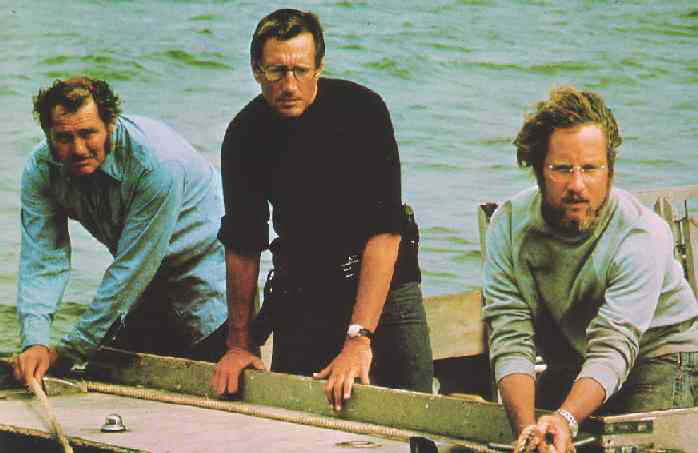
Cue Theme from JAWS–The Synopsis is Coming

I’ve made one of those decisions. You know, the kind that come with a load of goal-setting and self-commitment? The ones you start out sure you’re going to follow through on and then, too often, they go missing somewhere along the way?

Well, I’m going to try and stick with this one. I’m going to apply for next year’s SCBWI Work-in-Progress grant.

The application process is pretty straightforward—there’s a form, a writing sample, and…a synopsis.

Yikes.

I could very easily let the synopsis, heck…the whole idea…intimidate me into not trying for this. If Mr. Spock were here, or Data, we could get a whole debate going about the exact statistical odds of me actually winning. (And, sorry, Data, I know you’re a computer, but I’d totally have to go with Spock on this one.) So I’m trying not to focus too much on how many trips to Chicago that prize money would fund and concentrate, instead, on what I can actually get out of applying.

Like the synopsis.

How many times have I (or you) heard that writing a synopsis before you’ve finished your book is the way to go? That it helps you hone in on what your hero wants, how she goes for it, where the conflicts lie, and what power/strength she brings to the story to overcome those conflicts? And, okay, how many times have you listened to this advice and then gone off and…written the synopsis? Until, you know, an agent wants one with the query letter?

I thought so.

Well, I have written one synopsis, and it didn’t stop the agent from requesting a full manuscript, so I know it didn’t stink. But, hey, that book was finished. Finished like six times!  Whereas, a lot of days, thinking about my WIP feels a lot like this:

So I’m taking an online class–it starts next week. (And if it’s a good class, you’ll hear more about it here.) I’ll be learning the format/structure of a synopsis, but I’m also really going to use the time to try and pull some of the very loose story threads I’m working with into a tighter weave. I’m hoping that, by figuring out what I need to know (and highlight) for the synopsis, I’ll get closer to the big points of my overall plot. I’m getting close to the end of my first draft, so this seems an okay time to start thinking more about this. Not to mention the timing of the class fell right into the only two weeks in the next few months where I don’t have something else scheduled! Can you say “Omen?!”

I figure, whatever happens, this step will move me and my story forward. Do I want to win? Well, duh…

Then I’d better take it seriously and do the best job I can. Which, I’m pretty sure, means learning more about my story and writing a STRONG synopsis. So move over, boys…

I’m getting in the boat.

Posted in First Drafts, Thankful Thursday

Thankful Thursday and NOT Being the Bear

First, I want to say a HUGE thank you to Judge Vaughn Walker for declaring Prop 8…

UNCONSTITUTIONAL!

Yes, it seems like a big Duh! on the one hand, and I know there is more battle coming, but over here in California, many, many of us (really!) are dancing for joy at the breaking-through-the-clouds moment of common sense Judge Walker demonstrated yesterday. I have to tell you that, at election time, judges are often a category I don’t vote in, simply because I have never even heard the name of any of the candidates. Well, I will remember Walker’s name now, you can bet, and he’s got my vote for anything he wants to run for in the future.

Here’s how my heart is feeling:

And, second, the writing thought for the day: I am NOT being the bear. Did you all hear the news story about the bear who took the Corolla for a little joy ride? Here’s the photo:

Look at that bear. Despite the fact that he has probably already eaten the peanut-butter-and-jelly sandwich he originally went into the car for, he does not look happy. In fact, he looks, what? Trapped. Yes, that’s what I’d say. Completely stuck, unable to turn around, unable–as my husband asked about–to break out that windshield and escape.

Yesterday, I plotted a scene that makes a big direction change in one of my story threads. Early in the story, in this draft, my MC gets very excited about something, and you can see that she is hooked to the level of serious convert, that she will be riding this plotline and making it her own. Well, in the 100 or so pages since, I have pretty much dropped that thread, even forgotten about it. So I decided it was time to bring it back, write something about it, knowing very well that I will have to add a scene or two in the middle to support things. And I took the thread away from my MC. I gave it to someone else. Of course MC will be on the thread and will, at some point, take a strand of it up for herself, but for now she’s not driving it; her friend is.

Is this the right choice? Obviously, I don’t know yet. But it feels right for today–it feels like I am, unlike the bear, maneuvering myself (and my MC) out of a trapped position. I’m one of the deputies with the long rope that opened the car door (and then stood way back, I’m guessing) to let the bear get out and go on its way.

Is there some place where you feel like you’ve, even maybe, written yourself into a corner. Should you try backing slowly out and seeing if there’s a door waiting, somewhere in another direction? Don’t be the bear–check it out and see where it takes you.

Posted in Capital City Young Writers, Workshops

Capital City Young Writers Workshop

Yesterday morning, I got up before 4:00 to drive up to Sacramento and talk to teens at this summer’s Capital City Young Writers workshop. Capital City Young Writers is the magical brain-child of Verna Dreisbach, and I feel incredibly lucky to be getting involved.

I stopped about halfway and rode the rest of the way with the other speaker for the morning, Linda Joy Myers (author of Don’t Call Me Mother and The Power of Memoir, as well as founder of the National Association of Memoir Writers. We had a great drive, got there in time to re-wake up with a bit of coffee, and then joined the kids.

Here’s Linda Joy and me at the workshop. Thanks to Elizabeth Donham for the pic!

What a great morning. I loved hearing Linda Joy’s talk about turning true stories into fiction and watching the kids listen to her and work on their own pieces. After the break, I talked to them about sharing their writing with another author, about how to build the trust that turns the experience into a good one, and I had them practice digging into a sample scene and coming up with some critique feedback. Which they did beautifully.

The biggest surprise–I had set up to do some role-playing, just a bit, and I’d checked with Linda Joy that she’d do back-up and join me up front if the kids didn’t feel comfortable. SO not necessary–there were hands in the air right away, and the kids totally got into it–even hamming it up a bit to get the right emotion into their lines. I couldn’t stop smiling.

The morning was, in so many ways, what I would have loved to be part of when I was a teenager. On the other hand, it’s very possible that, in my shyness, I might not have made it there, even if someone had set up the opportunity. But, see…yesterday, the opportunity was there, and the kids took it. And they seriously rocked.

As does Verna. She has put so much work into this organization; she is always thinking about what else she can do, how she can make something better. The day-long conference I went to in Marin a few weeks ago–that was hers, for the kids, with volunteer authors and speakers coming along to make an incredible event for them to be part of. She’s setting up a literary journal for teen authors this year, with teen editors, as well, who will be picking the material and preparing it for publication. The kids will have mentors who help them learn more about the genre they’re editing and give them pointers about doing their job. And, yes, there’s a new mentor on board: me.

I’ll be mentoring the editors for the Book Reviews category. Am I happy to do this? More than happy. I’ve been looking for a way to work with teens, for the kids and for me, and yesterday it was obvious that I’d stepped into another section of the venn diagram that is my tribe. (Don’t you love how I occasionally sneak in the math?)

Am I still a bit sleep-deprived? Oh, yeah. Was it worth it? Totally.

Posted in Social Networking

How I Use Facebook and Twitter…Differently

I’m sure this isn’t news to anybody, but I social-network. (Do you like the way I just turned that into a verb?!) I read blogs, post my own, play on Facebook & Twitter. I justify that I’m doing this because it’s good marketing for my book and a good way to keep up with what’s going on in the publishing industry, but at the root of it all is…I just have fun with it (criteria #1 for picking which, if any, social-networking form you want to step into).

One thing I like watching is how my own use of all these sites evolves and changes. Just as a for-example (look, another noun!), I still read lots of blogs, including the ones in my google reader as well as the ones I come across other places. I’m pretty sure, though, that I’m commenting less–either because I am busier, or because I tend to talk back & forth with a lot of the same people on Facebook and Twitter. Haven’t figured that one out for sure yet.

Anyway, thought I’d do a post not on reading blogs (redirection, much?), but another one about Facebook and Twitter–specifically on the different ways I use the two sites. So here you go…

1. For Facebook, I use the original Facebook site, both on my desktop and on my Blackberry. (Oh, yeah, did I mention the Blackberry–LOVE it!) For Twitter, I do not. Even though I’ve got my book up on my Twitter page, and it’s always fun to see that,  I do not like the interface there. Too…something? Maybe too much everything in one single thread and–even though the other stuff is often no more than a single click away, well, that’s a whole, entire click people. Don’t make me work. On my desktop, I use Tweetdeck, which lets me see regular tweets, tweets about & to me, and Direct Messages all at once, in separate columns. On my Blackberry, I’ve settled into Seesmic, despite the fact that its icon is a raccoon (not my happy animal). I like both of these apps a lot, but I’d dump both Tweetdeck and Seemic in a flash, if someone came along with a good, easy Twitter app that let me see threaded conversations in the same kind of display that Facebook uses.

2. I talk to different people. Well, okay, in essence, I pretty much talk to anybody & everybody who wants to listen. With Tweetdeck, I can send an update to Twitter AND Facebook at the same time.  But…I am one of the few people I know who plays and chats a lot at both sites. (I know you others are out there, jump in at the comments if you’re a tandem-FB/T-social networker & identify yourself!) So while I send my posts out into whichever world, I get responses and have conversations with some people on Facebook & some on Twitter. It’s one reason I have stayed with Twitter, even though I like the format less than Facebook–I have friends there that I want to keep talking to. I also really thing that I hear/learn more on Twitter about publishing and social media. I find my editors and agents there, although there are definitely some on Facebook, and I get links to more industry blogs and news. Oh, yeah, and I hear about it on Twitter first, when anybody famous dies. What’s THAT about?

3. I have different privacy “issues.” On Facebook, yes, I  have to keep going back to my privacy settings and changing things back to the way I really want them, not just some new way Facebook thinks I want them (Have you checked to make sure you are not now sharing your phone number with the entire planet?). Sure, this is a bit irritating and silly, but I hear about changes at the speed of light from other Facebook users, and–honestly–it feels more like a kind of slapstick version of 1984 to me than a really serious threat. I don’t put stuff out on the internet about myself that I don’t want people to know–which makes it my call, not Facebook’s, pretty much.

On Twitter, though, I have my tweets protected. I’m not sure what this means in terms of people who can/can’t see them, and I guess there’s something them showing up as “locked,” but again–I seem to be having plenty of conversations with people I like, so I’m not too worried about it. I do this, because it seems to be the only way not to get those “lovely” porn spammers following me. The only way I see this playing out is that, when you go to see my list of Followers, you do NOT think I’m sharing electronic lives with people who have nasty little “names” and profile pictures sharing WAY more than I want to look at. 

4. I write with people on Facebook; I chat with people on Twitter. On Facebook, writers will post that they’re digging into a project–either just to write, or with a specific goal in mind–and invite others to join in. We do, we “go away,” we write, and then we come back at a certain time to check in and post progress reports. Maybe there are people doing this on Twitter, too, but I haven’t come across it. It’s possible the threaded conversations on Facebook make it easier to see these writing gigs; I know they make it fun to participate. Oh,  yeah, and productive!

On Twitter, I have jumped into a few “formal” chats to get to know other writers and hear about what they’re doing. Different groups within the children’s writing gang (and probably a lot of others?) gets together on various days, at set times, uses a hashtag to let people find them, and chats on a set topic. So I’ll stop in at #pblitchat on Sunday night, or #kidlitchat and #yalitchat on other evenings. I don’t go every week, for sure, but it’s fun to catch up when I can.

5. I RT more than I Share. Tweetdeck makes it incredibly easy for me to retweet someone’s original tweet–it takes maybe 1/4 of a second. Seriously. Sharing on Facebook takes a couple of steps and a little more typing. Not a biggie, and if I really want people to know about something cool or important, I definitely click that Share link. But  I pass on more funny things, more links, more info on Twitter than I do on Facebook–simply because it is SO fast.

6. I “filter” just a little bit. There are times when I feel totally comfortable posting something on Facebook and maybe not so much on Twitter, so I’ll head over to Facebook and just status-update there, instead of via Tweetdeck. I don’t quite understand out why this is, what’s going on that makes me feel that way. Maybe because there are more people I know personally on Facebook? Maybe because there do seem to be fewer industry people on FB (cuz, you know, tbose guys are all reading my tweets with baited breath!), so I am at ease with a little more goofiness, a little less I-know-exactly-what-I’m-doing-out-here? Not sure. If you figure it out, let me know, okay?

I think those are the basics. I’d love to hear how you use either or both of these sites–leave a comment with your two cents. It’s social-networking, right? Jump into the conversation!

Posted in First Drafts

Sometimes Progress is Little Steps

When I first started working on this WIP (which really needs a working title!), I read Donald Maass’ Writing the Breakout Novel (my review here) and spent a chunk of time with his workbook of the same name. In the course of doing some of the workbook exercises, I wrote a few actual scenes–trying to get closer to my hero’s needs, personality, and her narrative voice.

Honestly, I like those scenes. It’s easier, I think, to write a scene that isn’t yet connected to what has come before or what will come after. It’s easier to get in touch with the prose and the voice, because you’re worrying less–at that point–about how it all fits together. It’s a more free kind of word play, I think, which is always fun. 

Of course, as I get further into the book (I hit page 150 today–whee!), I’m coming up to some of those scenes, finding a place to fit them into the story as I’m learning it now. And, equally of course, I was right–so much of the stuff I wrote back them doesn’t mesh, doesn’t tie up with where Caro is, who she’s become. So what I end up doing is pasting the old scene into the new, keeping some or all of the setting and pieces of the action, then doing a quick “rewrite” of the dialogue and narration. Yes, quick, because it’s still the first draft, and, hoo-boy, is this baby going to change next time around.

But…Oh, come on, you knew there was going to be a but. Here’s what’s also happening. I’m further along with Caro. I still don’t know whether the things she’s doing and thinking should be showing up for the first time this late in the book (Oh, wait, I do know. They shouldn’t!), but at least she’s doing and thinking them. Yes, she’s probably acting with too much melodrama, thinking too much about this stuff instead of saying it out loud in conversation and argument, but I can take the melo away from the drama later, and I can move things into dialogue in another draft.

The thing is, she’s further along than she was before, than when I was just starting to know her through Maass’ workbook exercises, through those early disconnected scenes. Yes, sometimes it feels like I’m playing Mother May I, and the only steps I’m being allowed to take are the baby ones, but I’m inching forward.

It’s progress.

What makes you feel like you’re getting closer to the heart of your story, to the truth of your characters, even when the end goal seems far away? How do you know you’re on a track, any track, even if you’re not sure it’s the “right” one?

Posted in Critique Groups

Interview with a Critique Group

When I talked to Tanya Egan Gibson, author of How to Buy a Love of Reading,  about interviewing for my blog and she suggested that everyone in her group answer the questions, I loved the idea. I thought it would be great to hear how different members answered the same question. Especially when Tanya offered to pull everything together & create a composite interview from everybody’s answers. So…without further ado, I give you The Tuesday Night Writers.

  • Cyndi Cadi
  • Chris Cole
  • Amanda Conran
  • Tanya Egan Gibson
  • Tom Joyce
  • John Philipp
  • Jill Rosenblum Tidman
  • Maya Lis Tussing
  • David Winton
  • Jon Wells

BL: Your group formed out of a writing class that was taught by Stephanie Moore. When she passed away, you all decided to stay together as a writing group. That must have, in some ways, been hard. What helped each of you make that decision?

Cyndi Cady: It didn’t really feel like a decision…it was more of a vow.  Losing Stephanie was really hard, not just professionally but personally, and us staying together and continuing to learn from each other keeps her alive for all of us, I think.

JRT: It just seemed like the best, maybe the only, way to honor what Stephanie gave us all—an energy and enthusiasm for our writing that made all our efforts feel worthwhile and our individual goals seem achievable and necessary.

TEG: I’d never met people I trusted more with my writing—people I knew cared about friendship as much as writing, and who believe, as Stephanie did, that you grow as a writer (and a person) by supporting each other rather than competing.  By the time Stephanie passed away, I loved these people.

JP: Keeping the group together kept Stephanie alive in our hearts and minds and we continued to get the nurturing we’d enjoyed before she passed on. Also we have developed a unique climate of trust so we don’t have pull any punches in a critique and know it will be well received.

Chris Cole: I didn’t have anywhere else I felt comfortable. I began really writing with these folks. They helped me identify a thread I could hold onto, and the last thing I was going to do was let go.

MLT: Staying together was a no-brainer. It’s like asking sorority sisters/fraternity brothers what keeps them connected. Shared experience, mutual affection and being part of a support system.

TJ: Stephanie doubted [her students] could hang together as a group, and she was right to some extent. Most of her classes went their separate ways, but there was a small, hardcore group of us—the infamous “Tuesday Night People”—who were just ornery enough to want to prove Stephanie wrong…for once.

JW: Losing Stephanie was hard, but the decision to stay together was the most natural thing in the world. By that time we were very close. Breaking up the group because Stephanie wasn’t there would be like breaking up a family because your favorite cousin passed away. We’ll always miss her, and always wish she were still there, but just like a loss in a family, in many ways, it made us closer.

AC:  I wanted to honor the part Stephanie played in our lives. I’ve always felt we should meet until we’re all published! And then keep on meeting anyway. I want to prove that Steph was right to believe in us as she did.

 BL: You can read John Philipp’s essay about Stephanie Moore here. Also, Stephanie’s daughter, Nyla Moore-Rodgers founded Mama Hope–“a non-profit organization focused on building self-sufficient communities in Sub-Saharan Africa”–in honor of her mother.


BL: It sounds like you don’t have a consistent schedule for submitting manuscript pages and delivering critiques. Instead, you provide writing prompts at each meeting, then read and critique short pieces if someone is ready for feedback, and you do longer critiques by email. Why do you choose this kind of looser format than a more structured give-and-receive set-up?

Cyndi Cady: Schedule, schmedule! We all have a lot of stuff going on, and who needs another deadline? Just showing up gives me a sense of forward motion, even if I don’t bring anything new to read. I’ve gotten a lot of writing started from prompts, and I think the ease and informality is part of what makes it possible to keep going.

TEG: Our group has been together so long that I think we all trust that the amount of time and attention each person’s work gets will end up equal in the long run.  So we tend to allot time and attention in a way that feels organic to us rather than structure the give-and-receive in an everyone-gets-X-minutes way.

JRT: As someone who puts plenty of pressure on herself with regard to writing, the looser meeting format takes the pressure off and allows for the group meetings to exist as opportunities to get and give support and to grow. The prompt format we took from Stephanie, and for me it works great in terms of generating new material. I probably use 90% of what I write with the group.


BL: Your members write in a large variety of genres—from literary fiction to action novel. Can you tell me what benefits you get from including so many styles in your group? In what ways do you have to stretch yourselves to provide critiques?

JP: I think writing is writing. Humor may be a little different; poetry certainly is. What I have learned from the poetry discussions has improved my sense of rhythm and imagery in my prose writing. What I have learned about writing fiction has made a marked improvement in my non-fiction humor articles.

Chris Cole: Being able to take a less narrow or myopic view of the genres and styles allows one to appreciate and maybe even integrate things you might not think of. With no exposure outside of your chosen realm things can go stale. We’ve developed a form of communication and trust that allows us to come from the same place. That’s something for which Stephanie definitely laid the groundwork. The stretching feels less like bending over backwards and more like yoga.

MLT: I’ve dabbled in personal essays, fantasy and now I exclusively write plays. The basic tenets are the same, if not the detail at the margins. Good writers, regardless of genre, understand the basics and if you get the basics right, you’re on track.


BL: What would you say is the primary reason for/benefit of your actual meetings? What do each of you get from keeping that Tuesday meeting as a priority, even when you’re not critiquing?

JW: First of all, we’re great friends. I look forward to seeing everyone, every time. There’s a lot of great emotional support of people who share the tedious, frustrating, wonderful work of writing. Perhaps the least sexy, but most important benefit is structure. Knowing that we’ll be meeting, I work to have something for every session.

TJ: It’s partly discipline—knowing you have to come up with something to read that is not going to embarrass you—and partly because, even when you are feeling down, beaten, and washed up, getting together with your lit-homies always makes you feel like you don’t really suck as badly as you think you do.

AC: Inspiration, friendship, fun, leaning. The group supports me in every aspect of my work and life. We share writing stories. We sometimes share life stories. Even when my writing isn’t going well, hearing other people’s triumphs and woes makes me want to keep going. Frankly,  I just have so much fun. I love the sharing, I love the joking, I love the writing…and the food and wine helps! But more than that, I realize I’m truly invested in the Tuesday people’s stories and writing styles. I want to see us all succeed. I love the way my friends write and I want their stories to be loved and appreciated by others as much as I like them!


BL: In a lot of groups, I think different critiquers have different strengths that everybody else counts on. For example, in my group one of us is especially good at thinking of bad things to happen to the characters, and others are great at pushing heroes to be more active and antagonists to be meaner. If you had to assign one critique strength to each member of your group, what would those be for everybody?

GROUP:  According to our various and sundry members, our varied and sundry strengths include:

Cyndi Cady’s incredible humor, which is devoid of cynicism and sufficed with heart; her ability to create original, memorable characters; and the way she sees things in our work that we may never have seen for ourselves.

Chris Cole’s wonderful imagination; his ability to tell you when you should be pushing boundaries; and the way he helps us pare things down to their essence.

Amanda Conran’s strength at compression editing; her ability to identify the “heart” of people’s stories; and the way she can pinpoint how to capitalize on the strengths of a piece.

Tanya Egan Gibson’s attention to structure and word choice; her feel for style and language; and her eye for spotting areas that don’t quite ring true.

Tom Joyce’s potent sense of place and setting; his ability to discuss a story in a way that feels less like critique and more like exploration; and his ability to pick out that one sentence that needs to be altered, changing it until it works and sets off the piece.

John Philipp’s attention to rhythm and punchline (he knows when a sentence–or scene–should stop); his storied career and straightforward sense; and his humor and instincts that are a thing of beauty.

Jill Rosenblum Tidman’s astute eye for personality that makes her terrific at detecting character inconsistency; her attention to language that springs from her poet’s heart; and her ability to see situations from both sides, which she brings both to her own work and the feedback she brings to ours.

Maya Lis Tussing’s incredible humor and ear for dialogue; knack for breathing life into situations that could otherwise seem mundane; and ability to detect and remove flat points in our work.

David Winton’s comic edginess; imagination; and insistence (true to his lawyer soul) that you hold up the facts.

Jon Wells’s ear for language and lingo; the honest emotional reaction he brings to a piece; and his mastery of subtle and important details.

And from everyone’s responses it is clear (to quote Tom Joyce), that we think we all “strive to encourage what is good and unique in the work without pulling any punches.”