Posted in Blog Contest, Reading

The Gift of Writing for Kids—Bruce Coville Book Giveaway

So, this past weekend, I headed up to Sacramento for the SCBWI Spring Spirit conference. Which ROCKED. I may do another post this week telling more about it, along with perhaps a few car photos from my research trip, but what I wanted to talk about this morning was Bruce Coville‘s talk. Or part of it.

The part where he talked about why we write for kids. (Hint: It’s not the money.)

Slight detour first. I am very clear, personally, on why I write for kids and teens. Yes, I hope that they’ll read and love my books; yes, I think about them as the audience while I’m writing; yes, I try and figure out the best way to make my story connect with their world. But the full truth is that I do this writing…for me. I write because I need to, because I love the way it feels when words come off my fingers onto the keyboard. I write specifically for kids and teens because those are my favorite books to read, because the “club” I most want to belong to is the one whose members are the authors whose books I devoured as a kid. I admit it–I write for very selfish reasons.

I hear so many people talk about the book that most impacted them, the book where they first recognized themselves or the one that changed the way they saw the world. Honestly, I don’t have one of those. Every book that has hit me strongly as a child, as a teen, as an adult has hit me as an author. As in, WOW–look at the characters this writer created. Look at the way they built that world. Look at how they made me cry. Look at the flow of the prose. The books that are listed in my head as the most important are the ones that just made me–even more than before–want to be a writer. While I may have loved their content, the content is not what hit my life–it was and has always been about the writing.

But Bruce said something in his keynote that made me start thinking. And the basic thread is one we’ve all heard before, but it struck a chord for me Saturday. He basically created a picture, onstage in front of us, of The Kid who has just discovered reading. The one who has found THE BOOK (whether it be about content or prose) that, for him or her, has just opened up an entirely new world–the world of stories on a page. I don’t remember what that book was for me. The story goes that my big sister came home from first grade. played School with me, and taught me to read. I don’t remember a time when I didn’t know that my favorite thing in the world was to curl up with a book. I don’t remember the magic of discovering that feeling.

I do, though, know what that magic looks like on the face of another child. I know what it looked like on my son’s face; I know what it looked like on the faces of his young schoolmates, and I know what it looks like on the face of the boy or girl sitting on the floor of the bookstore or library, oblivious to everything that is going on around them.

I’m writing a picture book. I’m not sure whether or not a picture book can, by itself, create this magic–because they are so often part of cuddling with Mom and Dad, a grandparent, a teacher, an older sibling, a babysitter. I’m not sure whether or not this magic can be created with anyone else there, or if it is a simple, pure communion between a child and the book (and, yes, I think an e-reader qualifies!). What I think may be true is that there is an age-range, or reading-range, where the magic happens, and that it does fall somewhere between picture books and MG novels. Between the time the child starts to love stories and the time when they have already become book addicts and are now adding books and hours to their habit. I’m not sure if/when I will write a story that falls into that range, but I think–after this conference–that it must be a goal to think about.

I don’t know if Bruce Coville was the one who created that magic for my son. It may have been Bill Watterson, because the first time my son asked if he could read in bed before turning out the light, it was so he could lie there and “read” Calvin and Hobbes by himself. It may have been Roald Dahl. It may have been any one of the authors he loved when he was young. What I do know, and remember, is the click I heard in his reading world when he found Bruce Coville’s books. These were some of the first books I got him that were by an author I hadn’t read, didn’t know about. They were if not the first, some of the first, science-fiction stories he read. They were some of the first books that I picked up to read to myself, because my son loved them so much. My son’s favorites, and mine, were the Sixth-Grade Alien series, with Tim and Pleskitt as best friends. And then, of course, Jeremy Thatcher, Dragon Hatcher, because…hey, it had a dragon. And a disappearing magic shop. And lots more.

They didn’t have any of the Pleskitt books at the conference bookstore. They did have another favoriteThe Monster’s Ring, which I think has the (very brief) scariest moment I remember reading in any of Bruce Coville’s book. I bought a copy, and I asked Mr. Coville to sign it (with, I hope, a minimum of gushing). And I’m giving that book away here.

I’d like to give it away to someone with a child, or who knows a child, that hasn’t read Coville’s books yet. I’d like to send this book off somewhere to a boy or girl who might not yet have fallen in love with books, or not yet found their stories. I’m not going to ask any of you to pass a test for the giveaway, or prove that you know the perfect recipient. If you just love these books yourself and absolutely need a copy, then go for it. If your son or daughter had this book and something happened to it, or they just can’t speak at the thought of having a copy with Bruce Coville’s signature on it, I totally get that, and they should get a chance to have that! But if you think around your world, and you know a kid who needs to find their book, who wants to love reading but hasn’t quite got there yet, then–please–enter. I want this giveaway to send a little bit of that magic into the world.

So…all you have to do to enter the contest is leave a comment below. But if you’ve got a story to share about your book, the one that grabbed you as a child and made you a reader, or the one that did that for one of your own kids, a student, whoever–I’d love to hear that, too.

I’ll run this contest for a week, and I’ll draw one random winner next Monday, April 11th. Feel free to spread the word!

Posted in Friday Five, Writing Conferences

Friday Five: Out of Town

As you read this, or shortly after, I’ll be on the road (or many roads) on my way to the SCBWI Spring Spirit conference in Rocklin, California. For us non-geography experts, that’s right up in/near Sacramento. To get there, I head out of my mountains, through the heart of Silicon Valley, up into some lovely green hills (really green, this week!), and over toward the tip of the Central Valley. Not a long drive, but long enough that I’m taking an extra day, rather than rushing up and back the same day.

Road Trip!

Here are a few things I expect to do this weekend:

1. Drink “my” drink: Nonfat, decaf, light caramel macchiato. Just so you know. Yes, I do get that all out at the order station, and, yes, it’s worth the embarrassment. I’m not a big coffee drinker in every day life, but there’s something about sipping hot coffee from behind the wheel of a car that seems to work. And don’t push me to get the “hard” stuff–you don’t want me driving around on a full-caffeine hit!

2. Stop at the California Automobile Museum to do research for my WIP. I’m (hopefully) going to see a 1908 Model T, a 1911 Pierce-Arrow (think back to the car the dad bought in Cheaper by the Dozen), and a lot more. I’m going to figure out how you accelerated a car back in those days, which (if not all) had cranks to get things going, and–most important–what you might possibly bang your head against…hard!

(Note: I’ll be there on April 1st. I’m SO tempted to walk in, say, “Which one do I get to drive?!”, watch their faces fall, and then shout “April Fools!” Honestly, though, no chance I’ll have the courage.)

3. Hang out with kidlit writers and illustrators.

4. Meet Bruce Coville. Wait, let me say that again. MEET BRUCE COVILLE!!!!  He’s the keynote speaker at the conference, and I pretty much think he is brilliant in his ability to understand what makes kids laugh and what gives them the perfect world of fantasy to escape into.

5. Get back a critique from some professional (not sure who yet) on my picture book. Stick the still-sealed envelope in my bag and don’t open it until I’m somewhere quiet and safe? Tear it open upon receipt and block everybody else in the registration line until I’ve read it? Sneak a peak at lunch? What would you do?

Can you tell I’m ready to go? Have a great weekend, everybody!

Posted in The Writing Path, Writing Goals

Balancing Love and Ambition

Last week, Jordan Rosenfeld blogged about getting back to the joy of writing. She posed the question: “What would it be like if you wrote because it made you feel worthy, bigger, and joyful?”

This is a very important question, I think. My basic answer was the one I always come back to–the dreams I have about getting published are impossible to guarantee, so if I’m not loving what I’m doing (at least overall!), I’m in big trouble.

But I think my answer there is a bit too simplistic. Because, yes, I do have the dreams. I think most of us do. The dreams about getting published–whether it’s via agent/traditional publishing house or by way of our own self-publishing journey. We want to see our book in print, on a shelf that isn’t our own, in the hands of other readers than our family & critique group (as wonderful as they all are!). We want to know that someone else thinks it’s good.

As I said, there are no guarantees of this dream. We can work and work and grow our craft, strengthen our skills, revise our little hearts out, and still…we may still “just” be writing. Which is, I believe, the important part–at least for my happiness.

I also believe, though, that while I try to rest in the joy of the writing act, I need to take as many steps as I can to forward the dream–or to put it in more practical terms, to push my ambition. It’s actually hard for me to think of myself as an ambitious person–it brings up visions, for me, of having to become seriously competitive, to work past my emotional limit-switches, to put aside other things in life that are important to me. I have to remind myself that ambition can be a good thing, that it can hold us to a level of commitment that we need to grow, that it can bring out a professionalism in ourselves that can supplement what we’re learning about the art of writing.

I can read blogs to find out what’s happening in the market. I can make sure that a decent % of the books I read are recent publications. I can attend conferences and take webinars that teach me both craft and strategy. I can, obviously, continue to turn out chapters and send them to my critique group and really listen to their revision suggestions. I can think as I write, trying to feed what I’ve learned in the past few years into the story, so that I don’t just sit, too comfortably, at the same writing level I was back then.

So, yes, there are times when a publication goal seems so far away as to be overwhelming, scary or depressing enough to threaten our writing brains with shut-down. There are times when focusing on what we’re “supposed” to do can poison our ability to find the truth in the story. There are times when we have to pull the shade over that future vision and just write. And then there are times to look ahead, dream, and do something about it.

Jordan is absolutely right–writing without the joy is bloodless. I don’t believe that for me, that approach would ever bear fruit. The trick, I think (hope!), is finding the balance. And, somehow, staying sane as we go for it all.

Posted in Nonfiction, The Writing Path

A Little Snippet on Writing Nonfiction for Kids

News Flash: I am no expert in this genre. But it’s one I’m trying to stretch myself into, another curve I’m trying to include on my writing path. So you’re going to get bits & pieces about it here, as I work along and figure out the process.

The last few weeks I’ve been working on some samples to send out to one or more publishers, hoping what I write will click with someone there. To get started, I bought a few books of the type I’m trying to write, and I spent some time reading & analyzing, breaking down what kind of information they share and how they deliver it. Then I started writing.

I’ve got the first book nearly finished–I need to come back to it and do some last revision. This book was an animal one–fits into the science category for very young children. We’re talking a sentence or two a page–short sentences. With active verbs and strong words that, mostly, will fit into a young reader’s palette. Challenging. And fun.

The one I’m working on now is a biography, for older kids, which I have to say is my real love. This was the kind of nonfiction I devoured when I was young–the series biographies that opened a tiny window into another life, another time. The kind that had me tying grass on my father’s fruit trees to act out Luther Burbank’s grafting technique (Note that I did not become a biologist.) and “building” phonographs out of binder paper and scotch tape after reading about Thomas Edison (Note that I also did not become an engineer.). Anyway, I had recently read a wonderful grown-up biography of someone who felt like an ideal subject, and I’m now in the process of picking and choosing eentsy-weentsy, intriguing details from that book, ones that will show the big picture about this man to a young reader who, today, is a lot like I was then.

And I’m loving it.

The reading, the research, the weaving is so different from doing the same for fiction. Which, yes, I also love, but…I don’t find particularly relaxing. Researching for fiction seems to be a matter of looking for the information you already know you need–hoping it’ll fit into your plot and then, if it doesn’t, grappling with your plot again to make the reality and the story come together. Or looking and looking and not finding the details you need. Still.

With the nonfiction, I find myself reading in a more open kind of way, antennae out for the thing that makes me say, “Yes! That’ll get them!” The part of the story that is fascinating, that might tie up with something a young teen is already interested in, or that will intrigue them enough to start them thinking about something new. And then finding the word, the exactly right words, to share it with them. It feels a much more relaxed process, at least for me, more like finding the puzzle piece that really goes in that spot, less like trying to press one in that might very well belong somewhere else.

Relaxing. Some people, I know, find the constraints of word counts and vocabulary limiting and restrictive. And I can see that. I don’t know that I could do it full-time, without giving myself the room to go beyond them in my fiction. But…as another layer to my world of writing, I love this puzzle time. I guess it’s something like taking a cookie mold and a huge bowl of batter, pouring the batter into the mold and getting something like this.


With lines that clear and precise.

How about you? Is there one kind of writing that you do most of the time and another that you do less frequently? One that adds contrast and maybe, in some way, gives you a breather from the norm? Leave a comment and let us hear about it.

Posted in Uncategorized

Friday Five: Why I’m Ready for Spring

You know, Spring with sunshine. Not just Spring on the calendar.

1. I don’t like socks. Or shoes.

2. I’m feeling cold all the time, which makes me feel old. And rhymes.

3. Grey is a nice-enough color for a while, but I’m ready for some blue. As in skies.

4. I’m craving a few moments sitting on a sun-warmed rock, with my eyes closed against the glare.

5. I’m getting bored with my fingerless gloves. Yes, even my aqua-and-black striped-and-checked ones.

I’m ready for a little of this:

Posted in Uncategorized

My Auction Item at KidLit4Japan

Just a quick note to let you know that my auction item is up at the KidLit4Japan auction.

I’m donating a copy of my book, The Writing & Critique Group Survival Guide, plus a critique of either your novel’s first chapter or your complete picture book.

You can check out my specific auction here, but be sure to check out all the other donations, too. There are some great items, and–obviously–it’s a wonderful cause.


Posted in Uncategorized

Why Does IT Matter?

Whatever IT may be, in any given scene.

As my brilliant critique group reminded me yesterday, goals and obstacles are not enough. Yes, they can give our readers a purpose to follow and perhaps a feeling that they’re dodging bullets with us as they turn pages, but…there’s one more element for real tensions.

Stakes.

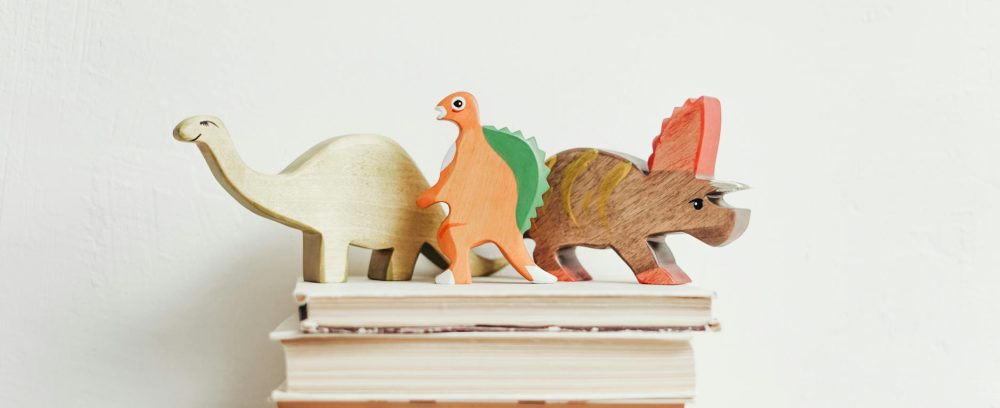
No, not this kind.

The why-does-it-matter kind. The what-will-happen-if-she-doesn’t-get-that-goal kind. The how-much-worse-will-things-get-if-she-fails kind.

I knew this. If I looked through my book, I’d probably find I talked about it some. And still, I managed to plot through my draft without thinking too much/enough about it. Because why? Oh, because there’s just so darned much to remember with this writing thing!

It’s never boring, that’s for sure. 🙂

Don’t worry. I am not stopping the forward movement on this draft to go through and add stakes (of either kind) to every scene in my plot. I am not stopping the forward movement to go back and revise the scenes my critique group returned to me yesterday. (It was actually a very happy critique session, anyway!)

I am, though, going to take a few minutes today and put a sticky note on each of those scenes about the stakes I want to add. I’m hoping that getting a bit closer to those will help me on the current scene, which is being–to put it mildly–a pain in the posterior. I am going to open up one more slot in my brain and, as I keep writing, take a little of that extra time to look at the stakes for each scene. To figure out why Caro’s immediate goal matters and what will go wrong, get worse, turn into a complete mess, when (rather than “if”) she doesn’t get that goal.

To up the tension.

And, once again, big thanks to my critique group for bringing out the Nerf baseball bat and giving me the perfect bonk on the head.

Posted in Conflict, Scenes

Giving Yourself a Little Push

When I plot, I have some basics I shoot for, in terms of each scene. Yes, I want to know things like who’s there, where are they, what are they doing. What I really want to know, though, is the conflict.

The biggest thing I try to figure out when I plot is my MC’s goal. Not her story-long, big-picture goal, but her specific scene for that goal. And then I need to know what the obstacles are–which characters’ goals are in conflict with hers, and how/why. What is going on in the environment/her world that creates extra problems. How does she sabotage herself?

Most of the time this works for me. I get just enough of these goal+obstacle=conflict pieces down, so that I feel I can move on to plotting the next scene or, if it’s time, writing this one.

Every now and then, though, once I’ve plotted I come across a scene that still feels weak to me. It might be a scene that has something big happening at the end, or a scene I need to show some world-building or to seed something that’s coming later in the story. Okay, fine. But what’s the problem NOW? What’s going to create the what-if feeling in the reader as they read?

The WIP I’m working on now is a much heavier (in emotional intensity, NOT density, I hope!) story than I’ve written before. So, yes, I can have a scene that’s perhaps a bit more action-packed, or that lightens the mood a bit with some comedy, but I can’t just drop in a chapter that’s all laughs and car-chases, without something more. That’s the kind of thing that jars readers, that makes them pull out of the story they’ve been dug into, shake their heads, and say, “Huh?” Doing this is breaking the contract you’ve established with this reader, the one that says, “I’m telling you this kind of story.”

What do you do when you’re writing or revising, and you start working on a scene that you don’t quite “get”? You’ve got a couple of choices. You can tell yourself just to write–to let the words go onto the page and watch where they take you and let your ideas develop as you go. Or you can take a few minutes and muse on goal and conflict, push yourself into the more tense places in your characters’ lives, and think about possibilities.

In either case, I think, this is a time to push yourself. Either while you’re writing, or while you sit with a cup of tea and stare out the window, don’t just accept the first idea that comes to mind. Look at it, make a note, write a few paragraphs about it, and then think. Is this workable? Is this taking you that extra few steps into your characters’, into the conflict & tension that will deepen your story and keep your readers hooked?

It’s amazing how little time this can take. Yes, of course, you are going to run into walls, especially during an early draft, where you just don’t understand enough yet about your book, where you have to throw up your hands, say, “I don’t know!”, leave some kind of note for yourself, and keep writing. But it’s always surprising to me how often, if I have the patience to slow down and listen, that another idea comes to me–a link to the deeper elements of the story. An idea that makes the scene better.

When and how do you push yourself to take that extra time, to sharpen your focus and see what comes?

Posted in Uncategorized

Thankful Thursday: Japan

We’re all thinking about it and all talking about it–the earthquake and tsunami that hit Japan and the truly frightening things happening at their nuclear plants. It’s been one of those dislocated weeks for me–my writing is going wonderfully, life is good, I’m  happy, but underneath it all the horror and grief and wishing have been running a constant thread of tension. Jenn R.  Hubbard said it beautifully here.

So this week, like so many of us, I am feeling extra grateful for the fact that I am safe, that my family and friends are safe. That I have a wonderful home and piles of books to nest with, that my son has a roomful of musical instruments and a kitchen table where he’s happy (or as happy as he can be) to spread out his homework, that my husband is strong and healthy enough to cycle 100+ miles on a Saturday, that I have both of them in my life. Here.

I am even more grateful, though, for the organizations and individuals who make it easy for me to do something. No, I haven’t jumped on a plane to Japan (yes, the thought has crossed my mind); I haven’t risked exposure to radiation or the overpowering feelings of anguish & helplessness I know I’d have to experience if I landed there. Thanks to the Red Cross, though, I was able to take a few seconds and click through to send money. I know there are hundreds and thousands of organizations out there–I feel strongly that I trust the Red Cross to take my money where it’s needed. When it’s needed.

And then…then there are the individuals. The ones who—without an already-developed infratructure–step forward and create another venue for us to help. Just from being on Facebook and Twitter the past few days, I found out about two: Authors for Japan and KidLit4Japan. My Facebook and Twitter friends lists tilt heavily into the writing profession; but I would bet just about anything that a little hunting would find me teachers for Japan, quilters for Japan, mothers, fathers, doctors, engineers, teenagers, chefs…you name it. Because people care. And people want to help. And amazing people like Greg R. Fishbone (the organizer of KitLit4Japan) take time and energy (and this isn’t a little bit of time and energy) to set these things up. To give us the means to fill out a simple form, donate a book or our own small chunk of time, and raise more money to send.

Because that money is needed.

I filled out my form for KidLit4Japan yesterday. I’ll be donating a copy of my book, The Writing & Critique Group Survival Guide, plus a critique of either the first chapter of a novel or a complete picture book. Check out everything at the auction, but I’ll keep you posted about when my stuff  comes up, here and on Facebook and Twitter.  Let me tell you—easy. Does this make me feel good? Honestly, it’s more a feeling of “If I can’t do this…,” but I’m incredibly grateful that it is something I can do. And incredibly grateful that heroes like Greg are willing to take on the bigger jobs, the ones that let us–as part of whatever tribe we belong to–make some actual kind of difference.

So, yes, Mother Nature has hit with a big one. The destruction she can wreak is, honestly, terrifying to me. But then I flip the coin and see what people can do and do do, and I have hope and some kind of strength to hang onto.

*Hugs*

Posted in Uncategorized

Mind the Gap

When your characters dance into your mind, full and alive and layered and laughing, and your fingers type away at the keyboard, and the words appear on the page, how do you know? How do you know if you are painting what your mind is seeing, recording what it’s hearing, or if the sights and sounds are staying put inside you as ideas only. You’re pretty sure you’re getting some of it, you hope you’re getting close, but because your mind is so full of your imagination, how can you be positive?

Of course, this is something you look at during revision, when you come back to the words you’ve written and take a close look at what they actually say. For me, though, it’s also something I trust my critique group to help me with. I know that, if the gap is there–the gap between what I know and what I’ve written–they’ll see it. They’ll point it out, and they’ll help me to fill it in as I revise. This “safety net” that they give me is one of the biggest reasons that I can write freely, why I can (usually!) tell my inner editor to go away.

What about you? How do you separate yourself from the story you imagine as you write and recognize the one that comes off the page at you when you go back and read it? How do you identify the gap?