Posted in Research, Uncategorized

Open Letter to Anyone Writing a Research Book Just for Me

This post is dedicated to my sister Jenny, the history teacher, who is stunned to find me reading history after all these years and who, I fear, grits her teeth and bites back words every time I reject or whine about a book. Love you, Jen!

Dear History Writer:

I’m back on the research trail, along with honing in on my WIP’s story. Over the weekend, I read a great book about technology and housework and what all those newfangled inventions did and didn’t do for women’s (and men’s) work in the home. (I can now tell you that there were, at one time, gas-powered refrigerators as well as electric ones, but do not ask me to explain the workings of either, or why one took off while the other didn’t!)

And then this morning, I picked up another book, that shall remain nameless, because–even though it’s on a topic I am interested in and that has a lot to do with my WIP, I couldn’t get through it. I tried–reading a few pages at the start of each chapter, skipping through looking for a heading that might be relevant, reading a few paragraphs more here and there…but nope. There might be information in this book that I need, but I can’t keep my brain attached to the words long enough to find out.

Why did I enjoy (and learn from) one book and couldn’t force myself to keep reading the other? Well, the obvious answer would be that the first author is a better writer, but I think there’s more to it than that. So, for anybody out there who’s considering writing history for readers like me–who aren’t their strongest with a nonfiction read, who need to be entertained while they’re being educated, who will leave behind a dry research book for something fictional at the drop of a hat…here’s what I’d like you to be thinking about as you write.

  • Do, please, tell me stories. I can only take so many facts without a breather, without being pulled into something that has plot, tension, character dynamics, and forward movement. No, don’t feel like you have to write a novel for me–I have plenty of those lying around. But bring that information into something with the elements of a novel, if only for half a page. Kay? Thanks.
  • Give me people. Yes, I know there are readers and researchers out there who love diving into pages and pages of government edicts, tables with housing and employment data, maps of population migration, lists of the various ores used in building railroads. And I need some of that, too. But please sprinkle them lightly through your words, as examples, not the entire text of a chapter. And then let me know what it really felt like to live with those statistics, what someone said about them in a letter or diary. Feed my imagination, not just the calculator that is, yes, stored somewhere in the dark recesses of my brain.
  • Weave some humor into your narrative. Make me smile, even laugh. Some of those quotes you’re sharing are ludicrous–I know it and, come on, you know it, too. How could he/she say that with a straight face? And how can you deliver it without at least a tiny well-phrased smirk. Or go the other way. Make me mad, get me pissed off at the nerve of a group, a person, a leader. And let your own anger leak out–just a little trickle, so I know we’re on the same side. So I know you didn’t just type that passage into your manuscript coldly and objectively, not when it’s outrageous enough to break through anyone’s objectivity. Seriously.
  • Draw connections. Yes, I know it’s simplest for you to organize your book by decades, or by geographic regions, or by ethnic groups. And,  yes, that organization makes it easy for me to find the information I most need. BUT…just because your chapters are separated by page breaks, does not mean these people, these areas, these timelines are distinct and isolated from each other. They’re not. One year builds to another; one person’s actions ripple through the lives of others; the events in one state cross the borders into another–even if it takes a while. Share this with me. Show me that you see the threads weaving through it all, and make me aware of the ones I don’ t know yet.
  • If you need an example of the things I’m talking about, I can refer you to a couple of books that were beginning steps of my conversion into reading (good!) history. Pick up Amy Butler Greenfield’s A Perfect Red: Empire, Espionage, and the Quest for the Color of Desire and Laurence Bergreen’s  Over the Edge of the World: Magellan’s Terrifiying Circumnavigation of the Globe. (Note: Don’t eat a big meal before reading the sections about scurvy in Bergreen’s book. And, yes, making me sick to my stomach gets you a gold star, right up there with the whole humor and anger thing.)

That’s all. For today, anyway. Thank you for listening and for, possibly, considering my wish-list as you start writing Chapter 1. I don’t know how far my request will get you in academic circles, or in the lives of those people who live for facts (Hey, some of my best friends are people who live for facts!!), but your efforts will not go unappreciated here, in my world.

Which must count for something.

Yours in research,

Becky Levine
Posted in Uncategorized

Research: Facts AND Feelings

As I work on my historical YA, I’m finding that the longer I do research for it, the more specific I start feeling that research needs to be. It’s relatively easy, I think, to find books and other information about the general history of a place or era. It’s trickier–at least for me–to find the concrete details that will add the depth of realism to my story.

So I keep looking. One of the areas I’ve been struggling with finding more about is the daily life and economic realities of a small-shop owner  in the 1910s. These people and their families seem to fall into a sort of gray area–if not in terms of actual class, at least in terms of class that I’ve been able to find out about. I can find plenty about the big factories, and I can find plenty about the people who worked in those factories, but show me some really specific writing about a family making a decent, if not wonderful, living selling dry goods, and I’ll be dancing.

Well, I kept searching, and a few weeks ago, I came across Robert Spector’s The Mom & Pop Store: How the Unsung Heroes of the American Economy are Surviving and Thriving. I guessed from the title (note the word “are”) and from the description of the book that it wasn’t going to be about the turn of the last century, but I hoped there might be some pieces of history woven in.

Well, there were, but–as I was expecting–they weren’t from the history I needed. Still, I kept reading. Because, guess what? While Spector’s books didn’t have the facts I needed (and probably still need), it goes deep into the feelings I hadn’t yet got close enough to, either, to write the story I want to write.

Feelings of pride in coming every day to the business you’ve built, feelings of frustration at being expected to inherit that business when you aren’t the one who built it. Feelings of independence at working for yourself, feelings of imprisonment at having no choice about who you work for. Feelings of anger and resentment toward “ungrateful” children, feelings of anger and resentment at “demanding” parents. All of which feelings I’ve seen in real life “today,” and all of which I need to think about for my story in the past.

Here’s the thing: history may be facts, but it is also story–historical fiction even more so, perhaps. And story is people–people who interact and resist interaction, who love and hate, work together and fight. And sure, the facts impact the feelings, but there is a universal to those feelings and the people who have them that transcends facts, that transcends time.

If I didn’t believe this, how could I be writing about history for teens reading today?

Posted in Research

Research Trip…Cars, Cars, Cars!

So Monday’s post was about Bruce Coville’s keynote speech at the Spring Spirit conference, and I still haven’t gotten around to writing up a summary post of the whole conference. Friday, maybe? Anyway, f you haven’t read the Monday post yet, and you’d like to enter my giveaway for a signed copy of Bruce’s The Monster’s Ring, go here and leave a comment.

Today, I want to talk about cars.

After I signed up for the conference, and after I decided to go up Friday and spend the night ahead of time, and as I was researching what kind of cars my MC would be riding around in, I discovered that the California Automobile Museum is in Sacramento, barely 30 minutes from Rocklin, where the conference was being held. So guess what I decided to do on Friday afternoon?

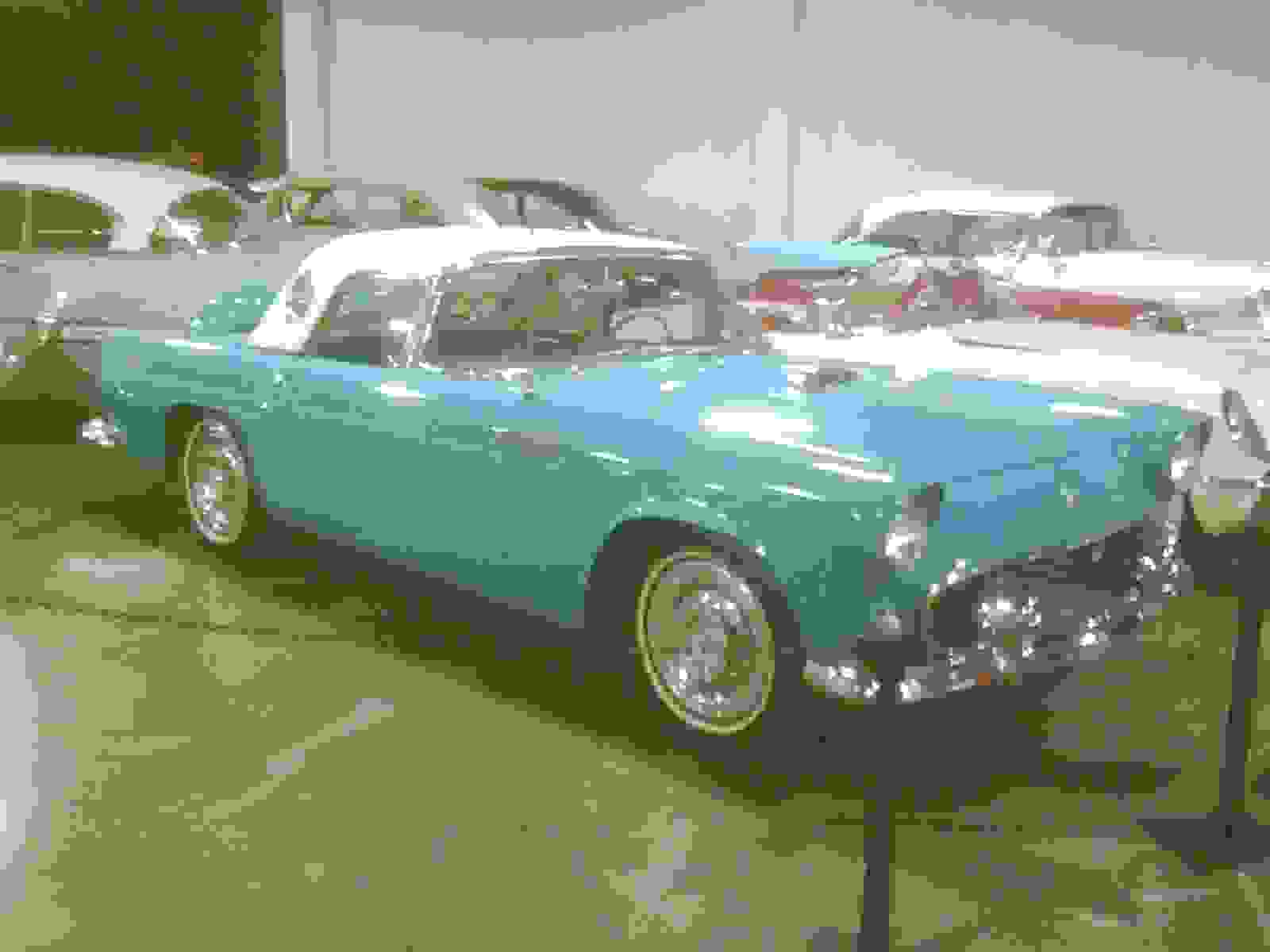
I drove up to Sac, had lunch, then showed up at the doors of the museum. I’d emailed the curator ahead of time, so he knew I was coming (although I’m not sure he know what kind of conversations we’d be having….”Wow, that brass trim on the windshield would be a lovely place to smack someone head during a car wreck, wouldn’t it?”). He was a wonderful person, took me around and showed me all the relevant cars, helped me understand what was standard for the time and what was different between the more luxurious cars and, oh, say…the Model T. Yes, the cars came with a toolbox on their running board (no trunk), not to mention an acetylene tank and generator for lighting the headlights. Well, okay, you needed a match, too. SERIOUSLY!

I had a wonderful time, took tons of notes, and after we were done talking, he left me to wander through the museum and take lots of pictures. Some of which I’m going to share with you–just remember that I’m a lousy photographer, I was taking these with my Blackberry (because I’m so lousy I don’t do any better with a real camera!), and these are the best of the lot! So everything in the museum was even more beautiful than it will look to you here.

Here are some shots of the cars I needed to see for research purposes. (Keep in mind I’m a lousy photographer!)

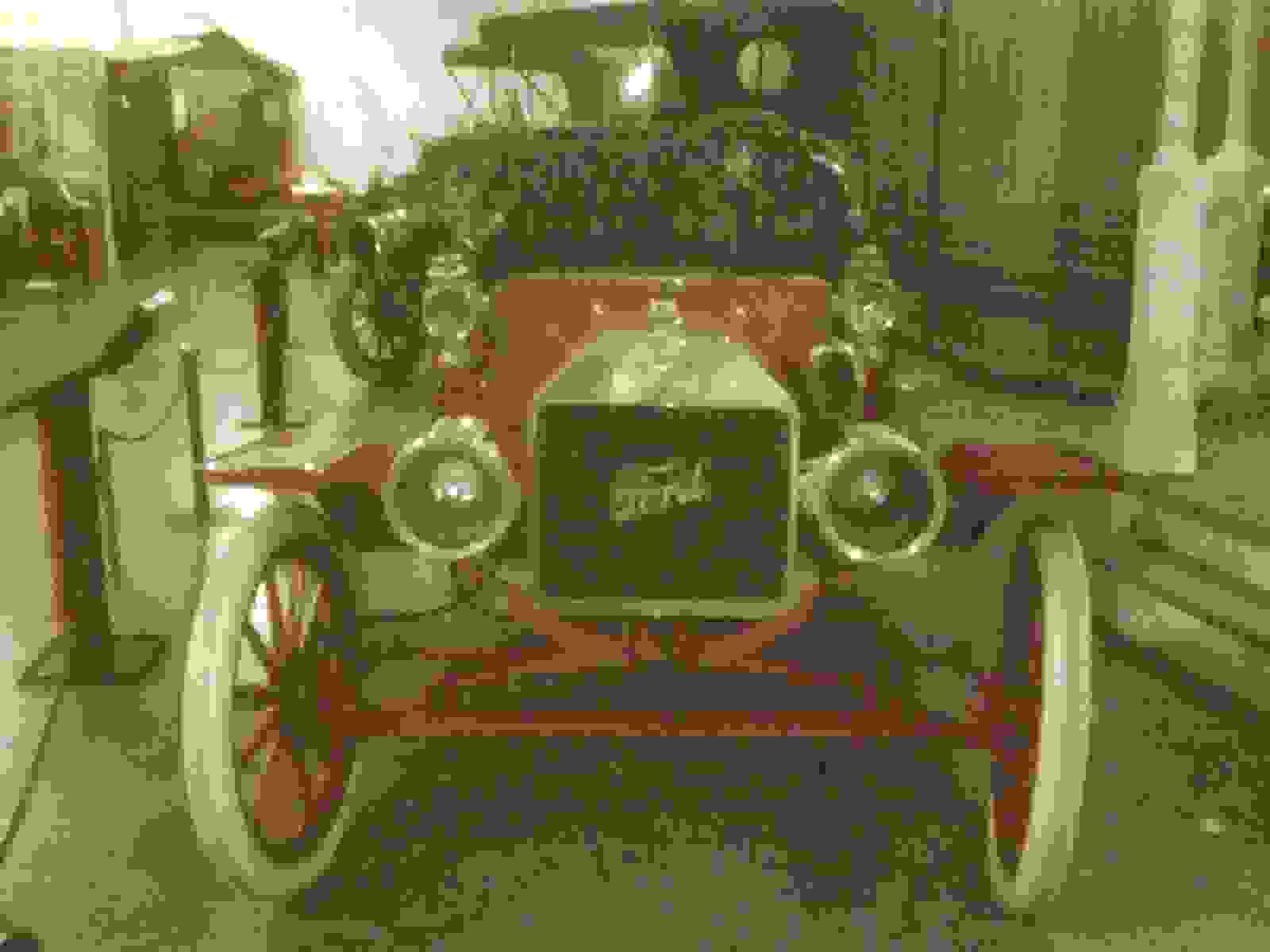
Here’s a 1908 Model T, which was before they only came in black.

Here’s a 1912 Cadillac Torpedo.

And here’s a 1926 Cunningham ambulance. Later than my period, but the same company was making ambulance back in 1911/1912. They were also making hearses, but let’s not go there.


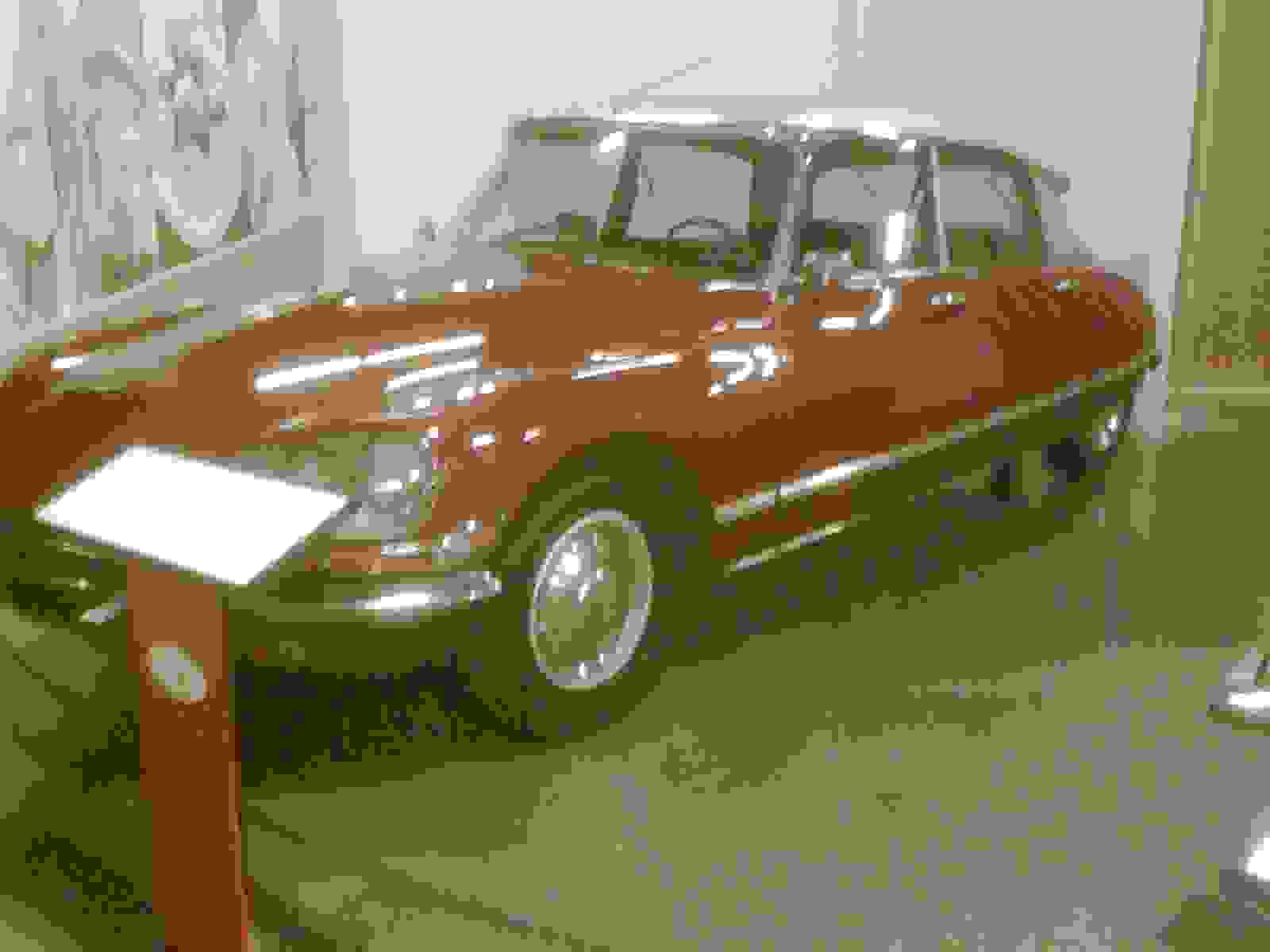
And here are a few of the pics I sent to my husband, just to drive him crazy with the pretty-please emails. Note: He is not a Citroen fan. I think they look like particularly cute armadillos.

I have always wanted one of these.

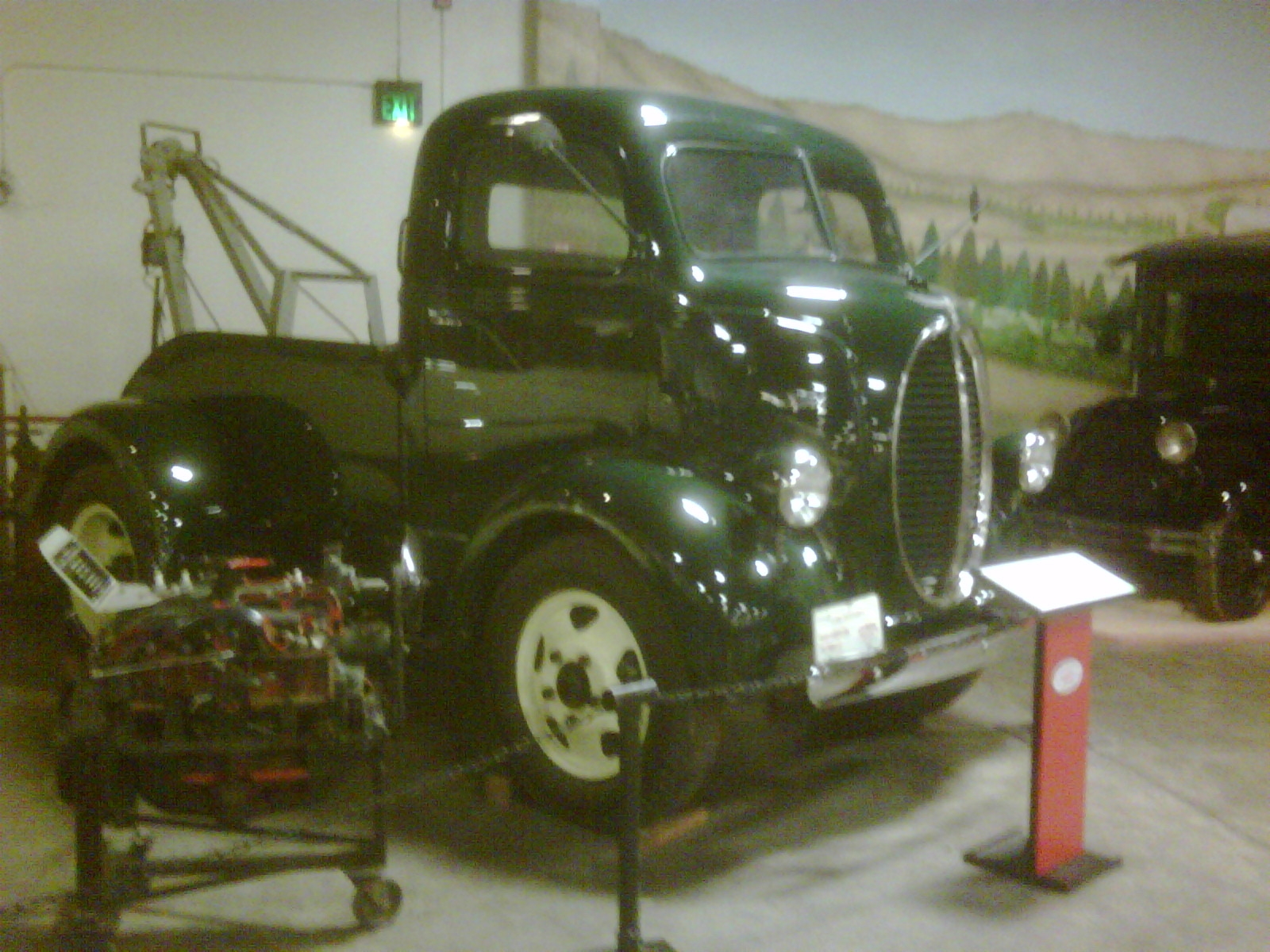
And don’t we all think this is the tow truck from the movie Cars? The one that went out to the pasture to do some tractor-tipping? Only this one doesn’t have a speck of rust.

It was a great afternoon. I felt a bit like a character out of Firefly, because everything was “Shiny!”  If you’re ever up in Sacramento, I recommend this museum as a stop, especially if you have any car-crazies in your family!

Posted in Early Drafts, Research

More Research: AKA Resisting the Rush

Last night, I took down books down from my shelf to do a bit more research. I’m starting to move into the less general research stage and focusing on specific details I need to create Caro’s world–her world, within that of 1912 Chicago.

Yes, more research.

As I looked at TOCs for the information I wanted, some of “those voices” started playing in my head. You know the ones–those that tell you you’re doing this wrong. Specifically, in terms of research, they tell me I’m wasting time, that I can add these details later, that I’m only on the second draft & I still need to get the story down, the characters talking to me more, that this book is taking long enough to write & I’m just adding hours on hours to the journey. On top of that is, of course, my own tug to just get writing.

I took a breath and told those voices to shush.

Who knows? Maybe they’re actually right. Maybe everything they’re telling me is the truth–that I would be “better off” pushing the research further along the timeline. Maybe I am writing too slowly. Maybe I should get the story and characters solid and then add history and setting.

I can only know one thing for sure and that is that, right now, the voices are wrong. Yes, I want to write. Yes, I want to get back to Caro and Chicago and her huge choices. When I take a close look at how it feels to be writing ahead without the layers of what a city street looked like in 1912, what daily chores she had to face, what her mother is doing while Caro is sneaking out of the house–what she’s doing that lets Caro sneak out of the house–I get a bad taste in my mouth and a sourness in my stomach. It’s not going to make me happy.

I did this on the first draft. I think it was necessary, and I think it paid off–I ended up with some big revelations about the story that I wouldn’t have had if I hadn’t pushed past all the history details. And, yes, it might very well pay off again. But I hated it. No, I didn’t hate all the writing, but I hated the feeling of skimming over the top of Caro’s world, of missing the layers that–to me–create a picture in my mind as I put words down. A picture that has images, tastes, smells, physical sensations, feelings.A picture that lets me connect more tightly with what Caro is experiencing, immerse myself more in her point of view, and lose myself.

One of the things I think many of us have to remind ourselves about, is that we’d better like what we’re doing with this writing thing. Even if/when it starts paying, it’s not going to pay big. (Checks skies for fairy godmother and her Turn-Me-Into-JK-Rowling wand…nope!) Hopefully, eventually, people will buy and read our books. Hopefully, what we’ve written will touch someone’s heart, maybe even a few hearts. But if you add up the minutes of our lives, most of this journey to a book is taken up with the actual process of writing. And if we’re unhappy while we’re doing it…well, for me, that defeats a bit part of the purpose.

So, yes, I told those voices to shush. And I found the perfect chapter, one with detail after detail that let me see Caro moving around in the scene I want to write, one that told me specifically what she is bored with, what she’s pushing away, what her conflict with her mother is about.  I spent more time looking at images and google maps of Chicago, reminding myself that–oh, yeah, the buildings all touch, and they’re narrow at the front but really deep, and brick comes in different colors. This morning, I’m going to dig a little further into some stuff I touched on last night.

And then? And then I’ll write.

It’s a process. It’s my process. It might only work for a day, a week,  three months. For now, though, it leaves a sweet taste in my mouth and lightens my mood. And I’m sticking with it until that changes.

When do you have to tell your voices “shush?” What’s a part of your process that you have to follow–at least for now?

Posted in Friday Five, Research

Friday Five: MORE Things I’ll be Researching

Here’s the thing about the research bucket. It’s like Mary Poppins carpetbag–never really empty.

I said back here that, in my second draft, I want to be able to weave in a lot of the history I need for the story. So I’ve spent a lot of time the past few months doing the kind of research I need to get closer to the plot–checking out realities and possibilities. I dug far enough into things to be pretty sure that, yes, one of my characters can have an automobile; yes, another can have a job in the beauty industry; yes, my MC can be the daughter of an immigrant; yes, her little brother can play with toy trains. And I’ve been tossing ideas into my plot, based on those green lights.

This week, I’m starting to flesh out the plot and then, hopefully, to put things into a sequence that may, as a starting point, make sense. I’m using Scrivener and filling out scene cards with basic information–which characters are in the scene, where do they go and what do they do, what’s the main conflict and why…that stuff. And I’m also including a list of specific questions I need answers to…for that scene.

This 2nd draft is going to be a lot of stops and starts. (That’s okay…remember my word for 2011? Peace!)

Anyway, during my plotting sessions with Scrivener, I’ve already come up with way more than 5 things I’ll be researching. So for today’s post, just the tip of the iceberg.

1. In 1912, who were the kids that were still in high school? I know that a lot more kids were going to and finishing high school by this time, but there were still plenty having to quit to get jobs, to help out at home, or just because the family didn’t see a reason for them to be going on. I want to have some idea of what the mix was that were still there, in the classrooms, learning for…learning.

2. Did American Flyer sell accessories for their wind-up model trains? Would a “train kid” have little houses and depots and trees and cows? (Don’t laugh: some British train companies modified their models for sale in America by adding cow catchers to the front!) And what would those accessories be?

3. What specific automobile will Caro’s not-yet-maybe-never-boyfriend own? What did it look like, feel like, smell like? And how much trouble is he going to get into when they…Never mind. You’ll have to wait for that one.

4. What kind of injury, in 1912, would put someone at potential risk for death and, if they survived, leave the chance they wouldn’t walk again. I have a doctor friend who will be getting a LOT of questions, and then I’ll have to read up on this stuff in 1912. Oh, yeah, that’ll be fun.

5. What needle craft did German-Jewish immigrant women do–those of the age to come to American in the late 1800s? Knitting? Lace-making? Some kind of embroidery? This is one it would be very nice to have a time machine for–I’d just zip back to Berlin in those  years and talk to some of my great-something-aunts. As it is…more reading!

Whether you’re working on a historical novel or not, what are some of the questions you’re wondering about for your WIP? Drop them in the comments–you never know when someone will have an answer. And if not, it’s fun to see some things we don’t have to hunt down ourselves!

Posted in Historical Fiction, Research

Following a Research Path & Arriving at Story

I’m thinking, not even too optimistically, that I’m going to be ready to start the second draft of my WIP somewhere on or about 1/1/11. Sounds auspicious, right? I feel like I’ve got a handle on most of the characters–on what they want and, a bit, about how that’s going to weave into, conflict with my hero’s path. The mother has become MUCH meaner and nastier (which will make Terri Thayer VERY happy), and she’s on the way to really messing with my MC’s life. I want to spend a bit more time on the father (who obviously has to be more than just a sweet, gentle do-nothing of a guy) and then get some notes down on the scene ideas.

For this draft, though, I want to weave more of the history. Yes, some details will wait for later revisions, but–for the first draft–I felt like I was writing in a desert (which Chicago is NOT) and, by the end, that was driving me nuts. In not a good way. So I want to be able to feel myself and Caro truly in the place and time as I write forward. Which means I’ll also be doing a LOT of reading in the next few weeks. And, as I’ve said before, that reading is not just about facts; it’s about story.

I thought I’d show you one bit of the path I took yesterday, as I read books about model electric trains, specifically those made & sold by Lionel in the early 1900s. Here are the basic steps.

1. A couple of weeks ago, I revisited Caro’s younger brother, Abe, who had done pretty much nothing in the first draft, other than whine and demand an expensive violin. I decided I didn’t want to go with the violin, partly because I wasn’t looking forward to researching music (yes, I think you do need to have some interest in the stuff you’re going to have to read about). Also, though, the violin thread was putting a lot of focus on Abe & money, and there’s already another money thread going on and, really, that was just too much money. So I played and rambled around the Internet and my mind and realized–Toy Trains. I want this kid to be younger, to be pretty happy at home the way it is (of course that will change) and to be the kind of puttering little boy who likes to lay out the track and run the trains.

2. I did some research and found out that, yes, Virginia, there were model electric trains on the market by 1910 (close to my story’s year).

3. I checked my library and found plenty of books about model trains, specifically some cool-looking ones about the Lionel company. I put a couple of those books on hold.

4. The books came and I started reading about the company and the trains, for the relevant years.

5. I found out that 1) Electric toy trains were BIG. 2) Electric toy trains were EXPENSIVE. 3) Although Lionel mostly always did trains, they also came out with a Racing Automobile set in 1912.

6. I pretty much had these reactions: 1) Cool! 2) Hmm…maybe even Blech. 3) Aha!

7. I went back to my story with this information and made the following adjustments. 1) Abe does not have an electric train (the family is not THAT comfortably off), but he SO wants one. 2) He’s going to have some other train toys–probably clockwork ones that have been around, marketwise, for a while and (I think) were not as expensive. (Obviously, more research needed, and-yes-another book is on hold at the library). 3) Abe’s older brother Daniel has bought (unknown to the rest of the family) the Racing Automobile set for Abe’s birthday present. Which complicates things wonderfully, because Daniel bought the set BEFORE getting in a bad car accident himself and with money he really shouldn’t have, as far as his parents are concerned (also tied to cars and racing and gambling–ooh!). And how bad is Abe going to feel, do you think, playing with a toy race car when his brother is barely walking and may never get to drive an automobile again? Hmm? Hmm? 🙂

8. Made a note to myself to figure out the small plot problem this has created, which is that I have been planning that MC has a new camera that she received for HER birthday and, really, two birthdays as the cause in cause-and-effect is too many.

Threads and layers and twists. THIS is how research ties into story.

Posted in Historical Fiction, Research

Monday Method: This is My Brain on Research

Thought I’d just give you a (not-too-scary) glimpse into my favorite research technique these days. And not just favorite because it involves a comfy couch and books. Remember, this is the research I’m doing to help figure out my characters, what they want (which means figuring out what is possible, probable, and/or dream-worthy in 1911), and what they might usefully do to further my plot. This is not the research for filling in details about how many hospital beds were in a ward or what kind of fruit you could buy at a market. That stuff I’ll find out while I’m writing. This is instead the research I really feel like I have to do before I dig deeply into the 2nd draft.

To proceed:

Step 1. Pick a topic, based either on character-development, setting for a scene, or a virtual dart toss, because I could pick any one of a dozen paths to follow.

Step 2. Start to browse the web for articles and books.

Step 3. Realize I probably HAVE some of that information already in my research stacks.

Step 4. Gather a small pile of books & take them away from the computer. Take myself away from the computer, too.

Step 5. Curl up on the couch with the books and my Blackberry. Yes, my Blackberry. This is important. The cat is also welcome.

Step 6. Start reading.

Step 7. Gather data and details, while waiting for burst of inspiration for the story.

Step 8. Repeat Steps 6 & 7. Perhaps ad nauseam.

Step 9. Get an idea.

Step 10. Gasp with excitement.

Step 11. Email it to myself via my Blackberry. (Told you it was important. This system actually keeps me doing research, without losing my place in the book, while the ideas simmer away and grow, hence creating more emails to my self via my…okay, you got it. So it is not just laziness.)

Step 12. When the BIG lightbulb in the sky blazes with THE idea and enough emails have been sent, I drop the books (being careful to not, of course, drop my Blackberry with them) and run to the computer. Or skip. Or dance. Depending on how bright that lightbulb really is.

(Artistic interpretation by my son.)

Step 13. Open Scrivener and start putting all those emails into character and scene notes.

Step 14. Rinse and repeat.

Step 15. Get closer and closer to shoving all character and plot and research into a paper bag and just start writing.

Posted in Revision

2nd Draft: Focusing the Telescope on…?

So, that first draft is done. The last chapters are off to my critique group. I’m reading and reading and ordering more books and reading, trying to get some more history and psychology into my brain.

I’ll also be cleaning my office–all those piles that have just gotten added to and sort of pushed into neatness the last few months need to be dealt with. I need to get the 1st draft binder on the shelf, start one for the 2nd draft, get all the notes I made while I was writing toward “The End” at least stuck in there for me to contemplate.

And then I’ll get revising.

For me, the 2nd draft is a huge deal, but–at the same time–another pass where so much doesn’t get touched. In my first book, when I looked at my first draft, the thing that jumped out of me was that my hero was way too passive–he was playing sidekick to his sidekick. So the 2nd draft was all about turning that around, putting him in charge, getting him to take the risks and have the failures and figure out the next thing to do–in other words, actually turn him into a hero.

Yes, of course, I revised smaller things to–I worked big-time on his goals, I’m sure, and played with setting and dialogue as well. But the revision had a main focus–that “thing” I had to change before I could really move on. Again.

For Caro’s story, I’ve got two biggies. The one I’ve talked about before–letting go of the 2nd plotline (and stashing it somewhere safe to write into another book) and bringing the storyline I’m choosing now to the forefront. The second thing I have to do is really figure out my antagonist–Caro’s mom. I have to get much closer to who she is and what she does–both in terms of making things really hard for Caro and in terms of all the hours of the day that she isn’t on the page. I have to understand her fear and come up with actions she takes, because of that fear.

So…to start, I’m reading. More history on immigrants in Chicago, on how bad things were and how long the problems lasted. The fact that people were fighting this battle for at least two generations (and, yes, are still fighting it) is a big part of my story, and I need to hone in on that sense of This is STILL happening?! I’ll also be reading about mothers and daughters, the not-good stuff…okay, the really not-good stuff. Light, pleasure reading? Um…no. Has to be done, though.

And somewhere in here, I’ll be plotting. I just downloaded the beta version of Scrivener for Windows, and I’m really excited about that corkboard. I’m going to dig out some of my plot books and think about connections and tension and layering.

Does this sound like it’ll take a while? It sure does to me. But it is part of the process. The first draft did a great job showing me what I don’t have figured out–and I’m going to get at least some of that cleared up before I start writing again. Will I go on and on and on forever before I revise. Nah. Don’t worry. I can only sustain not-writing for so long. Pretty soon, half the books will be read, some of the plot will be figured out, and I’ll start itching. 🙂

Until then, though…

Posted in Research, Writing

Write What You Know? Ahem…

I don’t think so.

If I only wrote what I knew, I would never have:

  • Created a 1st-person, 12-year-old boy protagonist
  • Written a scene at a skate-board park that ends in a get-away race to safety
  • Listened to many explanations of DNA-matching and written about it for 7-year-olds (Hi, Lee!)
  • Taken a trip to Chicago to visit Hull-House
  • Collected two shelves of research books that have me wanting to read (and write) down many, many new paths
I’ve been thinking a lot lately about how we do and can stretch our brains. My husband just finished reading Barbara Strauch’s The Secret Life of the Grown-up Brain (now so overdue at the library, I have to take it back and THEN check it out again for myself to read (Hi, Amytha!)), and he’s been reading me bits and pieces–mostly focused on the fact that, as we get older, our brain does not shrivel up, atrophy, and basically die.
 
Despite what our teenage children may be telling us.
 
 
I think I knew this–I am in many ways much more open to new experiences, new knowledge. Okay, maybe not so much to new opinions, but I just think of that as continuing to grow my stubbornness synapses. (Hi, Mom!) But working on a historical novel has got me thinking about it more, really recognizing what we can do if we try. There is so much I’m putting into my book that I cannot know, not in the sense people talk about for writers. I can’t march through DC with the other suffragists; I can’t sit down and listen to Ida B. Wells anger at being asked to walk at the back of that march. I can’t walk through all the buildings in the Hull-House complex in 1913; I can’t share a room with Jane Addams and experience the warmth and power so many people have written about. And, honestly, I don’t really want to go to Chicago in the middle of a blizzard and stand around for an hour or three to see how it feels.
 
But I can learn. I can push myself not only to read the research, but to imagine the feelings, to close my eyes–and stretch my brain–while I take what I do know and extrapolate outward to a much bigger world of understanding.
 
Write what I know? Only that? No, thanks!
Posted in Historical Fiction, Research

Two Steps Forward, One Step Somewhere

Here’s what I’ve decided it’s like to write historical fiction.

You go along, sort of researching and writing together, at slightly more than a snail’s pace–or so it feels. So you put the researching aside for a while, because you want to just GO for that flow-of-words feeling, even when you know the flow is a bit muddy and cluttered. Or really muddy and cluttered. So you take a stab at a few things, concentrate on the story elements of your scenes, versus the true-to-history stuff, and you write. And it feels great–you’re getting to know your characters a bit more, finding a few gems among  the garbage, and you’re watching the pages pile up in the old binder.

And then, all of a sudden, you get to a choice. A choice the hero needs to make to take the story in the next direction. And you realize you just do not know enough about what was possible and probably in 1913 Chicago’s public schools for a smart, active lower-middle-class Jewish teenage girl your world. And you feel like if you keep writing, it’s going to be a lot like this:


or this:

So you backpedal really fast and save all those scenes you have written on the flash drive, and you hit the books. And you find everything on your shelves that might have the tiniest tidbit of information about 1913 Chicago’s public schools for a smart, active lower-middle-class Jewish teenage girl your world, and you browse the internet for articles and more books, and you probably take a trip down to the big library with access to lots of databases, and you read. And it’s a lot like the writing–much of it muddy and unclear but, hopefully, with a few gems.

And you make a decision (for now) about what your hero could do and what she (for now) will do, and there you are again, back to the writing. So now, it’s more like this:

Although probably not with that much grace and style.

 If you need me for the next few days, you know when to find me.