Posted in Critique Groups, Thankful Thursday

Thankful Thursday: When to Say “Thanks” to a Critique Partner

It’s a good time to thank your critique partner when:

  • They point out that your first chapter would be a lot more interesting if you started…there (usually a LOT further in).
  • They show you the place they lost track of which character is saying what.
  • They tell you that they laughed out loud three times when they read your scene. Especially if you actually wanted those moments to be funny.
  • They offer to do a final read-through of the whole manuscript (not the first time) when you are ready to query agents. And they promise to mark only things that make them want to scream, “You can’t send it out with THIS!!!!”
  • They circle the six times you wrote “She looked at…” on the same page.
  • They put a smiley face in the margin of your manuscript.
  • They help you brainstorm a plot problem.
  • They celebrate with you–at the end of your first draft, at the end of each revision, when you send your first query letter, when you get a request for more. And so on. You get the point. Lots of celebrations.
  • They make a throw-away suggestion that sets fire to an entirely new, perfect path for your story.
  • They say, “Of course, send four chapters instead of two.”
  • They tell you, gently, that a character is still….a…little…boring. And then they pat your hand and remind you that you can fix this problem.

Okay, I’ve got a bit of a hidden message here, although probably not too hidden. Yes, these are things you want to thank your critique partners for. They’re also things, of course, that you want them to be able to thank you for! Everybody in a critique group wears both hats–critiquer and writer. And, in a strong group, my list barely touches the surface of things to be thankful for.

So, for today–Terri, Beth, Cyndy, and Jana–Thank you!

Posted in Critique Groups, Critiquing

Remembering: The Feeling of a First Critique

I’ve been doing this critique thing a long time. I met one of my current critique partners before my son was born, before he was even much more than a possibility in my future. I’m pretty used to the ups and downs that go with submitting my work, having my critique partners chew it into tiny pieces read it, and listening to what they have to say. Like all good critique groups, most days are great; a few are tough.

Monday was different. It was the first time I’d submitted a picture book, not to mention the first picture book I’ve ever written.

I had a mini visceral flashback as I was driving to the meeting. My stomach was churning, just a bit, with that balanced mix of nervousness and excitement that, to be honest, I’d almost forgotten existed. Nervous: What if they can’t stand it? (Translation: What if I realize I should never have started this picture book, let alone thought about writing anymore?) Excitement: What if they absolutely love it? (Translation: What if it becomes obviously clear that all I have to do is come home and start emailing queries and this book will be on the shelf in six months?)

Yes, both extremes, both equally unlikely. What happened, of course, was that they were all very excited about what I’ve gotten on the page, loved specific pieces of it, and had some wonderfully brilliant suggestions about what isn’t working yet and what to do about it.

All good.

But the feeling in the car made me think back to when I was just starting out with critique groups, looking for one that was a good fit, mailing around copies of my work to people I’d never met, so they could read my writing for the first time. And I thought, this is what everybody goes through when they make the leap–when they jump into their first group.

Duh. Well, of course, I know this. It’s why I wrote my book. But still, this was a strong, physical reminder of what that feels like.

It’s a risk. Stepping into a group, whether it’s your first time or yet another round of trying to find your place, puts you and your writing on the line–emotionally. Even if you know, logically, that the critiquers’ responses to your writing will stay out of those extreme reactions, you still hope for totally positive feedback and fear the bad stuff. You will have butterflies in your stomach on the way to your first meeting, or as you submit your first chapter to an online group, and those butterflies won’t disappear after Day 1.

They will, however, go away eventually–making themselves available for another writer ready to take the leap. Your stomach will calm, your hands will relax their grip on the coffee cup at meetings. You’ll start to see the pattern of good and bad in the feedback you receive, and that mix will strengthen your writing and your confidence in your own abilities.

So, if you’re standing by the river, wondering, take off your shoes and dip a toe or three into the water. Start your hunt. Scary? Yeah. And worth it.

Posted in Uncategorized

Friday Five: A Random Version

1. I’m meeting with a young writer today to talk about her novel. I’ve started reading it, and it’s fun, and I’m really looking forward to editing and brainstorming with her.  I’m also taking her a copy of my book, because she’s young and she’s clearly going to be a writer all her life, and it’s my decision that she should be know about critique groups.  Not to mention I will begin my indoctrination about joining SCBWI. Mwahaha!

2. I just read Deborah Underwood’s The Quiet Book. I know, I’m a bit behind, but I’ve been wanting to read it and then I found out that Deborah and I will be on an SCBWI critique panel at the end of this month , and then I really wanted to read it. And…wow. Honestly, I’m always hesitant about concept picture books, because I typically need story. Plus, I’d seen some of Renata Liwska’s incredible illustrations, and I knew that those were potentially powerful enough to take over from the prose. Nope. Yes, the art is amazing, but–honestly–so are the words. I read the words first, on purpose, and every single page evoked a sense for me–an emotion. Deborah hit the nail on the head every single time. Beautiful.

3. It’s cooled off. We actually just left the windows open last night, without running the so-loud fans. The car thermometer hit 117 degrees one afternoon this week, while son and I were sitting on an onramp waiting to get through the metering lights. I find it hard to even exist when it’s that hot. So yay for coastal fog and a light breeze.

4. There are colds in the house. Husband woke up with a slight sore throat and son is sneezing and sniffling. Medicine has been given, and I am crossing my fingers that the flu shot I got this week will magically transform into cold-protection. I may have to turn in to Lady MacBeth this weekend, to stay safe.

5. I have to go to the grocery store today. I went to the grocery store earlier this week. I’ll go to the grocery sometime at the start of next week. Am I having hallucinatory nostalgia, or did my mom manage to do a huge grocery run on the weekend & then stop for milk if we ran out during the week? And there were 5 of us then, to the 3 of us here. Was she just more organized (yes!) or more determined (less lazy) to really fill that fridge and freezer to the brim when she shopped (probably)?  Whatever it was, and as nice as the people at my grocery store are, I feel that I am way too familiar with that place. Do you ever find yourself wandering the aisles, “waiting” for something new and exciting and delicious and healthy and simple to cook to just pop out at you? Sigh. At least I’m remembering to bring in my reusable bags these days, and don’t have to ask the checker to “wait just a minute while I run out to the car.”

Happy Friday, everyone!

Posted in Critique Groups, Critiquing

I Can’t Believe I Read the Whole Thing: Supporting Each Other with Full-Manuscript Critiques

A while ago, when I was asking for post ideas on Facebook, Kristin O”Donnell Tubb suggested I write about full-manuscript critiques. I was sure I’d talked about that somewhere, but I have hunted around on my blog and it’s not showing up. Maybe it was on the old blog?

Anyway, it’s definitely a topic worth discussing, I think, especially because I’m often surprised to talk to writers whose groups don’t do full reads, or who think they can’t even ask their group to do one for their project.

I think full-manuscript reads are critical.

Yes, they take time–don’t try to read a whole book in the usual two weeks you give to a chapter or three, and try to arrange things so you’re not getting hit with a ton of other submissions at the same time.  But the trade-off, the one that every member of the group will benefit from–is completely worth the juggling and the scheduling.

When you read an author’s full manuscript, you are giving them the gift of reading for continuity.  You’re watching  tension build (or not build) across the whole story and finding the specific places where that tension drops off. You will catch the moments when the hero or other character behave, well…out of character. You will be able to make suggestions for places the author can cut and trim, where the pacing slows down or rushes.

Yes, we can do all these things when we’re reading chapter by chapter, scene by scene. I don’t think, though, that we can do it as well. Obviously, you’re not going to sit down with the whole manuscript, when it’s handed to you, and not leave the couch until you’ve penned your notes on the last page. You will, however, read the book much more quickly than you can when you’re getting it piecemeal every couple of weeks. You will hold the story and the characters and the details closer to the surface of your brain, and–even when you’re not reading–you’ll be mulling and musing and coming up with ideas.

Does this mean that, when the author has finished the first draft, this is the time for her to hand the whole thing over and ask for the full-read. Nope. Not yet. I really think the full-read comes when the group has read through several drafts, in chunks, and the author has revised and revised (and revised…). When the author and the group feel like the book is getting close, really close, to that magical “done” that we can’t ever really define. That’s when the full-read happens.

Stock up on the right tea or coffee. Build up your stash of chocolate and buy a few more of your favorite pens. Get out the notepad. Then take the time and the thought to read through those 2-300 pages of story, with thought and care.

You’ll get it all back, when the pendulum swings back to your side of the critique table.

Posted in Critique Groups

Interview with a Critique Group

When I talked to Tanya Egan Gibson, author of How to Buy a Love of Reading,  about interviewing for my blog and she suggested that everyone in her group answer the questions, I loved the idea. I thought it would be great to hear how different members answered the same question. Especially when Tanya offered to pull everything together & create a composite interview from everybody’s answers. So…without further ado, I give you The Tuesday Night Writers.

  • Cyndi Cadi
  • Chris Cole
  • Amanda Conran
  • Tanya Egan Gibson
  • Tom Joyce
  • John Philipp
  • Jill Rosenblum Tidman
  • Maya Lis Tussing
  • David Winton
  • Jon Wells

BL: Your group formed out of a writing class that was taught by Stephanie Moore. When she passed away, you all decided to stay together as a writing group. That must have, in some ways, been hard. What helped each of you make that decision?

Cyndi Cady: It didn’t really feel like a decision…it was more of a vow.  Losing Stephanie was really hard, not just professionally but personally, and us staying together and continuing to learn from each other keeps her alive for all of us, I think.

JRT: It just seemed like the best, maybe the only, way to honor what Stephanie gave us all—an energy and enthusiasm for our writing that made all our efforts feel worthwhile and our individual goals seem achievable and necessary.

TEG: I’d never met people I trusted more with my writing—people I knew cared about friendship as much as writing, and who believe, as Stephanie did, that you grow as a writer (and a person) by supporting each other rather than competing.  By the time Stephanie passed away, I loved these people.

JP: Keeping the group together kept Stephanie alive in our hearts and minds and we continued to get the nurturing we’d enjoyed before she passed on. Also we have developed a unique climate of trust so we don’t have pull any punches in a critique and know it will be well received.

Chris Cole: I didn’t have anywhere else I felt comfortable. I began really writing with these folks. They helped me identify a thread I could hold onto, and the last thing I was going to do was let go.

MLT: Staying together was a no-brainer. It’s like asking sorority sisters/fraternity brothers what keeps them connected. Shared experience, mutual affection and being part of a support system.

TJ: Stephanie doubted [her students] could hang together as a group, and she was right to some extent. Most of her classes went their separate ways, but there was a small, hardcore group of us—the infamous “Tuesday Night People”—who were just ornery enough to want to prove Stephanie wrong…for once.

JW: Losing Stephanie was hard, but the decision to stay together was the most natural thing in the world. By that time we were very close. Breaking up the group because Stephanie wasn’t there would be like breaking up a family because your favorite cousin passed away. We’ll always miss her, and always wish she were still there, but just like a loss in a family, in many ways, it made us closer.

AC:  I wanted to honor the part Stephanie played in our lives. I’ve always felt we should meet until we’re all published! And then keep on meeting anyway. I want to prove that Steph was right to believe in us as she did.

 BL: You can read John Philipp’s essay about Stephanie Moore here. Also, Stephanie’s daughter, Nyla Moore-Rodgers founded Mama Hope–“a non-profit organization focused on building self-sufficient communities in Sub-Saharan Africa”–in honor of her mother.


BL: It sounds like you don’t have a consistent schedule for submitting manuscript pages and delivering critiques. Instead, you provide writing prompts at each meeting, then read and critique short pieces if someone is ready for feedback, and you do longer critiques by email. Why do you choose this kind of looser format than a more structured give-and-receive set-up?

Cyndi Cady: Schedule, schmedule! We all have a lot of stuff going on, and who needs another deadline? Just showing up gives me a sense of forward motion, even if I don’t bring anything new to read. I’ve gotten a lot of writing started from prompts, and I think the ease and informality is part of what makes it possible to keep going.

TEG: Our group has been together so long that I think we all trust that the amount of time and attention each person’s work gets will end up equal in the long run.  So we tend to allot time and attention in a way that feels organic to us rather than structure the give-and-receive in an everyone-gets-X-minutes way.

JRT: As someone who puts plenty of pressure on herself with regard to writing, the looser meeting format takes the pressure off and allows for the group meetings to exist as opportunities to get and give support and to grow. The prompt format we took from Stephanie, and for me it works great in terms of generating new material. I probably use 90% of what I write with the group.


BL: Your members write in a large variety of genres—from literary fiction to action novel. Can you tell me what benefits you get from including so many styles in your group? In what ways do you have to stretch yourselves to provide critiques?

JP: I think writing is writing. Humor may be a little different; poetry certainly is. What I have learned from the poetry discussions has improved my sense of rhythm and imagery in my prose writing. What I have learned about writing fiction has made a marked improvement in my non-fiction humor articles.

Chris Cole: Being able to take a less narrow or myopic view of the genres and styles allows one to appreciate and maybe even integrate things you might not think of. With no exposure outside of your chosen realm things can go stale. We’ve developed a form of communication and trust that allows us to come from the same place. That’s something for which Stephanie definitely laid the groundwork. The stretching feels less like bending over backwards and more like yoga.

MLT: I’ve dabbled in personal essays, fantasy and now I exclusively write plays. The basic tenets are the same, if not the detail at the margins. Good writers, regardless of genre, understand the basics and if you get the basics right, you’re on track.


BL: What would you say is the primary reason for/benefit of your actual meetings? What do each of you get from keeping that Tuesday meeting as a priority, even when you’re not critiquing?

JW: First of all, we’re great friends. I look forward to seeing everyone, every time. There’s a lot of great emotional support of people who share the tedious, frustrating, wonderful work of writing. Perhaps the least sexy, but most important benefit is structure. Knowing that we’ll be meeting, I work to have something for every session.

TJ: It’s partly discipline—knowing you have to come up with something to read that is not going to embarrass you—and partly because, even when you are feeling down, beaten, and washed up, getting together with your lit-homies always makes you feel like you don’t really suck as badly as you think you do.

AC: Inspiration, friendship, fun, leaning. The group supports me in every aspect of my work and life. We share writing stories. We sometimes share life stories. Even when my writing isn’t going well, hearing other people’s triumphs and woes makes me want to keep going. Frankly,  I just have so much fun. I love the sharing, I love the joking, I love the writing…and the food and wine helps! But more than that, I realize I’m truly invested in the Tuesday people’s stories and writing styles. I want to see us all succeed. I love the way my friends write and I want their stories to be loved and appreciated by others as much as I like them!


BL: In a lot of groups, I think different critiquers have different strengths that everybody else counts on. For example, in my group one of us is especially good at thinking of bad things to happen to the characters, and others are great at pushing heroes to be more active and antagonists to be meaner. If you had to assign one critique strength to each member of your group, what would those be for everybody?

GROUP:  According to our various and sundry members, our varied and sundry strengths include:

Cyndi Cady’s incredible humor, which is devoid of cynicism and sufficed with heart; her ability to create original, memorable characters; and the way she sees things in our work that we may never have seen for ourselves.

Chris Cole’s wonderful imagination; his ability to tell you when you should be pushing boundaries; and the way he helps us pare things down to their essence.

Amanda Conran’s strength at compression editing; her ability to identify the “heart” of people’s stories; and the way she can pinpoint how to capitalize on the strengths of a piece.

Tanya Egan Gibson’s attention to structure and word choice; her feel for style and language; and her eye for spotting areas that don’t quite ring true.

Tom Joyce’s potent sense of place and setting; his ability to discuss a story in a way that feels less like critique and more like exploration; and his ability to pick out that one sentence that needs to be altered, changing it until it works and sets off the piece.

John Philipp’s attention to rhythm and punchline (he knows when a sentence–or scene–should stop); his storied career and straightforward sense; and his humor and instincts that are a thing of beauty.

Jill Rosenblum Tidman’s astute eye for personality that makes her terrific at detecting character inconsistency; her attention to language that springs from her poet’s heart; and her ability to see situations from both sides, which she brings both to her own work and the feedback she brings to ours.

Maya Lis Tussing’s incredible humor and ear for dialogue; knack for breathing life into situations that could otherwise seem mundane; and ability to detect and remove flat points in our work.

David Winton’s comic edginess; imagination; and insistence (true to his lawyer soul) that you hold up the facts.

Jon Wells’s ear for language and lingo; the honest emotional reaction he brings to a piece; and his mastery of subtle and important details.

And from everyone’s responses it is clear (to quote Tom Joyce), that we think we all “strive to encourage what is good and unique in the work without pulling any punches.”

Posted in Critique Groups

Critique Groups: Keeping the Spark Present

So I didn’t work on my WIP all last week. I had deadline for an article, and I was focused on pulling it together into something more interesting than just a bunch of data points and dry information. Because, really, who’d want to read that?

Anyway, so I took a week off from writing the YA, and then yesterday headed off to critique group to share my feedback about my crit partner’s work and hear their comments about the one scene I’d managed to send off to them before the break.

Lots of stuff was said, good and not-so-good, as per usual. They liked stuff I hoped they would and caught problems I hadn’t even thought about, which is why I love them. And they asked questions, one of which was…did my hero like a particular young man. As in, you know…like like.

And my basic answer, at the time, was lots of groans and a bit of head-pounding against the table.

Then, last night, I was reading through some more of my current research book, which did not have to do with love or crushes or romance or kindred spirits. And all of a sudden, I knew exactly how my hero feels about this boy at the start of the book, why she rejects him, what she discovers about him as the story progresses, and why she….

Oh, no, no, no. You’re not getting the rest of that sentence until this book is finished.

Anyway…my point is that after my critique partner (I can’t remember which one!) asked the question, it sat in the back of my brain, even though I hadn’t thought about my story in a week. It simmered and bubbled, and the minute I turned the focus back to the WIP, even toward a totally different part of it, the spark caught. The lightbulb glowed, and the answer pushed itself to the top of my brain and…out.

THIS is what a critique group does.

Posted in Critique Groups

Let’s Be Honest: Life Changes…and So Do Critique Groups

So I was trolling for blogging ideas on Twitter and Facebook this morning, and Jane Friedman wrote:

 “Here’s a question: what if you have a long-standing member of a critique group who … just doesn’t fit anymore. Yet they don’t seem to understand this themselves. How can you gently get them to move on? (Maybe this is a psychology question rather than a writing question … !)”

Jane’s right–this is a psychology question, but so much of the critique process is about how people interact that I think it’s a good topic to discuss. It also happens to be a question I get asked a lot–what do you do when someone in the group is not working out. “Not working out” can mean anything from slamming others with harsh critiques, to not submitting any writing for months, to overloading the group with hundreds of pages while baring showing up with comments for everyone else’s work.

I know, shocking, but it happens. 🙂

Sometimes, the problem isn’t even a problem. As Jane says, it may just be that one writer “just doesn’t fit anymore.” You may never experience the kind of horror-story situation that is the stuff of critique-group urban legends. At some point, though, I can almost promise you–your critique group will come across a time when they have to make a change. Perhaps most of the writers have achieved publication, and the other–while close–feels left out or left behind, even intimidated. Or maybe half the group has time to spend six hours a day writing and critiquing, while the other half are still working full-time jobs and feel overloaded by the group’s demands. The shift in the group can be something as small as one writer moving an hour further away from the meeting place, to a writer shifting gears from heavily-graphic sci-fi novels to rhyming picture books. You name it; change happens.

What do you do?

Now, I have to tell you, here’s what happens most often when someone asks me about problems in their group. Everybody’s very nice; there’s rarely any whining, but the conversation goes a lot like this:

Writer: “There’s this person in my critique group, and they’re doing (or not doing) X.”

Me: “Have you tried talking to them about it?”

Writer: “Um….” [Sheepish Grin]

So, yes, the first thing is to try and talk things out. Whether someone’s causing a real problem, or–as Jane says–just not feeling like they mesh with the group anymore, they can’t know that you’re unhappy with their behavior or their “fit,” if you don’t tell them. Okay, sure, unless they’re psychic, but if that were the case, we wouldn’t be having this conversation, would we? I don’t know if it’s human nature, or the training we get, but most of us will too often choose bury our heads in the sand and fuss silently, than move to directly confront a problem. Well, sand burns your eyes and silent fussing causes migraines.

Try talking about it.

Again, this conversation can range from simple and straightforward to a complete dissection of the way the group operates. If you’ve got someone new to critiquing who didn’t realize they were pushing a bit hard, or someone who’s still learning to dig for more than commas and spelling–a few pointers and reminders can get them headed in the right direction and bring peace and happiness back to the group. If someone has been slacking off, they may recommit to showing up and critiquing full-force; maybe they just needed the reminder.

On the other hand, it may be that different writers have wildly different goals and that–within the group–these goals can’t be reconciled. Sometimes the discussion itself is a way to point out to someone that they aren’t happy in the group anymore, that the group isn’t providing them what they need, and they will make the choice to leave. If not, one or more of you may have start your own break-away group, or you may have to ask another member to step out of the existing one.

Easy? Hah. This can be one of the hardest things you’ll ever do–as I said, most of us shy vehemently away from confrontation and conflict. Remember, though, that you are placing your writing (and your critiquing) up near the top of your priority list. Remember that you have had a core group with a wonderfully cohesive and productive dynamic. Remember that, if you do not take this step, the sore spot of the group will fester and damage that entire group, not just its individual members.

Be polite. Be respectful. And, if you need to, be firm.

Posted in Critique Groups, Critiquing

Friday Five: How to Keep Critiquing Strong Through the Summer

Okay, the solstice may not have hit, but as I mentioned last post, summer’s pretty much here. For some of us, that means kids out of school, family visits, vacations from work to someplace with lounge chairs and margaritas. As wonderful as these changes are, they can make writing…and critiquing quite the challenge. With schedules shifting and calendars filling up, it can be tempting to let the critique meetings drop, to write your way through as much of the summer as you can, but procrastinate actually getting stuff to your critique partners.

Resist that temptation.

Your critique group keeps you in touch with your writing and your current project, even if you feel like you’re mostly just showing up. Your critique partners will check in with you, you’ll end up talking about a character or a big plot point, and you’ll at least think about what you might write next. You will be critiquing work from the other members (yes, we pretty much always manage to make time for our commitment to others, even if we back off from that same commitment to ourselves), and that will keep you musing about strong setting, active dialogue, and how to weave some humor into a voice.  You’ll find yourself motivated to grab a few more minutes each week to write, and you’ll see that you are making progress–even if it slows down from the pace you’d like to set.

And, at the end of summer, you’ll find yourself still connected to your WIP, instead of having to find that connection all over again.

Here are a few tips to hold onto your critique pattern for the next few months.

1. If you’re in an in-person group, get everybody to bring their calendars to each meeting. Confirm that your usual meeting will work for everyone, or at least for the majority of the group. If too many people are scattering in the next couple of weeks, or cleaning for and entertaining those in-laws, set a new date for the next meeting. It’s okay if you’re a week late, and it’s okay if the one lucky member who’s spending the summer in France emails in their critiques. But schedule that time.

2. If you’re in an online group, shoot for the same kind of check-in. Email around and find out about everybody’s plans for the summer, and make sure your usual submission/critique schedule will work. If it looks like there’s going to be a bigger-than-usual gap, try to work something out for the “empty” time. Maybe you’ll email every couple of weeks for status reports and motivation; maybe you’ll commit to at least reading the submissions from the member who wants to submit to an agent in the fall. Find some way to avoid the void! 🙂

3. Be imaginative about where and when you read and critique. Maybe you’re used to a few hours of school time when you can sit quietly with the submissions from your group, but now the kids are home. Can you take them to the park for some run-around time? Are you up for allowing a few more hours of TV and/or video games during the summer months? Are you traveling? Can you critique on the plane without getting airsick? (Not mentioning cars here, because you don’t even want to THINK about me critiquing on a windy road!) What about pool-time at the hotel?  If you’ve got family visiting, let them know you will be mysteriously disappearing a few times while they’re there. Offer to drop them at a museum or a trailhead for a bit, then find a nearby cafe or bench to get your critiquing done.

4. Again, if you’re meeting in-person, consider shifting the location of your get-togethers. If one or more of you have small children at home, see if the other members will come to your houses. Yes, the kids will be distracting; yes, as soon as the group shows up, the shy ones will need Mommy or Daddy’s attention, and the non-shy ones will want everybody else’s. Work with it. Get a movie going at low volume in the same room (I can recommend any of the Land Before Time movies for a WIDE range of ages!)

5. Don’t beat yourself up too much if your focus isn’t as tight or if your critiques don’t go quite as deep as you usually shoot for. Yes, giving your critique partners your best feedback is important, but it’s just as important to keep rolling along with what feedback you can provide. It’s much better for everybody to swap a few basic ideas for improvement than to drop your creative exchange altogether.

Overall, be flexible and gentle with yourself and your critique partners. I’m learning big-time these days that baby steps can lead to big productivity and keep us sane! Odds are, nobody will make it to every meeting this summer, or be on-time with every submission to an online group. And, sure, you may see the intensity of your critiques drop a bit. That’s okay. What’s important is to not let the whole summer slip away from you, to keep touching base with each other and keep at least some feedback flowing.

It’s another time to remember that our writing is important to us, that it’s one of the things in our lives we love and need. It’s another time to make sure your current project is on your to-do list–somewhere near the top. It’s another time to commit to our WIPS and to the critiquing that keeps them going.

You can do all this and enjoy the sunshine. I promise.

Posted in Critique Groups, Critiquing, Guest Blogger

Guest Post: Ruth Spiro on Multiple-Genre Critique Groups

Please welcome Ruth Spiro to my blog! Ruth writes for children, but critiques with writers of various genres. When I heard that, I asked her if she’d do a guest post about how that works for her and her critique partners. She said, “Sure!”  Thanks, Ruth. 🙂 Check out her guest post below (especially my favorite line: “I think it’s this flexibility that has helped us remain together through the ebb, flow, and evolution of our individual writing.”) And anyone else feel like we need to ask Bev for her lemon-squares recipe?


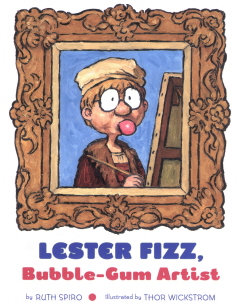
Ruth Spiro is the author of the picture book, Lester Fizz, Bubble-Gum Artist (Dutton).

Before it was published, the manuscript was a winner in the Writer’s Digest 72nd Annual Writing Competition, and also won the Liam Callen Award for Best Overall Contest Entry in the Kay Snow Writing Contest, sponsored by the Willamette Writers in Oregon.

 Ruth’s articles and essays have appeared in FamilyFun, CHILD, Woman’s World, and The Writer. She’s a contributor to The Right Words at the Right Time: Your Turn, edited by Marlo Thomas, as well as Chicken Soup for the Child’s Soul, Chicken Soup for the Beach Lover’s Soul, and Chicken Soup for the Soul Christmas Collection.

 A frequent speaker at schools and conferences, Ruth lives with her family in suburban Chicago, IL. Her website is www.ruthspiro.com. This summer, she plans to lose fifteen pounds and start her own blog.

I found my critique group through a lucky turn of events. I’d just completed a writing class with author Carolyn Crimi, and she connected me with the group because she knew they had an opening. I’ve been with them for ten years now, though the original members have been together since the early 1990’s. I remember bringing my poem “Into the Rain” to the first meeting I attended. They suggested I add more of a story arc, which I did, and it later won the “Bedtime Stories” contest sponsored by Half-Price Books.

Our eight members are: 

 We meet in person once a month at a member’s home.  I know many critique groups work online, but this face-to-face interaction invites discussion, brainstorming and camaraderie – to me, a welcome balance to the solitude of writing.  We email our manuscripts to the group about a week before our meeting, giving us time to read each piece and note our comments. That way, we can get down to business and make the most of our time together. At any given meeting we’ll have 4-5 manuscripts to review; I can only remember one or two occasions when we had eight. Most importantly, we’ve found that Bev’s lemon squares, microwave popcorn, and vast quantities of chocolate are absolutely essential to the process.

Our group is unique in that we write in a variety of genres:  picture books, middle grade novels, YA, non-fiction, poetry… a little bit of everything.  I also write for publication outside the children’s market, and my critique group has willingly read my articles and essays for The Writer magazine, Chicken Soup for the Soul, and the SCBWI Bulletin, among others. They’ve reviewed my website text, school visit brochure… everything but my grocery list. (Which I’m sure they’d comment on, if I asked them to!) I think it’s this flexibility that has helped us remain together through the ebb, flow, and evolution of our individual writing.

I believe we all benefit from reading and critiquing work in a variety of genres. After all, the elements of story apply across the board, regardless of the length or intended audience. Characters, setting, voice… they all need to make sense and ring true. Even the attention to language and rhythm that’s so essential to a picture book can also be applied to a young adult novel. And poetry? It’s everywhere.

The main challenge our diversity presents is in the scheduling. We try to divide our meeting time equally for each manuscript submitted, but when one member brings a 500-word picture book and another has a 15-page novel chapter, it’s hard to do.

Still, I don’t think anyone ever feels that her manuscript hasn’t been given the attention it needed. On a few occasions, we’ve actually devoted an entire session to critiquing a complete novel; although we’d previously critiqued the individual chapters, a complete read-through can reveal issues with plot, continuity, character development, etc.  Plus, it’s great fun to see the finished result of a friend’s months, or years, of hard work!

 Which brings me to the reason why being a member of this group is a joy, and a privilege: I truly consider them my friends. While our main goal is to work together and make our writing the best it can be, we always take time at the beginning of our meetings to ask, “What’s new?” We share good news and not-so-good news about our writing and our personal lives. We’ve celebrated the births of books and babies, and given moral support during difficult times. When I told my group I’d be missing a few sessions because of an upcoming surgery, a few days later I opened my mailbox to find a gift certificate for a restaurant take-out service, so my family could order dinner during my recovery!

While we share the common interest of writing for children, we’re about as different as a group of eight women can be. Luckily, these differences work to our mutual advantage, as well.  The unique perspectives of a high school English teacher, website editor, writing instructor, social worker, zoology expert and fine artist contribute to the knowledge base from which we read and critique manuscripts. Best of all, we respect one another as writers, there’s no air of competition, and we feel comfortable being honest with each other, without repercussion. Discussions may get lively and sometimes we disagree, but at the end of the evening there are always hugs as we walk out the door. 

Posted in Uncategorized

Friday Five: What’s Happening Out There?

Okay, the blog’s been pretty Becky-centric this week, so for Friday, I’m scanning the blogosphere for interesting news, discussions, and events that are happening between and to others! School starts up again on Monday, so my brain (my middle-aged brain!) should be back firing on most more cylinders!

1. April is National Poetry month, and writers all over the blogs are doing some pretty cool things. If you haven’t checked out Susan Taylor Brown’s blog lately, she’s given herself an incredible challenge–to write a poem a day about the father she never know. Susan’s a friend, and I’m not a poetry expert, but true gut feeling? Every poem I’ve read has been incredible–open, honest, and lovely.

2. Kerrie Flanagan at The Writing Bug talks about the blogging “box” she found herself caught in and warns us that she’ll be busting out soon! How are you feeling about your blog these days?

3. I love this post from Sherrie Petersen about what it’s meant to her to find her critique group.

4. Laurie Halse Anderson has a few posts about MORE proposed library cuts. Page down the blog a ways and catch them all, in order.

5. Jane Friedman at There Are No Rules talks about trying to make “it” all happen.