Posted in First Drafts, Plot, Scenes

Keeping an Eye on the Carrot

This week, and this weekend, I’m plotting my WIP. I’m trying to get as far as I can before Monday, when I’ve promised myself I’ll start actually writing. Here’s what I’ve been working on the past few days. I say “based,” because over the years, I’ve come to realize what categories of info I need to focus on before I write.
st01

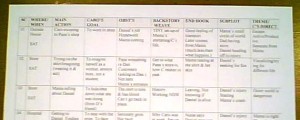
The table is based on Martha Alderson’s Scene Tracker, which you can see in her book, Blockbuster Plots,  or her other products. Of course, this plot session comes after a lot of research, working my way through Donald Maass’ Writing the Breakout Novel Workbook, and just…thinking. This is the chart, though, that I’ll use to move myself forward (I hope!) through the first draft.

In case you can’t read the headers, I at least think about these things for each scene:

  • Where and when the scene takes place
  • The main action(s) of the scene
  • The MC’s goal–her scene goal, what she wants to accomplish then and now
  • Any obstacles to that goal and who’s putting those obstacles in the MC’s path
  • What part of the backstory I should/could weave in
    This column is new for this book, because the past plays a huge part in the present, and I’m working hard not to just dump it in, but place it, in small drips, where it really belongs.
  • The “end hook”–how I visualize the scene ending, with a pull for the readers to turn the page
    This is another new column. Partially, this is to remind me about cliff-hangers, but it also helps me think about points of high conflict for each scene.
  • Any subplots I can bring into the scene
  • Theme/MC’s Direction toward or away from her goal. Theme is Martha’s column title, and I like to keep it in, because–even if I don’t get anywhere close to plotting in my theme, the column keeps it present in my mind where, hopefully, it simmers. I’ve included, in this same column, whether–by her actions–my MC is stepping toward or away from her goal. Somehow, in my mind, this has become connected with theme. We’ll see!

I let myself be pretty loose with this–it’s almost more of a brainstorming tool than an actual plotting chart. Some of the cells get seriously tall and skinny, as I dump random possibilities and connections into them. The thing to remember, hard as it can be, is that the goal here is almost a kind of anti-perfection. There is too much I don’t, and can’t know, until I start writing–until I’ve finished writing the first, and subsequent drafts. I want to use the info in this chart as a series of guideposts, not as a straight-jacketed path.

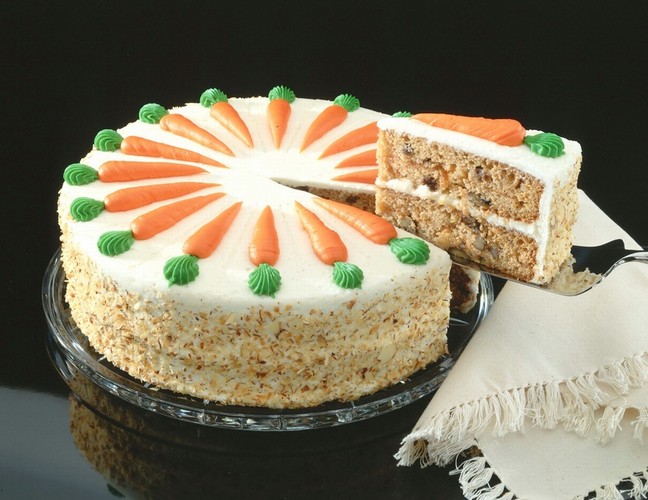
So, when I find myself worrying too much about whether my character would do this or that, what piece of history she’ll be interacting with, or even what the weather would be like, I focus on the carrot.  The one that’s dangling out in front of me, coaxing me to keep moving forward.

That carrot is that, the more quickly I plot, the more guideposts I’ll be giving myself, the more of that first mess of words I’ll be able to get onto the page, into the computer. I’ll be able to write my first draft with speed, energy, and excitement. And I’ll have room to make some of those magical discoveries as I go.

So, as you plot, keep an eye on your carrot, whatever it may be. Figure out what it is, get a picture in your mind, and write toward it.

Mine, just so you know, looks a lot like this.
carcake

Posted in Plot, Scenes, The Middle, Thinking

Plotting the Middle–One Attempt to Find a System

I don’t know about you, but my brain does strange things in the early stages of thinking about a novel. Many of those things are strange in a good way. Others, not so much.

Lately, as I spend time with my current WIP, I’ll be immersed in some wonderful, creative brainstorming about my hero or another character or a setting, and my mind starts going off in tangents about scenes that need to happen or about the big, dramatic choices my hero will have to make by the end. Fun things like that. And then, all of a sudden, I’ll have one of two thoughts. They are:

  • I have WAY too many actions/events that have to happen in the middle of this story!
  • How in the WORLD am I going to find enough actions/events to fill up the middle of this story?!

Note: Exclamation points denote panic.

Double Note: Yes, I realize those thoughts are extreme opposites. Donald Maass would love me as a character.

The point, today, is that I did spend a little time the other day thinking, again, about how to plot out that middle. How to find a way to place it–as a craft element–somewhere between a dense, overcrowded mess and a gapingly empty maw. And here’s what I came up with.

I’m getting a pretty good idea of what both the beginning and the ending of this story need to be doing. As I work, my brain goes back and forth between those two points, thinking about how they connect and what layers they share.  And I’m making myself slow down a bit and think about ways to weave those threads through the middle.

Here’s an example. Let’s say I’m writing a story about a tortoise and a rabbit. No, let’s call that second character a hare. The hare challenges the tortoise to a—okay, you know the story. You’re probably thinking it’s a pretty simple plot (which makes for a good example!), but there are a few layers here. We need to show the hare’s speed, and its cockiness, and its lack of manners. We need to show the tortoise’s slowness, its confidence, and its style.

Let’s take one set–speed and slowness.

In the Beginning, speed is strength and slowness is weakness. By the End, the tortoise has reversed that valuation–slowness can be power and strength may not be so good over the long haul. (Sounds like an ode to my running, but let’s not go there.) Obviously we can’t just snap our fingers and have that change happen–that’s wishful thinking, not storytelling.

We need two or three plot points in the Middle to make the change happen.  And this is where I’m taking a few minutes, to ask myself, “What could those plot points be?” And for each thread I think about, I’m making a quick list of possiblities…like this:

  • The hare could laugh at the tortoise and all the other animals for being slow.
  • The tortoise could stop in the middle of the race to help a young animal that is hurt or lost.
  • The other animals could have a meeting and decide to help the tortoise.
  • The elephant could fill up its trunk with water from a nearby lake, then flood the path so the tortoise could swim the race.
  • The bees could magically polinate a nearby field of poppies into bloom, so the hare would fall asleep–oh, wait, that’s another story.

Anyway, you see the point. Each of these possibilities could (I’m not necessarily saying should!) be a scene in the story. In sequence, they show the progression from the hare being the one with power, to the tortoise earning the strength and support of friends and turning the tables on his long-eared antagonist. Et voila, some of your middle is filled.

What do you think? Is this a possible tool to help make that middle less scary, less intimidating? Do you have techniques you use to plot your way across the void? I’d love to hear them, because–whatever may or may not work–I’m pretty sure I’ll be trying them all in the next few months!

Posted in Character, First Drafts, Plot, Scenes

Scenes: Writing in Sequence or…Not

I’m getting started on another WIP (work in progress). It’s a historical YA, set in Chicago in 1913, just before the suffragette march on Washington, D.C. I’ve been reading and researchng and mulling for a while now, and I’ve even done a bit of basic plot and character work. And I’m thinking about writing.

The question is: Do I plot in more detail, at the scene-by-scene level, so I can write in sequence and develop the connections and transitions as I go? Or do I go at it a bit more randomly, picking a scene that’s calling to me and putting words on pages, a bit more isolated from what may come before or after?

Confession: I already did the second one. I’m developing a critique workshop for the Redwood Writers branch of the California Writers Club, and I needed a writing sample for the participants to critique. I played with just making something up out of the ozone, but a scene from the WIP kept pushing at me. It’s one of the first scenes in the book that I visualized, and it’s one of those crux moments (I think!). So, being as I had eaten too much chocolate that night, I got up out of bed and wrote it.

Whee!

Yes, it felt great. And it started me thinking about the friends I have who write–well, randomly isn’t the right word, but they certainly don’t worry about writing scenes in sequence. Should I? Could I? (Have I mentioned here yet that I’m a bit of a control freak?)

So I’m thinking about the pluses and minuses of both methods. MY pluses and minuses. I really want to hear from all of you–about how you write, WHY you write that way, and what you think are the benefits and problems. Susan Taylor Brown has a post up today about why she chooses to write out of order.

Keep in mind, I believe that you need to have some kind of basic plot developed before you start with either of these methods. I’m also talking about a first draft here, although–if I thought about it–I could probably find applications for revision, also. (Another post, folks!)

Writing Scenes in Sequence

Pluses

  • When you finish a scene, you already know what’s coming next. Given that you’re writing as close to every day as you can, this means you’ve got a roll going and can move on to the next scene without that gaping void of what now? staring at you.
  • You can get a feel for the rising  tension of the story as you write. Yes, you’ll have to go back and tweak it, but you’ll be watching for it and have a sense of where each scene needs to fall in the pattern.
  • You feel the balance, as you write, of when and why various characters are appearing in your story.

Minuses

  • You may (will!) find yourself writing scenes you aren’t interested in at the moment, ignoring another scene that’s really calling to you.
  • You can get yourself pointed too strictly in one direction, a direction that may or may not be the best one for the story.
  • You may focus too tightly on the plot and not see the character that you really need to develop.

Writing Scenes out of Order

Pluses

  • You get the freedom to write whichever scene you’re excited about, which probably increases the joy of your writing.
  • You get more surprises, because you’re writing in less of a constricted “space.” Having less plan means there’s room for more spontaneity. (Okay, just WRITING this bullet makes me anxious!)
  • You will see connections as they appear, rather than trying to assign connections you’ve already decided on.

Minuses

  • When you run out of scenes that you really want to write, you’re still looking at a whole lot of scenes that still need to be written. 
  • You may end up with a bunch of scenes that have no connection, that are episodes, not part of an actual story.
  • You may struggle for ideas about what a scene needs to be doing.

Okay, Confession #2. I honestly thought when I started this post that I’d come down hard on the side of writing in sequence. Um…NOT. I was struggling to think of pluses for that method. Whereas when I got to writing scenes out of order, all of a sudden I was thinking…oh, yeah!

Now, this may be because, honestly, I don’t have 100% of my writing time to dedicate to this WIP right now. I’m over halfway through The Critiquer’s Survival Guide, but still have some serious work to do in the next few months. I’m trying to give as much evening time as I can to the story, but…family time, housework, all the life thingies need their minutes, too. As usual. So it’s very possible that the idea of picking scattered scenes to write just sounds more doable.

I’m also, though, looking back at the revision passes I made on my last book, the one I’m sending around to some agents. I can’t truly say that writing things in sequence gave me anything but the appearance of control (not that that’s a BAD thing!). And I’m seeing that, possibly, writing scenes out of order may actually let the story develop as it needs to, not just in the pattern I’ve decided it should follow.

CONCLUSION: I’m going to try it. I’m going to do a bit more plotting, focused on the most important scenes I can think of right now, and then I’m going to write them.

Until, at least, I go crazy trying. 🙂

What about you?

Posted in Scenes

Scene Transitions

Remember, in the days when you were writing essays for English class, and a teacher would write the word  “transition” in the margin of your paper? They wanted you to smooth out the jump from one paragraph to another, to use a phrase that would make the flow of text more clean. So you’d stick in something like “After Joe got home from the zoo…” or “Once Sally dug the pickle out of the pudding…” Then you’d hand the essay back in and hope for a better grade.

When we’re writing fiction, moving our readers from scene to scene, we need transitions, too. What we don’t want, though, is for our stories to sound like high-school essays, with the only goal being a higher grade. If we use an obvious, mechanical solution like the ones I showed above, the writing is not going to make an agent or editor happy. (It shouldn’t make your critique group happy, either.)

So what do we do? How do we keep each scene linked with the one that comes before, the one after, and–honestly–all the other scenes in our book. What can we do to put in that layer of connection that gives the story and the characters the depth and complexity our readers want.

We have to be elephants. That’s right–we have to never forget. Okay, go ahead and forget in your first draft. 🙂 As you revise, though, you’ll need to look at each scene and think about what’s come before. If your hero just got dumped by her boyfriend, you can’t have her move into the next scene in a smiling, happy-dance voice. And if your detective just broke open a major clue in his case, you don’t want to start the next scene showing him curled up with a good book and a glass of wine, ignoring the new path he just discovered. Not without a really good reason.

So you remember the connections. How do you show them, though,  without boring the reader with a restatement of what’s come before or slowing down the action that’s still to come?

Here are a few suggestions:

  • Show your hero stuck in, or fighting off, her mood from the scene before.
  • Drop the characters into an action set up by the previous scene’s cliff-hanger.
  • Send the story in a new direction, but let the main character show an awareness of that change. Let her remind herself (and the reader) that she’ll be coming back to the old, unresolved path soon.
  • Write some dialog between a few characters, to (briefly!) tie together what just happened with what’s going to happen next.

Don’t, as we all did with that pat phrase on our essays, stick your transition awkwardly and obviously into the first sentence of every new scene. But keep the old scene in mind and watch for the right moment to weave the old in with the new. Show your readers the continuity of action and character that makes the story one story, not lots of separate stories connected only by chapter breaks.

How do you work out your transitions? How do you keep the connections playing out in each scene, smoothly and seamlessly?