Posted in Bravery, First Drafts

Back on the High Dive

As a child, I was pretty much a wimp. Adventure was something to read about, not to actually participate in. Every now and then, though, something would snap inside me, and I would decide that I was going to do…X.

When I was, oh, ten or twelve, X was the act of diving off the high dive in swimming lessons. We were required to jump off, but it was our choice if we wanted to dive. For most of the week, I climbed up that ladder, walked to the end of the board, and jumped. None of this did I do happily.

And then, toward the end of the week, I decided I was going in head first. As I climbed out of the pool after the last jump and walked briskly back to the other end, I stopped at the chain-link fence separating the pool from the parents. My mom always brought a book to swimming lessons (hey, we must be related!), and I made sure that I stopped, got her to pull her nose out of it, and promise that she would watch–all without telling her what I was going to do. Then up that ladder I went again.

Keep in mind, these were the days of required swimming caps for girls, even though–in the early seventies–my pixie cut was several inches shorter than most of the boys’ hair styles. And keep in mind that, when I dove off the low-board or the edge of the pool, I would “part” the water with my hands, then pull them down to my sides.

Off the high dive, of course, I parted the air and had my arms at my sides miles before I hit the water. With my head. That had a rubber swimming cap stretched tight across it.

Say it with me…OW!!!!

Probably needless to say, that was the last time I ever dove off anything more than a few inches away from the water.

About two years ago, I wrote a complete first draft of a middle-grade mystery. Today, that mystery is complete and would love to find its way into an agent or editor’s hands. Meanwhile, what am I doing? I’m back up on the first-draft diving board. The completed novel is a long, long way down. What’s it look like from up here?

  • There’s a little extra confidence, because I’ve done this once. I believe (usually) that I can do it again.
  • There’s a little extra worry, frankly, because I also know how much work is ahead of me.
  • There is some serious excitement. In 4-6 weeks, I will have created something new. It will be a mess, I’ll probably have had my share of  tight-swimming-cap headaches along the way, and I’ll be a long way off from a swan dive. But I’ll have added a new piece to the world.

Perhaps the best part. I am liking myself a whole lot right now. I remember this feeling from walking back along the pool, from saying, “Mom!!” half a dozen times in a progressively louder voice to make sure I had a witness, from knowing that I–the wimp–was going to do something big and brave. It’s a much happier place for me than standing on the sidelines watching all the other kids dive right in.

Today, let’s celebrate our courage. What are you doing this summer that might be pushing your usual limits, just a bit? Let us know, and we’ll all clap like crazy. Well, once you’ve got your swimming cap off and have taken a couple of aspirin. 🙂
Posted in First Drafts, Plot, Scenes

Keeping an Eye on the Carrot

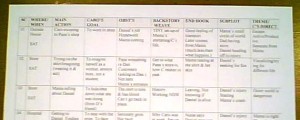
This week, and this weekend, I’m plotting my WIP. I’m trying to get as far as I can before Monday, when I’ve promised myself I’ll start actually writing. Here’s what I’ve been working on the past few days. I say “based,” because over the years, I’ve come to realize what categories of info I need to focus on before I write.

st01

The table is based on Martha Alderson’s Scene Tracker, which you can see in her book, Blockbuster Plots,  or her other products. Of course, this plot session comes after a lot of research, working my way through Donald Maass’ Writing the Breakout Novel Workbook, and just…thinking. This is the chart, though, that I’ll use to move myself forward (I hope!) through the first draft.

In case you can’t read the headers, I at least think about these things for each scene:

  • Where and when the scene takes place
  • The main action(s) of the scene
  • The MC’s goal–her scene goal, what she wants to accomplish then and now
  • Any obstacles to that goal and who’s putting those obstacles in the MC’s path
  • What part of the backstory I should/could weave in
    This column is new for this book, because the past plays a huge part in the present, and I’m working hard not to just dump it in, but place it, in small drips, where it really belongs.
  • The “end hook”–how I visualize the scene ending, with a pull for the readers to turn the page
    This is another new column. Partially, this is to remind me about cliff-hangers, but it also helps me think about points of high conflict for each scene.
  • Any subplots I can bring into the scene
  • Theme/MC’s Direction toward or away from her goal. Theme is Martha’s column title, and I like to keep it in, because–even if I don’t get anywhere close to plotting in my theme, the column keeps it present in my mind where, hopefully, it simmers. I’ve included, in this same column, whether–by her actions–my MC is stepping toward or away from her goal. Somehow, in my mind, this has become connected with theme. We’ll see!

I let myself be pretty loose with this–it’s almost more of a brainstorming tool than an actual plotting chart. Some of the cells get seriously tall and skinny, as I dump random possibilities and connections into them. The thing to remember, hard as it can be, is that the goal here is almost a kind of anti-perfection. There is too much I don’t, and can’t know, until I start writing–until I’ve finished writing the first, and subsequent drafts. I want to use the info in this chart as a series of guideposts, not as a straight-jacketed path.

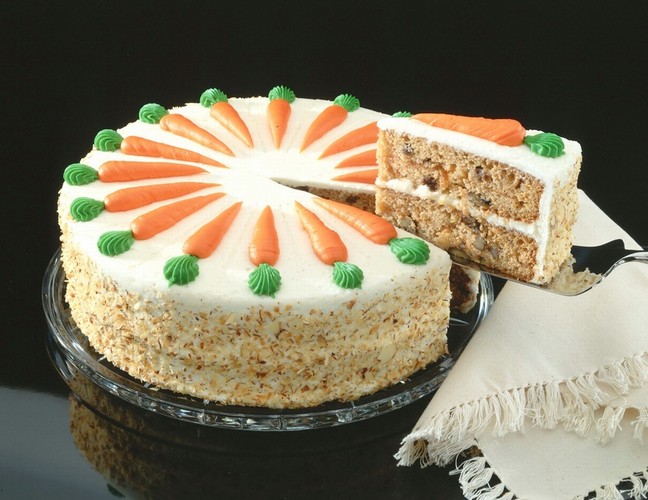
So, when I find myself worrying too much about whether my character would do this or that, what piece of history she’ll be interacting with, or even what the weather would be like, I focus on the carrot.  The one that’s dangling out in front of me, coaxing me to keep moving forward.

That carrot is that, the more quickly I plot, the more guideposts I’ll be giving myself, the more of that first mess of words I’ll be able to get onto the page, into the computer. I’ll be able to write my first draft with speed, energy, and excitement. And I’ll have room to make some of those magical discoveries as I go.

So, as you plot, keep an eye on your carrot, whatever it may be. Figure out what it is, get a picture in your mind, and write toward it.

Mine, just so you know, looks a lot like this.

carcake

Posted in First Drafts, Prose, Structure

Getting the Words Right…or as Close to Right as Possible

Today, I picked up The House of Green Turf, by Ellis Peters (Edith Pargeter), for a re-read. Peters is probably best known for her Brother Cadfaelmysteries, but I actually like her earlier Inspector Felse books better. I was tired and a bit cranky, and wanted something to just sink into. I admit it, I’m a sucker for British mysteries, especially the older ones like the Felse books, where the author seemed to take time, well-spent time, with the words.

Here’s a passage where Maggie Tressider has just found out that she is not–as she has thought for the past week–morally responsible for the death of a man and–for the past night and day–a woman as well. Look at this. Or better…listen:

A huge, clean, boisterous wind was blowing through her mind and spirit, blowing the sickness from her soul and the corruption from her will. She closed the door of her room, and sat down before the mirror to stare into her own face, and saw it marvellously changed. She felt cold and pure, scoured into her ultimate clarity, like a Himalayan peak honed diamond-clear and diamond-hard by the withering winds of the heights. She saw herself bright and positive and brave in the mirror, and wondered where this self of hers had been hiding for so long.

Yes, it’s an older style. More telling than we tend to accept today. It’s longer, less active. But it’s lovely. Because Peters knew how to take words and shape them into something beautiful.

I don’t think we’re less concerned with this part of the craft today. The best of the books being published do just what Peters has done, put words on the page so that they sound, feel, like poetry, even when they keep to the standard sentence and paragraph structure of prose. I think, though, that as writers, we worry so much about getting the plot tight and the characters extreme and the pacing at top-speed, that we sometimes let the words slip.

Words are hard. Yes, everything is, but we can learn much of our writing craft–through workshops and books and, yes, critique groups. Getting the art of the sentence down is a bit tougher, I think. And I very much believe that grammar and clarity of words is a very separate skill from story telling or world-building. If we didn’t learn this stuff when we were young, very young, it’s hard to pick it up now, as adults trying to turn our imaginations and our ideas into books.

What can we do? Well, I do think there are a few things that help.

  • Don’t worry about the language and sentences in the early drafts. Every time you sweat an apostrophe (its or it’s gets me every time!), you block the creative flow that is letting you get your story on the page. Push through those questions, those worries, and write.
  • Ask your critique group to lay off the grammar for a while, too. Receiving feedback is challenging enough; if someone’s red pen has bled punctuation all over your scene, you’re not going to be able to get past it to the bigger issues facing you and your project. If they see a writing problem or two happening time and time again, they can let you know about it, sure. Learning where your weaknesses are can only help your prose get stronger. But don’t let these be the focus of early feedback.
  • Read, read, read.  And when you find a book that captures you with its prose, read it again. These are the books that are so easy to get lost in, to not see how the author is doing what they do to us. Take the time to read for something other than story, other than character, to look at the playing the writer does with the words and the sentences. To get to the structure behind the beauty. Because, yes, every sentence is built on structure.
  • Read your own work, too. Read your scenes aloud and let your ear actually hear the writing. Keep a pencil handy and scribble down alternate words, different phrasings, stronger verbs and nouns.
  • If you really don’t feel comfortable with your sentence-level, grammar-type skills, consider taking a class. Yes, there are many books about “style,” including The Elements of Style, but to really understand what makes a clear, evocative sentence, you need to be writing them. And if you take a writing class that isn’t about fiction, you’ll feel less pressured and more able to learn the mechanics.
  • Find someone to read your final drafts. If you’re not confident about your prose, ask for help. If someone in your critique group is great at this, yay–buy them chocolate! If not, hunt around. You may have a friend or a relative or a co-worker who just loves grammer, revels in it. Ask them for a favor (and, yes, buy more chocolate). They may even be able to work with a bit more distance than one of your critique partner, and focus solely on your prose.

This sounds, I’m afraid, like all I’m pushing for is that we get those sentences right, that we write clearly and effectively. No, I want more than that. I want, “a Himalayan peak honed diamond-clear and diamond-hard.”  The thing is, just like story is built on structure, so beautiful prose is built on grammar rules and sentence clarity.

And we can produce those fast plots and edgy characters along with beautiful prose. 🙂

Posted in First Drafts, Getting Organized, Outlining, Plot, Research, The Writing & Critique Group Survival Guide

When the Itch Hits

Do you scratch it?

I’ve been talking a lot online about the research & planning I’m doing for my YA historical novel. It’s been going great. I’m learning tons about my characters, about their wants and their conflicts, about their back-story and their future. I know there’s more I can learn.

Except I’m itching to put all this aside and get writing.

I promised told myself I would finish Donald Maass’ Writing the Breakout Novel Workbook before I started writing. I said I would do a bit of plotting before I dug in. There are at least a third of these

researchbooks

that I haven’t read yet, and more I need to add to the shelf.

I can hear you all now. “Just write it!”

And here are your very good reasons:

  • I’ll learn more about your characters as you draft their stories.
  • The plot will change no matter how much time I spend on it.
  • I’ll narrow down my research needs as I write.
  • If I do too much planning, I’m putting handcuffs and chains on my muse.

Yep. So I’m going to write.

Soon. I’m still learning from Maass, but I’m giving myself permission to go a bit more quickly through his worksheets. I’m putting a few more tags on pages that need to wait until I have a draft to revise. And I’m letting myself relax away from the research a bit, so I can keep my actual characters at the forefront of my brain, instead of too many historical details/facts. And, since I still will have revisions to do on the critique book, I’m telling myself that any plotting I do has to be fit in between those changes. I’m not allowed to put the writing off, just because the whole outline isn’t complete and comprehensible.

When? I’m thinking June. A few other writing friends have first drafts looming, and we may all hit the keyboards together.

I’ll be MORE than ready.

So when do you start? What’s your comfort zone between knowing any/all of your story and needing to get those people on the page and moving? I’d love to hear how you do the balancing act?

Posts may be a bit thin on the ground the next few days–we’re in the middle of spring break over here. I’ll be back in force next week, though, and I’d love to start doing a little more talk about critiquing and critique groups. So if there’s a topic you’re “itching” to dig into, let me know that, too!

Posted in Character, First Drafts, Plot, Scenes

Scenes: Writing in Sequence or…Not

I’m getting started on another WIP (work in progress). It’s a historical YA, set in Chicago in 1913, just before the suffragette march on Washington, D.C. I’ve been reading and researchng and mulling for a while now, and I’ve even done a bit of basic plot and character work. And I’m thinking about writing.

The question is: Do I plot in more detail, at the scene-by-scene level, so I can write in sequence and develop the connections and transitions as I go? Or do I go at it a bit more randomly, picking a scene that’s calling to me and putting words on pages, a bit more isolated from what may come before or after?

Confession: I already did the second one. I’m developing a critique workshop for the Redwood Writers branch of the California Writers Club, and I needed a writing sample for the participants to critique. I played with just making something up out of the ozone, but a scene from the WIP kept pushing at me. It’s one of the first scenes in the book that I visualized, and it’s one of those crux moments (I think!). So, being as I had eaten too much chocolate that night, I got up out of bed and wrote it.

Whee!

Yes, it felt great. And it started me thinking about the friends I have who write–well, randomly isn’t the right word, but they certainly don’t worry about writing scenes in sequence. Should I? Could I? (Have I mentioned here yet that I’m a bit of a control freak?)

So I’m thinking about the pluses and minuses of both methods. MY pluses and minuses. I really want to hear from all of you–about how you write, WHY you write that way, and what you think are the benefits and problems. Susan Taylor Brown has a post up today about why she chooses to write out of order.

Keep in mind, I believe that you need to have some kind of basic plot developed before you start with either of these methods. I’m also talking about a first draft here, although–if I thought about it–I could probably find applications for revision, also. (Another post, folks!)

Writing Scenes in Sequence

Pluses

  • When you finish a scene, you already know what’s coming next. Given that you’re writing as close to every day as you can, this means you’ve got a roll going and can move on to the next scene without that gaping void of what now? staring at you.
  • You can get a feel for the rising  tension of the story as you write. Yes, you’ll have to go back and tweak it, but you’ll be watching for it and have a sense of where each scene needs to fall in the pattern.
  • You feel the balance, as you write, of when and why various characters are appearing in your story.

Minuses

  • You may (will!) find yourself writing scenes you aren’t interested in at the moment, ignoring another scene that’s really calling to you.
  • You can get yourself pointed too strictly in one direction, a direction that may or may not be the best one for the story.
  • You may focus too tightly on the plot and not see the character that you really need to develop.

Writing Scenes out of Order

Pluses

  • You get the freedom to write whichever scene you’re excited about, which probably increases the joy of your writing.
  • You get more surprises, because you’re writing in less of a constricted “space.” Having less plan means there’s room for more spontaneity. (Okay, just WRITING this bullet makes me anxious!)
  • You will see connections as they appear, rather than trying to assign connections you’ve already decided on.

Minuses

  • When you run out of scenes that you really want to write, you’re still looking at a whole lot of scenes that still need to be written. 
  • You may end up with a bunch of scenes that have no connection, that are episodes, not part of an actual story.
  • You may struggle for ideas about what a scene needs to be doing.

Okay, Confession #2. I honestly thought when I started this post that I’d come down hard on the side of writing in sequence. Um…NOT. I was struggling to think of pluses for that method. Whereas when I got to writing scenes out of order, all of a sudden I was thinking…oh, yeah!

Now, this may be because, honestly, I don’t have 100% of my writing time to dedicate to this WIP right now. I’m over halfway through The Critiquer’s Survival Guide, but still have some serious work to do in the next few months. I’m trying to give as much evening time as I can to the story, but…family time, housework, all the life thingies need their minutes, too. As usual. So it’s very possible that the idea of picking scattered scenes to write just sounds more doable.

I’m also, though, looking back at the revision passes I made on my last book, the one I’m sending around to some agents. I can’t truly say that writing things in sequence gave me anything but the appearance of control (not that that’s a BAD thing!). And I’m seeing that, possibly, writing scenes out of order may actually let the story develop as it needs to, not just in the pattern I’ve decided it should follow.

CONCLUSION: I’m going to try it. I’m going to do a bit more plotting, focused on the most important scenes I can think of right now, and then I’m going to write them.

Until, at least, I go crazy trying. 🙂

What about you?

Posted in Critique Groups, First Drafts

Critique Groups: Knowing You Have Readers

This week, as I continue drafting The Critiquer’s Survival Guide, I’ve been grateful–again–for my critique group. I’ve been working on a few chapters that have less of a “template”  to them than some of the earlier ones. I hit some frustration points, some places where I had to slow down, take a few steps back, revisualize what I was doing, then dig in again. As of today, I’m pretty happy with what I’ve got. I think it’s good.

But here’s reason 6,381 why I love my critique group. At this point in the process, I don’t have to know for sure. Because of my critique group, the chapters will have a trial run.

I’ve done a lot of different jobs that revolved around words, and I’ve never underestimated the value of having some kind of editor look at my work. When I did closed-captioning for television, it was a relief to know that somebody would review my captions, significantly reducing my odds of sending some stupid mistake out over the airwaves. As a technical writer, I loved knowing that there were a copy editor and a proofreader standing sitting ready at their spots on the production line. And now, as I write fiction and nonfiction, I am thrilled that I can send chapters along to my critique group, knowing they’ll tell me what they love and what…well, not so much.

This probably sounds like I’m lazy. And I definitely am–about things like housecleaning and gardening and laundry. About my writing? No. It’s not laziness to want a few pairs of  fresh eyes to read your work. It’s not laziness to let my writing flow quickly and freely, to slam the door on that inner editor, to trust that the rough drafting I do will take me somewhere strong. It’s not laziness. It’s appreciation.

Because all this is what my critique group gives me.

We’ve all heard, or experienced, horror stories about critiquers who trash an author’s writing, then proceed to dicate the book that author “should” be writing. Yes, when you step out to share your writing, you face this risk. I think, though, that it’s a small one, compared to the huge benefits a strong, supportive group can give you.  And, if you’re  considering publication at all–now or in the future– it’s a risk you’re going to have to take someday.

Why not do it now?

Posted in First Drafts, The Middle, The Writing Path

Making it through the Middle

Saturday was November 15th. For NaNo writers, that’s halfway through. I’ve been following people’s journeys on blogs and Facebook, and some people are already finished with their word-count goal (yay!), others are still working hard to get there (yay, again!)

Theoretically, a lot of NaNo-ers are somewhere around the middle of their novels. The MIDDLE. Whether you’re trying to write a whole book in thirty days, or just trying to write a whole book, the middle is often not a fun place to be. Lots of us start out on our projects knowing the start of the story and where we (for now) expect the story to end. We may even have a few big scenes that we know are going to happen along the way.

We rarely, though, have the whole middle figured out.  And that middle, while we’re drafting, can feel vast, bottomless.

In my critique group, we do a lot of brainstorming and, funny enough, lots of that brainstorming is about this middle section.  I thought I’d share one way we go at filling up that big space.

Take a look at your characters. All of them. What have they done so far and what should they be doing next. I literally make a list down the side of a piece of paper of my hero and the rest of the main characters. Then I write down where each of those characters are in their story arc. I might also write down (at the far side of the paper) where each of those characters needs to be, on that arc, by the end of the story. When you’ve got those lists, think about what each character could do–just one thing each–to make progress toward completing that arc.

The other way to look at their progress is goal-based. Each character has a goal. If you get stalled, see where each of your characters are in terms of achieving that goal (or failing to get the goal, if that’s where they’re headed). What can those characters do, what next step can they take, to push forward on their goal path?

Don’t forget interactions. You want these characters, especially your hero, taking steps that put them into contact, and conflict, with each other. Juxtapose your hero, on another sheet of paper, with the other characters. What action, discussion, or argument does your hero need to have with each of these characters, to move the story along?

If you’re still stuck, there’s one more trick. What information do you need to give to the reader. What do you know—about a problem, or a clue, or a piece of background story—that needs to show up on the pages? Once you’ve thought of that, go back to the characters again. Who can help you reveal that information? What pairing, usually with your hero and somebody else, would give you a chance to show the detail, rather than tell it?

And the biggest, most important thing: don’t stress. When you’re stuck, remember that you don’t have to fill up the middle all at once. All you need is the very next action. That action may not be perfect; it may not even be the event you end up using in the next draft. Don’t worry. Just pick it and write it and keep going. Worry about changing it or fixing it later, in revision.

Right now, whether you’re NaNo’ing or not, your goal is to get across this middle. Remember Red Light, Green Light? How many times did Baby Steps win over Giant Steps? Plenty. So Baby Step your way across the middle and, sooner than you think, you’ll have the finish line in sight!

Good luck to all of you!

Posted in Critiquing, First Drafts, Setting, Specifics

Concrete, Solid Specifics

A biggie for me, when I edit or critique, is pushing encouraging writers to really get specific and concrete in their writing. You hear a lot about using strong verbs, but I think we also need strong nouns, adjectives, adverbs, conjunctions, articles, you name it.

You hear a lot about using details, and I think sometimes, we get carried away by quantity and forget to really pick and choose the right detail (or two) for the moment. Right to me is the detail, whether I’m working on a setting, a thread of internal thought, an action, or a voice, that hits it just right, that evokes an equally strong, solid response in the reader.

I’ll probably come back to this thread in future posts, so I’m not going to try and cover all the ways I think you can weave specifics into your writing. (I’d overwhelm you, you’d throw something (hopefully soft) at your computer, and you might never come back!) Today, I’m just going to talk about setting.

Read this, please:

The mountain was in front of her, the path going up it through the trees. The wind blew, and clouds moved across the sky, making shadows that made the forest even darker. The air was cold, and she pulled her coat closer around her, trying to shut out the silence as well as the cold. She started walking again, up and up, one foot after the other, ignoring the distance that was left.

Now, this:

The huge stone loomed ahead of her, the path struggling up its chipped, hard surface through the pines. The wind sighed, and gray stormclouds gusted across the sky, casting shadows that turned the forest almost black. The air was icy, and she tugged her parka close around her thin body, hoping to shut out the loud silence, as well as the deep chill. She started climbing again, up and up, one heavy boot after the other, ignoring the height she still faced.

Okay, all I did here, pretty much, was replace a word. I added a few. I may very well have gone overboard, just by playing, but reread the two passages. Which one paints you a more clear picture? Which one brings you closer to the scene this woman is moving through, makes you experience more of what she’s experiencing.

These kinds of details are not something to worry about in a first draft (especially if you’re doing NaNo!). Often, we really do just throw our settings onto the page, giving them a placeholder in the scene where they belong. Later, then, we actively research that setting, go physically to the place we’re describing or send some time with it in our imagination. Your critique group 🙂 can help you with the balance of detail–how much is enough, and how much is…well, too much.

Whatever you settle on, though, every setting deserves revision time, a few passes, to make sure your details are the right ones–strong, sensory specifics.

Posted in First Drafts

First Drafts: Fantastic or Just Fast?

Don’t expect me to stay this organized, but I thought, for today, I’d start at the beginning. The first draft. A stage that some of us love, and some of us, well…let’s just say we struggle with it.

National Novel Writing Month (NaNoWriMo) starts in ten days. Martha Alderson blogged about it this week at The Plot Whisperer— talking about “pantsers” and “plotters” and how both types of writers can make NaNoWriMo work for them.  Debbie Ridpath Ohi also put up a post about the month at Will Write for Chocolate–she’s going to do cartoons for NaNoWriMo this year. (Once again, I wish I could draw!) And if you want a serious peptalk about joining in, go over to GottaWriteGirl and scroll down to her Git Her Done! post.

What I like about these posts is that they go at this novel-in-a-month thing with some flexibility. I know lots of writers welcome NaNoWriMo with wide-open arms, but I’m also guessing there are plenty out there who would rather eat massive amounts of eggplant than try to pour out 50,000 words in 30 days.

I’ve never done NaNoWriMo myself–the timing was never right. I did, however write a Book in a Week, after hearing April Kihlstrom talk about the process. Did it work? Yes. Did I do it exactly as the instructions said? Nope. I am NOT a pantser. I need a path to follow, even if I know that path is going to change (and it will). So, in my “free” time, over a couple of weeks, I plotted–making use of Martha’s Scene Tracker, and writing a page of basic info for each scene I had planned. Then I took the week to write.  Essentially, I did Book in Three Weeks.

Guess what? I wrote 150 pages in five days. I had a book.

And then I revised.

Because, for me, this is what NaNoWriMo and Book in a Week and Karen S. Wiesner’s book First Draft in 30 Days are about. Oh, yes, they’re about the first draft, but–really–they’re about getting that draft out of the way so I can start fixing it.

I hear authors talk about writing a slow first draft, revising as they go, cleaning up the plot and the characters and the prose before they move on. I believe that, for these writers, this process works. It does not work for me.  At this point on my writing path, it doesn’t seem to matter how long I spend on the first pass at a page, or a scene, or a chapter.  I’m going to have to change it…often in very big ways.  Any extra time I send on phrasing or voice or setting–the work I do to get things “just right”–is wasted.

The truth is, you really don’t know the beginning of your story until you’ve written the last scene. Odds are, the pages you will revise just before you send a manuscript off for submission will be the first ten. When I’m first-drafting, I need to get to “The End” as quickly as possible, so that I can stand back and look at my story–my whole storyand really understand what it’s about.

Since I did BIAW, fast first drafts have become one of my soapboxes. It’s a little crude, but when I speak at conferences, I tell the writers in the room that my first draft is my “vomit” draft. In other words, I get it all out and worry about cleaning it up later. 🙂


I know this process isn’t set in stone for me. As I write more books, my attitude and the way I come at the first draft may change. But for now, I’m definitely on the side of the fast first draft.

I’ll make it fantastic in the revision.

What about you? Do you speed through the pages the first time around, or do you need to take more time, figuring out the details before you can move on? Have you done NaNoWriMo, or a variation? Are you joining the NaNoWriMo gang this year? Or have you built your own, flexible, method for getting that first pass on the page?

Join in the conversation. I’d love to hear your take on things.