Blog Posts

Posted in Thinking

Thinking Time

For the WIP I’m “writing” these days, I’m following a different path than I’m used to. And this new path involves an awful lot of non-writing. Also called thinking.

poohthink2

My husband, just this morning says that 90% of writing is actually thinking. Now granted, he’s a design engineer, but he does do a lot of creating in his work, and he has modified BIC (Butt in Chair) to BICFODSASWC (Butt in Chair, Feet on Desk, Staring at Screen, with Coffee).

For me, it’s tea, and I don’t do so well staring at the screen, but it’s the same theme.

For previous projects, I definitely did a lot of thinking, and much of that was ahead of time, but it was also with my hands on the keyboard, fitting things into the plot I was growing and the characters I was developing. Not so much, this time around.

I’ve mentioned before that I’m going through Donald Maass’ Writing the Breakout Novel Workbook. It has become my thinking tool. Donald asks me questions, and I start looking for the answers. Now I could grab those answers out of my brain, scribble them down quickly, and move onto the next. You know, like this was one of those horrid, timed finals from college, where you had to come across as clever as possible in as short a time as you could manage (legibly!).

But that’s not what I’m doing. Instead, I’m dropping Donald’s questions into my brain (and my story) and seeing where they lead me. And they’re leading me in all sorts of direction. I have gotten a surprise the last three days I’ve done this work–a surprise that I’m pretty sure deepens and strengthens the story.

Do I have much idea of where all these layers will go–what the scene sequence needs to be, or what the cause-and-effect connections are? Not yet, although a sense of this is simmering along with all the other details. But–and here’s what I think is important–I am getting to KNOW this story, the people in it, SO much better than I ever have before. And I’m thinking (hoping) that this knowledge will have to pay off, when the writing starts.

Is all this magic because of the workbook? Well, a lot is, I think. The other part comes from me being ready for what Maass is talking about. And from using the part of the writing craft I already know, to go beyond what the worksheets ask me to do.

We tell ourselves that every hour, day, year that we put into this writing this makes us better writers, raises our skill level, but sometimes I think we don’t really believe it. We want to get “there” so badly that we are impatient with the time–and practice–that “there” requires of us.

I’m still impatient. I still want “there.” For now, though, I’m enjoying the path, the sparks that are flying between what I’ve already learned and I’m learning now. This is magic.
Posted in Uncategorized

Blog Award: Honest Scrap

A couple of wonderful bloggers have given me blog awards lately. I have to tell you, getting these awards does make me really happy–it feels like such a compliment for something I’m having so much fun with, anyway!  I’ve gotten a couple at my other blog (the more personal, sometimes whiny one at http://beckylevine.livejournal.com), and I’ve happily and quickly passed those along.

Because a few of these hit kind of at once, though, I decided to take a few minutes and actually think about what I’d like to do here, at Moving Forward on the Writing Path, with the awards. And here’s what I’ve come up with. I’m going to:

  • Send warm thanks to the blogger who gave me the award.
  • Talk a bit about what the award means and how we can all, if we want, incorporate the goals of the award into our own blogs.
  • Pass the award onto a few bloggers who I think deserve the award, and who will–I think–be helpful to you all as writers.

Honestly, I’m going to ignore the usual “requirement” of the awards to re-gift the award to a specific number of blogs. Somehow, for me, that feels a bit too much like quantity versus quality. Not that I don’t think there aren’t hundreds of wonderful bloggers out there, but I’d rather highlight a few of the best than overwhelm everyone with too many places to check out at once.

I may play with the other “game rules” a bit, too! And, obviously, I encourage anyone to whom I give a blog award to do the same. 🙂

So that’s my plan! Hope you all think it’s a good one.

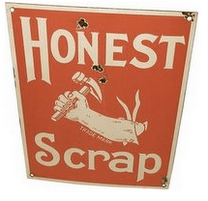
Today: the Honest Scrap Award.

honestscrap

Thank you so much, Shawna at Just Another Day in the Life, for giving me this award.

Here’s what I think about honesty in blogs:

I think one of the fun things about blogging, to be truthful, is the online persona we get to create. Most of us, as writers, often write “better” than we speak. I know I do. My thoughts are more organized, I do better choosing the right words or phrases, and (I think) I’m funnier. At least until (in person) you get to know me a bit more. Is this being honest, though?

I think it is.  By deciding which part of ourselves we are presenting at our blogs, we define ourselves more strongly. When I started my LiveJournal blog, my purpose was to have fun and meet (and learn from) other writers–mostly writers of kids’ books. Boy, did that work! When I moved my website to WordPress and started this blog, I decided I wanted it to have a slightly different function. I wanted the conversations to be more narrowly about writing, the tools and the journey, and I wanted to share the ideas and beliefs I’ve formed about writing with other people. To be “honest,” I wanted to use this blog to do a bit more teaching, to pass on my understanding of how this craft works. Within those two different blog worlds, I do my best to be honest. At my LiveJournal blog, I ask questions and talk about problems that are really challenging me. I’m half venting and half looking for answers from writers more experienced than me. At this blog, I try and give my true opinions about the things I think work, the places we have to push ourselves and the tools we have to use.

Why do I think honesty is important in blogs? Well–if we’re lying or covering up what’s going on in our own writing lives, what good is that? It doesn’t help the people reading our blogs, and it sure doesn’t help ourselves. The best thing about the Internet is that it has widened the circle of our writing community, increased the number of voices we can listen to about how to live this life. Honestly makes the most of this community; anything else is a waste of the connections we’re all making.

I know the rules of this award say I should state 10 honest things about myself, but I’m going to fiddle with that a bit and tell you why/how I think the bloggers I’m passing this on to are worth reading for their honesty.

Susan Taylor Brown at SusanWrites. Susan tells us when it’s going well and when it’s not. She lays out in wonderful, helpful detail the tools she uses to write and teach and how every trial plays itself out. She shares her knowledge and experience with incredible generousity. And if you want honest, and a wonderful story, read Susan’s book Hugging the Rock.

Mary Hershey & Robin LaFevers at Shrinking Violet Promotions. You met them here, and you should make their blog a regular read. They admit all the difficulties for introvert writers in putting ourselves out there, and they hold our hands to walk us through the process of actually doing it.

Vivian Lee Mahoney at HipWriterMama. Vivian is always stretching her understanding of the creative process, talking it out with us in her posts, sharing her successes and her not-so-much-successes. This writing thing is of the utmost importance to her, and she is completely open about the amount of work she puts into it, that we all need to put into it.

Lisa Schroeder at Lisa’s Little Corner of the Internet. Lisa published two booksin 2008. Does she act like it’s easy? Nope–she’s completely honest about the struggles and battles it takes to do this kind of work. Just check out the letters she wrote to herself (and shared on the blog) last week: here and here.

Check these blogs out; put them on your regular to-read list. And let me know about the honesty thing–what place to you think it has (or doesn’t) in your own posts?

Posted in Flashbacks

Flashbacks: Function not Fallback

I’ve doing some thinking lately about the back story of my WIP. The more I think things through, the more I realize how much impact the events & people of an earlier generation have on my MC’s current life. And of course that got me started thinking about how, where, & when to place that back story in a quickly paced, forward-moving story in the “now.” Which led me to flashbacks.

In general, I’m not a fan. That isn’t to say that wonderful flashbacks aren’t written every day–I’ve read many. But when I was editing, I frequently saw flashbacks being  used as a fallback tool, when the author couldn’t find another way to weave the information into the story. The flashback became a way for the writer to simply insert history into the present. I don’t think that’s enough reason to take your reader out of the moment, out of the scene.

I believe a flashback has to have a strong function, or purpose, to justify it’s presence in a story.

  • The flashback has to be caused by something happening in the story, at that moment.
  • The thing (object, person, event, etc) that causes the flashback has to be powerful enough to believably send the point-of-view character into the past.
  • The flashback has to impact the scene in which it takes place. In other words, the flashback cannot just be a memory. It has to be a memory that changes, in some way, the direction the point-of-view character was headed before the flashback occurred.

Again, this is a personal taste. I’m going to try and avoid setting my back story into a flashback structure. (Hopefully, this statement doesn’t come under the heading of famous last words!) One of the things I want to show is how close the past is to us, despite how far away it may feel. The less distance I can place between the immediacy of my main story and the details of this other layer, the more strongly I think I’ll be showing that connection.

What about you? Do you favor flashbacks or fend them off? 🙂

Posted in Agents, The Writing & Critique Group Survival Guide, The Writing Path

Agent or No Agent: My Two Cents

A few weeks ago, Shawna at Just Another Day in the Life gave me the Honest Scrap reward for my blog. I still need to pass this award on to seven other bloggers, which I am going to do soon, with pleasure. But I thought of the reward today, as I was coming up with an idea for a post. I’m still in recovery mode from the plague that has hit my house (which is why I was pretty much absent from here the second half of last week), so I was planning to just point you all to some other blogger’s links.

Then I thought of the reward, and I realized I’d better live up to it. Which is why I’m going to tell you, today, that–yes, I think writers should try to get an agent to represent their work. I know this isn’t always the most popular opinion, and that you can find an unlimited number of horror stories about agents on the blog and just by talking to other writers. My thoughts assume we’re talking about a good agent. And self-publishing is another conversation, with pluses and minuses, but obviously the agent question doesn’t come up there.

Here are the thoughts & ideas that have led me to look for and in one case, find an agent; in another case, not yet find an agent.

  • I want experts to do their work for me. I don’t do my own taxes, because I am lousy at math and legalese. I ask my critique partners to read my manuscripts thoroughly, because they’re better reviewers of my writing than I am. My husband trims our small trees, but we hire a wonderful tree-cutting company to climb around in and take out the really big ones. I now ask my taller-than-me son to get the dishes down from the high shelves.
  • I want to write. I don’t want to negotiate contracts. I want to be able to ask my contract questions to someone who isn’t creating that contract, but who is looking at it to get me (and them) the best deal possible.
  • I want my manuscript submitted to the right editors. I have NO way of knowing who those are. I can read their websites and submission guidelines, sure, but–what does “funny” mean? Humor, like so many qualities, is subjective. An agent will have worked with editors and know their senses of humor–and their senses of tragedy, suspense, edginess. I won’t have a clue.
  • I think that having an agent ask to represent me or my project means that my manuscript has reached a certain point. I know, what about my own self-confidence and my own sense of my strength as a writer? Well, let’s just say I’m open to a little extra reinforcement of that sense–especially from a professional who knows this business.

As I said above, one of my hunts–for a nonfiction agent–has been successful. And the experience of working with Jessica Faust on the contract for The Writing & Critique Group Survival Guide gave me everything I’d hoped for. Jessica is professional and efficient. She answered all my questions clearly (and without making me feel stupid or naive once!). And–for those who worry about that 15%–I’m not going into details, but the negotiating she did .

The other hunt hasn’t had the same success rate, but I’m not ready to give up. My first novel, a middle-grade mystery, went the rounds to agents for about a year. I got lots of compliments, but no takers. I was struggling to decide what to do–whether to go on to submit to editors and hope for the best, whether to find a new revision path, or whether to put it aside and work on the YA historical that had been calling to me. And guess what–I got the best, most clear-sighted advice I’d had yet…from an agent. One of my last queries returned me a wonderful letter from an agent who explained why she thought my book wasn’t being picked up…and it was a market reason. I don’t think I was just grasping at happy straws (because she wasn’tsaying the problem lay in my writing!), but the reason made perfect sense with what I know about the kidlit market. The lightbulb went off brightly, and I was able to pick which direction to take on my writing path.

Agents know what they’re talking about.

I really believe this. Some agents make a lot of money, sure. So do some writers. Overall, though, nobody takes any job in this industry for the high salary; they take it because they love books, they want to work with words, and they want to help add to the pile of reading choices in the bookstores and libraries.

So what do I think this means for writers? I think it means that, along with writing our manuscripts, we need to be doing research about agents. We need to be reading up on who represents our kind of project, on who has a trustworthy record in the industry and with other writers, and on the standard of work we need to be ready to present when we make that initial connection.

Obviously, if I had a direct, clean path to an editor, and I had a project that I thought was ready, I’d be emailing them and asking if I could submit. And if they said yes and if they wanted the book, guess what I’d do? I’d go back to all the research I’ve done, and I’d contact my “top” agent choices and ask them to represent me in negotations. Like I said, I want those experts around who will make my life easier.

What about you? I’d love to hear your thoughts on this conversation.

Posted in The Beginning, The End, The Middle

Beginnings, Middles, & Ends–What Goes Where?

Friday, I had a pretty productive day. I sat down and did some thinking about some new scenes in my WIP, and I ended up with a basic plot arc–styled after Martha Alderson’s Plot Planner in Blockbuster Plots-Pure and Simple. I took a photo and posted it on my other blog, if you want to check it out.

As I worked on the plot arc, though, I could see all these threads that I don’t have woven in yet. This is fine, obviously, since I’m just getting started. Still, too many loose story threads, just like too many loose threads on my clothes, can drive me a bit nuts until I get them a little more tucked away.

So this morning I’ve been browsing through some writing books–reading up on beginnings, middles, and ends–and trying for an early placement of some of these threads. This seems to help me look at the rising (hopefully!) tension of the plot, to think about where the big things should happen and how I can build to those spots. For me, it’s mostly about what happens:

  1. Before the hero’s first threshold–that inciting incident that is a microcosm of the whole, big story problem.
  2. After the hero’s death (symbolic or otherwise)–when they face their worst crisis and make their most important (and hardest) choice.
  3. Everything in between.

Here are a few things I came up with, in general terms, for what we should be doing in each of those sections.

Beginnings

  • Introduce the compelling hero
  • Establish the hero’s story goal/problem
  • Create a push/pull tension for hero around that problem
  • Establish the primary/most threatening antagonist
  • Establish the story world
  • Disturb that story world (seriously disturb it!)

Middles

  • Strengthen hero’s goal & opposition to that goal
  • Amp up the stakes for hero
  • Amp up the stakes for the antagonist
  • Strengthen and complicate character relationships
  • Throw in some new, surprising information (Thanks to Jordan E. Rosenfeld, in Make a Scene, for this one.)
  • Establish a sense of death hanging over the story world (And thanks to James Scott Bell, in Plot & Structure, for this one.)
  • Set up hero to make big choice, while making it “impossible” for hero to make that choice
  • Seed and (later) reveal secrets.

Endings

  • Resolve all story threads
  • Test, one more time, hero’s big choice
  • Show the impact of that choice choice–on hero and the whole story world

What about you. When you plot, do you just work through scenes in the order they play out? Or do you, like me, try to position them in one of the main sections of the story arc? And, please, freel free to tell me anything I’ve missed! 🙂

Posted in The Writing Path

It Really IS That Cool

Okay, most of the time at this blog, I try to emit a certain level of professionalism. I’m sure I don’t have any of you fooled, but my goal is to at least sound like I know what I’m talking about, and as though I’m moving calmly forward on my own writing path.

There are times, though, when that calm just gets broken. Like today.

What happened? Well, I got a couple of emails from my Writer’s Digest editor. The first was talking about some new wording on the title–still working on the final-final, I think! The second email, though, was, well…

MY BOOK COVER!!!

Okay, not yet. It was a preliminary book cover, and–of course–irritating me had to ask a couple of questions about it, so I can’t show it to you yet, but just take my word for it today.

IT’S GORGEOUS!

I am not a visual person. But you can bet that every time I browse through the writing section of a bookstore (which I’ve been doing a LOT lately, as I researched this book), I’ve been checking out all the recent Writer’s Digest covers and imagining what mine might look like.

I should have just waited. Because this one rocks. (Really, I’d show you if I could!)

You know, we go along as writers, working on a certain amount of faith. Even though I’d be writing even if I thought I’d never get published, it’s clearly one of the big goals that keeps me motivated and productive. And part of that faith is, I think, based on the excitement we see and hear from other writers, and from the excitement we feel for them, as their books take “real” form and land on bookstore shelves. Still, though, it’s a bit of, “I hope someday I really do feel that good.”

Well, I’m here to say, you do.

I know, there are still many months before the book is out, before it’s something I can pick up and hold. And I know this still isn’t my fiction, which has dreams and goals of its own that I still want to achieve. BUT…

Out there, somebody has designed a book cover for a book I’m writing. Today, when I opened up the file and saw not only the title, but also my name on a design I love, it felt very, very real. And absolutely fantastic.

So keep those dreams going, guys. Keep putting those words on the page, keep chasing down opportunities and saying “Yes” to them, and keep believing that it’s going to happen. Because all of these are pieces of the path, pieces that, someday, will add up to a big, loud, squeal of delight whe you least expect it.

Thanks for letting me share! 🙂

Posted in Getting Organized

What We Can Do & What We Have to Leave for Later

On Saturday, I sent the last chapters of The Writing Group Survival Guide off to my critique group. (You bet I’m sending the book through critique!) This means that in the past five months, I’ve written somewhere between 80,000 and 100,000 words.

It feels a little bit weird and a little bit…whew!

Now I’m not saying the book has been easy. (It hasbeen fun!) I’ve had lots of reading and research to do, and I’ve played a lot with the best ways to present and “voice” the information I want to deliver. But many of chapters do follow a basic structure (that I hope makes it easy for readers to jump in where they want), and that does make things flow a bit more simply and quickly than fiction. At least for me. 🙂

Still, yes, I’ve been working pretty hard the past few months. A deadline will do this to you, which I count as a plus. Because it showed me what I am capable of, when I need to be–when I am excited about and committed to a project. Once I get the critiques back and revise the chapters, I’ll be sending these off to my Writer’s Digest editor. And then, I believe, I’ll have some waiting time before I get comments and critiques back from him.

During that time, I want to apply the same excitement and commitment levels to my fiction. I’ve been spending some time with my current WIP–the historical YA novel. I’ve also started a few ideas for younger books–two picture books and a chapter book. So I’ve got plenty to work on during those weeks while the book is in Writer’s Digest’s hands.

So that’s half of the post title–the things we can do when we decide we’re going to. What about the second half?

Yes, well, I have worked hard on the book. And while I did, I managed, I think to keep up a certain, albeit low, level of maintenance on things like laundry, cleaning, and refrigerator supply. Other things, though, have piled up. Papers. Books. Dust. Miscellaneous-I-Won’t-Know-Till-I-Start-Digging. I definitely had to push some of those daily or weekly tasks onto the back burner.

I know–it’s not like I minded. These chores aren’t exactly my favorite way to spend time. But after a while–and you all know this–it starts to feel as though the piles are getting too high. As though they’re sort of leaning in on you from the walls, threatening to tip just a little too far and come crashing down on your head. Yes, I’m speaking metaphorically, but here in California, you never know!

So, this week, while my chapters are with my stupendous critique group, I’m taking the edge off some of those piles. I could still be working on little pieces of the book–I have a few introductions to write and some worksheets to develop. But I made a conscious decision to take a break from the book and get my house back in order.

Today, I cleaned up shelves in the living room that were, literally, overflowing. I’m not much of a cook, and I have the Internet, so 98% of the cookbooks are gone, and the others are moved into a new set of shelves just off the kitchen. I got rid of the binders in which I’ve been storing recipes I mightuse someday and typed the ones I really want to keep (my mother-in-law’s meat pie, my great-grandmother’s sweet & sour meat & cabbage) into software and put the printouts into ONE FOLDER–with the last of the cookbooks. I moved out stacks of junk and got the rest of the things that need be on the bookcases neatly organized.

This afternoon? I’m on MP3 and Pandora these days, for music. So I’m getting rid of the CD player that never worked, moving my CDs to one of those I-Can’t-Reach-the-Darned-Thing-Anyway shelves, and opening up space to get my writing books better organized.

What have you pushed away for so long that you’re actually looking forward to tackling it? Or at least to having it done? 🙂