This is a fascinating article on agents and editors and the whole publishing-relationship world. Thanks to Jessica Faust for the link.
Blog Posts
Critique Groups: Genre-Based or Not?
In The Writing & Critique Group Survival Guide, I talk about various “kinds” of groups a writer can join or start for themselves. One of these kinds of groups is a genre-based group. By this, I mean that everybody in the group is writing the same kind of material—whether that be fiction, memoir, how-to, or poetry.
Do I think a genre-based group is a good way to go? Sure. Do I think it’s absolutely necessary? No.
The bottom line of any good critique group is that the various members are supportive, respectful, and constructive. That last criteria means that the members do truly help each other dig deeply into writing projects and make serious, substantive changes. If you know a set of writers who you believe can help you do this and for whom you think you can return the service, then grab then, set up a place and time, and start critiquing.
If, however, you’re looking for a new group or setting out to build your own group, and two or three writers’ names aren’t just springing to mind, consider making your group genre-specific. Here are some of the benefits:
- If you’re looking for an online group, it may be easier to find one that is genre-based. National and regional associations like SCBWI or RWA often have resources for finding a group or posting about one you’re building. These groups are usually made up of writers working in one genre.
- Every writer in the group will be reading in that genre. (If they’re not, they’d better get started.) You’ll all be more aware and more educated about what is being published and what makes a strong well-written mystery, or romance novel, or picture book. Or whatever form it is that you’re writing.
- As you critique, you’ll not only help the other writers in your group, but you’ll learn from your own critiquing—about your genre.
- You can share information about agents and editors. You’ll all be doing your publishing research and education in the same areas–you can talk about articles you’ve read, pass on who might be a good person to follow on Twitter or Facebook, and discuss who’s going to be accepting pitches at what conference.
- You can consider, as you get closer to submitting and (hopefully!) being published, setting up a group blog. Group blogs are often genre-based, and sharing the posting cycle can take some of the load off your individual shoulders. Watch this carefully, though. If you sense at all that sharing a blog may threaten the cohesiveness or productivity of your critique group, consider whether this is a step to take together, or separately.
Now remember, the most important thing about a critique group is that you feel your writing is growing and that you are learning from the critique process. It’s more than possible to achieve this with several writers working in different genres. My current critique groups are a mix. One writer also does MG and YA. Another has two mystery series in publication. Another has worked on “grown-up” mysteries, as did I for many years. She’s now working on a nonfiction book, and they just critique the Survival Guide for me over the past few months. I wouldn’t trade these critiquers for anything.
On the other hand, I do keep expanding my network of kids’ writers. When Caro’s story is done, really close to being ready to submit, I’ll probably put out feelers to some of these writers and talk about swapping critiques. Because, again, writers in this genre will have a unique take on my story, and it will be a take I highly value.
What about you? Who critiques your writing, and whose writing do you critique? What are the pluses you find in working with writers in the same genre? Or in critiquing from a wider base?
Reinstituted: Summer Reading
It’s official. I will be adding in specific time this summer for reading. Not just reading, but…yes, I”ll say it: PLEASURE reading!
The last few days have been pretty jitter-buggy around here, with my writing on hold for fun family stuff. It was hard at first, but then I really saw that I’ve been applying just a bit too much pressure to myself. How do I define “too much” pressure?
- The amount of pressure that makes you step away from productivity and cross the line back into spinning fruitlessly in your own socks.
That would be the technical explanation.
I will write and write and write this summer. My editor just sent me an email saying that The Writing & Critique Group Survival Guidewill probably be on its way to copy edits soon. (Whee!) I’m going to get that first draft of the YA done, done, done–if not by June 30th, but soon after. I’m going to play outline with another nonfiction project.
And I’m going to do research. Four more books have shown up (mysteriously!!) in my mailbox, all about Chicago history and women and garment workers and “fun.” I’ll be making my way through those.
But I am also making a commitment to myself to push all of those away for at least a short time–30 minutes or an hour–as many days as I can. I just grabbed three more books by Tamora Pierce at the library today, and I feel like my son when he discovered Terry Pratchett. Ms. Pierce can keep me in relaxed, curl-up-and-dream reading ALL summer long! When I was a kid, even a teen, that was my favorite thing about summer–all that reading time. Reading whatever books I felt like, rather than something a teacher thought I should pick up. I want that back.
Son and I are discussing going with the whole siesta thing. Our house is almost 100 years old (I think!) and insulation is not in it’s vocabulary. So, during the summer, from about 2:00-4:00, it tends to bake a bit. We use fans, and it’s tolerable, but the brain synapses don’t always fire so great. We’re talking about meeting on the couch with books and popsicles, pointing the fans straight at ourselves and declaring it READING TIME.
Okay, I’m talking about it, with strong hints that this would NOT be a good time for video game noises. But he’s listening. And nodding a bit.
Frankly, I see this as therapy. And recharging. And a recognition that the word vacation IS an important part of the summer months.
What about you? Got your summer reads picked out yet? Your nesting/escaping spot in the house, or by the pool? Fridge stocked with your favorite cold drink?
Let’s all relax together this summer…just a bit and just enough!
World-Building: Fantasy OR Reality
I used to read SO much fantasy. From the day I discovered Tolkien, I was on the hunt for more elves and wizards, and McCaffrey introduced me to dragons (and fire lizards), and I never wanted to stop. It was, I admit, a habit–the kind that isn’t all that discriminating, but just needs to be fed.
I can’t remember when this pattern decreased. Maybe when I found mysteries? Or when I started reading new middle-grade and YA books about “real” kids? Not sure. I’ve always been ready to dip back in, as books come along–like with Jim Butcher’s Dresden Files and Sharon Shinn’s beautiful YA books. But somewhere/somewhen, the sheer quantity of my fantasy reading dropped.
It may be picking up again. I just read Tamora Pierce’s Melting Stones and I think I’m falling in love again. The characters are wonderful and her prose is just gorgeous. What I really think has hooked me, though, is the world that Pierce has built.
I’ve actually been thinking about world-building lately, because I don’t think it’s justsomething for fantasy and sci-fi writers. In my historical novel, I do have to create the world of 1913 Chicago that my MC lives in. Yes, I have to base this world on true facts, but I need to find the right balance with which to weave those facts into her story. I also need to make sure that I get the right balance between historical details and the specific, particulate of that world in which Caro lives.
So I’ve started thinking about how to do this, and I’m trying to pay attention to the writers who are doing it well. Like Pierce. I’m looking for the way this world-building shows up in, but doesn’t take over, the story. Here’s what I’ve come up with so far:
- The details/information that are important to the story world are introduced fairly early on. This establishes for the reader where/when we are and that this story is not taking place “here,” or”now” wherever the reader’s here and now might be.
- Those details are concrete and specific. They are SO shown, not told.
- The details are woven, not dropped in. They show up in dialog, in action, not simply in internal thoughts or narration. And they are scattered across the scenes and pages, never clumped.
- The details feel at once alien and natural. In other words, they are called out for the reader so that we see and know them as different from our world. On the flip side, they are taken as almost matter-of-fact by the characters–recognized as, not dull, but every-day or at least familiar.
To put that badly, but perhaps more clearly, a character does not come into the room, note the pottery bowl and wooden spoon on the table, and say, “Wow! Look at that!” Instead, they say something like, “Hey, clear your eatingware off the mat, will you?!” - In the same vein, special powers or abilities–just like unique personality traits–are not called out, highlighted, for the reader’s attention. It’s the changes in these powers/abilities that seem new and important to the characters, and that’s how they need to feel to the reader.
What about you? Do you world-build as you write? What are your techniques for finding the details, and what are your craft goals for making those details part of your story? I’d love to hear your takes on this! AND any fantasy-author recommendations, as well!
Somebody Else Says: Writing Rituals
I hear a lot of writers talk about their rituals–the process they go through every time they sit down to write, the steps they take before they put their fingers onto the keyboard.
I’ve never set anything up like this for myself. It helps me to have a cup of tea. This is probably mostly about giving my hands something to do while my mind is (hopefully) busy thinking. And I do need music, but it doesn’t seem to be connected in any way to the particular story I’m working on. It goes more with my mood–if I need something melodic in the background or something a little noisier to get my brain actually fired up. And, yes, probably Step #1 does need to be–for all of us–Shut Down the Internet, but I’m not quite there yet.
Anyway, I scanned around & came up with some links for us all to check out. I’d love to hear your rituals, too, in the comments!
- Karen Babcock made me laugh, which is always good!
http://www.karenbabcock.com/writingritual.shtml - Robin LaFevers uses a visual approach.
http://rllafevers.blogspot.com/2009/05/my-current-obssession.html - Lori Gloyd at Into the Blue discusses when she uses paper & pen and when she moves to the computer. She talks some about her writing space, as well.
http://lorigloyd.wordpress.com/2008/04/19/writing-rituals/ - J.R. Murdock talks about…oranges, over at sffworld.com.
http://www.sffworld.com/mul/115p0.html - Jennifer Louden at Comfort Queen describes her process of discovering her writing rituals.
http://www.comfortqueen.com/writing-again-the-ritual#more-1898
When you are ready to write, do you just sit down and dig in? Or are there specific steps that help you warm up and alert your brain that it’s time to start?
I Need a Metaphor
Or maybe it’s an analogy. I’m not going to dig out the dictionary or the style guide to make sure. Besides, I’m guessing most of you are just as vague and blurry on the difference as me.
I’ve been working on my first draft for two days now. I’m up to page 27 in my nifty DRAFT 1 binder, which breaks down to five very short scenes. Very short. Which may be okay. Or not.
And I keep trying to think of that exact phrase, that perfect image that will show (not tell!) what this all feels like.
I’ve been searching for this metaphor analogy metaphor for years. As an editor, I would try to explain to clients what revision is like, that you’re taking this…something and pulling it apart, ripping it into pieces, putting it back together. When I started speaking at workshops, I found myself waving my arms around in the air, trying to draw, maybe, what this…whatever looked like, and why it was such a good way to actually start creating a novel. I’ve used these not-quite-there, close-but-no-cigar descriptions:
- It’s like a lump of clay. Except you don’t just go out and buy it; you actually have to mix everything together until you’ve created the lump.
- It’s like making Pytt i Panna, which is actually a kind of Swedish hash, but is also the phrase my husband uses to describe when his mother cooked by pretty much pulling leftovers out of the fridge and cooking them all together in one pot. Or maybe she wasn’t that random, but he sure is.
- It’s kind of like that sculptor (Michelangelo? DaVinci? Someone else?) who said he didn’t carve the statue; he chipped away at the rock until the statue came out. Except it’s not really like that, it’s more like actually building or growing the rock in the first place.
- And my all-time favorite, dug deep out of the ooh-gross file: It’s the “vomit draft.” Get everything out now and worry about cleaning it up later.
As you can see, none of these is exactly poetic. (Hey, maybe it was Aristotle who made the comment about the statue!) And none of them has that seamless beauty that you get when you truly hit the nail on the head. Instead of your thumb.
So I’m coming to you all. What do you call your first draft. (Keep it clean, please!) What analogy metaphorthingamabob do you use to explain what this feels like, this process of creating the gunk out of which you hope to create something…more? Please, share your thoughts in the comments. If I use your idea at a workshop or conference, I promise to give you an attribution. Okay, it may be something like, “One of the wonderful, brilliant people who read my blog told me….,” but I will definitely admit that someone sharper than me solved this dilemma!
Back on the High Dive
As a child, I was pretty much a wimp. Adventure was something to read about, not to actually participate in. Every now and then, though, something would snap inside me, and I would decide that I was going to do…X.
When I was, oh, ten or twelve, X was the act of diving off the high dive in swimming lessons. We were required to jump off, but it was our choice if we wanted to dive. For most of the week, I climbed up that ladder, walked to the end of the board, and jumped. None of this did I do happily.
And then, toward the end of the week, I decided I was going in head first. As I climbed out of the pool after the last jump and walked briskly back to the other end, I stopped at the chain-link fence separating the pool from the parents. My mom always brought a book to swimming lessons (hey, we must be related!), and I made sure that I stopped, got her to pull her nose out of it, and promise that she would watch–all without telling her what I was going to do. Then up that ladder I went again.
Keep in mind, these were the days of required swimming caps for girls, even though–in the early seventies–my pixie cut was several inches shorter than most of the boys’ hair styles. And keep in mind that, when I dove off the low-board or the edge of the pool, I would “part” the water with my hands, then pull them down to my sides.
Off the high dive, of course, I parted the air and had my arms at my sides miles before I hit the water. With my head. That had a rubber swimming cap stretched tight across it.
Say it with me…OW!!!!
Probably needless to say, that was the last time I ever dove off anything more than a few inches away from the water.
About two years ago, I wrote a complete first draft of a middle-grade mystery. Today, that mystery is complete and would love to find its way into an agent or editor’s hands. Meanwhile, what am I doing? I’m back up on the first-draft diving board. The completed novel is a long, long way down. What’s it look like from up here?
- There’s a little extra confidence, because I’ve done this once. I believe (usually) that I can do it again.
- There’s a little extra worry, frankly, because I also know how much work is ahead of me.
- There is some serious excitement. In 4-6 weeks, I will have created something new. It will be a mess, I’ll probably have had my share of tight-swimming-cap headaches along the way, and I’ll be a long way off from a swan dive. But I’ll have added a new piece to the world.
Perhaps the best part. I am liking myself a whole lot right now. I remember this feeling from walking back along the pool, from saying, “Mom!!” half a dozen times in a progressively louder voice to make sure I had a witness, from knowing that I–the wimp–was going to do something big and brave. It’s a much happier place for me than standing on the sidelines watching all the other kids dive right in.
Today, let’s celebrate our courage. What are you doing this summer that might be pushing your usual limits, just a bit? Let us know, and we’ll all clap like crazy. Well, once you’ve got your swimming cap off and have taken a couple of aspirin. 🙂
Keeping an Eye on the Carrot
This week, and this weekend, I’m plotting my WIP. I’m trying to get as far as I can before Monday, when I’ve promised myself I’ll start actually writing. Here’s what I’ve been working on the past few days. I say “based,” because over the years, I’ve come to realize what categories of info I need to focus on before I write.
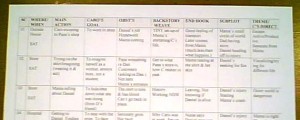
The table is based on Martha Alderson’s Scene Tracker, which you can see in her book, Blockbuster Plots, or her other products. Of course, this plot session comes after a lot of research, working my way through Donald Maass’ Writing the Breakout Novel Workbook, and just…thinking. This is the chart, though, that I’ll use to move myself forward (I hope!) through the first draft.
In case you can’t read the headers, I at least think about these things for each scene:
- Where and when the scene takes place
- The main action(s) of the scene
- The MC’s goal–her scene goal, what she wants to accomplish then and now
- Any obstacles to that goal and who’s putting those obstacles in the MC’s path
- What part of the backstory I should/could weave in
This column is new for this book, because the past plays a huge part in the present, and I’m working hard not to just dump it in, but place it, in small drips, where it really belongs. - The “end hook”–how I visualize the scene ending, with a pull for the readers to turn the page
This is another new column. Partially, this is to remind me about cliff-hangers, but it also helps me think about points of high conflict for each scene. - Any subplots I can bring into the scene
- Theme/MC’s Direction toward or away from her goal. Theme is Martha’s column title, and I like to keep it in, because–even if I don’t get anywhere close to plotting in my theme, the column keeps it present in my mind where, hopefully, it simmers. I’ve included, in this same column, whether–by her actions–my MC is stepping toward or away from her goal. Somehow, in my mind, this has become connected with theme. We’ll see!
I let myself be pretty loose with this–it’s almost more of a brainstorming tool than an actual plotting chart. Some of the cells get seriously tall and skinny, as I dump random possibilities and connections into them. The thing to remember, hard as it can be, is that the goal here is almost a kind of anti-perfection. There is too much I don’t, and can’t know, until I start writing–until I’ve finished writing the first, and subsequent drafts. I want to use the info in this chart as a series of guideposts, not as a straight-jacketed path.
So, when I find myself worrying too much about whether my character would do this or that, what piece of history she’ll be interacting with, or even what the weather would be like, I focus on the carrot. The one that’s dangling out in front of me, coaxing me to keep moving forward.
That carrot is that, the more quickly I plot, the more guideposts I’ll be giving myself, the more of that first mess of words I’ll be able to get onto the page, into the computer. I’ll be able to write my first draft with speed, energy, and excitement. And I’ll have room to make some of those magical discoveries as I go.
So, as you plot, keep an eye on your carrot, whatever it may be. Figure out what it is, get a picture in your mind, and write toward it.
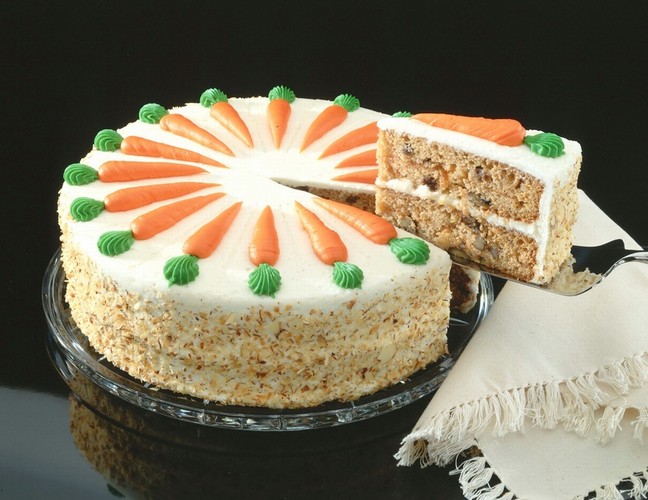
Mine, just so you know, looks a lot like this.
Some New Bloggy Links
Earlier this week, Shawna at WriterMomof5 sent me this blog award.

Shawna is one of the unexpected rewards I got from starting this new blog and getting out there on some social networking sites. She is sweet and funny and reading her blog is one of the treats of my week. So having this award come from her is just…cool!
I thought I’d combine passing this award on with giving you links to some of the newer blogs I’ve been following. Well, they’re not necessarily new to the blogosphere, but they’re new to me. In some of that free time we all have just laying around, take a few minutes and check these out–leave a comment and say, “Hi!”
- Elana Roth is an agent with the Caren Johnson Literary Agency. I “found” her first on Twitter and have recently started reading her blog–enjoyable and informative.
http://elanaroth.com/ - Beth Revis cracks me up. Every time. She’s writing a SF YA that I so want to read. Beth’s also a middle-school teacher, and you have to read her Today: In Class posts. She’s the teacher we all wish we’d had.
http://bethrevis.blogspot.com/ - Amy Butler Greenfield is History Maven. We hooked up somehow (I’m not sure if it’s a bad or good thing that I can never remember where or when these connections get started!) after I started blogging about my historical YA. Amy is dug into her own historical fiction, and I love her posts (and comments) about history, writing, and life.
http://historymaven.livejournal.com/ - Joyce Moyer Hostetter is another history writer, and the author of several historical novels for children. Joyce is incredibly supportive and her posts about research and writing and talking to kids about her stories are hugely motivational for me!
http://moyer-girl.livejournal.com/ - Sara Zarr is, for me, the epitome of the thinking writer. Her posts are intelligent and speak clearly and concisely of the process and the art and the struggle.
http://sarazarr.livejournal.com
I’m passing the Lovely award on to all these bloggers and hope you’ll add them to your own lists of very readables!
Blog Contest: Betsy Franco’s MATHEMATICKLES!
I’m actually running this contest at my other blog! If you like picture books or know a child who does, hop on over and leave a comment to enter!
 Becky Levine