Blog Posts

Posted in Uncategorized

Friday Five: Giveaway Winner & Other Random Stuff

1. And the winner of my Random Acts of Publicity contest is…

Mike Jung!

Which is more than fitting because Mike is the one who reminded me about the RAP, AND because Son pulled Mike’s name out of the hat bowl last night, which pretty much proves that the BOOV are out there & taking an interest in our lives. Mike, send me an email at beckylevine at ymail dot com, with your snail-mail address, and I’ll get a copy of Steve Kluger’s My Most Excellent Year out to you!

2. I read through some past chapters of my YA historical, downloaded the newest Beta of Scrivener, and came up with a different way to approach the next scene (one already written in the first draft). Which officially means, yes, I’m back to work on the YA.

3. I have seen several yellow leaves drift out of the trees as I drive up our road into the hills. I don’t think autumn is officially here yet, but between the leaves and the shorter days, I can tell it’s on its way.

4. I realized I have hit a yoga milestone. Well, a few. First, yes, the tips of my fingers have actually touched the ground during forward bends. Did I say my knees were straight at the time? No, I did not. They’ll get there. AND I have gone a week+ without having to take an afternoon nap the day of a morning yoga class. Did I say I wasn’t tired? No, I did not. I’ll get there. I’m counting it all as progress.

5. I was lucky enough to get an ARC of Kathryn Fitzmaurice’s latest book, A Diamond in the Desert. This book blew me away. Who says a historical novel has to be heavy on details? Who says it has to bury us in historic figures & facts. Not Kathryn. She’s chosen an amazingly taut, light structure to tell the story of a young boy playing baseball in a Japanese internment camp. And it all works beautifully. Watch for a future interview here with Kathryn about the book.

Posted in Contest, Random Acts of Promotion

Random Acts of Publicity: Steve Kluger’s MY MOST EXCELLENT YEAR

Mike Jung reminded me that today is Day 1 of the third annual Random Acts of Publicity, started by DarcyPattison as a fun way to promote friends and favorite books. Mike’s running a contest to win THREE books by Julian Hector. You may go enter Mike’s contest, although if you can do so WITHOUT beating out my entry, I would of course appreciate that.

Anyway, in my never-ending quest to get more people to read one of MY favorite books, I’m running a giveaway, too. Never said I can’t steal make use of someone else’s good idea!

Here’s the book:

As you can see from the complete title [deep breath], My Most Excellent Year: A Novel of Love, Mary Poppins, and Fenway Park, the book has everything. Why is it one of my absolute favorites? Because it is very possibly the best love story I have ever read. And, remember, I wrote my master’s thesis on Wuthering Heights (Sorry, Emily!). The story and the characters and the relationships cover every possible form that happy, kind, supportive love can take. The connections and the voices and the humor are outstanding, and if you aren’t smiling, laughing, or saying “aaaaw” on every page, well, then, yeah–this book isn’t for you.

But you know what? It will be.

Just to prove it, yes, I’m giving away a copy of this book. I like Mike’s idea of having us add more promotion to the contest–he’s asked minions enter his contest by leaving a comment listing one of their favorite picture books. So, here, let’s hear your favorite love story. Since this is about promotion, let’s say favorite love story published in the last five years. Yes, you can ALSO add a second favorite from way back whenever–Jane Austen comes to mind–but that won’t enter you in the contest.

And, no, I’m not going to check the pub date on entries–can’t I TRUST you people?!

I’ll announce the winner on Friday, so enter now! And, if you aren’t logged in so that I can click your signature & get an email to you, please make sure to leave your email in the comment.

And have a love-filled week!

Posted in Uncategorized

Saturday Six: Why I Love Weekends

In honor of this long weekend, here are just a few of the reasons weekends in general make me happy.

1. Late-ish Friday nights. Okay, not SUPER late, because I just don’t have all-nighters or wee-hours-of-the-morning left in me, but there is no schedule to get up the next day and no reason to rush the movie schedule or put down the night’s book.

2. Sleeping in. See Friday nights above.

3. Reading time. Yes, I do typically have other things I need to get done on Saturday and Sunday, but I also feel totally justified in laying on the couch for several hours with a book. This weekend, son finished Jim Butcher’s Ghost Story just in time to hand it off for me to enjoy.

4. Less driving. No school means no drop-off and pick-up. Which means no juggling other errands I have to do, to minimize the number of times I go down and drive back up our mountain.

5. Relaxation for everybody. At this moment, son is also/still sleeping in (or maybe just laying there reading the X-men comic he grabbed from the library bag last night). Husband is off on a long, leisurely bike ride. Cat is asleep somewhere, and Bird is chirping quietly and entertaining himself with his swing. And I’m at ease at my computer with happiness and quiet all around.

6. Recharge. Unless I’ve got a deadline, I try hard not to do any WORK on the weekends. This doesn’t mean critiquing, and if I’m on a roll, it won’t mean writing. But it does mean that the other stuff on my list gets put off, making for much less chopped-up days. The slower, more steady pace gets me rested and ready for Monday (or, in this case, Tuesday!) See Relaxation above.

What about you? What’s your favorite thing about the weekend? And hope you’re enjoying this one!

Posted in Backstory

Backstory: How Robin Brande’s DOGGIRL Got Me Thinking

I’ve talked plenty about backstory here, including this recent post. The thing to remember is that, while we don’t want to put a ton of unnecessary backstory in our manuscripts, we still need to know and understand what that backstory is.

Especially the backstory for our heroes.

Backstory in my YA historical has been a particular challenge, because I’m working hard to show (NOT tell!) the impact Caro’s mother has on her (Caro’s) present life. Bad things happened to her mother, bad things contributed to the person she is, to the mother she is…and that’s a big part of what Caro is fighting against. One of the things I’ve been trying to figure out is how much of her mother’s backstory Caro actually knows, at the beginning of the story, and what she has to find out along the way. I’ve been hunting for the right place to have the “reveal” happen–if there is to be one. And, along the way, there’s been another, different backstory idea poking at me, trying to get me to listen.

And then I read Robin Brande’s Doggirl.
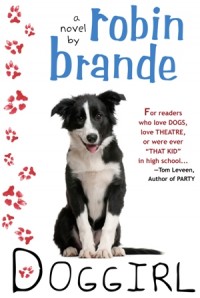
I’ve read and loved both of Robin’s previous books—Evolution, Me & Other Freaks of Nature and Fat Cat. Doggirl did not disappoint. It’s a wonderful story about Riley Case, a girl who has always felt more comfortable around animals (particularly dogs) than she does around people. Riley’s dream is to train dogs for the movies, and she gets a chance to put those dreams into action when the school’s theater group needs a dog trainer (“Must provide OWN DOG”).

The story is wonderfully written. The theater group is participating in the annual Thirteen-Day-Theater Trash, a crazy-making whirlwind of writing, directing, and acting in a play, the performance of which must be filmed and submitted for competition. The drama kids are wonderful, from the wonderfully bossy director to the fantastic costume “department” of one. Quirkiness rules, and Riley struggles with finding a place where she finally fits in and needing to back away from that place before it turns into another disaster.

There’s the backstory. No spoilers, but something happened to Riley, something to do with her connection with animals and the cruelty that humans can be. Something bad enough that her parents chose to uproot the whole family and move them to a new place, giving Riley a fresh start. In other words–and here’s the part that got me thinking–the backstory, the truly important backstory of Doggirl belongs to Riley.

Not to her mother.

Ding! Ding! Ding! Ding!

Yes, when you’re in a puzzle about your own book, sometimes you do start seeing solutions everywhere. But, honestly, I think there’s something here to help me learn and to help me perhaps make my own book stronger. Brande does an absolutely wonderful job of trickling the backstory in, giving us just enough information that we are never confused and wandering about whatever it was that did happen, but tantalizing us enough to create that little anxiety in our stomachs: What did happen? How bad was it? Will Riley be able to take this fresh start and move forward, after all the pain from that other…thing?

Brande makes us care. Yes, definitely from her skill, but also because–it’s about Riley. Riley is the one who was hurt in the past. Riley is the one that has made some choices about how she’s going to live from now on. Riley is the one who’s being pushed to reconsider those choices. Riley is the one who risks more pain.

Sure, Riley’s parents are affected. They’re kind, supportive, and real. They hurt for their daughter in the past, they made a strong, active choice about how to help her, and they worry about how she’s doing now.

But the pain, the struggle, the choices—they’re Riley’s.

Now I’m not saying that doing it the other way–having a story in which someone else’s painful history seriously impacts the hero–can’t work. I’ve read books in which that happens, and I’ve seen that choice work beautifully.

But…

That other backstory idea that’s been hanging around my WIP? That one that’s been doing a “Hermoine”–jumping up and down, waving its hand, trying desperately to get my attention?

It’s Caro’s.

Yes, it’s tied to her mother’s history. It involves her mother, in a big way. But it specifically, directly, and harshly hit Caro.

Now don’t think I’ve found an immediate, clean, easy solution to my own struggle with how to deal with this backstory. In some ways, it’s gotten more complicated, because it’s bringing up more questions about how much Caro knows, when she found out about it, what choices she is making now…and why. But there’s a glimmer that’s coming along with all that complication–and that’s the feeling that I may have found something stronger, something that…yes, will make my reader care.

Here’s hoping.
Posted in Uncategorized

An Experiment: Twitterless September

A while ago, Debbi Michiko Florence blogged about Online Time Management. Her post got me thinking, and I decided it was time to get rid of my GoodReads account. It also started me wondering about what I really need and enjoy about social media, and I made one more decision.

I’m going Twitterless in September.

I’ve talked a few times about what I do and don’t like about Twitter. As an interface, I am just not crazy about it–I prefer the threaded conversations on Facebook. Also, I don’t like that I can so easily be followed spammers. For whatever reason, it seems like that happens more frequently than on Facebook, and I feel like I have to do more monitoring of it on Twitter. Which, frankly, I can do without. I do think I get more information about the publishing biz–more links to agent and editor and other industry blogs, and this is important to me. And, of course, there are people on Twitter that I love “talking to,” who just aren’t on Facebook.

If any of those people want to find me on Facebook, please do!

So I’m not at all sure that this coming month will be anything but an experiment. I’m not promising myself I’ll stay off, or making any other projections about what will happen. I’m thinking that maybe I’ll end up using it mostly as that industry resource and be more of an observer/listener than an active participant, but… I’m not sure how much time staying off Twitter will save me, I’m not sure if staying away will help me focus more and use my time more efficiently. I know I’ll have withdrawal the first few days. After that, who knows? For me, it’s a matter of looking at the fact that I’m using multiple social-media tools (like so many of us) and just wondering whether I really need to or want to.

Here’s to finding out.

One month. 30 days.

I can do this.

And, of course, you’ll hear from me at the end of the month about how it went. Meanwhile, I’ll see you here or on Facebook or at your blogs. Happy September!

Posted in Uncategorized

Thankful Thursday: Finding My Words

Okay, heads up: this post may get a bit woo-woo. But, hey, it’s Thankful Thursday, right? Just proceed at your own risk.

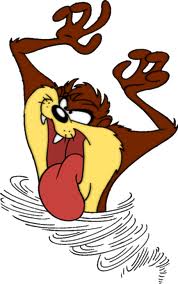
I’ve never been very happy with the way I deal with stress. When I was young, I backed away from many things that even held the possibility of anxiety or fear. Over the years, I’ve tried to work on this–I’ve pushed myself to take more risks, and I’ve been more than happy with the results of saying “Yes!” when I was thinking “Maybe” or even “No?” But even when I stopped avoiding challenges, I often found myself in a tizzy as I took them on. Think the Looney Tunes’ Tasmanian Devil, without the charm.

Meditation has always seemed an obvious solution, but one I haven’t been able to make work for me. See, there’s this stillness and calm required… Sure, if I had that, well, yeah, I could meditate!

I’ve also tried yoga many times, without success (being defined as enjoying it and wanting to go back). But I recently made another attempt to take yoga classes, and this time it seems to have clicked. I started because, lately, I’ve just been feeling more stiff and sore. Let’s face it, I’ve been feeling older. And you know, the age thing just isn’t going away anytime soon!  I’ve also been doing some reading about retraining one’s brain–actually changing the chemistry, the reaction our brain has to stress. I LOVE the brain. I love its elasticity, its hidden secrets, and all the things it can do that we don’t understand. And I love the idea that I can actually teach it that the place I’ve built for myself in the world is actually safe and happy and good.

This is coming back to the meditation and to the words. Really.

For some reason, when I’m doing yoga, I find that I can do a little meditating. Probably because my body is actually doing something–I don’t have to deal with my body and my mind needing to be still. Also because the soft music and the teacher’s voice, both something I can let skim the surface of my brain, give me something to sort of focus on and sort of tune out all at the same time. So I’m busy, as I’m trying to be quiet.

I know. Remember, Tasmanian Devil.

But here’s the magic part. The revelation…probably only for me. I give you all permission to slap your foreheads and shout “Duh!” One of the parts of meditation that I’ve seemed to have a problem with is the words other people–meditation teachers, writers, “guides” on mp3s–use. Yes, the words. I’ve sat there and looked at the page and said, “Huh? That’s not what I need.” Or listened to an mp3 and thought, “What? That’s not going to work.”

Okay, I’m picky. Why do you think I’m a writer and an editor?

Anyway, when I’m in yoga, I have time and space (and exercise and noises) to try out some of my own words. And guess what…THEY WORK! When I find the phrase, the mantra (??), that means exactly what I need to hear, it’s like a little, private chime goes off in my brain. And all of a sudden, I can stay with those words, I can use them to relax, to relieve whatever stress I’m dealing with at the time. Because they have the exact meaning I’m looking for.

You’re all probably there ahead of me. Yes, we can bring this back to writing. It’s what makes it worthwhile to revise and revise and revise again. It’s what makes it worthwhile, whether you’re working on a picture book or building a world for your 300-page fantasy novel, to think and rewrite and think and rewrite…until you  hear the chime.

And then you keep that word. You use it. You find its place in your story and you tighten everything else around it. Because it belongs. And, believe me, if it works for you that strongly, it’s going to resonate with your reader, too.

All these years, what I was looking for was, yeah–right under my nose.

Words.

Of course.

Posted in Revision

Unkilling Those Backstory Darlings

Yes, “unkilling.” WordPress wouldn’t let me write Killing in my post header, so I had to get creative. Shoot me, already.

On with it…

Yes, we have to be careful about how much backstory we drop into our manuscripts. It sure feels like, unless I’m reading an epic fantasy or a long family drama, that less and less backstory is being used today. And, honestly, as a reader, I’m fine with that. I like spare prose, I like tight storytelling, I like characterization that the author has managed to draw fully in a very few words.

As a writer, I’m more than fine with it…as a goal. That doesn’t mean I don’t struggle with it. Especially in a historical novel in which the MC’s freedom is being seriously limited by her mother’s past. Especially in a picture book in which I seem to need to know lots about the two characters’ past together, none of which am I giving six actual words to explain on the page.

So, yes, as a writer, I want to encourage you to kill your backstory darlings. In revision, train yourself to throw up a mental penalty flag (Wow! A sports metaphor from me!) every time you start talking about the past, or describing a character, or discussing a relationship, etc., etc…for more than a few paragraphs. Maybe for more than two paragraphs. Honestly, maybe for more than two sentences. Cut and…kill.

But here’s the thing. I’m not sure those deaths have to be final.

(Sorry, but that’s the scariest zombie you’ll see at my blog.)

This backstory is development. When you’re writing a first draft, you’re supposed to let things flow. You’re still learning. Heck, I’m on the second draft, and I’m still learning. Oh, wait…picture book….thirteen drafts…sigh. You get the point.

At some point, though, you’re going to get rid of a humongous chunk of backstory.

Here’s the question.

Do you hit the Delete key, or do you pick Cut-and-Paste?

Your choice, obviously, and it’s going to depend a lot on your process and your memory. Me, if I think I’m going to want to use something in the future, I don’t get rid of it. I don’t trust myself to remember what it was, or the absolute brilliance with which I wrote it. (Yes, you’re right. 98.7323% of the time, I look back at it and either don’t need it or the brilliance has completely faded.) But I don’t see a problem with keeping a file of backstory that you’ve taken out of your manuscript.

Your readers do need some information about the characters and the world they’re moving in. It’s a rare novelist, and I can’t name one off the top of my head, who can give the reader everything through dialogue and pure action. As you cut and cut, you’re also going to be trickling.

A line here. A few words there.

Odds are you’re not going to pull the exact wording from that backstory file. But tons of writers use character worksheets, or make collages to represent the settings they want to create. What do you think? Would a backstory file be a good refresher for you, a reminder of all the things you once knew and wrote down about this story? Would this file point you in the right direction to the few words you need now?

Thoughts? Comments? Do you delete, or do you copy?

Posted in Uncategorized

Monday Morning Brainstorming: In Which I Take My Own Advice

In The Writing & Critique Group Survival Guide, I’ve got a chapter titled, “Brainstorming.” It’s not a long chapter, but I think it’s an important one, because I do think brainstorming is one of the biggest gifts critique partners can give to each other. I’ve talked to some beginning critiquers who haven’t realized that it’s an option for their group–and a great one. If they get stuck in a story, they struggle along by themselves trying to get past the block. And too often, this just puts them in a position in which they’re not writing, not submitting, and just feeling worse about how much they’re not getting done.

Meh.

This morning, my group’s having an all-brainstorming, all-kicking-ideas-around session. For various reasons–some of being in between projects, some of us dealing with end-of-the-summer business, some of us (who, me?!) in that stuck place I just talked about–there were no submissions this week. It only took a quick email around to find out that there were several of us who thought this was a great opportunity to raise a hand and say, “Over here! Ideas welcome!”

My personal goal: To stir up the mud that has been the one big, LAST story problem of the picture book. The one I stare at and stare at and say, “Huh” about, over and over and over. Maybe someone in my group will have THE brilliant idea (fingers crossed!). If not, though, I know I’ll come out of the session with thoughts I haven’t had on my own, ideas I didn’t know were out there. And that, my friends, is a step forward.

Posted in Uncategorized

Friday Five: Back to School

As I type this, my son is stretched out on the futon in my office, the cat asleep beside him, and Terry Pratchett’s Soul Music in his hand. This weekend, a cousin is coming to hang out, there will probably be band practice, and there will definitely be Shakespeare.

And on Monday, school starts.

It’s been a wonderful summer, the recharge and relaxation being so wonderful, I honestly haven’t missed the productivity. This is the first August in a long time that I’m not seriously antsy about needing fall to GET HERE.

Here are a few things this school year will bring.

1. Driver’s Education. Oh, yeah. Did I mention he’ll be sixteen in the spring? Luckily, his dad wants to take charge of the driving lessons. I have NO problem with that. None of us need me in the passenger seat at the start of this big step.

2. A mix of determination and hope that I will have something on submission by the end of the fall. I feel like I have one more hurdle to get over on the picture book, and then it’s word revision, which I’m seriously looking forward to at this point. And then this book will be in the pile of all those trying to find their way out into the world.

3. More picture book ideas and drafts. I’m determined to participate in Tara Lazar’s PiBoIdMo in November. After all the work and learning I’ve put into my first picture book, I’m darned well going to find some more stories to play with.

4. Please, please, please, a completed draft of the Historical YA. My biggest battle with this book is NOT getting discouraged at how long each draft is taking me to write. I’m choosing to look at that as evidence that it will be a better, stronger, deeper book than other manuscripts I’ve worked on and completed. Yeah, that’s it!

5.  Growth. For my son and for me. There’s something about seeing my son head into his sophomore year of high school that makes me very aware of how much things have changed and are still changing for both of us. Watching him is an experience made up of equal parts wonder, awe, and hope. And a reminder that I, myself, don’t want my own life to stay the same, that I need to be looking for the places I want to, yes, mature. That I need to be pushing myself to take the risks that will let me do that.

What’s shifting for you and yours, as summer vacation fades out for another year?

Posted in Uncategorized

Pacing: Some Thoughts from Me and a Few Others

Pacing.

I haven’t talked a lot about it here, because, well…it’s hard. Pacing feels a lot like voice to me: I can recognize (and love) strong pacing when I see it, and I sure as heck know when the pacing is off. But how to achieve the strong and avoid the weak? That gets a little trickier to figure out and to explain.

So I thought I’d take a little stab at it myself, and then share some links from other writers giving their take on it.

Anyway,pacing sounds simple, right. Action, action, action…think. Action, action, action…think. Well, sure, at some level, you can make a basic equation out of it, and I think-in today’s fiction–action is going to be a bigger part of the equation. But the simple formula doesn’t account for the magic that happens when someone gets it right. Or the clunkiness when they don’t. (And please note I’m not talking only about high-suspense, gun-fighting novels. Every book has its own pace–oh, dear, that’s another whole topic!–and within that pace, every book will have scenes or more action and less.)

Maybe the magic happens when we get out of the formula and into the scene. Into the narrator’s head. I’m thinking that maybe point of view and pacing are intertwined–so that when you’re as close to the narrative character as you need to be, then you can see the scene as they see it and share it, from that close perspective, with the reader. So you know when they’re feeling tense, and you know when they feel like they can take a breather. You know when they’re in conflict mode, ready to take on the world, and you know when they need to retreat into their quiet place and let the world go by for a bit. Of course, this doesn’t take into account distant third point of view, or even that old standby–omniscient point of view. And of course, it doesn’t tell you how to get there!

As an editor, as a reader, I can see pacing that’s rushed or that’s too slow. Prose that feels too fast, to me, often steps too far away from the narrator’s thoughts and feelings, too close the author’s outside point of view. The dialogue in a rushed scene often comes in a quick back-and-forth, with no space or time being given to dialogue beats. It only takes a few words to give us physical response or a panicked thought. And those few words can make the story, the pacing, feel layered and full. Without taking us out of the drama.

Pacing that feels too slow can do the reverse–cause us to spend too much time in the narrator’s thoughts/internal reactions. It can read as though the character herself, not just the reader, is stepping out of the action to think about it, to analyze the problems they’re facing, to look too far ahead into future possibilities. Slow pacing takes us further into response than the character has time for–often, the narration starts to feel like it’s coming from the author, not the narrator. Really slow pacing shows up, I think, when the author lets himself and the characters get pulled out of the in-the-moment scene. Yes, you need a bit of that background story, but you don’t need it at a time when the conflict and tension are running high, when they should be running high. Save it for later, for that moment of retreat and shelter, when everybody-especially the character–has time for a little peace.

I think pacing may be one of those elements that we can really help by reading a passage or a scene or a whole manuscript out loud. When I critique, I’m obviously further outside the story than the author has been while they were writing it. Reading out loud seems, to me, to be a way of taking ourselves closer to that outside point–closer to wearing our own editor hat, than just staying under the writer’s chapeau. Try it with your manuscript and see what you hear–and what you don’t!

All right–those are some of my thoughts. Pretty rambly and not necessarily helpful. Let’s see what a few other people have to say.

  • Some good tips from Heidi M. Thomas at The Blood Red Pencil.
  • Here’s a vlog on pacing in the YA novel that Sara Zarr did for WriteOnCon.
  • Excellent, specific advice from Holly Lisle.

Any thoughts of your own? Happy pacing!