Blog Posts

Posted in Uncategorized

Friday Five: Halloween

We’re celebrating Halloween tomorrow, with a party, and we don’t get trick-or-treaters on Monday (too far up in the mountains without being in a little mountain “neighborhood.”) So a few days early, here are some of my favorite things about Halloween.

1. Candy. Yes, you knew I was going to say that. My favorites? Butterfingers, peanut-butter cups, and the little pumpkins that come in candy corn this time of year.

2. Cute little children in cute little costumes. Oh, yes, and cute dogs in cute costumes, too. Our cat Lacey does not dress up. Or eat candy (like I’m guessing those dogs do!).

3. The shift into a new season. I know, autumn has already technically arrived, but for me it comes right around Halloween. This year, we got cold a couple of weeks earlier than usual. Typically, here in NorCal, we spend the week before Halloween thinking, “Boy, that costume is going to be awfully warm.” Then, the day before the big night, temperatures drop suddenly, and our thoughts shift to, “Wonder if I can persuade the kid to wear a coat over that costume.”

4. The lights and decorations. Yes, I love Xmas lights, too. There’s a several-blocks-long street in town, where the town kids and an awful lot of the mountain kids go to trick-or-treat, and that street maxes out on the decoration. Tacky, gaudy, and oh, so bright–I love them.

5. The thought of all the time off, time with family, time with festivities coming in the next two months!

Posted in PiBoIdMo, Picture Books

PiBoIdMo 2011

PiBoIdMo: Picture Book Idea Month.

Art by Bonnie Adamson

Tara Lazar’s answer to NaNoWriMo for all those picture-book writers who weren’t sure what to do with themselves when November hit. You know, other than order a turkey, buy a turkey, eat a turkey, reheat a turkey and eat more of it.

And, hey, let’s all see if we can come up with a non-turkey themed picture-book idea on Thanksgiving Day, okay?!

I wasn’t actually ever one of those novelists. NaNo has always intrigued me, but it also never quite hit the right timing. I was always in the middle of drafting a book, or working on yet another revision. November, as the start of the holiday season, has always presented enough of a challenge to keep up with whatever writing I’m doing, never mind embarking on something new and trying to finish it.

Don’t get me wrong. I love the idea of NaNoWriMo and the thought of pushing that first draft out so quickly. Someday I hope to participate.

Just not this year.

This year, I am again in the middle of drafting. And revising. And, well, you can read about the current state-of-mind in my Novel World here.

But I’m also in the middle of a picture book. And nearing the ending, revision-wise, of another. And I’m loving them. This year, I discovered the magic that is the picture-book genre–playing with big things like STRUCTURE and PLOT and CHARACTER and VOICE in such a tiny form. It’s like doing a jigsaw puzzle the size of a postage stamp. Yes, in true geekdom, I’m finding that…well, fun.

And I want to do more.

What better way than to follow Tara’s lead and try to generate 30 picture-book ideas in 30 days? When all around you, out in the internet-zone, hundreds of other picture-book writers are doing the same? And then, in December, there you are, looking through your new treasure trove of ideas and digging around for the one, three, or many that you want to work on first, that you see real potential in.

That you want to turn into a story.

I’m SO in.

For full information and to sign up, go to the 2011 PiBoIdMo starting post on Tara’s blog, Writing for Kids (While Raising Them). And make sure to check her blog all month, for great posts and giveaways!

Posted in Uncategorized

Frustration Saturation

Can I use two -tion words right after the other? Well, yes, I can, because that’s how I’m feeling. I’ve heard so many people talk about reaching this stage in a writing project, where they’re so unhappy with the work they’re doing, the story they’re trying to tell, that they feel like…

Well, that I feel like

  • Putting this book away and finishing up the revisions on Picture Book #1
  • Putting this book away and starting the revisions on Picture Book #2
  • Putting this book away and digging out one of the MG ideas I’ve been tossing into files for the past two years
  • Putting this book away and doing major revisions on the MG novel in a drawer I still love
  • Putting this book away and Fill in the Blank

There are three things stopping me from doing any of the above.

  1. My innate and seriously deep-running stubbornness. If you don’t believe me, just ask my mom.
  2. The wonderful critique partner who said to me, “What do you mean figuring out character stuff instead of working on the book? How is that not working on the book?”
  3. The absolute knowledge that if I drop this, there will be a HUGE bump in the learning curve that I haven’t surmounted, that will be there waiting for me on whatever novel I decide would be easier, more fun, a happier place to spend my writing time.

If I have ever sounded flip or unsympathetic to any of you going through this stage, I apologize with all my heart. This stinks. I have no idea where I am going to go with this book. I do believe the next step is to back up and, yes, figure out my characters. This may mean buying a new, fresh copy of Donald Maass’ Writing The Breakout Novel Workbook. It may mean filling out those character charts that I hate. It may (and almost certainly will) mean spending hours staring at a new file on the computer or a notebook in my hand and filling the page with doodling ideas about who these people are, who my hero is, what she wants. It may mean major brainstorming sessions with my critique group.

I am going to let myself work on those picture books, too. Right now, they seem to be the light in my writing time, and I don’t want to give that up. Besides which, they seem to spell the word progress, which is important for my sense of Yes, I’m Writing! But…here’s the thing.

One of my husband and son’s favorite books is a science-fiction novel called Armor by John Steakley. I haven’t read the book, but they tell me that in the story, one character Felix, gets attacked by ants, which aren’t actual ants, but some kind of “multi-limbed, insectile, chitonous, hive-minded, three-meter-tall aliens. With heat rays.” (Descriptive summary, thanks to Son.) Anyway, Felix is pretty much doomed not to survive. Another character, Jack Crow, finds recordings of Felix’s experiences during the battles, which show Jack why and how Felix keeps going in the face of absolute disaster. Jack says that Felix just flatly refuses to die. The quote, to the best of son’s memory, is: “The ants will get him. But not this one. Do you know why? Because it pisses him off.

This book may beat me. But not today. Do you know why? Because the thought of losing to this story pisses me off.

Posted in Blog Contest, Uncategorized

THE PLOT WHISPERER Blog Tour: Lacey Picks the Winners. Kind of.

This post is dedicated to Trixie, Debbi Michiko Florence’s dog. I’ve met Trixie, and she’s a sweetie. She’s also amazing–I’m always impressed at how clever she is when she helps Debbi pick a winner in one of their giveaways. You can see Debbi and Trixie together, at Jama Kim Rattigan’s celebration of National Dog Day. You can also watch Trixie here, as she picks ME to win a copy of Gabrielle Zevin’s All These Things I’ve Done.

I was curious. Would my cat, Lacey, be at all interested in helping out the way Trixie does? I was pretty sure she wouldn’t actually carry the winner’s names over to me, but I thought maybe she would bat around the paper with the winner’s name. Or at least sniff at it. She does a lot of sniffing.

I decided to try an experiment, following Debbi & Trixie’s steps as closely as possible, with the entries for Martha Alderson’s new writing book, The Plot Whisperer: Secrets of Story Structure Any Writer Can Master. I have to admit, I was a little tremulous–Lacey would have to clearly pick out two pieces of paper, without knocking them all under the bookshelf or something, where I’d never get to them and never know who had won.

Really, I needn’t have worried.

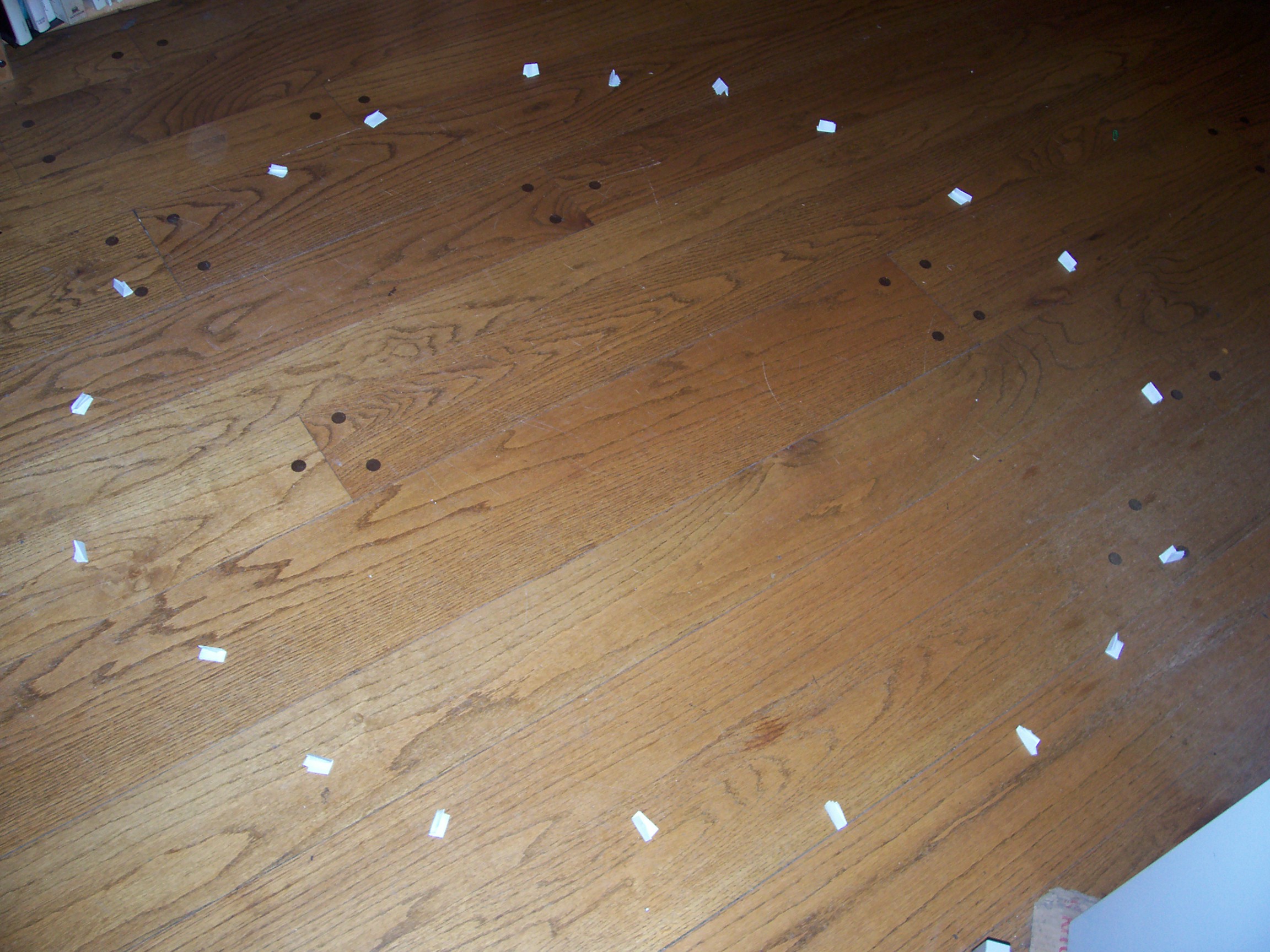
First, I put all the names on a piece of paper, folded those, and set them in a circle. I was working on the idea that maybe we’d go with the first two names Lacey batted out of the circle.

My son went to check if the cat was ready. You can see she was raring to go.

To get the full sarcasm of that last statement, go back and look at Trixie on Debbi’s blog, waiting so eagerly for Debbi to let her pick, then do the comparison. Yeah.

Basically, it was Kitty-Drawing fail. Lacey was so uninterested that she jump right out of the circle, over the pieces of the paper. You got it. Without picking one. So quickly that we were unable to get a photo.

Plan B.

First I needed to get the pieces of paper into a smaller space. A reachable-by-paw-while-being-held space.

I had reached the obvious conclusion that Lacey, unlike Trixie, needed a little help. (Note: No kitties were harmed in the making of this blog, only a small amount of kitty pride.) So, together, neither of us knowing which name was written on which piece of paper, we chose two winners.

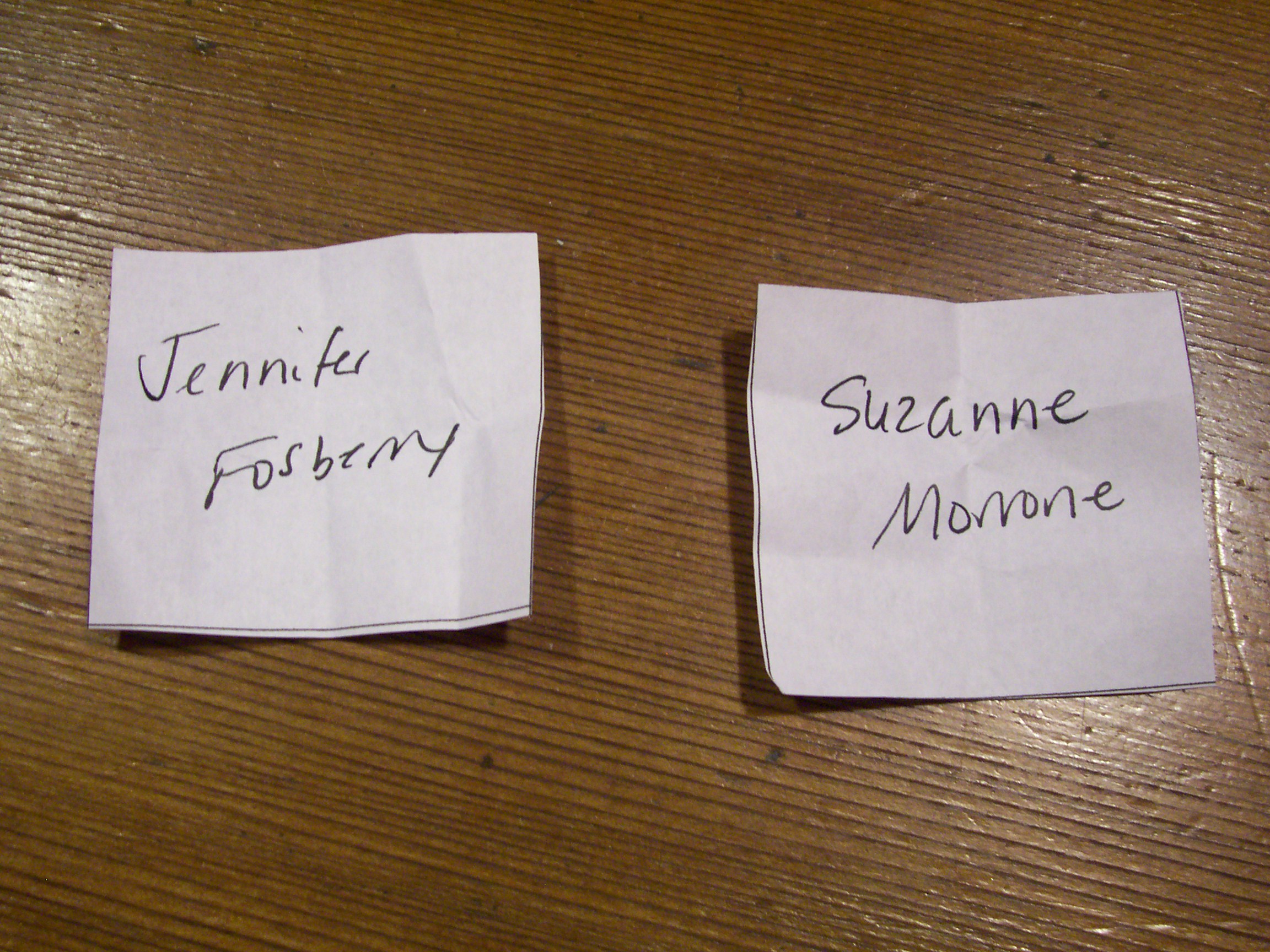
Lacey and I (and my son, the photographer) say congratulations to:

Jennifer Fosberry and Suzanne Morrone, send me an email at beckylevine at ymail dot com, with your snail-mail addresses, and I’ll get your copies of The Plot Whisperer out to you. Don’t worry, I’m not going to ask Lacey to drive them to the post office!

Everybody else, you’ve got lots more chances to win. Martha has posted the schedule for the rest of her blog tour here, and there are more giveaways to come! And, Debbi, if Trixie has any tips for Lacey on doing this drawing-thing right, feel free to share.

Posted in Blog Contest, Plot

Martha Alderson: The Plot Whisperer Blog Tour, Day 3

I count myself lucky in many ways. A big one of those ways is all the amazing people that my writing has brought into my life. And one of those people is Martha Alderson.

You probably know her better as The Plot Whisperer.

Martha and I met over ten years ago, in the first critique group I joined when I moved up to the Bay Area. If you’d asked either of us back then if we thought we’d write books about writing, I think we would have laughed pretty hard. I don’t know, though–one of the things I love the most about Martha is that she always dreams…and dreams big. So the fact that she has just published her second book on writing–or to be more specific–on plot, should be no surprise. And if you’ve followed her tweets at @plotwhisperer, you’re not surprised either. In fact, you probably can’t wait to read the book!

Well, you’ve come to the right place. (Okay, you’ve come to one of the right places. Tomorrow, the blog tour stops at Not an Editor, where Mary Baader Kaley is also having a giveaway. And check out Martha’s blog for a complete list of her blog tour stops and other chances to win a copy.) I’ve got TWO copies of The Plot Whisperer: Secrets of Story Structure Any Writer Can Master to give away. I usually run my contests for a while, but I’m keeping this one short so you’ll have time to enter all the other contests, too.  I’ll draw the winners Thursday night and announce them Friday morning. Make sure to stop back!

Let me tell you a little bit about Martha. Yes, she dreams, but she does more than that. She continuously shares that dream with others. Martha understand plot, but–as she’ll tell you–it’s an understanding she worked to reach, so she absolutely gets how those of who are not so good at plotting feel.  Because of this, her advice is always sympathetic and supportive, but it’s also strong. One of the best things about having had Martha as a critique partner is that she never gets lost in the words, in the stuff that fills in and layers around the plot points. Every time Martha has read a piece I’ve written, or done a plot planner for one of my stories, she has zeroed right in on the big pieces of the plot. Sometimes, it’s the lack of those pieces, but one of the best things Martha ever said to me was, “This has too many plots. It’s too crowded.”

Guess what? She was right.

Martha believes in plot. She recognizes that there are many writers who worry that, by plotting, they’ll make their story stiff or formulaic. She recognizes and respects that fear, but she also reassures us–rightly, I think–that the plot is the container, the structure, that holds all the magic we could ever want to write. And she coaches us through all the steps of creating that plot.

I bought Martha’s first book, Blockbuster Plots: Pure and Simple, when it came out. And last night, I drove over the hill to attend Martha’s launch party at Capitola Book Cafe and buy her new book. I talked earlier about this week how I’m struggling with plot on this WIP. I’m thinking it’s pretty nice of Martha to publish The Plot Whisperer just when I need it.

That’s just how she is!

I’m not doing NaNoWriMo, but I know a lot of you are. You’ve still got time to do a little pre-plotting and, even as you write as speedily as possible, you can be thinking about story. If you haven’t checked out Martha’s YouTube series on plot, do so now. And leave a comment for this post to enter my giveaway copy of The Plot Whisperer. (If your comment ID doesn’t include an email, please leave that in the comment as well, so I can let you know if you’re the winner!)

Good luck!

Posted in Character, Plot

Plot-Driven vs. Character-Driven

Warning: This post may be a bit rambly and confusing.
It’s one of those where I’m going to be thinking as I type, trying to figure out a few things. I can’t tell you yet whether the post will end with a conclusion or a questions. Or a dozen questions. Oh, well. Feel free to come along for the ride.

As a reader, I’m all about character–in terms of WHY I’m in the book. I love to lose myself in personalities–the people who are quirky, angry, effervescent, stuck, free, stubborn, searching…you name it. And I love to see all these personalities come into contact with each other: interaction and conflict. The dynamics of any mix you want to throw together on the page–that’s what I want to read about.

Which means that, as a reader, I want the plot done really well. I do NOT want to be aware of it. I don’t want something so convoluted and tricky that I get caught up in WHAT is happening and pulled away from WHO it’s happening to. Yes, of course, I’ve read strongly plotted books, and I’ve loved them–I can admire the author, and I get caught up in a great story, just like anyone else. But…if I have to pick, I’d rather get caught up in the characters.

I think this is one reason I like mysteries. I know–here’s the rambly, confusing part. Mysteries ARE plot, right? But, in general, the basics of that plot are steps I know: Murder or some other crime occurs. Detective takes on case. Detective hunts down clues, bugs people, eavesdrops and breaks into necessary buildings. Detective gets close, gets beat up or shot at, wonders despairingly if this is THE case that will finally stump her. Detective gets the last piece of the puzzle, adds it all up, and catches the bad guy. Detective probably solves or moves to a new place on some personal problem as well. Yes, I’m being tongue-in-cheek here, because a good detective story is much more than these parts, but you know what I mean. If the author is a strong writer, you’re watching and thinking about the specific details of a plot you know, not working to follow the pattern of the plot.

My first book is a mystery. I loved writing it. Because–guess what? As a writer, plot is not my strength. (Anyone else see a connection here?) When I wasn’t sure where to go next, what to make happen, I’d look at the suspects and think about who my MC needed to investigate next. I’d think about the last clue and see where my hero needed to follow it. Had he been open and direct in his last attempt to solve the crime? Maybe it was time for some sneakiness. Because I knew that basic plot of the mystery, I was able to play with voice and humor and adventure and an irritating sidekick.

Of course, that book hasn’t sold.

This new book, the YA historical, is so different. It’s going to be one of those other books–the ones with characters you love and love to hate. It’s going to be one where the personalities clash, where the people struggle with trying to make their relationship work and pretty much fail, and all those conflicts along the way.

Do you see how dull that paragraph sounds? That’s because, yes, without plot, character is…meh. And see that last phrase…”all those conflicts?” Yeah, tell me about those conflicts.

No, really, please. Tell me about those conflicts. Give me some plot, will you?

I always hear that, in a character-driven novel, the actions and problems arise out of…yes, you got it: character. What a character will do in any given situation comes from that character’s personality. Yes, those things I love so much as a reader. But in terms of writing about them–well, it feels so much more like guesswork. When I was writing the mystery, I could say to myself: “Self, MC needs to find out about Bad-Guy #3.” Then self would go off and write  about MC “finding out,” making sure MC did that in his own special way.

In this character-driven book, I’m more like, “Self: MC needs to….???????!!!!!!!??????!!!!!!” With a few $*(%#*(#%))#@# thrown in for good measure.

Obviously, the idea of a plot-driven book as a separate thing from a character-driven book is some kind of joke.

Because, yes, we all really know it. Plot and character are so NOT separate issues. The plot does depend on who your hero and your bad guys and your sidekicks are. And the character does completely depend on what happens in this particular story about these particular people. And clearly, just because I’m not writing a mystery, and it’s not obvious that this MC has to go follow that guy down the alley and listen in on his conversation with the elephant trainer–I still need that plot to help figure out my characters.

I guess the conclusion (yay!) is that I have some more learning to do. I guess each book we take on, if we’re lucky, makes that demand on us–to push past the stage of the writing craft we’ve made it to so far, to stretch ourselves to take on the next thing we need to figure out. As tough as this is, as frustrating as it can be, I think it’s also where some of our hope has to lie. If there is more we can do, more craft we can practice, then our writing can get stronger. Better.
So here’s to plot and character. And, appropriately enough for a Monday, here’s to all the torture and agony they cause us!
Posted in Blogs, Friday Five

Friday Five: Around the Blogosphere

A quick glance around the blogs to see what other people are saying:

  1. Jennifer R. Hubbard with a discussion on Little Women: Jo and Laurie or Jo and Professor Bhaer. Fact: I am now and always have been Team Bhaer.
  2. Because I loved the book but am feeling too lazy to write about it, this excellent review of Kenneth Oppel’s This Dark Endeavor, from Thea at The Book Smugglers.
  3. Beth Revis on being afraid. She says it so well.
  4. I don’t know if you remember KidLit4Japan, the children’s and YA auction that raised over $10,000to help Japan after the earthquake and tsunami? Well, the author who organized and ran the WHOLE THING, Greg Fishbone, has a new book out, the first in his Galaxy Games series–Galaxy Games: The Challengers. Check out Debbi Michiko Florence’s interview with Greg.
  5. Go answer Nathan Bransford’s question: When Do You Let Other People See Your Work? Me, I use early critiques as motivation and thinking-fodder, but I know a lot of writers get nervous about sharing those first drafts. You?

Happy Friday and have a great weekend!

Posted in Thankful Thursday

Thankful Thursday: Change

Yesterday, I walked with a good friend. We walked and talked, and because we talked, I barely noticed the walking–which is always nice! What did we talk about?

Change.

Well, no, not by name. But her son is six weeks into his freshman year of high school, and I wanted to hear all about it. Because why? Well, because I care, yes, but also because last year, we walked and talked, and she heard all about MY son’s first year of high school.

Changes. Or as I sometimes like to refer to it…Chaos.

What am I thankful for today? I’m thankful for this friend, and the others, who have walked and talked with me for the past decades, who have listened to me and shared with me, who have been a huge part of my dealing with and adapting to change. And I am thankful that as I get older, I’m just less timid of new things, less worried about–and this is a biggie–the unknown.

I’m in my forties. (Hint: I won’t be able to say that for much longer.) I have less free time than I used to. It takes me longer to recover from exercise than it used to (not that I DID a lot of it, even then). I have more pairs of glasses than any one person should own. There may be just a hint of arthritis starting in my fingers (yes, those fingers that get my stories out!). I have lines on my face that weren’t there before–I swear  they’ve just popped up out of nowhere. My memory…what? I’m sorry? Did you ask me something?

But guess what. I’ll take ALL of that. Because the biggest change that has come with aging, for me, is learning that all change isn’t bad. I’m not saying it’s easy, but it can be handled. It can be faced, even welcomed. And, you know, what? It can be fun.

So I’m thankful for, I guess, the experience that comes along with the wrinkles, and I’m thankful for the support and community I’ve grown right along with the aches. Between the things I’ve managed to learn and the things my friends are still teaching me, you know what?

Life is good.

Posted in Character

Characters: When Do You Listen & When Do You Give a Little Push?

I’ve got this protagonist.

Well, actually, I don’t yet. She’s a good kid, she’s trying to be active, and, overall, I think she’s a likeable hero. The thing is, she isn’t coming onto the page–YET!–as I want her to.

She’s a little young. And a little naive. Which might be okay, if I were writing a middle-grade novel. Okay, the naive still wouldn’t be okay, not for me, but she could be a little less aware at the start of the story, a little less–yes, I’ll say the word: edgy. But I’m writing YA: She’s sixteen years old, and she’s not feeling like the sixteen-year-old I want to see on the page.

The key words in that last sentence are, I think, “I want.”

I have a vision for this story. It’s changed since I started the book. In my first first draft (yes, I consider that I’m on my second first draft, and you don’t want to argue with me), I pictured my hero, at the end of the book, really coming into her own–eyes being forced open and taking a huge step into growth and commitment. Then, when I realized I was working on two books, and that I had to pick the one I wanted to tell now, that hero changed for me. At least in my head. She became someone who was already more used to living a certain way, in a world that had constraints for her–constraints she’d learned to work around, constraints she’d developed a pattern to deal with. She became someone for whom–because of a big event at the start of those books–the constraints tightened, to the degree that she couldn’t work around them anymore, to the point where she and the constraints are headed for a big confrontation.

I think this hero is who my character, not just me, wants to be. But she hasn’t yet come through and told me that, or talked to me about how that makes her act, what choices it makes her face and take, what voice (and that’s the biggie) she should be telling her story in.

And, frankly, I’ve gotten a bit tired of waiting for her to do that. I think it’s time for me to do a little bit of forcing my vision onto the character.

This goes against a lot of what we hear writers talking about–those exploratory drafts in which the characters (hopefully, ideally) talk themselves onto the page in fits and spurts, those brainstorming sessions where we sit with a clean sheet of paper and listen to our characters, to what they have to say about themselves. It goes against that really hard thing to be: patient.

And yet. Maybe we have to give our characters some help. I swear, every now & then, I do hear the voice of this older, more aware hero in my head. I see her in glimpses–with a bit more attitude in her shoulders, a bit more tension in her face, a bit more of that here-we-go-again feeling in her heart. Maybe it’s not her. Maybe it’s that the work to bring her out, to let her out, is a new skill for me, one I haven’t yet developed as strongly as I need to. In my last book, the hero pretty much rolled onto the page–it was a lighter book, with humor, and my hero’s flip, impatient, cocky words came easily. Okay, maybe not easily, but compared to this book? Oh, yeah.

So maybe this is a craft thing for me. Maybe the hero of this WIP is in there, for real, just waiting for me to find the key and open things up. Maybe she wants me to push.

Well, I think she’s going to get it.

I’m working this week on letters to my protagonist and my antagonist, a la Susan Taylor Brown’s technique. I’m also going to just take some notes on attitude, on voice, on the “normal” world that both these characters are living in when the book opens. I don’t know how much of this will get into the draft I’m working on, but I’m hoping doing this work will at least get rid of the floundering feeling I’m having as I write –that sensation that, sure, I’m writing structured scenes with some setting and conflict, but that I have no clue what their base is, where they fit into the bigger world I’m creating.

How much do you listen and how much do you direct, or choreograph, your characters? When do they talk freely, and what do you do when they’re closed down and incommunicado? I’d love to hear your thoughts in the comments!

Posted in Book Review

THE PENDERWICKS AT POINT MOUETTE: Problems That Do Matter

I just finished reading The Penderwicks at Point Mouette, by Jeanne Birdsall. I love all the Penderwick books–they take me back to reading Edward Eager’s books and Mary Nash’s Mrs. Coverlet books when I was young. They also make me think of Elizabeth Enright’s books, which I didn’t find until I was in my forties (thanks to Jen Robinson), but which have the same flavor. It’s partially the pleasure of nostalgia that makes me lose myself in Birdsall’s books, but it’s also more than that.

It’s the writing.

I have to say I think this latest book is my favorite. It’s kind of different, because the story opens with Rosalind getting ready to spend two summer weeks with a friend, separated from the rest of the family–who are all heading off to a little house in Maine. Rosalind isn’t really in the book, which is an absolutely necessary plot device to put Skye–my wonderful impatient, frustrated, girl-with-a-real-temper Skye–in charge as the OAP (Oldest Available Penderwick). A job she SO does not want.

I’m not going to go into a full review of the book–I recommend the whole series wholeheartedly, but I also think you could just pick up any one of them and fall in love, especially this one.

What I want to talk about is something I think Birdsall does especially well in the Point Mouette book–she writes a fun, charming, easy book…with stakes.

I have one of those books in a drawer–the ones we write & write on and revise & revise, then submit and, in the long run, get rejections for. I love this book, which is how I suspect most of us feel about our drawer books. But I also know what’s missing. You guessed it: stakes.

Several agents and editors were nice enough to explain that the book was perhaps too quiet, that they didn’t feel the things the characters went through mattered enough–not necessarily, I don’t think, that the events weren’t big enough, but that they weren’t getting the feel of how important these events were to the hero. As the book sits in the drawer, it also sits in the back of my mind, and every now and then–as I work on more current projects–I wonder about what it is I can and should do to revise–yet again–and amp things up for my hero.

I’m not going to get into spoilers, but Birdsall achieves just what I want and need to for my book. I don’t think anyone would call a Penderwick book heavy,–I think light is a much better and probably most often applied adjective. Light in a good way–that you smile a lot as you read her books, that you laugh out loud, that the story moves quickly (even with the nostalgic feel), and that it is a sheer, happy pleasure to be immersed in the stories.

And yet…Skye REALLY doesn’t want to be OAP. The humor around her taking on the job Rosalind has carried for five years is absolutely brilliant and wonderfully funny. Skye’s worries and fears also are woven in with humor, but at the same time, you GET why she doesn’t want this responsibility, and why it isn’t easy for her to handle. That’s real. The same with Batty’s missing Rosalind and the nighttime fears she doesn’t share with anyone except Hound, the family dog. Very sweet, very charming, and–again–very real. Batty doesn’t remember their mother; Rosalind has carried that role for as long as Batty knows. And it’s hard for her to be separated from her biggest sister. Truly hard. And we feel that. The scenes total maybe 5 or 10 pages in the entire book, but we feel what Batty’s feeling in every word.

And then the Big Thing. No, I’m not going to give away what the Big Thing is–I’m telling you, go read the books. The Big Thing doesn’t come along until very close to the end of the book (unless you’re a much smarter reader than me, which–in terms of plots & secrets–isn’t actually hard to be), but when it hits…BOOM. It is intense. And hard. And, once more, so absolutely real.

It matters. Suddenly all the light reality that has made us love these characters so much gets completely transformed into anxiety and heartache and hope. Yes, because it’s a huge deal and, yes, because the outcome could go either a good way or a bad way, but mostly, I think, because of the work Birdsall has done before. The realness she has woven into every scene, every moment, has created characters that we care about–that we sympathize and empathize with. With the perfect touch, never forgetting to charm us and make us smile, she has shown us that the things that happen in this world–small or big–matter to these people.

So, yeah, they matter to us.