Blog Posts

Posted in Uncategorized

Looking for Guest Bloggers…and Giveaway Winners

So, if you read my theme post earlier this month, you’ll know I’m getting back to my fiction writing in 2012. This doesn’t mean, though, that I am forgetting about critique groups or the book I DO have out, The Writing & Critique Group Survival Group: How to Give and Receive Feedback, Self Edit, and Make Revisions.

I have an article out in February’s issue of Writer’s Digest magazine, “Critique Your Way to Better Writing,” and I’m always available here, or on Facebook, to talk about critiquing. Heck, I’ve even added a second critique group to my own life, one that I’m going to use to focus on my picture books.

And here’s the thing. I still have quite a small pile of author copies in my office. And they’re not doing me, or anyone else any good, just sitting here.

So it’s a year of giveaways! Well, almost a year, since I didn’t get it together enough to start this until February! What I’m going to do is ask for guest posters to come to my blog and talk about their critique experiences. I want to keep things positive, but that doesn’t mean you can’t share a not-so-great experience that taught you something, or a bad place you started from that led you to a better critique place. Basically, I’m open to anything, just not full-out slamming of any group or the critique process overall. Cause that’s not how I roll.

Each guest-blogger is going to get a copy of The Writing & Critique Group Survival Guide. AND, on top of that, I’m going to pick one commenter at each guest post to also send a book to. (I told you I have a pile!)

If this sounds fun to you–the guest-posting part–send me a quick note at beckylevine at ymail dot com, with the basic idea for your post. I’m hoping some of you will want to chime in with your thoughts and experiences.

And, hey, you’ll be helping me continue to clean up my office in 2012!

Posted in Revising, Revision

When DO You Back Up & Start Over?

I am the queen of writing forward. Okay, I’m the queen of telling other people to do that.

Nobody has ever said I don’t have strong opinions. Or that I don’t share them. So what’s happening? Well, as so often happens when we spout off share our opinions, life seems to be coming back at me with a “Oh, really?!” And a “Ha!” And, even possibly, a “Neener-neener.”

I’m considering restarting an entirely new draft of my YA historical without having finished off the last.

Not yet, obviously. I’m still working through Donald Maass’ Writing the Breakout Novel Workbook, and I’m still on the character section–haven’t even started the plot section yet. So no decisions today.

But…remember my reasons for going back to the workbook? My WIP was in such a tangle, I felt totally lost. Believe me, I’m not out of those lost woods yet.

I’m hoping to be, and I’m seeing glimpses of light, and I’m realizing all over again what a tangle of bad knots that last draft is. (Not to mention the one before it!) And I’m feeling like the idea of stepping back into that mess makes me cringe. Plus, the ideas I am having–I can’t see how or where they would fit into what I have on the page, even if I do tell myself I’m still just drafting.

Which, obviously, I will be.

So my question to you is: if you’re a forward-moving writer; if you’re someone who–like me–feels that the best thing you can do is finish off a draft  and then restart…when do you break that “rule?”

When do you leave the earlier mess in a lump, without writing a last page, and start over? When do you let yourself start fresh?

And how has that worked for you?

Advice and words of experience welcome!

Posted in Historical Fiction, Voice

“Historical” Voice: Are We Letting it Go?

I’m writing my historical YA in first person, present tense. I made a conscious choice to do this, way back when, because I am not fond of the dense, slow voice and pacing that can  be one of the markers of historical fiction. I hoped present tense might let me get to more immediacy in the writing. At the time, I hadn’t read any other YA historical written in present tense, so I told myself I was just experimenting, seeing how it all fell onto the page. But, really, I wanted to make it permanent, decisive.

And I was thrilled when, right after that, I read several YA historicals that used present tense. And worked.

Small dance of joy.

Still, it’s been a struggle. I find myself writing drafts where the language comes out stilted and formal, acres away from any way of thinking that a 16-year-old today would recognize and, I believe, pretty far away from how a 16-year-old in 1911 would think or speak. The language takes over, and the characters and action lose out–they’re given short-change by my attention. When I reread my scenes, it feels like stepping into a sticky mire, a hedge of brambles, and I’m trying to push  my way through and find the story.

So, as I work through the Maass workbook, I’m backing off from the language. I’m trying to get closer to Caro’s thinking, her way of viewing the world, and I’m letting myself write it in modern language. I’m even allowing slang to slip in, because I need to get in touch with her anger, her contempt, her determination and push–and I can’t quite get there when I’m stepping out of the sentence to find out how someone in 1912 would think “kick in the ass.” I know I’m going to have to change this, at least some of it, but I’m letting myself put that off for later. Until I know Caro.

I admit, I’m carrying a bit of hope through this process, hope that maybe I won’t have to change as much as I fear. Has anyone else noticed the lightning of prose, the shortening of sentences, the lessening of time-specific vocabulary in recent YA historicals? I just finished Kimberly Brubaker Bradley’s Jefferson’s Sons, and while the events and circumstances and details left no doubt that the story took place in the past, I was never bogged down in language or pacing. Similarly, Sherri Smith’s Flygirl, Kristin O’Donnell Tubb’s Selling Hope, Kathryn Fitsmaurice’s A Diamond in the Desert, and Ruta Sepetys’ Between Shades of Gray all beautifully capture and evoke the power of a specific time in the past, without having their characters speak in a long-winded, formal structure, without making the reader lose sight of the story behind the language. And I know there are others that aren’t popping into my mind right at the moment.

Yes, I’m setting my standards high. 🙂

Is it just me and wishful thinking? Or, if you read historical YA, are you seeing the change, too? And what do you think of it?

Posted in Uncategorized

The Word for 2012

Yes, I know it’s January 3th. Yes, I know that’s a little late for resolution-type posts. But, hey, I’ve been busy writing and working, which–since those are a big part of my goals for 2012–I believe is a satisfactory excuse.

Every year, Laura Purdie Salas picks a theme. I like this idea so much better than resolutions, which–in my head–seem to take the metaphorical tone of that anvil in the coyote-road runner cartoons. You know, the one that hovers over the right spot just until the coyote stops under it, then drops…WHAMMO!

Themes are softer.

My themes are usually a word. This year, after two months of upper-respiratory plague running through the family, my word came easily.

RECOMMIT

Now, I do have to say that, with Son over his pneumonia and me over my bronchitis and Husband over HIS pneumonia, I am starting to realize that I didn’t just spend November and December bailing out on my writing. I know, I know–it should have been obvious that they AND I were tired and drained, and not a whole lot of writing gets done at times like that. Yes, I know I was too hard on myself.

There is, however, a silver lining. Because struggling so hard (and pretty much failing) to get any writing, revising, or thinking done during those weeks was a big wake-up call about how much I dislike not making progress. It was also a big wake-up call about what I’ve been focusing on for the past year or so–the WHEN of publication.

It’s a dream. It’s a wonderful dream, and it’s one we all have. But it comes with churning and stress and panic-modes that do NOTHING to help us write. I’m stating the obvious here, but it just really came home to me at a gut level toward the end of 2011.

I want to write. I want to work on my stories. I want to push myself to dedicate some time, as many days as I can, to making my books and my craft better. THAT is what I missed these past few weeks, not the idea of seeing my book on a bookstore shelf or someone’s e-reader. Of course I want that. But the timeline needs to return to “someday,” and back off from drumming insistently at “how soon?!”

I’ve been there. I’ve concentrated on the the actual project–the characters, the plotline, the prose. I’ve done it. And it’s time to do it again. That’s why my word for 2012 is “recommit,” not just “commit.” Because, for me, it’s a return to doing this writing thing the way I really need to.

I seem not to be alone in this feeling. Susan Taylor Brown talked about it on Facebook.  Check out Kelly R. Fineman’s series of posts on commitment, starting here and moving forward chronologically, and do not miss Jo Knowles’ post, Defining “Work” and Another Invitation.

Do you have a theme or a word for 2012? Did you make some writing resolutions. I’d love to hear about yours, and I wish us all the best of luck in keeping them in mind during the next twelve months!

Happy New Year!

Posted in YA Historical Fiction Challenge

YA Historical Fiction Challenge: JEFFERSON’S SONS

Coming in under the wire on the last day of the year, here is my 5th review for YA Bliss’ 2011 Young Adult Historical Fiction Challenge. I said I would read and review five books and, while it was a near thing at the end, I did it.

I picked up Kimberly Brubaker Bradley’s Jefferson’s Sons  a few days ago, in the middle of the afternoon, and I couldn’t go to bed that night until I’d finished it. Action-packed? No. Lots of tension around the physical horrors of slavery? No.

Why couldn’t I put it down?

Three reasons: The characterization is exquisite. Bradley writes in multiple points of view, and each speaker has a completely distinct feel and energy.  In fact, every character in the story is full, real, and layered—whether or not they have a say in actually telling the story.

The premise question is unique. How would it feel to be the child of the man who wrote these words: “We hold these truths to be self-evident, that all men are created equal…” and to be owned, as a slave, by that writer? That father?

The stakes: incredible. I don’t know if this is historical fact, but in Bradley’s story, Jefferson has promised Sally Hemings that he will free all their children as they each turn 21 years old. Will he remember? Will he make a will before he dies, that states this promise? Will his heirs respect the will? Freedom. Life. It doesn’t get much stronger than that.

The anger and disgust I felt as I read must only be the tiniest drop of the emotions Jefferson and Hemings’ children felt. Confusion. Hatred. Love. Respect. Hope. Contempt. The list could go on forever.

And somehow Bradley pulls all that together and writes an incredible book—in a structure that I would have sworn would leave me irritated, but didn’t—that worked perfectly. Bradley starts with the oldest son’s point of view, then passes onto his younger brother, then leaves that point of view for one of an even younger child—but one who isn’t Jefferson’s son, who isn’t going to be freed at Jefferson’s death. There is magic in having the children tell the story, rather than their mother, or one of the older slaves. We see the moment each child comes to the realization of what they are—not just a child, not just a person, but an owned human being—and what that means for their life. The pain of that moment is excruciating. Over and over and over.

The only thing I question about this story is the title. I’m not sure how or why Sons was decided upon as the thing to highlight. Jefferson had three sons who lived with Hemings—Bradley chooses two of them to tell their parts of the story. It works beautifully, and nothing feels like it’s missing, but I do wonder what was behind the choice of not using the third son’s point of view. Also, Hemings and Jefferson had a daughter who lived—Harriet. In this book, Harriet is an incredibly strong and believable character, and she has a different path to walk than all her brothers. Again, she lives on the page—I don’t know what would have been added by telling a chunk of the story in her voice…but I am left with wondering why she isn’t part of the title, why it isn’t Jefferson’s Children. Or Jefferson’s Sons and Daughter. (Awkward, I know, but you get the point.)

That is almost all curiosity, though, because—as I said—I “get” Harriet as wonderfully as I get the other characters. I get her purpose, her acceptance of her mother’s plan for her, and her absolute determination to get out of the world she has grown up in. As I get her brother’s reluctance and fear about the same step, her other brother’s sadness, and her younger brother’s equanimity.

I even get Jefferson in this story. As a character, Bradley has made me believe in the man she envisions could have this split in his personality—an incredibly intelligent, apparently kind man, who kept slaves, who kept his own children as slaves and could not see the cruelty in every smile he gave them. That’s as a character. As a person who truly existed, this story has made me feel more anger and hatred toward Jefferson than I had even let in before. That feeling you have of just wanting to shake sense into someone? I had it every time Jefferson appeared on a page, every time I saw him through these children’s eyes, through their attempts to reconcile all the things that couldn’t be reconciled.

This book stayed with me. Every time I woke during the night after I’d finished it, I was back at Monticello, back with these people going about their daily lives and not knowing what would come to them, not having any control over what that would be. Moment after moment, as I read, I felt like I wanted to throw up. And I mean that as the highest compliment to the author.

A disturbing book? Upsetting? Oh, yeah.

As it should be.

Posted in Uncategorized

Merry Xmas: Books Given & Received

Books as part of my Xmas gift-giving? Really?

Oh, come on. Don’t look so surprised! Of course books are my favorite presents to give AND receive. So I thought for today, I’d show you some of what passed in and out of my hands, and my family’s hands, this holiday.

What I Gave

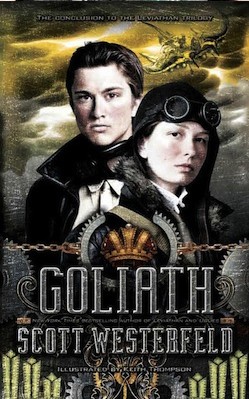
To my son, the latest in Scott Westerfeld’s steampunk trilogy, Goliath.

He also got, via my recommendation to the grandparents, Terry Pratchett’s latest: Snuff.

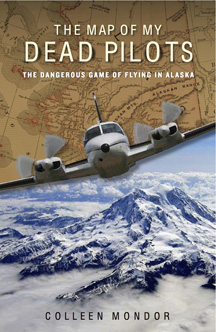
To my husband, Colleen Mondor’s The Map of My Dead Pilots: The Dangerous Game of Flying in Alaska.

To my dad (knowing very well that Mom will read this, too!), Robert Bothwell’s Canada and Quebec: One Country, Two Histories.

Big Sister got Sarah Stewart Taylor’s Judgment of the Grave.

And Little Sister got Debra Schultz’ Going South: Jewish Women in the Civil Rights Movement.

Others got various pieces of Simon R. Green’s Nightside series, Adam Rex’s The True Meaning of Smekday, and Kenneth Oppel’s This Dark Endeavor.


Okay, that’s about….What? What’s that?

What did I get? Oh, yeah!

Stacy Schiff’s Cleopatra: A Life

…and Sara Zarr’s How to Save a Life.

(Gee, I wonder how my guys knew what books I wanted!)

Hope you all got books you wanted, and here’s to some wonderful end-of-year reading time!

Posted in Uncategorized

Revision: More from Mary Kole…and Me

I will get some time into my picture book this week. Mary Kole posted an archive blog this week on Facebook about trying things out, and that’s going to be my mantra for this revision.

  • Is this what that character wants? I don’t know…try it out!
  • Will this new ending work? I don’t know…try it out!
  • Can I simplify and specify to a stronger character want? I don’t know…try it out!

You get the point. There are two things going on here for me. One: I do believe anything can work. Tense changes, pov switches, you name it. If it’s done right. (And, no, I am NOT implying that’s easy!) Two: As much as we talk things out, play with ideas across the table or on scratch pads, the only way to really know if it makes your story better, is to actually write it. Put it down, in scene, with characters and action and dialogue.

My critique partners may get a bit of a mess next time. Or they might get a story that has moved that much further along the path to “done.” Heck, they might get something that covers both of those descriptions!

But they’re going to get something.

How goes your current writing or revision?

Posted in Uncategorized

Comfort? Here? No way!

This morning, on Facebook, Jeannine Atkins posted a quote by someone named Josh Simpson. The quote was:

“It’s important for an artist to find his comfort level—and stay out of it.”

I laughed out loud. Why? Because I had just said to my husband that this morning, I was going to spend an hour with my YA WIP, the one that is distressing and depressing me. Yes, despite the fact that it’s making me feel that way. I worked on it for a while yesterday, and the image I took away was a picture of me, spinning in circles in the same tiny space in the middle of a desert. Yep, there’s me, in the center of a little dust storm, just burying myself deeper and deeper into a tight, barren spot.

Fun? I don’t think so.

But this quote hits it. What am I supposed to do, quit? Boy, there are parts of me that want to. I’ve been musing a bit about my goals/direction for next year–what I want to attain, and it flashed through my head that next year may be the year of a decision about this book, about whether I DO keep working on it, or whether I put it aside until what…until I’m ready to handle it? Until I get a lightening-bolt breakthrough from somewhere unknown? And maybe that’s what I will decide.

It’s not what I want to do, though, and it doesn’t feel right to my gut. Yes, it’s partly that whole doctrine against quitting that I was raised with, but there’s more. If I quit, where am I supposed to go next? Back to that comfort zone? Some safe place where I’m not struggling with my writing?

You know, safety is not all that comfortable either, in my experience. It contains a lot of looking out at all the cool things going on around you…without you. It comes with some knowledge that you’re backing off, letting the fear control you, keeping away from some goal you really want.

No, I think there’s only one thing to do when you’re out of your comfort zone. Keep pushing through. At some point, I think–I hope–you push past that plateau you’re stuck at (the one with all the sand and cacti and circling buzzards), and you reach a new perspective. One that comes with the things you actually did learn in that stuck place, one that has a vista with maybe a palm tree and some water, or a little peak with pine trees and deer. And space to move and actually create.

For a while anyway. Until you hit that next uncomfortable zone.

Rinse and repeat.

Thanks, Jeannine, for the reminder that there is a reason to keep pushing on. *Hugs!*

Posted in Uncategorized

Revision: I’ve Been Here Before

I did something the other day. I shared my first picture book, the one I thought was “close,” to a set of new readers. A few things happened:

  • They said many of the things my other critiquers have been saying.
  • Because they were fresh readers, and this was their first sight of the picture book, their comments gave me a bit of a kick in the backside, a wake-up call.
  • I realized that I still have some deep revision work to do.

Last week, Mary Kole posted a wonderful blog about big revision. In it, she talks about the difference between tinkering and really digging deep, taking apart your story, getting back down to the bones of it and making drastic changes. Here’s a great passage from the post:

…look at the word revision…it means “to see again.” To see your story in a whole new light. To make massive plot, character, and language changes. And having so much on the page already often lures us into a false complacency.

I think I’ve been doing something kind of in between tinkering and the deep stuff. I have made significant changes to the story, at least to the way I tell the story. I’ve been trying to revision the way I see the characters and how I draw them on the page. I’ve been playing a lot with what I write into words, and what I leave for an illustrator.

But–as these new critiquers brought home to me–I haven’t gone deep enough. I still need to answer questions about the purpose of each character (thank goodness there are only three!) in the story. I need to think about who’s story this really is, and why. And I need to seriously take a look at that ending and see if it needs to be tossed out–if it’s simply leftover from that initial idea, rather than being the true way that everything comes together.

Back to the bones. Not just picking up the ones I’ve scattered around, but figuring out–for real this time–which bones I need and what they do. Maybe the wrist bone isn’t connected to the arm bone. Or maybe it is, but I’ve stuck a leg bone in by mistake. I have, possibly, been spending too much time laying the muscles and skin over a not-yet-sturdy assemblage of parts.

I absolutely believe everything Mary Kole says in her post. I’ve told people the same thing a hundred times. I’ve told it to myself. I know it all to be true.

This doesn’t mean I’m not nervous about whether or not I can do it. Or how.

But…this is what it’s all about. It’s as Mary says: “…it’s those writers who have the guts to start over in a piece that usually reap the biggest rewards.”

And it’s one of those writers who probably said best, how I’m feeling as I head into this next revision:

Posted in Uncategorized

Friday Five: Questions to my MC

This week, I was able to start digging back into my YA WIP.  For Friday, here are a few things my MC and I are wrestling with. At least I hope she is. Because I sure am.

1. What will make you get back in that car? Love for a guy? Really? SO not happy with that answer.

2. Will you ever get your mother to talk with you about her past? Yeah? Okay, how?

3. Can you please stop feeling like you’ve been punched in the gut?

4. Are you honestly telling me that you go for help because you, as a teenager, think you need an adult to save you. Excuse me, but that is NOT going to fly with our readers.

5. What DO you want from your grandmother? Yes, I know she’ll give it to you. Yes, I know she’ll give you anything. But you need to narrow down the target just a little bit. Please.