Posted in Uncategorized

Merry Xmas: Books Given & Received

Books as part of my Xmas gift-giving? Really?

Oh, come on. Don’t look so surprised! Of course books are my favorite presents to give AND receive. So I thought for today, I’d show you some of what passed in and out of my hands, and my family’s hands, this holiday.

What I Gave

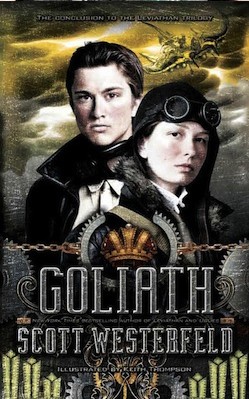
To my son, the latest in Scott Westerfeld’s steampunk trilogy, Goliath.

He also got, via my recommendation to the grandparents, Terry Pratchett’s latest: Snuff.

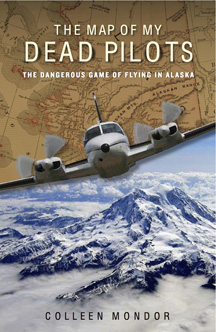
To my husband, Colleen Mondor’s The Map of My Dead Pilots: The Dangerous Game of Flying in Alaska.

To my dad (knowing very well that Mom will read this, too!), Robert Bothwell’s Canada and Quebec: One Country, Two Histories.

Big Sister got Sarah Stewart Taylor’s Judgment of the Grave.

And Little Sister got Debra Schultz’ Going South: Jewish Women in the Civil Rights Movement.

Others got various pieces of Simon R. Green’s Nightside series, Adam Rex’s The True Meaning of Smekday, and Kenneth Oppel’s This Dark Endeavor.


Okay, that’s about….What? What’s that?

What did I get? Oh, yeah!

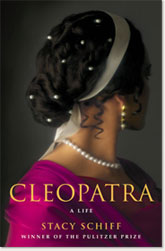
Stacy Schiff’s Cleopatra: A Life

…and Sara Zarr’s How to Save a Life.

(Gee, I wonder how my guys knew what books I wanted!)

Hope you all got books you wanted, and here’s to some wonderful end-of-year reading time!

Posted in Uncategorized

Pacing: Some Thoughts from Me and a Few Others

Pacing.

I haven’t talked a lot about it here, because, well…it’s hard. Pacing feels a lot like voice to me: I can recognize (and love) strong pacing when I see it, and I sure as heck know when the pacing is off. But how to achieve the strong and avoid the weak? That gets a little trickier to figure out and to explain.

So I thought I’d take a little stab at it myself, and then share some links from other writers giving their take on it.

Anyway,pacing sounds simple, right. Action, action, action…think. Action, action, action…think. Well, sure, at some level, you can make a basic equation out of it, and I think-in today’s fiction–action is going to be a bigger part of the equation. But the simple formula doesn’t account for the magic that happens when someone gets it right. Or the clunkiness when they don’t. (And please note I’m not talking only about high-suspense, gun-fighting novels. Every book has its own pace–oh, dear, that’s another whole topic!–and within that pace, every book will have scenes or more action and less.)

Maybe the magic happens when we get out of the formula and into the scene. Into the narrator’s head. I’m thinking that maybe point of view and pacing are intertwined–so that when you’re as close to the narrative character as you need to be, then you can see the scene as they see it and share it, from that close perspective, with the reader. So you know when they’re feeling tense, and you know when they feel like they can take a breather. You know when they’re in conflict mode, ready to take on the world, and you know when they need to retreat into their quiet place and let the world go by for a bit. Of course, this doesn’t take into account distant third point of view, or even that old standby–omniscient point of view. And of course, it doesn’t tell you how to get there!

As an editor, as a reader, I can see pacing that’s rushed or that’s too slow. Prose that feels too fast, to me, often steps too far away from the narrator’s thoughts and feelings, too close the author’s outside point of view. The dialogue in a rushed scene often comes in a quick back-and-forth, with no space or time being given to dialogue beats. It only takes a few words to give us physical response or a panicked thought. And those few words can make the story, the pacing, feel layered and full. Without taking us out of the drama.

Pacing that feels too slow can do the reverse–cause us to spend too much time in the narrator’s thoughts/internal reactions. It can read as though the character herself, not just the reader, is stepping out of the action to think about it, to analyze the problems they’re facing, to look too far ahead into future possibilities. Slow pacing takes us further into response than the character has time for–often, the narration starts to feel like it’s coming from the author, not the narrator. Really slow pacing shows up, I think, when the author lets himself and the characters get pulled out of the in-the-moment scene. Yes, you need a bit of that background story, but you don’t need it at a time when the conflict and tension are running high, when they should be running high. Save it for later, for that moment of retreat and shelter, when everybody-especially the character–has time for a little peace.

I think pacing may be one of those elements that we can really help by reading a passage or a scene or a whole manuscript out loud. When I critique, I’m obviously further outside the story than the author has been while they were writing it. Reading out loud seems, to me, to be a way of taking ourselves closer to that outside point–closer to wearing our own editor hat, than just staying under the writer’s chapeau. Try it with your manuscript and see what you hear–and what you don’t!

All right–those are some of my thoughts. Pretty rambly and not necessarily helpful. Let’s see what a few other people have to say.

  • Some good tips from Heidi M. Thomas at The Blood Red Pencil.
  • Here’s a vlog on pacing in the YA novel that Sara Zarr did for WriteOnCon.
  • Excellent, specific advice from Holly Lisle.

Any thoughts of your own? Happy pacing!

Posted in Books, Reading

Quiet Books: Can I hear a YES?!

Remember “edgy?” Okay, the word is still here. And I like it–I like edgy books. I admire the strength these authors put into their words, the sharp and almost painful voice with which their narrators tell their stories, and the power that pulls me in and keeps me turning the page, at times faster than I can really keep up with.

BUT…

I also like books that AREN’T this way. Lately, I’ve heard the word “quiet” tossed around. People are talking about it on Twitter & Facebook. Writers are trying to figure out what it means, when they hear it from publishers and agents, and they’re trying to figure out–I think–if it has to be a bad thing. Because I think there is some sense out there that it may, indeed, be something that, well…won’t help your book get picked up and sold.

Honestly, I hope that’s not true. Not only because I suspect that my own writing may be more quiet than…edgy? Loud? Whatever that other thing is? But because–if my understanding of quiet books is right–I value them so much for the reading experience they bring me that I don’t want to see them go away.

I’ve been thinking about a few authors whose books I’ve read–some recently, some not so recently–books that I think of as “quiet.” (Some of these authors have also written what I’d called edgier books that I also loved, but I’m not talking about those today.) I’m going to name these books, and I want you all to take this labeling as a STRONG recommendation to go out and read them. Because they’re all incredible, powerful writers. Just…in a different way.

All of these books, like the edgy ones, deal with teens who face problems. BIG problems. MODERN problems. The two things that seem to be different, to me, are the pacing and the voice.

These books don’t rush. I’m not sure the edgy ones do, either, but I find myself rushing through them, often, to find out what’s coming next. These “quiet” stories don’t feel slow, I just feel like I have time to sit with them, to follow the explorations the author is making into character and choices and connections and to make my own explorations at the same time.

The narrative voices in these books also give me time. Somehow, there is a strength of character in the hero (even if they’re not 1st person, we’re almost always getting the story through the hero’s perspective) that makes me feel confident and safe. I’m not saying I read their stories knowing that they’ll be okay, or expecting a predictable ending. That’s not it. It’s that somehow I believe the hero has the strength to make it through their pain and their experiences, and that strength lets me breathe a bit more slowly and read for HOW they’re going to do that–to watch their choices with curiosity, sympathy, and hope.

I’m not doing this very well–telling you what I like so much about these books, without sounding like I’m putting down the others. Honestly, I like them all. I just get sad when I hear writers worrying about whether they shouldn’t write these books. I want to stand up and shout, wave my arm frantically to get their attention, and say, “Yes! Please! Keep writing!”  I want to tell them that I crave their kind of story, and that I’m not the only one who feels that way.

Am I? 🙂

Posted in Recharging Your Writing

Input and Output: Sara Zarr, Me, & You

(Note: WordPress does not like me today. It is not letting me put in paragraph breaks. And Cinderella (AKA me!) has to get to the ball and doesn’t have time to argue with the blog!)
In her post today, Sara Zarr talks about the times she needs to switch from output mode to input mode. This rang a real bell with me–it’s something I ran into for the first time as I was finishing up and revising The Writing & Critique Group Survival Guide. This was the first time that I remember feeling so drained from focusing on getting words out, that I needed to take solid breaks and put some words in.
 
When I was working full-time, I think I experienced a variation of this. I would spend my requisite six to eight hours behind my desk, writing explanations and instructions for technical manuals, and then I would come home and try to write fiction. Usually, I’d get a little bit in, but often, the evening would revolve around a long bath, a cup of tea, and reading a good book. Day: Output; Evening: Input. Let me just say, I admire beyond boundaries people who do manage to put in those long work hours and still produce full-length manuscripts, whether those manuscripts are ready for publication or not.
On those days, my brain felt like a sponge. Even the most boring academic “Let me prove my point to you over and over” books felt good in my hands, in front of my eyes. Because they were putting words into my head, instead of asking me to pour them out.
When I stopped working full-time, I was still very busy–I had a bright, active toddler to take care of and, of course, the house/life stuff that fell onto my plate. But…less of that was output. It was in those days that I really started concentrating on my fiction, on getting stacks of pages written, on digging into the feedback from my critique group, on revising. I didn’t just have a bit more output energy; there were days my brain was begging for an hour or two of output mode.
As I was writing the critique book for Writer’s Digest, I was—for the first time in quite a while—writing under deadline. This meant developing an even tighter focus and really spending “school hours” as writing hours—output hours. I was and am determined to keep making progress on my own fiction, so I was doing output to get word-count and revision down on those projects. Which added up to…days that shrieked STOP! Days where I’d lay on the couch, snuggled up with a winter blanket, and pull out a research book for my historical YA WIP.
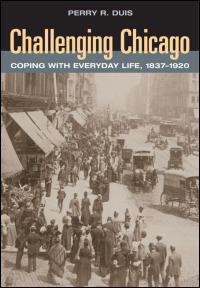
The last couple of weeks have been divided between wrapping up the school year, socializing with friends and relations (which for an introvert also = output!), and moving on my WIP’s first draft. Today, in between a morning celebration for a friend and an evening party, guess where I found myself? Yep, on the couch. I thought I’d nap, but instead, I stayed awake, eyes front, brain imbibing this:
chchicago
Did you know that:
  • The first cable car was invented in San Francisco, California? Think about it–all those hills. As my son says, horses have a lot of shins to get shin splints on!
  • Cable cars didn’t work so well in Chicago. The cables had to be deeper in the ground, to run below the frostline. That meant the grip had to be longer, which meant more break-downs. Plus, you know, all the frozen horse poop (lots of horses still around on the streets) kept falling into the cracks and gunking up the cable.
  • Chicago switched to electric streetcars, which were first developed in Richmond, Virginia. There’s a question for your next trivia game!

I know. Little stuff. But input, input, input. Not to mention, it gets me much more immersed in the world about which I’m writing, which translates into inspiration and motivation to get back to…output!

Sara says for her, input is “Books, music, poetry, movies, and Gabriel Byrne.” 🙂 For me, it’s mostly books, your blogs, and a bit of serious “quiet time.” What about you? How do you recognize when you’re drained of output power? What input helps you recharge?

Posted in Blog Award

Some New Bloggy Links

Earlier this week, Shawna at WriterMomof5 sent me this blog award.

LovelyBlog


Shawna is one of the unexpected rewards I got from starting this new blog and getting out there on some social networking sites. She is sweet and funny and reading her blog is one of the treats of my week. So having this award come from her is just…cool!

I thought I’d combine passing this award on with giving you links to some of the newer blogs I’ve been following. Well, they’re not necessarily new to the blogosphere, but they’re new to me. In some of that free time we all have just laying around, take a few minutes and check these out–leave a comment and say, “Hi!”

  • Elana Roth is an agent with the Caren Johnson Literary Agency. I “found” her first on Twitter and have recently started reading her blog–enjoyable and informative.
    http://elanaroth.com/
  • Beth Revis cracks me up. Every time. She’s writing a SF YA that I so want to read. Beth’s also  a middle-school teacher, and you have to read her Today: In Class posts. She’s the teacher we all wish we’d had.
    http://bethrevis.blogspot.com/
  • Amy Butler Greenfield is History Maven. We hooked up somehow (I’m not sure if it’s a bad or good thing that I can never remember where or when these connections get started!) after I started blogging about my historical YA. Amy is dug into her own historical fiction, and I love her posts (and comments) about history, writing, and life.
    http://historymaven.livejournal.com/
  • Joyce Moyer Hostetter is another history writer, and the author of several historical novels for children. Joyce is incredibly supportive and her posts about research and writing and talking to kids about her stories are hugely motivational for me!
    http://moyer-girl.livejournal.com/
  • Sara Zarr is, for me, the epitome of the thinking writer. Her posts are intelligent and speak clearly and concisely of the process and the art and the struggle.
    http://sarazarr.livejournal.com

I’m passing the Lovely award on to all these bloggers and hope you’ll add them to your own lists of very readables!