Posted in Uncategorized

Friday Five: Around the Blogosphere

I take you today to a few posts that caught my eye, and my imagination, over the past couple of weeks.

1. PJ Hoover lists her top ten reasons to have a writing group (different than a critique group).

2. Beth Revis gives her answer (for now) on the question of how to define success.

3. On a similar thread, lit agent Erin Murphy guest-posted over at Shrinking Violet Promotions about the many different paths to success.

4. Janni Lee Simner coaxes her protagonist to join her on the first steps into Draft 3 of her their WIP.

5. Terri Thayer asked us to share our snow-day stories. Being a native Californian, I had to make mine up. 🙂

Happy Friday, everyone, and here’s to a wonderful weekend.

Posted in Uncategorized

Getting Back to the Calendar

Here’s what I thought would happen once school started. I’d have 6-8 hours a day of just-writing time. You know, because high school would be so easy and straightforward and life, with all its complications and responsibilities and tasks would somehow magically take care of itself.

Um. Yeah.

Let me just say that the past few weeks have felt just a tad scrambled and random and disorganized and—okay,yes, productive in many ways, but not for my writing and not with a high degree of calm, relaxed, sanity.

Which, I reminded myself this morning, means it’s time for my calendar. It’s time to schedule my writing and to fit some planned time in for all that other life-stuff, too.

Here’s how it works, when I remember to do it. The first thing I schedule for the morning, in writing, or–these days–on my Blackberry-is the writing. I take up an hour slot on the day’s calendar, or if I’m being nice and generous, an hour and a half. Sometimes, when I first get back to this “system,” I have to fight the feeling that I’m only dedicating a small piece of the day to the thing I love most. Of course, then I think about the past week or two or…you know, and I realize that’s way more than I’ve been giving to my writing. I schedule this time for a few days, up to a week ahead–basically as far as I can look forward and know what life will be like. Supposedly, anyway.

For the rest of the day’s time, I think about what else I have to do. Sometimes I have an editing job or some freelance writing to fit in. Other times, like now, I feel a serious need to get in some solid exercise–another thing that typically goes missing when my life chooses the haywire path, so I make sure I get some of that down, in writing. This month, it’s paperwork–all the lovely financial-management joys that skulk in corners and make sneering nyah-nyah noises when I try and hide from them for too long.

Writing, exercise, paperwork.

I don’t know about you, but that’s plenty for me to fit into a day, along with, you know, spending time with my family, helping my son ride that school roller-coaster, keeping the house and food supplies in some semblance of order, and–lest we forget–reading.

I’m getting a bit freaked out again just looking at this post.

Breathe.

Okay.

I know this works. As long as I write it down. I might not be speeding along, but I’ll be making progress. And that’s really what it’s all about.

PJ Hoover uses her own very special time-management tools. If you haven’t seen her fun video yet, take a look here. And enjoy the calm.

Posted in Critique Groups, Critiquing, Guest Blogger, Uncategorized

Guest Interview: PJ Hoover on Critiquing

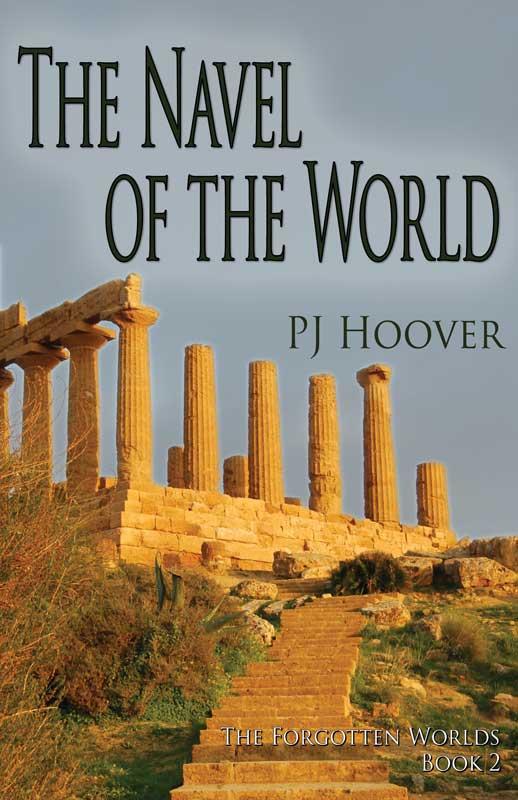
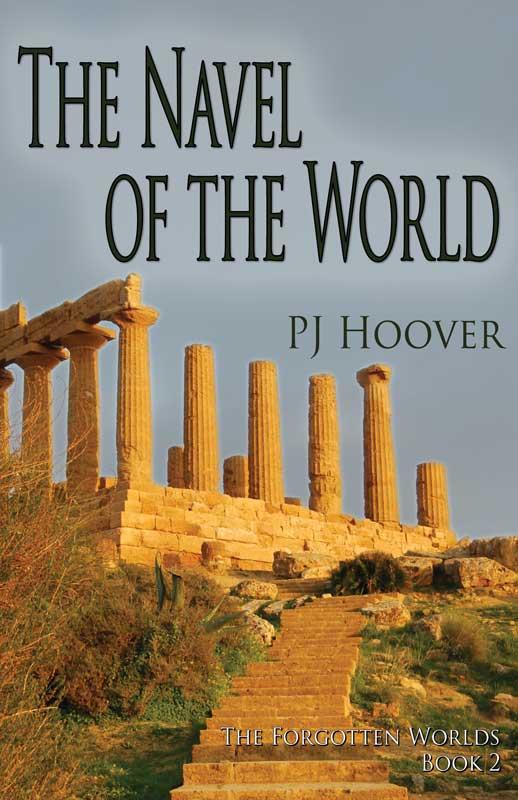
PJ Hoover is the author of The Forgotten Worlds Trilogy, a fun fantasy that takes its characters and readers into the world of Lemuria and Atlantis. The series includes The Emerald Tablet, The Navel of the World, and The Necropolis. (The last book will be released Fall, 2010.)          

PJ is also a wonderful blogger, with a positive energy that always warms and cheers me when I read her posts.


I asked PJ a few questions about her experience critiquing and how her critique group works. Read on for some great information. 

BL: Can you give us a brief description of your critique group (online or in person, how many members, what they’re writing, how you found the group, how long you’ve been together)?

PJH: Sure! My current critique group is more a group of online on-demand beta readers. I was previously part of a more formal critique group (20 pages each once a month, 8 members), but a few of us formed a side group to critique extra stuff like full manuscripts. I also contacted a few bloggers whose book reviews I was terribly impressed with to see if they would want to join. They did, and we soon found a nice solid group. Eventually, I dropped from the formal group to focus on the side group. So as for how long we’ve been together, it feels like forever, but in actuality it’s only been a year or so.

BL: Is your group genre-specific or do the members write in various genres? What do you think are the benefits of the kind of group you’re in?

PJH: Our group focuses on MG and YA novels. That’s not to say we wouldn’t read something in a different genre, but thus far the request hasn’t come. The novels are all sorts from fantasy to sci-fi to romantic comedy to historical. The benefits of sticking with MG and YA novels are that we are critiquing the genre we’re all writing in and thus get the added expertise of being familiar with the market while still seeing a variety of work.

BL: What’s the hardest part of being in a critique group, for you? What makes that part worthwhile?

PJH: There’s nothing hard about my current group J I’d say the hardest things in the past groups I’ve been in have ranged from personality conflicts to how long it takes to get through a manuscript. I’m not sure there is anything worthwhile about personality conflicts. I want to have my critique partners for the long haul, so making sure I’m working with people I respect and enjoy talking with is an enormous requirement for me.

BL: If a writer’s goal is publication, do you think participating in a critique group can help the writer toward that goal? How?

PJH: Yes! First off, getting work critiqued really helps us see our work more objectively. It’s so much easier for other people to see what needs to be improved in our work, and their critiques help us see this, too. In addition, critique groups are a fabulous source for networking and support. I consider my critique partners my friends and feel I could count on them for most anything.

BL: What was the biggest surprise for you, about critique groups or the critique process, when you first started participating in a group?

PJH: The biggest surprise to me has been how everyone sees things differently and how getting a variety of opinions can really give us a nice rounded picture of what needs to be improved in our work. Some critiquers may focus on plot while others may focus on character. And seeing as how both are important, getting that variety of opinions becomes essential.

Please answer the next questions quickly, without too much thinking time. 🙂

BL: Do you critique with: Red pen or NOT-red pen?

PJH: Highlighter

BL: Favorite critiquing drink: Tea, coffee, or diet soda?

PJH: COFFEE

BL: Do you prefer: Critiquing or being critiqued?

PJH: Being Critiqued

BL: Who would you rather have run the house while you write/critique? Jeeves or Alice from The Brady Bunch?

PJH: Alice—she did everything,

BL: Name one book that has blown you away in the last year.

PJH: Life As We Knew It, by Susan Beth Pfeffer

PJH: Thanks so much, Becky!

BL: Thanks to you, PJ!

Posted in Critique Groups, Critiquing, First Drafts, The Writing Path

Getting a 1st Draft Critiqued…Yes or No?

And of course, my answer is…it depends.

PJ Hoover, author of The Emerald Tablet, had this to say about her first drafts. It sounded very familiar, and it got me thinking.

I’m working on the first draft for my WIP and know, very firmly, that no eyes but mine shall see the actual words. I’ve finally realized that I have so much to figure out & understand about this story, that the draft is truly exploratory only. I chose this path, also, on my last book–the middle-grade mystery. That was the first draft I wrote via Book in a Week, the system I heard about from April Kihlstrom, and I was able to dive right into the second draft, with a lot more structure and a more active hero, and pass those chapters onto my critique group. At this point on my writing path, I’m just more aware of how rough these early stages truly are, and I have more confidence in my ability to do some of my own work with this mud clay I’m trying to shape.

For years, though, in my earlier writing and critiquing days, I did submit first-draft chapters to my critique group. There are days when I really miss doing things that way. And I think, depending on the writer, there are definite pluses to this kind of sharing.

  • You are not writing in a vacuum.
    When you are writing a first draft, it’s just you and the computer. While this can help you keep a flow going, it can also leave you with plenty of doubts and worries about the progress you’re making. Okay, the computer isn’t going to tell you that your plot line (what plot line?) is weak or that you’re wrong about how a circus tent smells. But neither is that computer going to reach out and give you a pat on the back, tell you that a character is getting interesting, or hand you some dark chocolate for getting all the way to Chapter 10. The support of a critique group can be just the encouragement a writer needs to…keep writing.
  • You have a “soft” deadline.
    A meeting every two weeks can be a great motivator. Sure, if a group’s critique schedule is too strongly enforced, that schedule can translate into nothing but pressure, which–if you’re like me–is about the greatest shut-down device ever invented. In a good group, though, a meeting on the calendar can be a reminder that you’re in this group because you want to write. Because you want to get some pages out. Two chapters a month for a year adds up to 24 chapters. Sounds like a first draft to me.
  • You may get some fodder for that learning curve.
    In a first draft, you think while you write. Well, there’s nothing to say that a few other people thinking about that writing has to be a bad thing. Yes, your critiquers must remember (and they will, because you’ll remind them!) that this is a FIRST draft. They need NOT to be marking commas or rewriting your description of the Cannes Film Festival that they just happened to visit last month. They can, however, talk to you about that hero you’re developing and make suggestions about his or her strengths and flaws. They can point out the places where you’ve written tension to make them crawl out of their skins and the places where…you haven’t. You can look at this comparison with pieces of your own work and start to grow a skill.

Obviously, when you’re writing and when you’re critiquing, you need to make the decision about what stage is right for you to share your work. You need to recognize whether a critique will frighten you off from your own story, stalling you out, or whether it will help you give weight and value to that story, providing a supportive audience that is not the black hole of your CPU. You need to be very careful about going back and revising too much from this early feedback, rather than using it to propel you forward.

However, I hear a lot of authors saying, however, never to show a first draft, never to get it critiqued.

And I say, well…never say “never.” Sometimes, it’s more than a little okay to say “yes.”