Posted in 2024, Picture Books

Animal Protagonists in Picture Books

Writing a picture book with an animal protagonist hasn’t exactly been a goal of mine, but I’ve certainly played around with it several times, for various story ideas. While playing, I spent some time wondering about when and why authors choose to put an animal in the starring role. In some books, the text is specific enough that it’s pretty clear the writer made the choice. But I’ve also heard writers talk–almost always in a good way–about getting art back and finding out the illustrator has drawn the main character as an animal.

This year, I finally ended up writing a story with an animal in the lead role. I started out with a human child, but–no matter what perspective I brought to the story–it felt like trying to fit the proverbial round peg into the square hole. I knew what I wanted the story to be about, but every time I tried to write it, I bumped up against all the assumptions, expectations, and baggage that come with being a human child in a human world. Then, in one of those moments we all live for, I saw the story with animals–animals that interact in nature for real and that brought their own comedy to the story. I’m still revising, but this is a manuscript I’ll keep working on until it’s ready. And every version carries the humor and heart that making this choice brought to the first draft.

I’ve added a new board to my Pinterest page, for picture books with animal protagonists. And I thought I’d talk about a few of my favorites here.

The Capybaras (written & illustrated by Alfredo Soderguit) is one of the most artistically and emotionally beautiful books I’ve ever read. It takes on the harsh reality of refugees fleeing from danger in their home countries and the cold, often cruel way they are received by people to whom they turn for safety and support. This is an incredibly important story, but also a BIG story with a LOT of layers to write for children. By choosing to “people” his book with capybaras and chickens, the author was able to take a complex idea and write a story that children can access, understand, and empathize with. (And remind us adults about what really matters.)

Margaret Chiu Greanias’ How this Book Got Red (illustrated by Melissa Iwai), accomplishes a similar result, but with a completely different approach. If you haven’t read Margaret’s book, she writes some of the best humor out there, and her comedy always opens a window for kids to recognize and explore challenges they already live with in their worlds. The top layer of plot shows a red panda being frustrated (and hurt) that all the panda books are about the other kind of panda, but the story layers in the big ideas of representation and self-esteem and being an ally. The book offers a smile or laugh on almost every page, but will also open important conversations between grownups and kids and–more importantly–between kids and kids.

The Bear Must Go On (written by Dev Petty, illustrated by Brandon Todd) puts a shy, self-conscious bear into a scary situation–one that shy, self-conscious kids have to deal with all the time. In the midst of ridiculously chaotic comedy, Bear is the only character in the story who would (very much) rather not get on stage. I believe there are emotions and stories that, when shown with human characters, can hit a bit too close to home for some children to be comfortable with. By making the protagonist a bear, Petty has given children the freedom to root for him, because they are experiencing just enough distance from their own anxiety and fear.

And then there are times when the main character has to do something a child can’t do–either because they would never have the opportunity or because they would get in trouble if they did. In Ryan T. Higgins’ Norman Didn’t Do It! (Yes, he did), Norman’s best friend, Mildred, is a tree. Norman gets so jealous when another tree comes between them that he completely removes that second tree from the equation. Triangles are hard. What child hasn’t wished that a third kid would just go away–that they could make the kid go away? But they pretty much don’t have the power to make this happen and, if they even try, some adult is going to find out. Watching a porcupine dig up a tree; take it far, far away; and then have to think about what they’ve done lets kids play with familiar problems and solutions–good and bad–without risk to themselves.

Posted in Book Review, Picture Books, Read-Aloud

Four Fantastic Picture Book Read-Alouds

I have a lot of picture books on my shelf–possibly too many! They’re all great, and they all bring something to the table for my learning & craft. And, obviously, every picture book is a read-aloud.

But there are some books that just sing to me as a reader–I can hear the rhythm or voice in my head, and I can see myself reading it happily and easily to a crowd of children (well, maybe a small group!).

Federico and the Wolf – Written by Rebecca J. Gomez, Illustrated by Elisa Chavarri (2020).


I’ve never been a huge fan of the original Red Riding Hood story, but this is one of the most delightful fairy-tale retellings I’ve seen. The rhyming and rhythm work so well together, and the prose and dialogue has an energy that transfers itself into the reading. And on top of that, it’s funny! This is a must-have to share with kids.

Nobody Hugs a Cactus – Written & Illustrated by Carter Goodrich (2019)


I laughed out loud in the bookstore when I opened this one. The text is spare and tight, with a lot of dialogue. And that dialogue is absolutely filled with attitude, especially Frank’s. It is SO much fun to read a rude character. And the art! On every page, after I read the text to the kids, I’d be pointing to Frank and saying, “Look at his face!” Pretty soon, they’d probably be saying it before me.

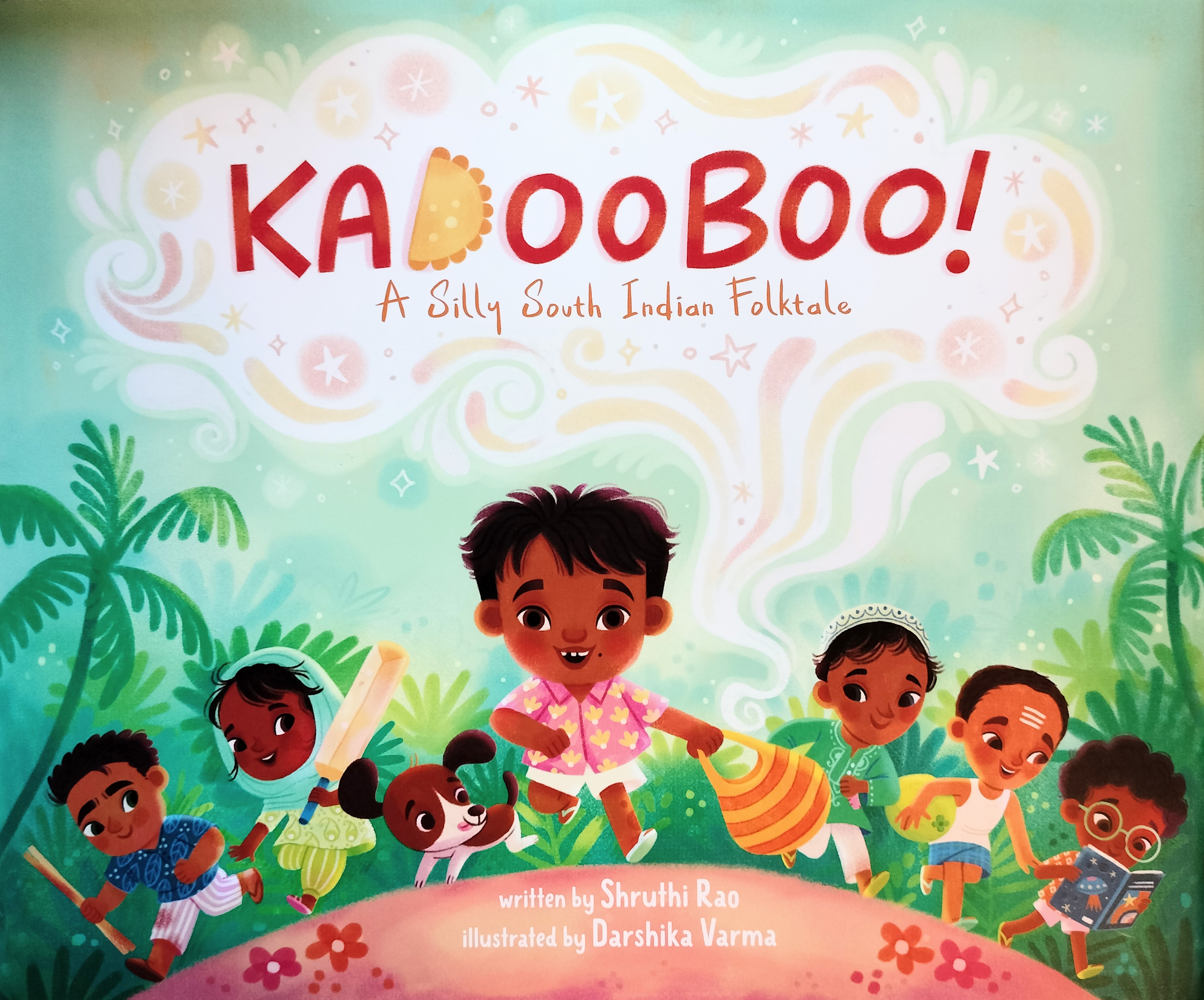
Kadooboo! A Silly South Indian Folktale – Written by Shruthi Rao, Illustrated by Darshika Varma (2024).


Full transparency: I know Shruthi, but that doesn’t change how I feel about this book. It’s a lovely, simple story. Kabir has to get the kadooboo home to his Amma before it rains. But the harder challenge is telling everyone what he’s carrying…and remembering how to say the word. The mistake words are fun & funny, and the artist has brought them out of the main text in a large, bold font that would make it easy for a child to find. And the gaps in Kabir’s teeth–such a small thing, but it adds so much to the illustrations. I love the idea of reading this to a classroom of kids who have all been losing their baby teeth.

Don’t Hug Doug (He Doesn’t Like It) – Written by Carrie Finison, Drawings by Daniel Wiseman (2021)


The confidence and energy this book exudes is amazing. The rhyming is great, and the word choices will make you laugh. And at the end of each scene comes a matter-of-fact reminder not to hug Doug, plus a chance for Doug to reiterate, offer alternatives, and move the story forward in a new way. The illustration of Doug with the megaphone, shouting, “Who here likes hugs?” and giving everyone on the next page (and listening to the story) a chance to answer is a powerful, joyous moment of self-positivity.

Posted in Picture Books

Picture Book – Some New Favorites

I updated my Pinterest page with a few new books, if you want to take a look!

Two of the best picture books I’ve read in July play with what I’d call more traditional styles, stretching my brain a bit and showing me what can be done (really well) by pushing past expectations.

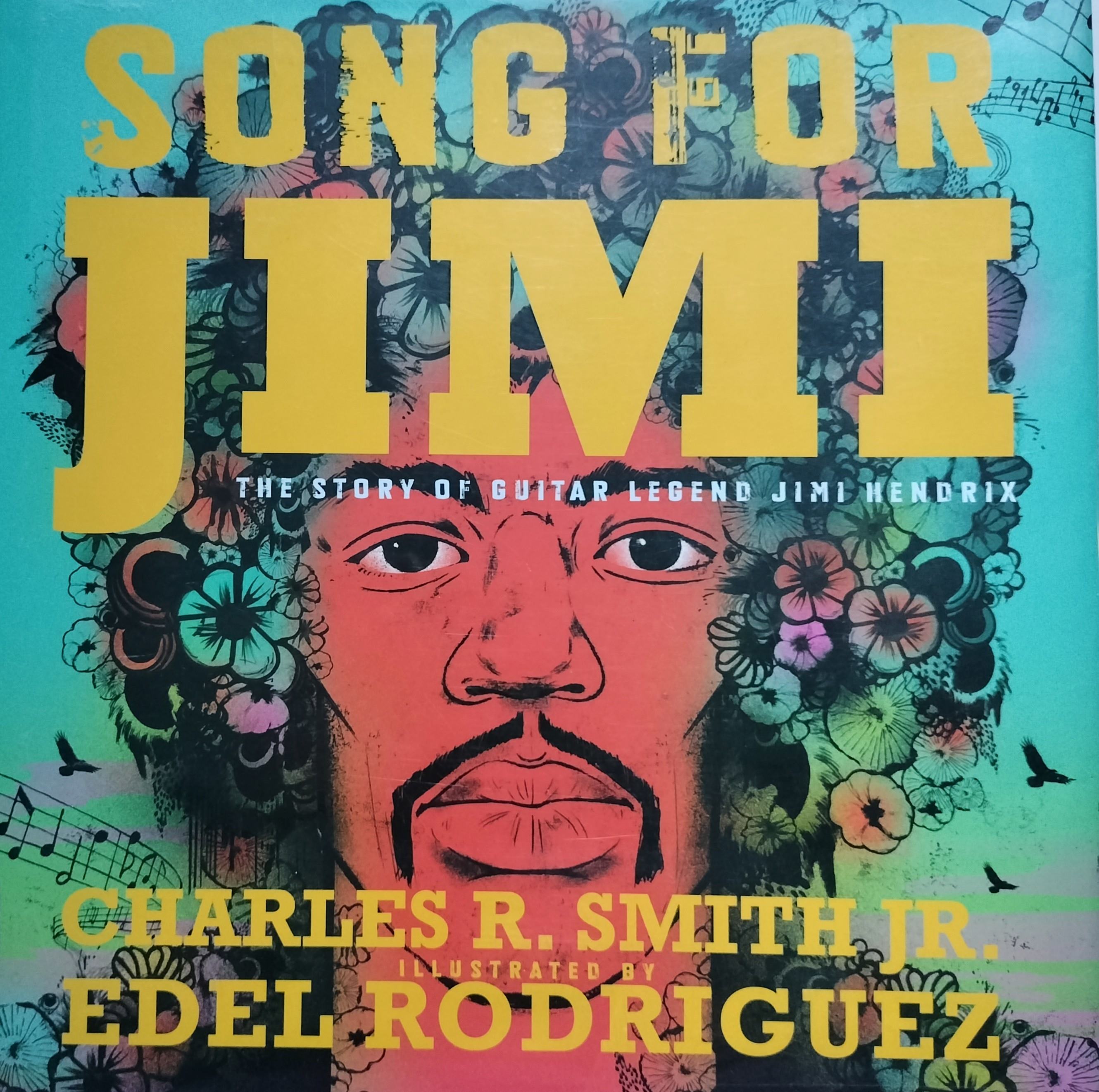
Song for Jimi: The Story of Guitar Legend Jimi Hendrix (written by Charles R. Smith Jr. & illustrated by Edel Rodriguez) is stunning. The art carries all the passion and power that Jimi’s music does. And the writing comes in a series of verses that also get to the heart of who Jimi was and the not-like-anything-else way he played guitar.


Small Things Mended (written by Casey W. Robinson & illustrated by Nancy Whitesides) explores grief, but–unlike so many books with this theme–the story starts after the loss. And while there are hints in the illustrations as to what the loss is, the text doesn’t address it. This story is about recovering from grief, and that’s the journey shared with the reader. And it’s beautifully done.


See what you think!

Posted in Chapter Books, Getting Organized, Organization, Picture Books, Progress

Sometimes Life is Like a Snow Globe

Okay, sometimes life is like being inside a snow globe. It’s an odd metaphor for a summer, but it’s a summer where things have been shaken up, settled briefly, then shaken up again. In July, we “hosted” my husband’s kidney stone about three weeks. (Go get a big glass of water. Right now. I’ll wait.) Then the heat wave hit, and now California is basically one big firestorm. I’ve been able to get things done at work and make some decent progress on a writing project, but concentration and focus haven’t been my friends for a while now.

When my snow is “settled,” I’m good with having a lot of writing projects up in the air. I can shift back and forth, letting one simmer while I move forward on another. When the snow is whirling, though, having that many first drafts and revisions in my head is like being in a blizzard. (Not that I’ve ever been in a blizzard.)

This morning, after I checked the news on the fires, I took a few minutes to sit and breathe (the smoke has been better at our house for a couple of days!). The wind in my head quieted down a bit, and my mind wandered over to my current writing projects: a new picture book idea I’m excited about, three revisions I have some good thoughts on, and whatever continued writing I want to do on my chapter book wip after the Highlights workshop at the end of this month.

Needless to say, the thought of all those projects waiting for me kicked up the wind, and my mind was back in the snowstorm. I reminded myself that, at times like this, it’s good for me to step back into a sheltered place, line up my goals neatly by the fire, and make some decisions about what comes next, then next after that, and then next again. A row of “nexts” is much better than a swirl of “NOW!”

I put my row in this order:

  • I want to write another chapter on the chapter book WIP. I’d been putting that on a shelf, because it isn’t required for the workshop, and who knows what direction I’ll be going when I’m on the other side of all that learning. But I realized this chapter is calling to me, I can see my MC struggling and coming out (temporarily) ahead by the end. This sounds fun, and fun is good. Assuming the snow settles a bit, that’s the writing I’ll do this weekend.
  • I’ll plot and think and brainstorm and get a first draft out of the new idea. When this year started, I had what I thought was four picture book manuscripts worth revising for (eventually) querying agents. Since then I’ve drafted and revised two new ideas into stories with a lot more potential. It’s clear to me that only one of those original ideas is good enough to revise right now, and the other three need to go on a shelf. I think this newest idea is another good one, and I want to get it drafted. Then I’ll be back to a stack of four, and a much stronger hope that I can turn them into something ready to show agents.
  • After the workshop, I ‘ll move into revision-only mode on my picture books. Four is enough, and I want to keep doing the hard work and getting more feedback from my critique group. I never say never, but at this point, I may not go on another idea hunt until Tara Lazar’s Storystorm comes around in January. (Which, the way time has been feeling lately, is right around the corner!) My goal is to start querying, and revision is going to be the best path toward that goal.
  • I’m not making any hard decisions about the chapter book until after the workshop. I may find out that this story idea just doesn’t have the potential for today’s market. I may find out that I’m on the right track, and I may “depart” from Highlights as or more excited about the story as I am right now. If the latter happens, then I’ll toss that ball into the air and have it handy to work on anytime I need to let all four picture books simmer for a few days.

Believe me, I’m perfectly aware that this list is my brain’s attempt to glue my snow globe to a shelf and keep anything else from shaking it up, and I’m even more aware that actuality is out of my control. But I’m looking at my plan as being like a snow shovel. If I don’t pick it up and do some clearing while I can, I’m never going to be able to get my car out of the driveway. (Not that I’ve ever held a snow shovel.)

How are you handling the chaos these days? Feel free to share any tricks and tips in a comment!

Posted in Book Review, Picture Book Biographies, Picture Books

PB Biographies – Game Changers: The Story of Venus and Serena Williams

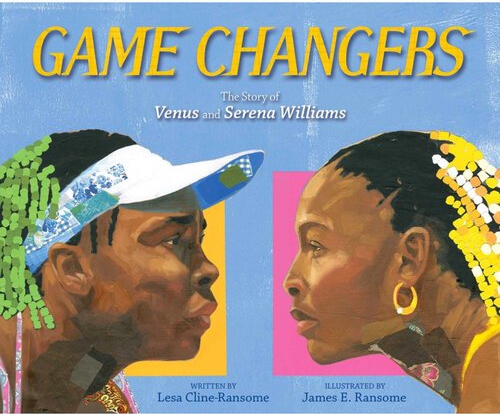
I added Lesa Cline-Ransome’s and James E. Ransome’s Game Changers: The Story of Venus and Serena Williams to my first bookstore orders of pb biographies, and I am so glad I did.

Picture book biographies of one person require the author to wander through mounds of research, sort out big stories and little stories, delve into personality, and find a way in that will engage a young reader and keep them engaged. And that’s true when you’re writing a biography of one person. I think the most amazing thing about Game Changers is the way Lesa Cline-Ransome weaves the complexities and layers of two amazing women into the book. She never drops down into over-simplification, but somehow integrates every element seamlessly into the forward-moving story.

If I had to say, in a few words, what this book is about, I’d say it’s about the love of Venus and Serena for the sport of tennis and the love Venus and Serena have for each other. Not only does Cline-Ransome achieve absolute balance between the two threads, but she manages to capture what I imagine is a truth of the Williams’ lives.

Serena and Venus Williams have shown their absolute commitment to playing their best possible game of tennis every time they step on a court. Simultaneously, each is dedicated to being their sister’s best friend and strongest supporter, even when they are standing on opposite sites of the net.

Cline-Ransome achieves the book’s balance by a sort of “take-turn” structure that, I think, intentionally mirrors the pace of two players warming up before a match. She spends a few words, a page or two, focusing in tightly on the tennis thread–the hard work that started when the women were young children, the determination with which they put in hour after hour on the court. Then she shifts to the way the sisters were constantly together, excluding their individual names from many pages and using instead the plural they. And throughout the book, she touches lightly but firmly on pieces of their story that are not easy and, often, not complimentary to the world of tennis.

The story builds with the women’s success, to a climax of three matches they played in 1998, 2000, and 2002. Venus beats Serena in the first match at the Australian open. They play doubles together in the 2000 Olympics and walked off the court with two gold medals. And in 2002, Serena beats Venus at the French open. Reading the pages feels like you’re in the stands, watching a three-set match, if an imaginary match in which the second set ends in deuce. A match where Cline-Ransome’s “ball” goes back and forth between the two woman as smoothly as one of their rallies.

Yes, I, too, can occasionally resort to sport metaphors.

At the very end (spoiler alert), Cline-Ransome brings the two loves–the loves of sport and sister–together in three incredible paragraphs.

…Venus served big for the second set and took the lead, but Serena broke serve and won. The second set was hard fought, and the sisters rallied with down-the-line combinations, skidding from sideline to baseline until the final match point, when Venus cracked the ball into the net and the moment belonged to Serena. In two sets of 7-5 and 6-3, a victorious Serena stepped out of the shadow of her sister.

Turn the page…

Venus ran off the court as the curious eyes of the crowd followed her. High into the stands Venus sprinted, snatched up her bag, and pulled out a camera.
Nothing can keep me from celebrating when my best friend wins a match,” Venus said proudly.

I closed this book with a sigh of utter satisfaction.

A note about the illustrations: I wish I knew enough to describe what
James E. Ransome has done with his art. Every page shines with beauty and energy and emotion. It’s hard for me to choose a favorite, but this one stunned me when I first saw it and continues to draw me back to look at it again and again.

Posted in Picture Book Biographies, Picture Books

PB Biographies: Evelyn the Adventurous Entomologist

I’ve been saying for a long time that, someday, I want to write picture book biographies. In a recent Duh! moment, I realized that isn’t going to happen until and unless I get serious about reading and dissecting them. So I’m starting a new series on my blog featuring picture book biographies and my thoughts about why and how they work. I’m starting the series with a book I love and that happens to be very handy, sitting right there on one of my picture book shelves. That book is Evelyn the Adventurous Entomologist: The True Story of a World-Traveling Bug Hunter, written by Christine Evans and illustrated by Yasmin Imamura.

Full disclosure, I met Christine at an SCBWI event and picked up her book to browse through it. I was already loving it when I came to these words,

Many years later, Evelyn applied to veterinary college. She longed to help sick animals.

And the next page:

However, it was the early 1900s. Women couldn’t vote. They rarely went to college. And they certainly weren’t allowed to be vets.

Then and there, I bought two copies–one for me and one for my mom. My mom also wanted to go to vet school and, in the 1950s, but was told by a school counselor that might not be possible. But vet schools had just started to admit women. My mom knew it wouldn’t be easy. But she “went anyway.”

Fifty years earlier, Evelyn Cheesman wasn’t able to vet school. But many, many other times she was told she couldn’t go somewhere, but–in a lovely repetition of phrase in Evans’ book–“…Evelyn went anyway.”

One of the things I love about this book is the way Evans doesn’t try to force the facts or her language. She uses “Evelyn went anyway” when it’s accurate–when Evelyn did go. In places where Evelyn was unable to pursue a specific dream, Evans shows us the other ways in which Evelyn persisted, pushed forward. In the book, Evelyn says yes to every opportunity and, when one isn’t presenting itself, she makes her own. She dives into everything she tries, making it her own with creativity, hard work, and–I think–a love of being in charge of her own world. By making clear the many bumps in Evelyn’s path, Evans shows us beautifully the ways in which Evelyn got past those bumps–sometimes walking around, sometimes climbing (literally), and sometimes pivoting in a new direction. But she never once stops moving forward.

Evans also does a fantastic job of weaving in the perfect amount of information about the time in which Evelyn lived. The focus is always on Evelyn–the things she chooses to do, the adventures she takes, the way she seems (to me) to always be on the lookout for something new she can learn, something new she can explore. But mixed into Evelyn’s story are bite-sized tidbits about Evelyn’s world. We don’t need this context to know that Evelyn was special, but the contrast of her actions with what she was supposed to do, allowed to do, highlights the power of her personality and the strength of her commitment to herself and her dreams.

A note about the illustrations: I really love the art in the book. The colors are all earth tones, evoking Evelyn’s love of the outdoors. Evelyn’s energy, focus, and action are brought out in every illustration of her. And somehow, as we see Evelyn across various ages, she is always Evelyn. Beautiful.

I would give this book to any child as an introduction to picture book biographies, but most especially to a child who sees the world in a slightly different way than those around them or to a child who needs to know that stubbornness can be a strength. I would also, of course, give this book to anyone (child or adult) who loves bugs.

Photo by Pixabay on Pexels.com
Posted in brainstorming, Dreamscapes, Getting Organized, Picture Books, Writing Goals

Getting My Dream Ducks in Order

As good as I am at multi-tasking, my natural, happy mind-state is to think and act in a linear path. One thing at a time, put it down, pick up the next, work on that, repeat. And for many years that has worked for my writing. Until recently, I was never popping with story ideas–I could pretty much put all my focus onto wherever I was in whatever novel I was struggling with at the time.

Then picture books came along to say, “Hi!” Storystorm is a huge part of my idea generation, but also–these days–some muse (maybe the Muse of Overwhelmedness) sends ideas to me on a regular basis. And you know what?

I CAN’T WRITE THEM ALL AT THE SAME TIME!

Add to this that I am moving toward querying agents. And while I would like to just dive in head-first, some very wise people recently reminded me of the important steps involved in a smart agent search. And..guess what?

I CAN’T DO ALL THE STEPS AT THE SAME TIME!

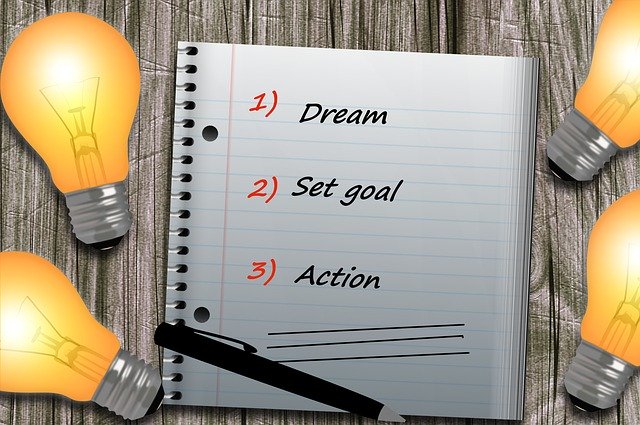
And once more piece–now my looking-forward is a mix of dreams, goals, and actions. That’s about as non-linear as you can get. Some people could work it into a flow chart and feel comfortable dropping onto any arrow. But not me.

I CAN’T FOCUS ON MULTIPLE BIG-PICTURE VISIONS AND TINY DETAILED TASKS AT THE SAME TIME!

It was a busy week at the day-job, and I had to push the ALL down to the bottom of my brain for a few days. (No, of course it didn’t stay there, which is why I ended the week feeling like I had gone ten rounds with…Yes. The Muse of Overwhelmedness.)

So…I went to bed early last night, and I slept in this morning. I let my mind gently roam its way to a couple of Storystorm ideas, and I had breakfast and caffeine. And then I played with dream-scaping.

Dreamscape 2

Typically, these brainstorming-circle tools don’t work for me. The fact that this one has, at least in having filled up a page with bright colors and actual text, is–I guess–reassuring. In an oh-good-I-am-finally-deep-enough-into-this-writing-thing-to-have-my-head-explode way.

How I turn this dreamscape into process(es), I’m not sure. In my past, free-to-be-linear life, my lists were a straight line of numbered tasks, and I got to happily cross off each one as I finished it. This new world is filled with tasks that connect to each other backward and forward, get to be repeated time after time, and play a role in various and sundry scenarios. It’s as if a nice, simple If…Then statement met up with Wile E. Coyote.

But I think this is my new normal, and it’s a normal I have been aiming toward for years. So I’m celebrating by being grateful and breathing deeply. And I’m keeping the nice paper and pretty pens near at hand.

Posted in Picture Books, Storystorm, Uncategorized

Storystorm 2020: I’m in!

I just signed up for Storystorm 2020.

If you aren’t familiar with Storystorm, it’s the creation of Tara Lazar–author of so many fantastic picture books. To name just a few you should definitely check out: The MonstoreNormal Norman, and The Upper Case: Trouble in Capital City.

Every January picture book writers sign up to participate in Storystorm and commit to trying really, really hard to get 30 new picture book ideas by the end of the month. Every idea counts–no matter how wonderful or horrible. Personal tip: Do not second guess yourself; just write that idea down! And Tara gives so much support–daily posts from authors and other publishing professionals to inspire, encourage, and kick your brain into gear. Plus prizes!

This year, along with coming up with 30 new ideas, Tara is suggesting we also pay attention to our creative process. 2020 is, for me, all about new ideas. I’ve been working for quite some time on revision, getting ready to query in the next month or so. Now I need to grow my pile of actual stories. So I’ll be watching how I do come up with those ideas, what I observe, what I remember, what direction my brain drifts, and when I hear that *ping* that tells me I at least have something to write down in my notebook for the day. Maybe I’ll post about it!

If you haven’t done Storystorm before and are wondering if it’s for you, I say go for it. The worst that could possibly happen is that you have no more ideas at the end of January than you do right now, as you read this post. And I can just about, 99.99999%, promise that won’t happen. So what have you got to lose?

Don’t forget to sign up for the Storystorm Facebook group, too. See you there!

Posted in First Drafts, Picture Books, Uncategorized

Better Questions This Time Around

I’ve pretty much spent the last year in picture-book revision mode–before the Big Sur workshop to get ready and after the workshop to integrate the feedback I got.  I’m sending these stories through my new critique group and then using their comments for yet more revision. But, as I submit to the group and wait for our meetings, I’m finding I have time to play with new ideas and write some early drafts.

The good thing about all this is revision is that I have learned a bit. (As one does.)  No, my first drafts aren’t suddenly works of beauty. No, I don’t understand what my hero wants on the first go.

But I’m asking better questions. Questions that, on previous manuscripts, I didn’t think to ask until draft four or draft six or draft nine. Questions that I knew all about from working on novels, but that I hadn’t yet woken up to applying to picture books.

Questions like:

  • Who is this character, that they have this specific-to-them want? What does the want say about them?
  • What “universal” childhood experience/feeling does that want touch on?
  • How does the character approach their attempts to get what they want, and how do they respond to their failures?
  • How does each failure lead into the next attempt; how does the big failure shift the character into a new, different story step?
  • What powers the character out of the dark place to push, one more time, for their own success? (Thinking again about what that original want said about them.)

And then there’s the biggie that perhaps isn’t/shouldn’t be an active part of early drafts, but that is starting to claim its place in the back of my brain even as I start to put the first words on the page.

What can I do with this story to give it that something extra,
that will turn it into a book a child ask for again and again? 

I’m not sure if having a stronger toolkit of questions is going to make my writing process easier or reduce my revision time. But I feel like I’m getting to step into the water at a deeper spot, like I can take my feet off the ground to swim at least a ways out of the shallow end of the pool. I’m leaving the swim noodle behind.

Posted in Book Review, Nonfiction, Picture Books, Uncategorized

Keith Negley’s MARY WEARS WHAT SHE WANTS

I love good nonfiction picture books, but I don’t purchase a lot of them–I’m writing fiction, and so most of my book budget goes toward good examples of that genre. Every now and then, though, I come across a nonfiction book I can’t leave at the store.

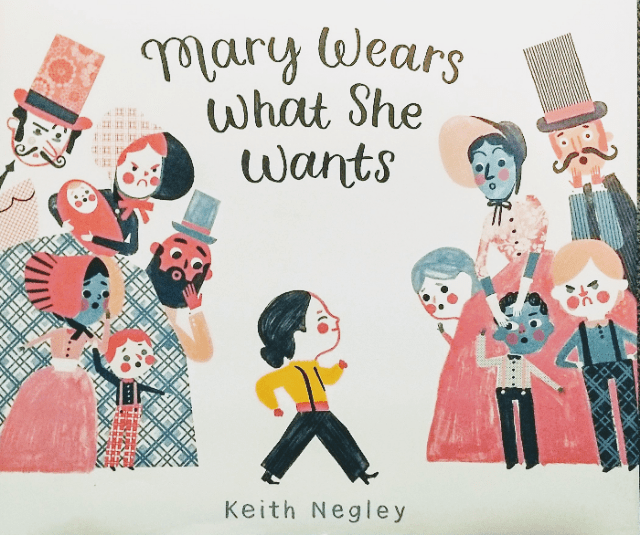
Keith Negley’s Mary Wears What She Wants was one of those–telling, as it does, a snippet of the life of Mary Edwards Walker. The title caught my eye–because it focuses on the fact that Mary is doing what she wants to do, as opposed to the fact that she is wearing pants instead of dresses. As soon as I pulled the book off the shelves, the art caught and held me. Look at that cover–I loved Mary as soon as I saw it. She strides along, head held high, looking straight ahead & not giving the naysayers a speck of her attention. And you could pull me into a debate about her facial expression, but I think she’s wearing a very small smile of determination and freedom.

This book seems, to me, a wonderful example of words and art supporting each other. Negley is a writer-illustrator, so maybe it’s a bit easier to leave yourself room for art, but I’m guessing it’s just different. Still, however it is all working inside his head, Negley weaves together text and illustrations magically. Some places, he uses gorgeously concrete words with sparse illustrations, like this page early on, where Mary and other girls face all the problems that come with wearing a dress. (I apologize for what my phone camera does to the font–it’s nice and sharp in the book!)

Mary 3a

In other places, he flips the balance completely, filling a page or two with art and just a few words. The sentence on the spread below–“It was kind of a big deal.”–is essentially a mike drop (even though the story continues when you turn the page.)

mary 4

And the story has tension. Despite the look on Mary’s face–and the certainty she has about there being no reason she shouldn’t wear pants–Mary does worry and she is a bit afraid. Mary meets every obstacle head-on, with force and power. I think, though, that–as you read–it becomes clear Mary would be happier if she didn’t always have to be fighting.

Obviously, I think every child needs this book–no matter what gender they identify with, no matter if they are happy or not wearing the clothes people give them. It’s a book about crossing boundaries, opening eyes, and resetting “truths.” Mary Wears What She Wants sets as a standard the right to think for yourself and make your own choices. And shows a path for doing just that.