Posted in Character

(Good) Reasons for Combining Characters

And, no, combining characters so you can finish up sooner with the Secondary Characters exercise in Donald Maass’ Writing the Breakout Novel Workbook, does not count as a good reason.

Still…that’s when I ended up doing it.

I’ve been working for a while now on the Secondary Characters exercise in the workbook. Maass only requires that you do the exercise for a couple of characters, but I’ve been pushing myself to do it for all of them–all the ones I know at this point, anyway. And I was down to what I thought was the last one–a resident of Hull-House that, up till now, has been only that–a resident. Not anyone with a distinct personality or goal, just someone who linked my MC to the settlement house and popped up whenever I needed someone to do a Hull-House function. In fact, this character has been sort of multiple-personality up till now, because I hadn’t focused in on her yet as one person. Coherence? Continuity? Not so much.

As I started working on her exercise, I realized I was possibly getting her mixed up with another character–a visiting nurse. Who, no, I hadn’t done the exercise for yet, because I forgot about her. Or was thinking about her as a very minor character. As I started to think about the primary trait for the resident, I said to myself, “Self, you can’t use that trait. That’s the trait of the nurse.”

Unless…

What if the visiting nurse is the resident. Of course, this took me off on some all-too fascinating research about connections between the Visiting Nurse program in Chicago, started–yes–by Hull-House and Jane Addams (seriously, what wasn’t started by those people?!), and about the nurse who did live there for a while, and the visiting nurse who didn’t live there but had a station at Hull-House from which she managed operations, and Dr. Harriet Rice, one of the first black women doctors, who lived at Hull-House for a while…and on and on and on.  Good times.

Did I find a concrete, absolutely 100% certain answer. No. Did I find enough to tell me that I can take the idea of a visiting nurse as a resident as a possibility, a likelihood, that I can write into the story. Which means, yes, I can combine the two characters?

But should I?

I’m thinking yes. Why? What are the good reasons?

  • One less storyline/arc to develop and, more importantly, to weave through the story. Which means one less path to weave into my MC’s story, and one less path for my readers to have to keep track of.
  • Giving this one character the qualities I was going to distribute among two means, I think, more layers and depth for one person, rather than two characters who would be uninteresting, flat.
  • Crowding up a character’s life makes things more busy, more complicated. For this story in particular, that’s a good thing–because everyone involved in Hull-House did have a busy, complicated life. If she’s got so much to do that she’s running around like the proverbial headless chicken, well…that’s realism. And, hopefully, engaging.

What about you? Have you got a couple of characters who are thin on the page? W ho don’t have enough to do, who only show up once and haven’t told you when they want to show up again? Is it possible for you to combine then? What will it add to your story, even as it takes away one of the bodies on the stage, one of those names you sweated over? Good idea or bad?

Here’s to writing progress, however it comes!

Posted in Revising, Revision

When DO You Back Up & Start Over?

I am the queen of writing forward. Okay, I’m the queen of telling other people to do that.

Nobody has ever said I don’t have strong opinions. Or that I don’t share them. So what’s happening? Well, as so often happens when we spout off share our opinions, life seems to be coming back at me with a “Oh, really?!” And a “Ha!” And, even possibly, a “Neener-neener.”

I’m considering restarting an entirely new draft of my YA historical without having finished off the last.

Not yet, obviously. I’m still working through Donald Maass’ Writing the Breakout Novel Workbook, and I’m still on the character section–haven’t even started the plot section yet. So no decisions today.

But…remember my reasons for going back to the workbook? My WIP was in such a tangle, I felt totally lost. Believe me, I’m not out of those lost woods yet.

I’m hoping to be, and I’m seeing glimpses of light, and I’m realizing all over again what a tangle of bad knots that last draft is. (Not to mention the one before it!) And I’m feeling like the idea of stepping back into that mess makes me cringe. Plus, the ideas I am having–I can’t see how or where they would fit into what I have on the page, even if I do tell myself I’m still just drafting.

Which, obviously, I will be.

So my question to you is: if you’re a forward-moving writer; if you’re someone who–like me–feels that the best thing you can do is finish off a draft  and then restart…when do you break that “rule?”

When do you leave the earlier mess in a lump, without writing a last page, and start over? When do you let yourself start fresh?

And how has that worked for you?

Advice and words of experience welcome!

Posted in Uncategorized

Breakout Novel Workbook: Getting Back to the Hero I Started With

“A long time ago, in a galaxy far, far away…”

Okay, not THAT long ago. But long-enough ago, I knew who the protagonist of my YA historical was. I had an image of her walking at high-speed down the streets of 1910 Chicago, going fast, because that was what she did, how she moved. She was antsy, energetic, and I loved that about her.

Somewhere in the drafting process of this novel, I lost her. She’s become a worrier, a fretter, someone who–well, you might decide to take the time to get to know her and find out if she was more, deep down, but then again–you might NOT take that time. In other words, not much of a hero at all.

The good news is, I think I’ve found her again. I’ve been working through the exercises in the first two chapters of Donald Maass’ Writing the Breakout Novel Workbook, which focus on–guess who–the hero. Yes, when I first opened the files to answer Maass’ questions, I was drawing a blank. I was staring at the computer screen and back to the workbook, and thinking, “Yeah, if I could answer your questions, I wouldn’t be having these problems.” But I gave myself the chance to let my brain empty out a bit, let some of the frustration I’ve been feeling just drop away, and then I thought about who I feel Caro is, separate from all the confused actions and thoughts I’ve been putting on the page.

And I got it. Somewhere out of the silence, I got an adjective.

Restless.

Oh, yeah. That’s MUCH better than worried or stressed or unhappy. And, guess what? The adjective came with a WHY. I know at least one reason behind Caro’s restlessness. It’s a reason tied to a goal.

If you’ve read my blog for long, you’ll know that I like goals. Big time.

It’s not enough yet, but, hey, I’m only two chapters in. I’ve got some more time this afternoon to spend with Caro and with the workbook, and I’m moving forward. Forward to remember all the other things I already knew.

Posted in Uncategorized

The Blog: What’s Coming in November

First, Happy Halloween to everybody!

I’ve been feeling like my blog posts are a little scattered of late–kind of “my life” focused and a little light on craft-talk. Hopefully, this month, I’ll get back on track with talking about fiction and the writing of it. I’m digging into a couple of projects that I think will get me back on track, both with my own writing (the emotional AND time commitment) and with blogging about the process, tools, and ideas that I really love talking about.

First, as you probably already know, I’m participating in PiBoIdMo (Picture Book Idea Month) over at Tara Lazar’s blog, Writing for Kids (While Raising Them).

I’ll be guest-posting over there next weekend, but I’m guessing I’ll also be talking about it here plenty–what it’s like mining for a new idea every day for 30 days, how those ideas are feeling, if I’m seeing serious potential in any of them for development into actual stories…That kind of thing.

And I’m pulling myself back to the YA historical that has been driving me nutso.

This is my copy of Donald Maass’ Writing the Breakout Novel Workbook. No, you can’t buy it in a three-ring binder, but if you have a bandsaw in your garage, you can either bravely take the book to the blade yourself, or–like me–ask your husband to cut the edge binding off, then three-hole-punch the thing into a binder, thus leaving LOTS of room for all those extra pages of notes and scenes you’re going to create. Yes, it’s book mutilation, but in the best cause ever. Yes? Yes.

I’ve talked about this book before, well–about the prequel to it, Writing the Breakout Novel. And I used the workbook when I first got started on this WIP.  The story has changed so drastically, though, and I find myself struggling so much to understand the characters, that I’m going back to the workbook. Seriously, that’s the biggest compliment I can pay a writing book–that I return to it in times of stress, mind-chaos, or need-for-inspiration. I’m going to work my way through the workbook, and I’m going to do ALL the exercises. In some form or another.  Between Mr. Maass and me, we’re going to figure these people out! And, lucky you, you’ll probably get to hear about the process, and hopefully the discoveries, along the way.

So that’s what’s coming. A little more thinking, a little more writing.

And of course, there’s bound to be at least one post on…

November? Bring it on!

Posted in Uncategorized

Frustration Saturation

Can I use two -tion words right after the other? Well, yes, I can, because that’s how I’m feeling. I’ve heard so many people talk about reaching this stage in a writing project, where they’re so unhappy with the work they’re doing, the story they’re trying to tell, that they feel like…

Well, that I feel like

  • Putting this book away and finishing up the revisions on Picture Book #1
  • Putting this book away and starting the revisions on Picture Book #2
  • Putting this book away and digging out one of the MG ideas I’ve been tossing into files for the past two years
  • Putting this book away and doing major revisions on the MG novel in a drawer I still love
  • Putting this book away and Fill in the Blank

There are three things stopping me from doing any of the above.

  1. My innate and seriously deep-running stubbornness. If you don’t believe me, just ask my mom.
  2. The wonderful critique partner who said to me, “What do you mean figuring out character stuff instead of working on the book? How is that not working on the book?”
  3. The absolute knowledge that if I drop this, there will be a HUGE bump in the learning curve that I haven’t surmounted, that will be there waiting for me on whatever novel I decide would be easier, more fun, a happier place to spend my writing time.

If I have ever sounded flip or unsympathetic to any of you going through this stage, I apologize with all my heart. This stinks. I have no idea where I am going to go with this book. I do believe the next step is to back up and, yes, figure out my characters. This may mean buying a new, fresh copy of Donald Maass’ Writing The Breakout Novel Workbook. It may mean filling out those character charts that I hate. It may (and almost certainly will) mean spending hours staring at a new file on the computer or a notebook in my hand and filling the page with doodling ideas about who these people are, who my hero is, what she wants. It may mean major brainstorming sessions with my critique group.

I am going to let myself work on those picture books, too. Right now, they seem to be the light in my writing time, and I don’t want to give that up. Besides which, they seem to spell the word progress, which is important for my sense of Yes, I’m Writing! But…here’s the thing.

One of my husband and son’s favorite books is a science-fiction novel called Armor by John Steakley. I haven’t read the book, but they tell me that in the story, one character Felix, gets attacked by ants, which aren’t actual ants, but some kind of “multi-limbed, insectile, chitonous, hive-minded, three-meter-tall aliens. With heat rays.” (Descriptive summary, thanks to Son.) Anyway, Felix is pretty much doomed not to survive. Another character, Jack Crow, finds recordings of Felix’s experiences during the battles, which show Jack why and how Felix keeps going in the face of absolute disaster. Jack says that Felix just flatly refuses to die. The quote, to the best of son’s memory, is: “The ants will get him. But not this one. Do you know why? Because it pisses him off.

This book may beat me. But not today. Do you know why? Because the thought of losing to this story pisses me off.

Posted in Character

Houston, We Have a Problem.

I’m baaack! I had a wonderful time at the 2011 Pennwriters Conference, and I’m going to do a more complete post about it later this week. This morning, I’m going to talk about one of the revelations I had at one particular workshop, and what I’m going to do about it.

First, a quick reminder that today is the last day to enter my contest for the “best” revision metaphor. Leave a comment at last week’s post and join in the fun.

So..there were plenty of wonderful workshops at the conference, and I had time to drop in on a few. One was Ramona DeFelice Long’s “Four Truths of Character.” Ramona’s talk was great, and it got me thinking–as all the good classes do–about my own projects. Specifically, about Caro’s story. One of the things Ramona talked about was the character’s mission–another word for her goal. THE THING SHE WANTS. And I realized that I’ve been drifting around that question, not honing in on what it is that Caro is going after.

Now, I have some excuse, I know. There was that crazy first draft, at the end of which I realized I had two stories to write, not one. If I wasn’t clear, while I was drafting, what story I was supposed to be putting Caro in, it’s no wonder I wasn’t clear on what she wanted. So I’m not flagellating myself. Too much.

BUT…here’s the thing. I have this book-in-a-drawer. It’s a book I still love, and a book I have hopes of revising at some point down the line. And the longer I stay away from it, the longer I realize that perhaps the biggest revision point will be…wait for it: what the hero in that book really wants.


Light-bulb moment.

I wrote six drafts of that book, all without tightening the story enough around the hero’s goal/needs. And the result has been, I think, that I have a nice, well-written, funny book, with a big flaw that is now–because of that polishing–harder to revise away.

In other words, I don’t want to wait that long on Caro’s story to figure it out.  (Okay, and this is very possibly true for the picture book, too!)

So what am I going to do about it? Well, my first thought was that I needed some brainstorming time with my critique group. So I brought it up at yesterday’s meeting, thinking I’d just schedule 20 minutes or so at our next meeting. But, of course, because they are so amazing, that wasn’t good enough for them. One brilliant critique partner suggested that I could let them know about some missions/goals that I’ve seen in other YA books.

Another light bulb.


So here’s the plan. In the next couple of weeks, I will:

  • Pick a half-dozen of my favorite YA novels and reread at least the first chapter, but most likely up to the point where the inciting incident hits, since I think that incident is a microcosm of the story’s BIG PROBLEM.
  • Figure out what the hero wants at that moment, and see if I can come up with how that specific goal plays into the big story goal (which, I think, the hero doesn’t always know until later in the story).
  • See if, in the process, any more light bulbs go off.
  • Bring those goals and my own questions about Caro to my critique group for brainstorming

I’m also, I think, going to read Donald Maass’ The Breakout Novelist. I think Maass’ writing books may be the best I’ve found, for pushing me to actually think about character, instead of just typing away and seeing what comes.

Between Ramona, my critique partners, Donald, and me, I’m guessing Caro and I will get our mission. Or at least get a heck of a lot closer to it!

Posted in Writing Books

Friday Five: Favorite Writing Books

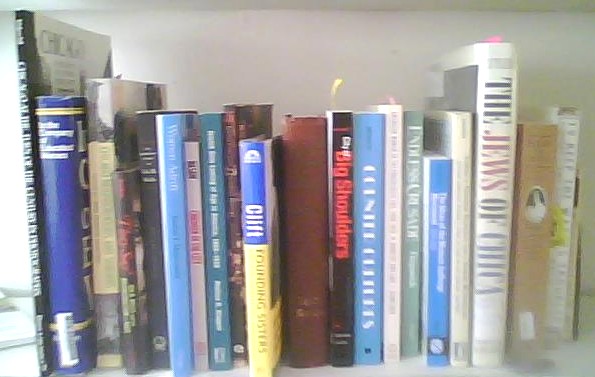
I’ve written about some of these books here, but it felt like time to just toss up a list. As of today, and in no particular order, these are my top 5 books on the craft of writing. If you’ve got some other favorites, add them to the comments, where everybody can see!

I have to mention one other book, which I haven’t actually read yet, but which I have on order–after listening to Merrily Kutner explain the diagramming method for picture books that the author teaches.  I’m pretty sure I’m going to seriously love  Eve Heidi Bine-Stock’s How to Write a Children’s Picture Book, Volume I: Structure. I’m pretty sure I’m going to like Volumes II and III, too, but I’m going one at a time for now!

Posted in First Drafts

Sometimes Progress is Little Steps

When I first started working on this WIP (which really needs a working title!), I read Donald Maass’ Writing the Breakout Novel (my review here) and spent a chunk of time with his workbook of the same name. In the course of doing some of the workbook exercises, I wrote a few actual scenes–trying to get closer to my hero’s needs, personality, and her narrative voice.

Honestly, I like those scenes. It’s easier, I think, to write a scene that isn’t yet connected to what has come before or what will come after. It’s easier to get in touch with the prose and the voice, because you’re worrying less–at that point–about how it all fits together. It’s a more free kind of word play, I think, which is always fun. 

Of course, as I get further into the book (I hit page 150 today–whee!), I’m coming up to some of those scenes, finding a place to fit them into the story as I’m learning it now. And, equally of course, I was right–so much of the stuff I wrote back them doesn’t mesh, doesn’t tie up with where Caro is, who she’s become. So what I end up doing is pasting the old scene into the new, keeping some or all of the setting and pieces of the action, then doing a quick “rewrite” of the dialogue and narration. Yes, quick, because it’s still the first draft, and, hoo-boy, is this baby going to change next time around.

But…Oh, come on, you knew there was going to be a but. Here’s what’s also happening. I’m further along with Caro. I still don’t know whether the things she’s doing and thinking should be showing up for the first time this late in the book (Oh, wait, I do know. They shouldn’t!), but at least she’s doing and thinking them. Yes, she’s probably acting with too much melodrama, thinking too much about this stuff instead of saying it out loud in conversation and argument, but I can take the melo away from the drama later, and I can move things into dialogue in another draft.

The thing is, she’s further along than she was before, than when I was just starting to know her through Maass’ workbook exercises, through those early disconnected scenes. Yes, sometimes it feels like I’m playing Mother May I, and the only steps I’m being allowed to take are the baby ones, but I’m inching forward.

It’s progress.

What makes you feel like you’re getting closer to the heart of your story, to the truth of your characters, even when the end goal seems far away? How do you know you’re on a track, any track, even if you’re not sure it’s the “right” one?

Posted in First Drafts, Getting Organized, Outlining, Plot, Research, The Writing & Critique Group Survival Guide

When the Itch Hits

Do you scratch it?

I’ve been talking a lot online about the research & planning I’m doing for my YA historical novel. It’s been going great. I’m learning tons about my characters, about their wants and their conflicts, about their back-story and their future. I know there’s more I can learn.

Except I’m itching to put all this aside and get writing.

I promised told myself I would finish Donald Maass’ Writing the Breakout Novel Workbook before I started writing. I said I would do a bit of plotting before I dug in. There are at least a third of these

researchbooks

that I haven’t read yet, and more I need to add to the shelf.

I can hear you all now. “Just write it!”

And here are your very good reasons:

  • I’ll learn more about your characters as you draft their stories.
  • The plot will change no matter how much time I spend on it.
  • I’ll narrow down my research needs as I write.
  • If I do too much planning, I’m putting handcuffs and chains on my muse.

Yep. So I’m going to write.

Soon. I’m still learning from Maass, but I’m giving myself permission to go a bit more quickly through his worksheets. I’m putting a few more tags on pages that need to wait until I have a draft to revise. And I’m letting myself relax away from the research a bit, so I can keep my actual characters at the forefront of my brain, instead of too many historical details/facts. And, since I still will have revisions to do on the critique book, I’m telling myself that any plotting I do has to be fit in between those changes. I’m not allowed to put the writing off, just because the whole outline isn’t complete and comprehensible.

When? I’m thinking June. A few other writing friends have first drafts looming, and we may all hit the keyboards together.

I’ll be MORE than ready.

So when do you start? What’s your comfort zone between knowing any/all of your story and needing to get those people on the page and moving? I’d love to hear how you do the balancing act?

Posts may be a bit thin on the ground the next few days–we’re in the middle of spring break over here. I’ll be back in force next week, though, and I’d love to start doing a little more talk about critiquing and critique groups. So if there’s a topic you’re “itching” to dig into, let me know that, too!

Posted in Workshop

Workshop: CWC Redwood Writers

I just saw a post Linda McCabe did about my critique workshop at her writing club–the Redwood Writers branch of the California Writers Club. I had a great time that day–everybody was very nice and made me feel so welcome! And Linda did a great job summarizing the morning. Her post also reviews the Breakout Novel Intensive, with Donald Maass, that she recently attended.

Check out the post here.

I’ll be back in a day or two to talk about that scary place–the Middle!