Posted in Uncategorized

Some Explanation: Why I Love Structure

I’ve been going on here for a bit about plotting and having a structure for my novel and figuring out what happens, technically, at various points in a scene. And I think sometimes I may sound like I’m looking for a quick fix for something that is just a long process.

Quick?! Do you know how long I’ve been working on this book?!

That’s not really it.

Martha Alderson, author of Blockbuster Plots and The Plot Whisperer probably says it best, although I’m paraphrasing here: We need a bucket for the inspiration to flow into. (Okay, she probably didn’t end her sentence with a preposition!)

I think I need a sturdier bucket than some other people do.

When I write, I have an image in my head–not a visual, but a sort of flavor–about how I want this book to feel. With my first book, a mystery, I knew I wanted light and funny, and I wanted some good action–arguments, sneaking around, a good chase scene. (Oh, I had fun writing that chase scene!). I know what all those things feel like when I read, and I think I hold that feeling out somewhere in front of me, as a goal to reach. I’m not trying, obviously, to copy the voice or writing of another author, but I know when pacing–for example–feels right on. I know what it’s like to read a book where the character layering is perfect–not too heavy, not too flat. And I want to achieve those things in my own writing.

What I don’t always (often?!) know is the how of that achievement. I do, however, believe there are techniques–ways of structuring a sentence, a paragraph, a scene–that are part of that how. I know, because it’s what I do when I critique–make suggestions about how to tighten a sentence, how to layer movement into dialogue, how to trim words that slow down action. I know it, too, because when I sit down and analyze a book, really look at what the author’s doing, I can see their buckets. I don’t know if they actually went out and built their buckets–if they picked and chose the right metal, a cool handle, welded everything up themselves–or if they are so good they basically waved their magic writing wand and just made the bucket appear.

I just know I’m pretty much out here cutting the metal, rolling it up and putting in rivets (rivets?), somehow getting a nice solid bottom into it, and making sure that handle doesn’t come off when I fill that bucket and pick it up.

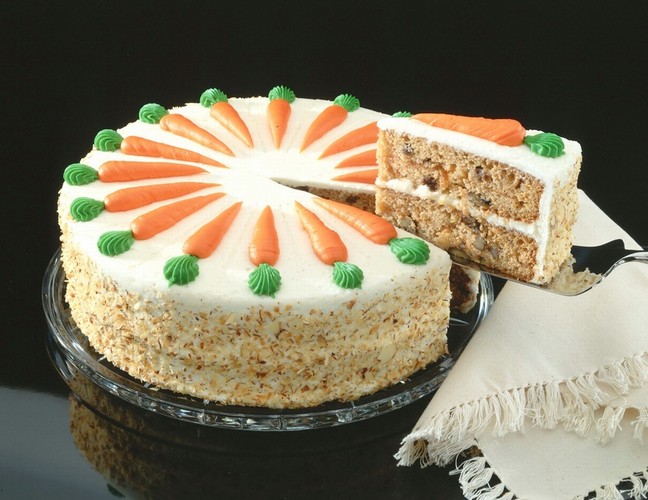
Luckily, as I do the work, I can feel the inspiration bubbling. I get ideas that I send myself in an email (hey, it’s a long way from the couch workshop to the computer!), and I start to see the layout of the book. I start to know what has to happen when, who needs to make it happen, and where I’ll need to be rearranging plot points and character arcs. For me, the bucket is a necessity. And I have to believe that, if I do the work, someday that bucket will look a lot like this.

Posted in First Drafts, Plot, Scenes

Keeping an Eye on the Carrot

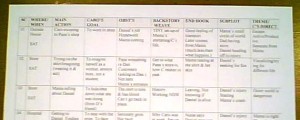
This week, and this weekend, I’m plotting my WIP. I’m trying to get as far as I can before Monday, when I’ve promised myself I’ll start actually writing. Here’s what I’ve been working on the past few days. I say “based,” because over the years, I’ve come to realize what categories of info I need to focus on before I write.

st01

The table is based on Martha Alderson’s Scene Tracker, which you can see in her book, Blockbuster Plots,  or her other products. Of course, this plot session comes after a lot of research, working my way through Donald Maass’ Writing the Breakout Novel Workbook, and just…thinking. This is the chart, though, that I’ll use to move myself forward (I hope!) through the first draft.

In case you can’t read the headers, I at least think about these things for each scene:

  • Where and when the scene takes place
  • The main action(s) of the scene
  • The MC’s goal–her scene goal, what she wants to accomplish then and now
  • Any obstacles to that goal and who’s putting those obstacles in the MC’s path
  • What part of the backstory I should/could weave in
    This column is new for this book, because the past plays a huge part in the present, and I’m working hard not to just dump it in, but place it, in small drips, where it really belongs.
  • The “end hook”–how I visualize the scene ending, with a pull for the readers to turn the page
    This is another new column. Partially, this is to remind me about cliff-hangers, but it also helps me think about points of high conflict for each scene.
  • Any subplots I can bring into the scene
  • Theme/MC’s Direction toward or away from her goal. Theme is Martha’s column title, and I like to keep it in, because–even if I don’t get anywhere close to plotting in my theme, the column keeps it present in my mind where, hopefully, it simmers. I’ve included, in this same column, whether–by her actions–my MC is stepping toward or away from her goal. Somehow, in my mind, this has become connected with theme. We’ll see!

I let myself be pretty loose with this–it’s almost more of a brainstorming tool than an actual plotting chart. Some of the cells get seriously tall and skinny, as I dump random possibilities and connections into them. The thing to remember, hard as it can be, is that the goal here is almost a kind of anti-perfection. There is too much I don’t, and can’t know, until I start writing–until I’ve finished writing the first, and subsequent drafts. I want to use the info in this chart as a series of guideposts, not as a straight-jacketed path.

So, when I find myself worrying too much about whether my character would do this or that, what piece of history she’ll be interacting with, or even what the weather would be like, I focus on the carrot.  The one that’s dangling out in front of me, coaxing me to keep moving forward.

That carrot is that, the more quickly I plot, the more guideposts I’ll be giving myself, the more of that first mess of words I’ll be able to get onto the page, into the computer. I’ll be able to write my first draft with speed, energy, and excitement. And I’ll have room to make some of those magical discoveries as I go.

So, as you plot, keep an eye on your carrot, whatever it may be. Figure out what it is, get a picture in your mind, and write toward it.

Mine, just so you know, looks a lot like this.

carcake

Posted in The Beginning, The End, The Middle

Beginnings, Middles, & Ends–What Goes Where?

Friday, I had a pretty productive day. I sat down and did some thinking about some new scenes in my WIP, and I ended up with a basic plot arc–styled after Martha Alderson’s Plot Planner in Blockbuster Plots-Pure and Simple. I took a photo and posted it on my other blog, if you want to check it out.

As I worked on the plot arc, though, I could see all these threads that I don’t have woven in yet. This is fine, obviously, since I’m just getting started. Still, too many loose story threads, just like too many loose threads on my clothes, can drive me a bit nuts until I get them a little more tucked away.

So this morning I’ve been browsing through some writing books–reading up on beginnings, middles, and ends–and trying for an early placement of some of these threads. This seems to help me look at the rising (hopefully!) tension of the plot, to think about where the big things should happen and how I can build to those spots. For me, it’s mostly about what happens:

  1. Before the hero’s first threshold–that inciting incident that is a microcosm of the whole, big story problem.
  2. After the hero’s death (symbolic or otherwise)–when they face their worst crisis and make their most important (and hardest) choice.
  3. Everything in between.

Here are a few things I came up with, in general terms, for what we should be doing in each of those sections.

Beginnings

  • Introduce the compelling hero
  • Establish the hero’s story goal/problem
  • Create a push/pull tension for hero around that problem
  • Establish the primary/most threatening antagonist
  • Establish the story world
  • Disturb that story world (seriously disturb it!)

Middles

  • Strengthen hero’s goal & opposition to that goal
  • Amp up the stakes for hero
  • Amp up the stakes for the antagonist
  • Strengthen and complicate character relationships
  • Throw in some new, surprising information (Thanks to Jordan E. Rosenfeld, in Make a Scene, for this one.)
  • Establish a sense of death hanging over the story world (And thanks to James Scott Bell, in Plot & Structure, for this one.)
  • Set up hero to make big choice, while making it “impossible” for hero to make that choice
  • Seed and (later) reveal secrets.

Endings

  • Resolve all story threads
  • Test, one more time, hero’s big choice
  • Show the impact of that choice choice–on hero and the whole story world

What about you. When you plot, do you just work through scenes in the order they play out? Or do you, like me, try to position them in one of the main sections of the story arc? And, please, freel free to tell me anything I’ve missed! 🙂

Posted in Guest Blogger, NaNoWriMo, Plot, Revising, The Writing Path

Guest Blogger: Martha Alderson

Martha Alderson is a friend, a critique partner, and a wonderful teacher of plot. Her blog, The Plot Whisperer, is a font of information about crafting your fiction, and you can buy Martha’s book and other plot tools at her website, Blockbuster Plots. To celebrate the end of NaNoWriMo, Martha has declared December National Plot Month and is giving daily tips at her blog to help you get started on revising that manuscript.

I asked Martha to stop by and give us just a taste of this next stage, how to look at those tens of thousands of words you just produced and figure out what you’re supposed to do with them.

Welcome, Martha!

Thank you, Becky, for inviting me to guest blog “about the kind of plotting a writer can do when they’ve FINISHED NaNoWriMo.” I agree with you that this is a crucial time–because, as you say–“it’s the first time (if the writers have done such a fast first draft) that they start shaping the story.”

The craft of writing involves taking what the muse has offered during the first draft and shaping the words into a coherent story. This step involves more than rewriting. The craft of writing requires a revisioning of the overall story.

The first draft is all about getting the words on the page.

Now it is time to forget the words.

Instead, stand back and analyze the story as a whole.

Consider the overall structure, how the characters develop and transform, where the gaps and holes appear, how the dramatic action rises and falls, the flow, the pace, the voice, what themes are introduced, and the overall meaning of the story itself.

Plot Tricks & Tips to Prepare for Draft Two

  • Do not read your manuscript for at least a week, preferably longer.
  • Do not show your first draft to others.
  • No editing. (Editing keeps you at the word level. Now is the time to consider the story as a whole.)
  • Break the story into the Beginning, Middle, and End. Each part has specific parameters and is easier to manage that takes place in each section.
  • List the main events that take place in each section.
  • Plot out step-by-step what happens to the main character in each of the three parts, both in terms of the action and in terms of their own individual growth, based on the action.

If you have a draft of a novel, memoir, or screenplay and are at a loss as to how to take your writing to the next level, join me throughout the month of December. I’ll take you through the process of crafting your first draft into a viable story.