
Posted in First Drafts, Getting Organized, Outlining, Plot, Research, The Writing & Critique Group Survival Guide

When the Itch Hits

Do you scratch it?

I’ve been talking a lot online about the research & planning I’m doing for my YA historical novel. It’s been going great. I’m learning tons about my characters, about their wants and their conflicts, about their back-story and their future. I know there’s more I can learn.

Except I’m itching to put all this aside and get writing.

I promised told myself I would finish Donald Maass’ Writing the Breakout Novel Workbook before I started writing. I said I would do a bit of plotting before I dug in. There are at least a third of these
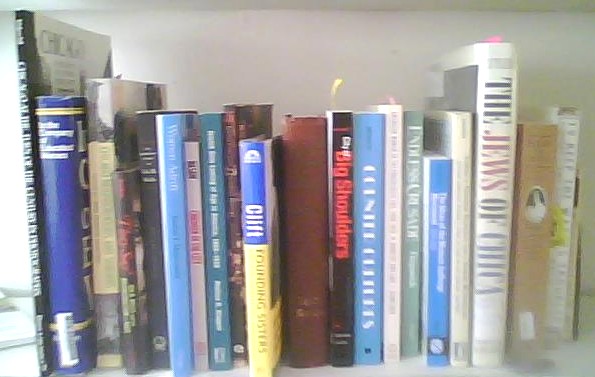
researchbooks

that I haven’t read yet, and more I need to add to the shelf.

I can hear you all now. “Just write it!”

And here are your very good reasons:

  • I’ll learn more about your characters as you draft their stories.
  • The plot will change no matter how much time I spend on it.
  • I’ll narrow down my research needs as I write.
  • If I do too much planning, I’m putting handcuffs and chains on my muse.

Yep. So I’m going to write.

Soon. I’m still learning from Maass, but I’m giving myself permission to go a bit more quickly through his worksheets. I’m putting a few more tags on pages that need to wait until I have a draft to revise. And I’m letting myself relax away from the research a bit, so I can keep my actual characters at the forefront of my brain, instead of too many historical details/facts. And, since I still will have revisions to do on the critique book, I’m telling myself that any plotting I do has to be fit in between those changes. I’m not allowed to put the writing off, just because the whole outline isn’t complete and comprehensible.

When? I’m thinking June. A few other writing friends have first drafts looming, and we may all hit the keyboards together.

I’ll be MORE than ready.

So when do you start? What’s your comfort zone between knowing any/all of your story and needing to get those people on the page and moving? I’d love to hear how you do the balancing act?

Posts may be a bit thin on the ground the next few days–we’re in the middle of spring break over here. I’ll be back in force next week, though, and I’d love to start doing a little more talk about critiquing and critique groups. So if there’s a topic you’re “itching” to dig into, let me know that, too!

Posted in Books, Research

Research: What You Look For and What You Find

My current WIP is a YA historical novel, about a young girl in 1913 Chicago. This is the first time I’ve written a historical story, and I was very intimidated, when I started, at the idea of all the research I’d be doing.

Okay, I’m still a bit intimidated.

I cleared off an entire bookshelf for the history books, and I’m working my way through them. Yes, the Internet is out there, and it’s full of fascinating and incredible information. What I’m really loving, though, is burying myself in a book with the depth and layers of a specific subject or theme. 

When I started on this path, I expected I’d be reading for facts, specific details I would need to flesh out the world I’m writing about–to make that world real for my readers (and me). And I’m finding those–although the ones I know I need are making me dig and the ones I had no idea I’d want are jumping out at me!

What I hadn’t thought about was how full a picture I’d get of a place and time, of the people who were moving along the streets and stopping to talk and making changes, small and big.

For the past couple of weeks, I’ve been reading Twenty Years at Hull-House by Jane Addams. Addams was one of the founders of one of the biggest, if not the biggest, settlement houses in the country–in Chicago. My MC will get involved with the settlement movement in the city, so I’ve been reading up on it a lot. Addams’ book has been on my shelf for several months–for the same reason, pretty much, that I hadn’t read Donald Maass’ book for so long. Someday, I’ll learn.

I read Hull-Houseyears ago in college and remembered only that it was the most boring book of the year. Now I just shake my head at the things “They” expect 18-year-olds to read and connect with. Yes, the book is very densely written, and Addams has a seriously convoluted style. This is why it’s taking me so long to read–I have to back up frequently and restart a sentence or a paragraph. Even then, depending on how much she’s referring to politics or events I don’t know about, I don’t always get the point she’s making.

But, oh, I’m learning. I’m finding out the goals of the settlement houses, and the dreams of their founders and residents. I’m getting solid, concrete visions of the people around Hull-House, the families and the children and, oh, the women! I’ve found a couple of wonderful facts that either fill in a gap or are sending me down a new path I needed to find.

The best, though, is what I didn’t expect. I’m getting to know Jane Addams. At 18, in college, if I’d been able to understand this book, I’d have respected the woman who wrote it, even admired her. Now I get to like her. Yes, she was incredible, amazing, even awe-inspiring in dedication to the things she believed in. She was also, though, warm, generous, and funny–in a way that smiles with us as we chase our own ideals.  The energy of trying something new, the passion of commitment, the sometimes head-pounding dead-ends–she sees them all. She can laugh at her young self and still respect that woman she was–even as she made mistakes. She’d rather have had regrets than never have tried.

I would have liked to invite Jane Addams over for tea.

Do you do research for your stories? What magic have you discovered?