
Posted in First Drafts, Plot, Scenes

Keeping an Eye on the Carrot

This week, and this weekend, I’m plotting my WIP. I’m trying to get as far as I can before Monday, when I’ve promised myself I’ll start actually writing. Here’s what I’ve been working on the past few days. I say “based,” because over the years, I’ve come to realize what categories of info I need to focus on before I write.
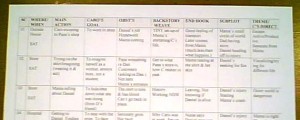
st01

The table is based on Martha Alderson’s Scene Tracker, which you can see in her book, Blockbuster Plots,  or her other products. Of course, this plot session comes after a lot of research, working my way through Donald Maass’ Writing the Breakout Novel Workbook, and just…thinking. This is the chart, though, that I’ll use to move myself forward (I hope!) through the first draft.

In case you can’t read the headers, I at least think about these things for each scene:

  • Where and when the scene takes place
  • The main action(s) of the scene
  • The MC’s goal–her scene goal, what she wants to accomplish then and now
  • Any obstacles to that goal and who’s putting those obstacles in the MC’s path
  • What part of the backstory I should/could weave in
    This column is new for this book, because the past plays a huge part in the present, and I’m working hard not to just dump it in, but place it, in small drips, where it really belongs.
  • The “end hook”–how I visualize the scene ending, with a pull for the readers to turn the page
    This is another new column. Partially, this is to remind me about cliff-hangers, but it also helps me think about points of high conflict for each scene.
  • Any subplots I can bring into the scene
  • Theme/MC’s Direction toward or away from her goal. Theme is Martha’s column title, and I like to keep it in, because–even if I don’t get anywhere close to plotting in my theme, the column keeps it present in my mind where, hopefully, it simmers. I’ve included, in this same column, whether–by her actions–my MC is stepping toward or away from her goal. Somehow, in my mind, this has become connected with theme. We’ll see!

I let myself be pretty loose with this–it’s almost more of a brainstorming tool than an actual plotting chart. Some of the cells get seriously tall and skinny, as I dump random possibilities and connections into them. The thing to remember, hard as it can be, is that the goal here is almost a kind of anti-perfection. There is too much I don’t, and can’t know, until I start writing–until I’ve finished writing the first, and subsequent drafts. I want to use the info in this chart as a series of guideposts, not as a straight-jacketed path.

So, when I find myself worrying too much about whether my character would do this or that, what piece of history she’ll be interacting with, or even what the weather would be like, I focus on the carrot.  The one that’s dangling out in front of me, coaxing me to keep moving forward.

That carrot is that, the more quickly I plot, the more guideposts I’ll be giving myself, the more of that first mess of words I’ll be able to get onto the page, into the computer. I’ll be able to write my first draft with speed, energy, and excitement. And I’ll have room to make some of those magical discoveries as I go.

So, as you plot, keep an eye on your carrot, whatever it may be. Figure out what it is, get a picture in your mind, and write toward it.

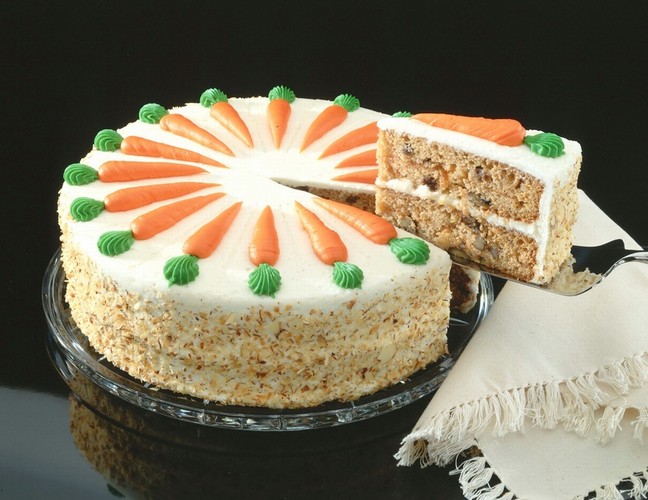
Mine, just so you know, looks a lot like this.
carcake

Posted in Outlining

Outline: What’s Your Definition?

Today’s post is in honor of all the NaNo writers out there, and all variations thereof, who may or may not be writing from some kind of outline. To all of you: Go, go, go!

Outlines. Think back to school–junior high, high school, even college. You had a paper to write, an analysis of a book you’d been assigned. You were organized, you’d learned the method, so you started with an outline. You know: Thesis, Topic Sentences, Supporting Details, Conclusion.

Remember?

It’s a useful technique. I kept at it when I became a technical writer, and I use it today for my nonfiction. It’s a great map to write from, and it gives me a starting point to go back to, if I get distracted or off track, to re-organize things a bit, get my new focus down on paper. And, yes, it’s got that basic form: Chapter 1, Heading 1, Heading 2, etc, etc.

Not so my fiction. Probably because there are too many layers to fiction. If I try to fit them all into headings and subheadings—my brain will implode. Messy. So how do I outline?

I start with Martha Alderson’s Scene Tracker. The Scene Tracker has several columns of information that you fill out for every scene. I add columns of my own, things I tend to forget about unless they’re right in front of me. And I’m sure I fill every column out with a LOT more text than Martha expects. I don’t trust myself to remember big ideas from a word or two, so I end up using a teensy font and get these very skinny, very TALL columns to squint at later. But the system keeps me organized, which keeps me calm and (relatively) sane.

I also always have gaps. I find it too hard to “outline” my story all the way through, without getting down to doing some writing. The outlining process stirs ideas that go beyond details and facts–scenes, character moments, tensions–and I need to start writing.

Before I write any real scenes, though, I usually take things one step further. I open a file for those scenes–starting with the beginning of the story. In that file, I write the basic action that I visualize in the scene–what the hero does, who and what they run into that makes their life difficult, and where, by the last page, they need to be heading. I get down the goal of every major player in the scene, and I try to come up with a plan to put those goals in conflict. I also throw in a lot of fairly random thinking about theme, tension, setting, and various connections I’m starting to see.

When I’ve done this scene planning as long as I can stand it, I start writing.

Do I stay with the “outline” I’ve plugged into my Scene Tracker? Do I stick to the goals and actions I gave my hero in the scene basics?

Sometimes, yes; sometimes, no. I said that I use my nonfiction outline as a guide, as the original drawing board that I often go “back to.” Why should my fiction plan be any different? Would I love to know everything ahead, have the story perfectly drawn out in my head and on paper, so I could just write and write and write? I’ll admit it: Yes, I would.

I just don’t think its possible. And I don’t think it’s a good goal for the writer to shoot for. Every time I lose myself off the outline, I come up with something new and exciting, something that either turns the story in a new, better direction or something that adds a layer, a depth, that simply didn’t exist before.

Here are a few more blogs and articles I found about the variations of outlining:

What about you? What’s your definition of outline these days?