
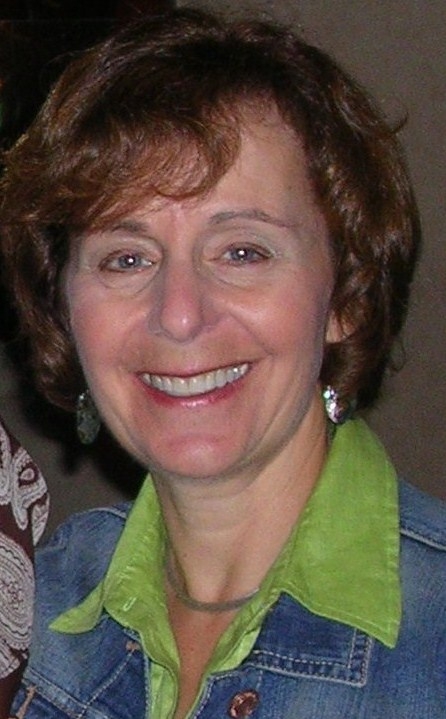
Carol Baldwin is the first in my monthly series of guest bloggers talking about critiquing. Carol’s most recent book is Teaching the Story: Fiction Writing in Grades 4-8 (Maupin House, 2008). She has coordinated an SCBWI critique group for over 15 years, blogs at www.carolbaldwinblog.blogspot.com, and is writing her first young adult novel. The three Gs in her life are gardening, grandchildren, and learning how to golf.
Read through Carol’s great post to see all the steps critiques can take you along. Take the time to leave a comment on the post. As with all the posts in this series, I’ll be picking one commenter to win a copy of my book, The Writing & Critique Group Survival Guide. Enter by Monday for a chance to win. Make sure you leave contact info in the comment, so I can get hold of you!
And…here’s Carol!
* * *
When someone asks why I decided to write about two girls in Charlotte in 1950—one white and another light-skinned black—I tell them it’s a long story. A story full of critiques, re-vision, and rewriting.
Half-Truths started as a picture book. About 15 years ago, I visited Wing Haven, a bird sanctuary in Myers Park, NC. The garden’s history is full of stories about animals which the founder, Mrs. Clarkson, rehabilitated. When I visited I thought, Someone should write a picture book about this place! I tried, but there were too many stories to fit into (what was then the acceptable) 2000 word limit.
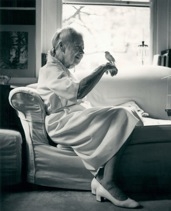
Since the market wouldn’t support my original idea, I re-visioned the story. The new book would be a fictionalized account of Mrs. Clarkson rehabilitating a baby robin. I created a young boy protagonist to make it a “boy book.” When I shared the idea with my son-in-law he scoffed, “Boys aren’t going to read a story about a bird! They want blood and guts!”
His off-the-cuff “critique” made me consider my audience. Maybe this was a girl story? I started playing with different ideas.
At that time, I met Joyce Hostetter and read BLUE. She repeated the advice that Carolyn Yoder gave her: “Look for the story in your own backyard.” Although I had moved to Charlotte, N.C. 22 years earlier, I began observing many instances of the same last name belonging to both blacks and whites. What was the connection?
As I looked at pictures of light-skinned African Americans and listened to local stories the seed of my story started to root.

Since I’m a transplanted Yankee writing a Southern story, I surfed the Internet hoping to figure out how my characters spoke “Southern.” The result was a disaster. A member of my SCBWI critique group, Miriam Franklin, read one of those first attempts and said, “No character in Myers Park talked like that!” Her critique was another wake-up call. I didn’t know who my characters were or where they came from. Their diction should flow from characterization, not vice-versa.
My next significant critique intervention came from Harold Underdown, my critiquer at the 2009 Highlights Writer’s Workshop. His most helpful question was simple, yet pivotal: “What does your character want?” I have repeatedly wrestled with that question, and have actually found not one–but layers of answers as I continued to write.

I joyfully marked New Year 2011 by finishing my first draft. I read the entire manuscript and then buckled down to what I naively thought, was a chapter-by-chapter revision. I participated in Kidlit4Japan and won a critique from Ann Manheimer. Among other helpful recommendations, she suggested that I didn’t open my story close enough to the inciting event. As a result, I revised the first five chapters.
Fast forward to September, 2011 and the SCBWI Carolinas conference. Mary Kate Castellani, an associate editor with Walker Books, read 10 pages and offered the biggest book-changing critique of all: since my story featured two main characters–one white and one black–I should write it from both girls’ points-of-view.
Total shock. Rewrite my entire book? Write as much from the black girl’s POV as the white girl’s? How could I, a white author, do that?
That is when I learned how a good critique enables you to re-vision your work.
I laid out my book using different colored note cards representing the alternating chapters. I suppose that means I’m a plotter; I had to visually see how to make the story work from both girls’ point-of-views. (picture of my dining room table)
The result? I’m thrilled that the finished product will be more accessible to a wider audience and am enjoying the new places my manuscript is taking me. But, my critiquing and re-vision hasn’t stopped.
My local SCBWI group reads each new chapter and provides helpful feedback. I love their thoughts about my characters. “Kate wouldn’t act like that,” or, “Do you really think Lillie would say that?” Their comments make me see my characters through new eyes and help ensure that my characters are both consistent and original.
Revision happens on the small, microscopic level, as well as on the “big picture” level. Recently, to prepare an application for the SCBWI WIP grant, Joyce Hostetter went through my first ten pages and showed me how I could cut 400 words. Meanwhile, Rebecca Petruck looked at the big picture of these same pages and gave a cogent argument for opening the book with a different scene. Re-vision time again!
Many years ago I created this graphic organizer “The Writing-Revising Cycle” for my book, Teaching the Story: Fiction Writing in Grades 4-8. Feel free to print out a copy and hang it near your workspace; it’s still a good reminder to me of the work I have ahead of me.

 Becky Levine