Posted in Character, Plot

Plot-Driven vs. Character-Driven

Warning: This post may be a bit rambly and confusing.

It’s one of those where I’m going to be thinking as I type, trying to figure out a few things. I can’t tell you yet whether the post will end with a conclusion or a questions. Or a dozen questions. Oh, well. Feel free to come along for the ride.

As a reader, I’m all about character–in terms of WHY I’m in the book. I love to lose myself in personalities–the people who are quirky, angry, effervescent, stuck, free, stubborn, searching…you name it. And I love to see all these personalities come into contact with each other: interaction and conflict. The dynamics of any mix you want to throw together on the page–that’s what I want to read about.

Which means that, as a reader, I want the plot done really well. I do NOT want to be aware of it. I don’t want something so convoluted and tricky that I get caught up in WHAT is happening and pulled away from WHO it’s happening to. Yes, of course, I’ve read strongly plotted books, and I’ve loved them–I can admire the author, and I get caught up in a great story, just like anyone else. But…if I have to pick, I’d rather get caught up in the characters.

I think this is one reason I like mysteries. I know–here’s the rambly, confusing part. Mysteries ARE plot, right? But, in general, the basics of that plot are steps I know: Murder or some other crime occurs. Detective takes on case. Detective hunts down clues, bugs people, eavesdrops and breaks into necessary buildings. Detective gets close, gets beat up or shot at, wonders despairingly if this is THE case that will finally stump her. Detective gets the last piece of the puzzle, adds it all up, and catches the bad guy. Detective probably solves or moves to a new place on some personal problem as well. Yes, I’m being tongue-in-cheek here, because a good detective story is much more than these parts, but you know what I mean. If the author is a strong writer, you’re watching and thinking about the specific details of a plot you know, not working to follow the pattern of the plot.

My first book is a mystery. I loved writing it. Because–guess what? As a writer, plot is not my strength. (Anyone else see a connection here?) When I wasn’t sure where to go next, what to make happen, I’d look at the suspects and think about who my MC needed to investigate next. I’d think about the last clue and see where my hero needed to follow it. Had he been open and direct in his last attempt to solve the crime? Maybe it was time for some sneakiness. Because I knew that basic plot of the mystery, I was able to play with voice and humor and adventure and an irritating sidekick.

Of course, that book hasn’t sold.

This new book, the YA historical, is so different. It’s going to be one of those other books–the ones with characters you love and love to hate. It’s going to be one where the personalities clash, where the people struggle with trying to make their relationship work and pretty much fail, and all those conflicts along the way.

Do you see how dull that paragraph sounds? That’s because, yes, without plot, character is…meh. And see that last phrase…”all those conflicts?” Yeah, tell me about those conflicts.

No, really, please. Tell me about those conflicts. Give me some plot, will you?

I always hear that, in a character-driven novel, the actions and problems arise out of…yes, you got it: character. What a character will do in any given situation comes from that character’s personality. Yes, those things I love so much as a reader. But in terms of writing about them–well, it feels so much more like guesswork. When I was writing the mystery, I could say to myself: “Self, MC needs to find out about Bad-Guy #3.” Then self would go off and write  about MC “finding out,” making sure MC did that in his own special way.

In this character-driven book, I’m more like, “Self: MC needs to….???????!!!!!!!??????!!!!!!” With a few $*(%#*(#%))#@# thrown in for good measure.

Obviously, the idea of a plot-driven book as a separate thing from a character-driven book is some kind of joke.

Because, yes, we all really know it. Plot and character are so NOT separate issues. The plot does depend on who your hero and your bad guys and your sidekicks are. And the character does completely depend on what happens in this particular story about these particular people. And clearly, just because I’m not writing a mystery, and it’s not obvious that this MC has to go follow that guy down the alley and listen in on his conversation with the elephant trainer–I still need that plot to help figure out my characters.

I guess the conclusion (yay!) is that I have some more learning to do. I guess each book we take on, if we’re lucky, makes that demand on us–to push past the stage of the writing craft we’ve made it to so far, to stretch ourselves to take on the next thing we need to figure out. As tough as this is, as frustrating as it can be, I think it’s also where some of our hope has to lie. If there is more we can do, more craft we can practice, then our writing can get stronger. Better.

So here’s to plot and character. And, appropriately enough for a Monday, here’s to all the torture and agony they cause us!

Posted in Character, Revision

Writing Lessons from Tiffany Aching

Okay, Tiffany Aching isn’t Steven Tyler. But if we’re learning anything from Jo Knowles’ “unintentional blog series” about Tyler, it’s that writing advice comes where you find it. And, probably, most people would agree that Terry Pratchett would be right up there with authors we could all learn from.

BTW, if you didn’t know who Tiffany Aching is without that Wikipedia link, stop reading this post , go out to the bookstore or get online, and buy yourself a copy of The Wee Free Men. If you’re smart, you’ll just buy the whole series now and save yourself the extra gas and shipping charges. And then be prepared to spend the next few days laughing hysterically, having moments of philosophical clarity, and pretty much bowing down to the genius that is Pratchett.

Anyhoo…

Tiffany Aching is a witch. Not your typical witch, unless you’re talking typical to Discworld. She’s a witch for many reasons–the first and foremost probably being that she chooses to be one. Another reason, though, is that Tiffany has First and Second Thoughts. Occasionally, she has Third Thoughts, but when that happens her Second Thoughts step in and say, “Let’s all calm down, please, because this is quite a small head.”  (She’s only nine years old.) Tiffany’s thoughts let her see things more clearly than other people; they let her stand outside herself and observe what’s really going on, separated from her own feelings at the moment. It’s a powerful ability, better, in my opinion, than all the magic the wizards at Unseen University can do.

So where does the writing lesson come in? Here: To really use these thoughts, to really see past all the illusion and even all the things she’d like to believe, Tiffany has to be still. She has to, as another witch tells her early in the book, “open your eyes…and then open your eyes again.” She has to look.

I’m a bit stuck on my picture book revision. I’m at the point where I really have to get closer to the dynamic/relationship/conflict between my young hero and the other character. Which means–yes, here we go again–really figuring out what each of them wants and what that want makes them do. Once again: goal+action. You’d think I’d have it down by now.

All weekend, I was busy with weekend stuff, but I thought maybe I could let the problem bubble away in the back of my mind and see what that back-of-my-mind came up with. The internet is full of writing articles and blogs about people getting brainstorms in the shower or while they’re cooking dinner or just before they go to sleep. Well, I occasionally get this happening to me, but not all that often. For whatever reason, when my brain is showering or cooking or drifting into unconsciousness, it is pretty busy doing just that. The membrane between front and back seems to be relatively non-porous.

Apparently, when I want to figure out a story problem, I have to–yes, you’re getting it–I have to be still. Like Tiffany.

So this week, I’m scheduling time for stillness. I will take myself away from the computer. I will stretch out and close my eyes. I will open them to look at my characters. And then I will open them again.

I’m betting I actually get somewhere.

Posted in Character

Houston, We Have a Problem.

I’m baaack! I had a wonderful time at the 2011 Pennwriters Conference, and I’m going to do a more complete post about it later this week. This morning, I’m going to talk about one of the revelations I had at one particular workshop, and what I’m going to do about it.

First, a quick reminder that today is the last day to enter my contest for the “best” revision metaphor. Leave a comment at last week’s post and join in the fun.

So..there were plenty of wonderful workshops at the conference, and I had time to drop in on a few. One was Ramona DeFelice Long’s “Four Truths of Character.” Ramona’s talk was great, and it got me thinking–as all the good classes do–about my own projects. Specifically, about Caro’s story. One of the things Ramona talked about was the character’s mission–another word for her goal. THE THING SHE WANTS. And I realized that I’ve been drifting around that question, not honing in on what it is that Caro is going after.

Now, I have some excuse, I know. There was that crazy first draft, at the end of which I realized I had two stories to write, not one. If I wasn’t clear, while I was drafting, what story I was supposed to be putting Caro in, it’s no wonder I wasn’t clear on what she wanted. So I’m not flagellating myself. Too much.

BUT…here’s the thing. I have this book-in-a-drawer. It’s a book I still love, and a book I have hopes of revising at some point down the line. And the longer I stay away from it, the longer I realize that perhaps the biggest revision point will be…wait for it: what the hero in that book really wants.


Light-bulb moment.

I wrote six drafts of that book, all without tightening the story enough around the hero’s goal/needs. And the result has been, I think, that I have a nice, well-written, funny book, with a big flaw that is now–because of that polishing–harder to revise away.

In other words, I don’t want to wait that long on Caro’s story to figure it out.  (Okay, and this is very possibly true for the picture book, too!)

So what am I going to do about it? Well, my first thought was that I needed some brainstorming time with my critique group. So I brought it up at yesterday’s meeting, thinking I’d just schedule 20 minutes or so at our next meeting. But, of course, because they are so amazing, that wasn’t good enough for them. One brilliant critique partner suggested that I could let them know about some missions/goals that I’ve seen in other YA books.

Another light bulb.


So here’s the plan. In the next couple of weeks, I will:

  • Pick a half-dozen of my favorite YA novels and reread at least the first chapter, but most likely up to the point where the inciting incident hits, since I think that incident is a microcosm of the story’s BIG PROBLEM.
  • Figure out what the hero wants at that moment, and see if I can come up with how that specific goal plays into the big story goal (which, I think, the hero doesn’t always know until later in the story).
  • See if, in the process, any more light bulbs go off.
  • Bring those goals and my own questions about Caro to my critique group for brainstorming

I’m also, I think, going to read Donald Maass’ The Breakout Novelist. I think Maass’ writing books may be the best I’ve found, for pushing me to actually think about character, instead of just typing away and seeing what comes.

Between Ramona, my critique partners, Donald, and me, I’m guessing Caro and I will get our mission. Or at least get a heck of a lot closer to it!

Posted in Character, Plot, Scenes

Cause: The All-Important WHY

Those of you who’ve been reading this blog for a while know I’m a plotter. I had to “pants” for a while on the first draft of this WIP, and it was not a happy place for me. Effective, yes, but not happy. So, of course, I’m in love with being back to plotting as I work on the second draft.

When I got started, I basically threw a bunch of scenes into Scrivener–things I knew needed to happen. And then I started filling in cards for them–my MC’s scene goal, the obstacles she’d face, and a few details that I wanted to weave in. I took a break from this story to get that picture-book revision done, but now I’m back and I’m trying to tie these scenes together with a bit more connectivity. In other words, I’m figuring out why one scene follows another. Why my character does things. What causes her actions.

I’m big on this when I critique–I tend to push people to really look at the character actions and connect them to the story, ground them in something specific that has actually happened. And I love the magic of staring at a scene in my own work, knowing I’m not there yet, and then…Flash! The lightbulb goes on, and I’ve got it.

It’s easy, when we write, to know the big stuff–the major plot points that will lead to the ending, that will build to the crisis and the character change. In between those plot points, though, is a lot of space. Yes, it can be maddeningly vast and intimidating, but it’s actually there for a reason. It’s where you build to each of those big events, where you layer in the smaller things that show us who your character is, that push her in new directions, and that–yes–cause the big things to happen.

Let’s take an example. Say you’re writing about a teenage boy–Clive–who is about to get his driver’s license. You know that, oddly enough, Clive doesn’t want to drive. So, he’s going to miss his driving test. Fine. Good. Plot point. If you’re one of those amazing people who can write scenes out of order, you write that scene. (If not, you put notes about it into a Scrivener note card!) Just as his dad is coming upstairs to get him for the appointment, Clive climbs out his bedroom window and down the rose trellis. Except the trellis breaks, and so does Clive’s arm. Dad’s truck is a stick-shift. Clive has successfully delayed the inevitable.

Why?

You can start with the general. Let’s say, really early in the book, Clive sees someone die in a horrible accident. Okay–there’s your big why–that’s the reason Clive doesn’t want to drive. But you can’t just let us know this and then, ten scenes later, pop Clive out his window. You have to do some set up. You need to show Clive trying to talk to his parents about not driving and getting no support. You need to show him in driver’s training failing dismally at parallel parking. You could, of course, throw in the ghost of the dead drive who makes Clive relive the crash over and over. You should probably let us know about that rose trellis before the big day, maybe show Clive using it safely when he sneaks out to ask his girlfriend to run away with him.

These are all good. You need to take it one step further, though. You need to determine the single, very specific story moment that sends Clive out that window. You can’t just have his worry build and build over scenes and then–on that day–out he goes. Something concrete has to propel him into action. Like…his dad coming upstairs and “jokingly” waving around the belt he hit Clive with when Clive was a little boy. Or his mom showing him the new wallet she bought him, with the space for his driver’s license, then telling him it’s time to go. Or his irritating sister singing “Little Deuce Coupe” over and over, as she dances back and forth outside his bedroom door and blocks his escape route.

Notice that the action-causing events aren’t always that big a deal, although–yeah–that belt could be pretty intense. These things act as a catalyst for the big action; they’re the match you drop onto the pile of gunpowder. Small, inexpensive, available…but absolutely necessary set things off.

They’re the whys.

Posted in Character, Plot, Writer's Block

Today, Character Definitely Comes Before Plot

When I finished the first draft of my WIP and after I did the happy dance, I decided I was going to do some major plotting before I started on Draft 2. I had spent enough time with that exploratory first draft and now I wanted structure. Big time.

So I opened Scrivener and I started tossing in scenes, and I was happily and busily adding cards to my corkboard.

Until…I wasn’t.

As happens all too frequently, I ran out of scenes–I ran out of ideas for scenes. When I hit this spot, I go back to character. My exploratory draft made me familiar with each of my characters in a sort of gray, blobby, nebulous way, but did not really put me in touch with what they want, why it matters, and–most important–what actions they’ll take to try and get there.

Today, I started working on the father character, someone I love a lot, but, no…don’t really understand. And I was drawing a blank, but taking a stab at who he might be and what his goal could possibly become, and I was only getting so far until…

I realized I was giving him a goal very similar to the goal of my MC’s would-be boyfriend. Oops. I almost gave up then, because you can’t have too characters with the same personalities and same needs, right? Wait…what if they start at the same point, but end up changing in very different ways–one much more successfully than the other? Then what you’ve got is…such a lovely word: CONTRAST! I mean we’re talking about the two men in the book, both of whose goals revolve around loving a woman (different women!), and we’re looking at one generation following the other and needing to do things very differently.

Ding, ding, ding, ding, ding!

From here, things took off–this glimpse of similar goals with different paths led me deeper and deeper into who these men are, who they need to be, and which–if either–is going to succeed. Along with why. And guess what…

Character led to plot.

I’ve set up maybe a half-dozen more scenes this morning and moved at least that many more around on my corkboard, because–as one thing happens, it sets off another. And when that thing happens, it sends something else into a new spot. And so on and so on and so on….

This, to me, is one of the best cures for writer’s block, backing up to the who ARE these people and what the BLEEP do they want? Yes, it involves some fixed-and-dilated starting at the computer. Yes, it means resisting the impulse to pound your head against your keyboard. Eventually, though, the wall cracks, and a brick falls down and then another brick and, finally, the story starts to come.

And, of course, that brings on yet another dance of joy.

Here’s hoping the productivity fairy zings her wand over your writing space today!

Posted in Uncategorized

Me to MC: Let’s Decorate

It’s been too long since I worked on my novel. In terms of actual writing–August was great & productive, with getting the synopsis written & filling in some gaps in the middle. And I’ve been doing some more reading–trying to connect with Ida B. Wells and get close to what it is about her that inspires me and needs to inspire Caro. And I won’t have much time this week to really focus in, because I’ll be getting ready to head down to San Luis Obispo to talk at the Central Coast Writers’ Conference.

With the “writing” time I will have, I’ve decided to play. Caro and I are going to decorate her room.

This should be interesting. My visual-art talents are pretty much limited to drawing stick figures–really simple stick figures. If you read Susan Taylor Brown’s blog, you may have seen some of the art collage work she’s doing–here’s her page on Flikr to really look at the beautiful pages she’s created. Anyway, I do NOT have aspirations to this level, but it has gotten me thinking. I may do some searches for furniture around 1910, print some of them out, and do the more basic-level, think-first-grade kind of collage. I’m picturing printing everything in black & white, then maybe washing some colors over it (like I know what that means or even how to do it quickly and easily!).

Anyway, I’ve been thinking about what I need to furnish & decorate Caro’s room. I want, somehow, to catch the period and her personality–the contrasts between the way her mother will have set up the room when Caro was younger and the layers Caro has added as she gets older, the things that contrast and conflict with the original feel & look. So I’m picturing some pretty sturdy, long-lasting furniture, but with bright and cheerful colors–which may be where the wash comes in. And I think whatever I put on top of things will be important–the blanket on top of the bed, the items–necessaries and extras–on top of the dresser, the books on the shelves. Underneath becomes critical, too–what is Caro hiding away, from her brothers and, most importantly, from her mother? There’s a photograph somewhere, that I think was originally Mama’s, but which Caro now has–without her mother realizing it’s “gone.” There’s a place that Caro’s little brother sits when he visits, and something her older brother fiddles with when he shows up. And there’s probably a scuff on the floor where her father stands, just inside the door, because he’d rather talk with Caro downstairs, in their shop, then in a place where she’s growing into a young woman he doesn’t quite understand.

I’ve heard authors talk about figuring out what’s in a character’s pocket, or purse, and I think I probably need that, too. For some reason, though, it’s starting to feel as if Caro’s room is what’s critical here. When she steps out of that room and into the rest of the house, she walks into the control of her mother, and that world isn’t great for asserting any individuality. When she pushes through that space to outside, into Chicago, she’s venturing further and further from what she knows–loving it, but also having the bigger world threaten her edges. So her room, I think, will be the last spot where she actually knows who she is, and even that is changing on a daily basis.

Where does your hero live? Does he or she have a space that is truly theirs? And what’s in it? What’s on display for anyone to see, and what’s tucked away? Have you thought about decorating lately?

Posted in Character

What Does Your Hero Carry With Her?

In case you aren’t YET a fan of Jim Butcher’s Harry Dresden series, and you aren’t aware that the newest book, Changes, has been on bookstore shelves for a while, I’m here to let you know about it. I’ll also mention that I haven’t read it yet. It’s just come out in hardback and, while sometimes I don’t buy hard-cover booksbecause I’m cheap trying not to break the house budget by spending all our food dollars on book, that’s not why this time. I’m not buying it yet, because I, my son, and my husband reread and reread the Dresden books, which means I will be storing them all for decades. If I bought hardcovers of all the books I was going to keep and reread, I’d run out of space. Like tomorrow. Not to mention, when I truly want to disappear into a book, to just curl up and escape, I really like a light, bendable paperback that doesn’t break my wrist.

So I’m like #3,282,619 on the hold list at the library, and meanwhile, I’m rereading the series to catch up. Again.

And I’m realizing something new. Harry  has stuff.

He’s got magical powers, too, but that’s beside the point. No, he’s got several things that he takes pretty much everywhere with him. I’m not going to get them all, but some are:

  • His wizard staff, which he has carved himself and which gets beaten up and scarred as he goes along
  • His silver pentacle necklace, left to him by the mother he never met, which he can use to bring magical light into any dark situation
  • His blasting rod, which helps him fine-tune his sort of brick-bashing power
  • His black leather duster, given to him by his ex-girlfriend (now disappeared out of his life after she was bitten by vamps and turned into an ALMOST vamp who loves him to much to be with him).  He magicks the duster so that it resists stuff like fire and bullets. Pretty much beats Kevlar hands down.

He also picks up a foo-dog puppy along the way. How cute are these?

Okay, back to the stuff. You can see that each of these items has some symbolic meaning. Butcher does this all much better than my list shows–each of these items is a tool that, most of the time, he uses to accomplish some piece of magic. Yes, sometimes a staff is just a… (couldn’t resist!) But here’s the thing, somewhere in each book, at least one of those tools takes on extra meaning, and–when this happens–Butcher packs the tool and the whole scene with an beautifully emotional wallop that makes the reader sit up and say, “Wow.” And “Oh….”

I want to do this.

Dresden has a lot of things that help him out, but Changes is something like Book 12 in his series. I’m looking for one item, one thing with room for that kind of emotional punch. I’ve been playing with the idea of a photograph in my WIP that will seem to tell one story and, by the end of  the book, reveal a truth that hits my hero hard. On the one hand, this feels a bit trite, but look at my descriptions of Butcher’s symbols–the way I’ve written them, they read as pretty trite, but in Butcher’s stories they feel anything but. So once again, it comes down to craft–it’s only cliché if you let it stay that way. Whether I have that level of craft yet…well, that’s the $10,000,000 question.

Step one, though?

This is a scene I’ve already 1st-drafted, and the photo was nowhere to be seen. It may be too late in the story for an intro, and I may need to find an earlier spot to seed that picture. Or it may turn out that the photo doesn’t work, that I need to dig further, past my first idea, for something that has more inherent meaning, more possible layers. For now, though, I’ve done what’s important. I’ve taken the idea, the initial piece of stuff, and I’ve given it to my hero.

Let’s see what she decides to do with it.

What does your hero carry with her? Why? What meaning does the object have at the start, and how does that meaning change over the story arc?

Posted in Character, Conflict, Scenes, Tension

Amping Up Character Tension

This summer I will turn forty-mumble-mumble years old. At this time in my life (says the old, wise one), I have built up a community (or a tribe, as my friend Terri Thayer calls it) of friends with whom I am comfortable and happy, and who help me keep my life interesting and my brain active. When we get together, there’s lots of talking back and forth, sharing of family stories, and laughter. I feel connected and supported.

And if you wrote us into a scene of your book, your readers would be yawning and heading off for a nap. (Well, okay, not right away–we are pretty funny.)

There just isn’t a lot of conflict.

Yes, we’re realistic. Unfortunately, that’s not enough when you’re writing a scene in a story. You need emotion, tension, and some serious problems to deal with. And the characters can’t just be talking about problems; they need to be experiencing some. At that moment.

How do you add conflict to character interaction?

  • Give your characters conflicting goals. I’m not just talking about their big, story goals, but their goals for the scene. What does each of them want right there and then, and where do the goals clash?
  • Add a third character to a scene. Remember how, when your child was small, you were wary of setting up a “triangle” playdate? Guess why. The goals/needs of two people have equal weight. A third person can pick a side, making the scale off-balance. They can give supremacy to one person and put the other on the defensive. Nice!
  • Give one character authority over the other. Bosses, parents, teachers, venture capitalist—they hold the power and can “make” another person do something they don’t want. Anger and resentment, much? Go for it.
  • Weave in a secret. If you want complicated dialog, with some tension, let one character know something the other doesn’t. Are they using it to bribe the second character? Are they desperate to keep that character from finding out? Does the second character suspect the secret? Push/pull…conflict.
  • Add a deadline. People with all the time in the world to talk, accomplish something, or make a plan can, well…take all that time. They can be relaxed, chit-chatty, patient. If they’ve got five minutes to make a decision, though, and they don’t even have all the facts they need—they get rushed, impatient, frustrated, and argumentative. Can you hear the dialog?

We all know the “rule”–no scenes with characters sitting around a table at the coffeehouse, talking. Frankly, I’m okay with a scene (or maybe two) like this, if it doesn’t send the story, or me, into a slump of slow-pacing, frivolous dialog, and happy friendship. As much as I want that in my own life these days, I do not want it in the books I’m reading. Or writing.

Neither do you. 🙂

What do you do to make your characters less happy with each other, more at odds? Leave a comment and share the tip!

Posted in Character

Characters: Getting to Know Your Hero

My son’s 7th grade English class just read The Outsiders. In the back of the book were some questions S.E. Hinton had written answers to. My son doesn’t remember the specific question, but in one answer Hinton said, basically, that she knew everything about her characters before she started writing the story.

Then yesterday, I went to an SCBWI conference and heard editors and agents talk about what really “grabs” them about a submission. They didn’t really apply the label of “Character” in their talks, but here’s what I “heard.”

An editor or agent has to fall in love with your work to take it on. Really fall in love. And to do that, there has to be something “there” for them to attach to. Something very, very specific. And I took that to be something specific about your main character.

How many times, when someone asks you about your book, have you said, “Well, it’s about a woman who…” or “It’s the story of this guy who…”

I decided yesterday that our stories can’t be about “a woman” or “this guy.” Our stories have to be about Ponyboy or Jane Eyre or Anne Shirley or Sam Spade. What happened in your brain when I put the names in that sentence. You knew just who I was talking about, you recognized each character. You responded as if I was talking about a real person. Because, when you read one of the names, you instantly–I’m betting–focused in on one or more specific, concrete details about that character. You also went right back to the feeling that person raised in you when you read about them on a page.

That’s our character goal, I think. To write someone who almost literally walks off the page and grabs the reader, who says, “Here! Right here! I’m ME!” And who shows you just who that ME is.

So, for today–how far do you have to go in knowing your characters before you start to write about them? Do you do character sheets? Do you draw pictures of them or cut out photos from magazines? Do you build a collage of all the things that make up that character? Or do you just write and write and see what grows off the page, what calls to you to shape and mold and highlight as your revise.

I cannot do character sheets. I’ve tried and tried. I need to start writing about a character to learn who he/she is. In many ways, character is defined by action and reation, so–writing down hair color, or age, or even the character’s secret, never feels real to me, unless I’m playing with it on the page of a story. Also, frankly, I get bored filling out this kind of details.

There are certain questions I do need answers to, though, before I can start telling my hero’s story:

  • What does my hero want? Here, I’m talking about a concrete, specific THING, not the big, global dream ideal
  • Why does he want this thing?
  • Why doesn’t my hero already have it?
  • What does my hero plan to do to get it?
  • Who will try to stop my hero? How will they try and, most important, why will they try?
  • What about my hero will work against his getting his own goal?

Do you see all the “whys” in that list? I think this is the layer of characterization that makes our characters unique, special enough to come close to any of those I listed above, to make a big splash with an agent, an editor, and a reader.

I don’t know all the whys when I start writing. As I said, I have some idea, or I couldn’t get started. But the more I write and the more I revise, the deeper I push myself for fuller, more detailed answers. People often ask, how do you know when your story is done. There are a hundred answers, but one has to be, “When you have the answers to all your whys and, together, those answers produce a strong, cohesive, captivating character.

Here are a few links I found to show you some more thoughts on characterization:

What about you? What have you tried and what’s worked best for you?

Posted in Uncategorized, Writing Books

The Writer’s Journey: Start Here

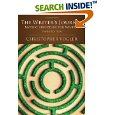
Have you read this book?


You might not recognize the cover. I didn’t at first, because it doesn’t match my copy. Of course, mine is only the second edition. This one’s the THIRD edition. Christopher Vogler’s The Writer’s Journey is like the energizer bunny–it keeps getting printed and printed and printed…

There are plenty of reasons why. First, Vogler has a lot of important things to say. His book is based on Joseph Campbell’s ideas about the hero’s journey, the common storyline in so many myths. Vogler does NOT, as some people seem to fear, advocate writing from a template, a formula. What he does instead is analyze the common elements of all stories, in a way that makes us recognize the patterns and layers we’re all struggling to find in our books and bring to the surface. I have a very specific criteria for a “good” writing book, that I find myself putting it down before I reach the end and rushing back to my story to get all the new ideas onto the page. The Writer’s Journey more than qualifies.

The other big reason is more practical. Basically, if you want to have a discussion about plot, or character, this is your starting point. As an editor, when I talked with a client about what their hero was doing, what the other characters were up to, I’d inevitably find myself talking about Vogler’s book. I’d suggest that, even before they looked at my critique, they should probably pick up a copy of The Writer’s Journey and read it through. This book is also the basis of so many brainstorming sessions I have with my critique groups, whenever we get deep into what our hero is (or isn’t!) doing.  Teachers in writing classes point to Vogler’s book, and The Writer’s Journey is referenced in more other writing books than I have time to count. You need to know what all these people are talking about.

I’ll admit that Vogler hasn’t solved the problem of the story middle for me. And, these days, I’m also pushing Les Edgerton’s book Hooked as a must-read companion to The Writer’s Journey.  Edgerton builds on Vogler’s ideas, and really hits on the kinds of beginnings we need to be writing today. Still, I find myself going back to Vogler’s book time and time again, when I’m stuck, when I’m trying to figure out WHO my hero is and needs to be, when I’m just trying to get a closer look at the layers of my story.

Whether you’re just starting on your writing path, or you’re already treading strongly along it, I recommend dropping this book into your traveling pack.