Posted in Uncategorized

Saturday Six

Stuff:

  1. I am making progress on this fast-first-drafting thing. I’m not getting in the after-work writing that I should, but I’m managing steady writing on the weekends. And I’m sticking to my goal of blasting along, without questioning or worrying (much) or stopping to fix stuff. No fixing allowed!
  2. The new job is making me happy. I seem, somehow, to have landed in a place where people are respectful and kind, just because that’s the kind of people they are. Plus, we’re trying to help education, plus I’m always busy and never bored, plus we’re in walking distance of frozen yogurt.
  3. My son leaves for college in six weeks. Tomorrow, we’re going shopping for dorm bedding. I’m voting for polka-dots, but he’ll probably pull out the whole independence thing and veto that, right?
  4. We didn’t see any fireworks last night, but we had several hours of BOOM! BOOM! BOOM! Alice paid more attention to the clicking of the laser pointer, so I’m guessing cats don’t suffer in the same way as dogs. I hope all your dogs have recovered and relaxed!
  5. I just read and enjoyed Natalie Lloyd’s A Snicker of Magic. Nice magical realism, with a slight flavor of Savvy, and a very sweet layer of friendship and family.
  6. I love three-day weekends.
Posted in Uncategorized

What’s Your First Step After The First Draft?

Seriously, before you ask, yes, I’m way ahead of the game. I’ve fast-drafted Act I, but that still leaves Acts II, III, & IV to go. (Did you notice that higher math there?) And, right, Act I is shorter by far than, at least, Acts II and III. Don’t panic. I’m not worrying (too much) about what I’ll do after that first-round typing of The End. But I am getting curious about techniques for moving, effectively, from drafting to revising.

Here’s what i did last time I fast-drafted a novel. I took probably a week or so away from it, and then I sat down with the manuscript and started reading. I will tell you right here that I never finished reading that manuscript (at least not just reading). Instead, one big, huge problem jumped out at me: I had made the sidekick character way more active than the hero; the hero was (unconsciously, I think) doing a Nick Carraway and telling the story as he observed it happening, rather than as he made it happen. So I put the first draft down and started revising, pushing my hero as far to the front of every scene as I could. These were the scenes I sent to my critique group, as I wrote them. And from that point on, I was revising from my critique group feedback, as well as from my own ideas–a pretty happy state.

At this point, I feel like I’ll probably try this technique when I finish the first draft of this new MG (I have got to come up with a sharable working title). This whole fast-drafting thing is a return for me to something that actually worked once upon a time, and–since it seems to be working a second time–I’m feeling a bit tremulous about reaching out into experimentation. I know it’s a good thing in general, but last time it left me in a pretty big pit, so maybe I need to get my process base a little more solid before I slide out onto the ice again. (My apologies for the majorly mixed metaphors. And the alliteration.)

Anyway, I am curious about how other people handle this stage. I’m going to share a few links to a few other processes. Some of them I’ve played with, some look effective, some are intriguing. And then I’d love if we got this conversation going in the comments-what do YOU do?

Just the other day, David Lubar linked to a WriteOnCon post he wrote about how he deconstructs his novels. I thought his process looked really interesting and valuable; I like how he really sticks to the basics.

Martha Alderson’s Plot Planner is another wonderful tool. Martha is brilliant at nailing the holes and flaws in a plot, and her planner is a good tool for laying everything out and seeing what you have and what you don’t. I’ve used this tool with Martha and with my critique partners. What usually happens for me is I get excited about what I’m seeing (and perhaps a bit lazy), and I run back to writing. While it is good to be writing, I’m not sure I’m using the tool to its fullest strength.

The other thing I’ve heard people talk about doing is writing a synopsis. I know people hate synopses, and maybe the only reason I don’t is that I’ve only done them at the extreme ends of the writing process–as a conference assignment when I’d barely started a story and as a required submission piece when I had a completed manuscript. (When I have written them, I’ve used Hélène Boudreau’s very doable synopsis steps.) I’m assuming people use them at other stages to identify holes and weak spots, but I’m not sure how exactly that works.

So those are my thoughts and my pointings to other thoughts. What about you? What do you do with that first draft manuscript once it’s done, and what processes have helped you bridge from that stage into second draft revision? Thanks in advance for your ideas and tips!

Posted in Uncategorized

That Lovely “Maybe” Feeling

Last night, I finished the first scene of my new MG novel. I had printed out my Scrivener scene cards and put them in a binder, which is part of my fast-drafting method. All I (supposedly) have to do is flip to the next scene card, without leaving Word (which is what I use to actually write, versus plotting), and keep typing.

I had started the scene a day or two before and written about a page and a half, but it had been a bit of a slog–not unusual, I’m guessing, for the very first pages. Then last night, very possibly powered by way too many cookies, I shot through the rest of the scene. And it was awesome. I paused a few times to think about one or two things, then either skipped over a problem or wrote something and pushed on. I wrote a couple of lines that I absolutely love. I wrote a few more that I sure don’t hate. I just wrote. And, in whatever first draft version this may be, I wrapped up the scene.

And then I remember that feeling. The one where you actually get something on a real page, and you feel in your gut that you are truly starting a new project, and you had fun with the writing, and you like some of what you created, and you think…maybe.

Maybe I will finish this draft, quickly, like I want. Maybe I will see how to revise it, and I will jump in. Maybe I will have more magic as I revise, and even more as I find the right threads to pull together, more as I polish. Maybe this story will be one of the ones that I finish, that I love (with other moments, obviously) through to the end.

Maybe I have just started to create a book.

Posted in Uncategorized

A Mini-Rant on Censorship

So they’re out there again. Or, more specifically, one of them is out there again. (Oh, but we know that, on any given day, it’s never just one.) I’m not going into details, but read Laurie Halse Anderson’s post about the labeling of her beautiful book Speak, as pornography.

Heads up: There is nothing profound in this post. There is nothing new. There is just me, not feeling particularly tolerant today, and wanting say a few things YET AGAIN to anyone who would censor or judge a book in such a way that creates a barrier between that book and even one child. I know I’m preaching to the converted here, but here’s what I WANT to say to people who take it upon themselves to makes rules for books and readers.

  • Get over it.
  • Grow up.
  • Mind your own business.
  • Feel free to not read the book yourself.
  • Put your hate back in your own head, and keep your mouth shut so it doesn’t fall out again.
  • Give some credit to every thinking child, parent, and librarian who picks up a book, to read or share, for HAVING A BRAIN OF THEIR OWN.
  • Go away.
Posted in Uncategorized

Blog Hop Time

There’s a blog hop going around, and Kelly Ramsdell Fineman tagged me. So today you get a few Q & As about…me! 🙂

About Kelly

Kelly Ramsdell Fineman is a poet and author of stories for children. Her first picture book, At the Boardwalk, came out in 2012 from tiger tales press, and was illustrated with amazing diversity and skill by Mònica Armiño, who lives in Madrid, Spain. Kelly does not live anywhere quite as exciting as Madrid, Spain; she lives in Williamstown, New Jersey, with her sweetheart and a calico cat named Kismet, who was found by chance along a roadside. She keeps a blog called Writing & Ruminating which just celebrated its ninth anniversary/blogiversary and includes features like Jane Austen read-alongs, lots of Shakespeare and poetry posts, and a rather recent series of posts on downsizing.

Kelly’s work has won awards from Writer’s Digest, and has appeared in anthologies for children including National Geographic’s Book of Animal Poetry and Dare to Dream . . . Change the World, in anthologies for grownups including Breaking Waves: An Anthology for Gulf Coast Relief, The Omnibus of Doctor Bill Shakes and the Magnificent Ionic Pentatetrameter: A Steampunk’s Shakespeare Anthology, and Mountain Magic: Spellbinding Tales of Appalachia, and in a number of poetry journals including Chantarelle’s Notebook, The Raintown Review, and U.S. 1 Reports. Kelly enjoys cooking, tai chi, and, of course, reading.
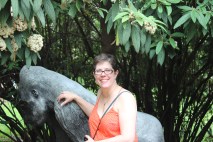
Kelly Fineman

And now, hopping along to me.

1. What are you working on?

I just finished polishing up three picture books, readying them for submission. For the rest of the summer, I’ll be fast-first-drafting a middle-grade novel. This WIP will be my first attempt to weave a layer of magic into a novel. (When I thought about it, I realized there’s some fantasy in every one of the picture books.) I think it falls into the magical realism genre. I’m very excited and, oh, you know, just the littlest bit nervous, about making sure I get the rules of my magic right at the same time as I don’t bog my readers down in those rules.

2. How does my work differ from others in this genre?

Well…okay, so, it’s written by me. I’m not sure there are any other differences. At some later stage in my writing path, I may find myself aspiring to break through genre walls and into new territory. Today, I’m still working very hard to write the most tightly constructed story I can, with characters who are real and layered and who will keep readers turning page after page. I am, in my own role as a reader, absolutely blown away by the new-territory writers whose books I discover, but I there is a beauty to a story that, within whatever genre it fits, is done right and done well. For now, that’s what I’m aiming for.

3. Why do I write what I do?

The first reason is that I write for children, because approximately 98% of my reading for pleasure is children’s books. I know I am a grown up, and I definitely participate in a grown-up world, but–for whatever root psychological reasons–when I go into a book I want it to be for children. That does also include YA, although I lean more toward the younger YA than the older.

The second reason is that I find the transformative power inherent in every childhood choice to be amazing. Of course, I know that adults change as they age–it’s very possible that I’ve changed more in the last twenty years of my own life than I ever did in the first twenty. But so much of childhood is trying to figure out one’s self, and trying to do it within the restraints of the adult-created world around you–trying to do it despite those restraints. I think it’s easy to think that the choices young kids make are easy, or that most of them are made by adults, but I don’t think that’s true, and I don’t think most children believe it. Anyway, it’s these early choices and changes that I’m pulled to explore.

4. What is your writing process?

Today? Or yesterday? Two weeks ago? I truly wish I had a process that worked consistently for me and my stories. I think it may work best for me to dump out a first pass as quickly as I can and then revise, revise, and revise. I say this, because the best writing experience I’ve ever had was the MG novel that I first-drafted in a week and then took apart and rewove over and over again. And, really, that’s what I do when I write a picture book. I toss anything, even just a long, non-dramatic description of an idea, onto a few pages and then start over with it. The one time I tried to write more slowly and think things through as I went, I got so tangled and confused that the novel is sitting in a binder on a shelf, waiting for another day when I’m a different writer and can try to make repairs. For the magical realism MG, I’ve done about the most basic plotting possible, and my goal is to have the first draft written by the end of the summer. (I’m working at a job-job these days, so a one-week first draft probably isn’t going to happen.) I’m shooting for that feeling when you push away all the questions and problems and just write, absolute garbage that will, hopefully, have a gleam of a story in it to work on.

Tag!

I’m tagging two bloggers whose writing I love.

Joyce Moyer Hostetter is the author of some of my favorite historical novels, especially Healing Water. She lives in the South, so we haven’t ever met in person, but I have high hopes that we will some day. Joyce always has a supportive word, especially for those of us who have ventured into historical research and writing and who know the feeling of getting a little lost, sometimes happily and sometimes not so much. On her website, Joyce says, “The stories of the past belong to us if we make them ours.  As a writer, I love scrounging through history’s images and finding hidden stories that have been lost in the bottom of the pile. My books are a way of bringing history into my experience.  And hopefully, into yours also.” Take it from me–they do. Joyce blogs at The Three R’s–Reading, ‘Riting and Research.

Alex Villasante is another writer who, as far as I’m concerned, lives too far away. I met her at the fantastic Pennwriters conference, and we’ve continued to chat back and forth and share our writing across the country. Alex lives in the semi-wilds of Pennsylvania. She holds an MFA in Fine Art which (according to her, not me!) was fun to acquire but fairly useless for gainful employment. She writes Young Adult and Middle Grade books about misfits, magic, and identity. The book on which she is currently working takes place at the beach in Avalon, New Jersey, and may or may not contain fairies. Alex is represented by Barbara Poelle at the Irene Goodman Literary Agency. Alex blogs at Magpie Writes.
Posted in Uncategorized

What I’m Remembering about Writing Fast

Okay, yes, if you’re going to get picky, right now I’m just plotting fast. The three-day weekend is coming up, and my goal–barring any rising creeks –is to take those three days and finish all my scene cards for the MG novel. I’ve been putting in a little time on this for the past couple of evenings, after I get home from work, and I think this is doable. And when done, I’ll be set up to fast-write the first draft over the summer. I wrote here about why I’ve decided to try this process again.

So, anyway, right now I’m fast-plotting. And I’m remembering all the delights and joys that come with fast-plotting (and, if I remember correctly, also with fast-writing.) There are many of them, and I’ll mention some below, but the underlying awesome feeling of them all is this: It doesn’t matter.

It doesn’t matter if

  • You plot your hero behaving in a way that may, once you write it all out, turn him into a whiny brat in Scene 4, Scene 19, and Scene 23.
  • You forget the best-friend-soon-to-be-former-best-friend’s irritating new girlfriend’s name and “must” refer to her scathingly as whatshername every time you stick her into a scene.
  • You’re building the other best friend toward an act of strength and kindness, possibly setting him up to out-hero your hero.
  • You’ve created multiple siblings but keep forgetting to put various ones into the story.
  • You don’t know what the magic will do in Scene 15.
  • Every action you apply to one character makes him darker and darker, so that he could be awesomely wonderful in a Gary-D.-Schmidt novel (as area all his characters), but you’re probably not writing a Gary-D.-Schmidt novel.

It just doesn’t matter.

You may be thinking, oh, but it kind of does. Maybe you’re focusing on the part where you know (and I know) that eventually, I”ll have to make all this work. Or possibly, you’re thinking about all the time and energy I’ll put (even fast-writing) into a draft that will, when that draft is done, need to be turned into something drastically and dramatically different. Perhaps you’re thinking, but how can you even WRITE a scene when you don’t understand the magic?

Guess what? I’m thinking all those things, too. Every time I come to a question, stare at the screen, make a choice, I hear one of these questions in my head. I push them away, but they do keep popping up. And I try really hard to answer them with “It doesn’t matter.”

There is a trust implicit to this process, a belief that Anne Lamott is right when she says to write that shitty first draft. That vomiting that draft onto paper or into a file is a necessary first step. I have believe that for years, logically, but as I’ve said before–somewhere along the way I had stopped believing it in my gut. Stepping back into actively fast-plotting has brought the trust back. Of course what I’ll have at the end–at the end of the plotting, at the end of the first-drafting–will be a complete and utter mess. But…O.M.G. IT WILL BE THERE.

The contrast between how clear and happy my head feels as I plot this book to how it felt when trying to plot the last book is unbelievable. That one, the plot which I thought about, where I tried to track threads from the start to the end, where I asked myself questions about how something would work and then tried to find the answer–that one made me tangled and confused, tired and irritable. This plot, the one I’m pushing myself to speed through, is making my feel sparkly and creative and in possession of brain cells on fire. Add that to the excitement and anticipation of the fact that, if I can keep to this process, I will have A DRAFT at the end of this summer–a draft to chew up and spit out, to cut apart and glue back together, to kill darling after darling after darling….well, that feels like dancing.

It’s nice to be remembering.

Posted in Uncategorized

A Little Bit More on Diversity

Last week, diversity in books was the hot topic. At least in my world. The thread has faded a bit from the internet, but it hasn’t gone away. A few posts to share, and then a starting list from me.

From the Cybils, my source for so many of the books I love: Diverse Book Recommendations for #WeNeedDiverseBooks

From Jen Robinson at her Book Page: Roundup of Diversity-Themed Links I Shared this Week

From Mother Reader: The Ninth Annual 48 Hour Book Reader Challenge (Note: I have been wanting to do this challenge for years, and it has always been “a bad weekend for reading.” Yes, even I have the occasional one. And this year–my parents come visit on Thursday, my son graduates on Friday, and there will be major sleeping of the son and visiting of the family on Saturday. But you know what? What else am I going to do with Sunday except recover. So I’m thinking I will do my own, little, baby 24-hour challenge along with every one else. I could do it with picture books and read, like a gazillion. Or maybe a half-gazillion. Right? Right.)

And from Jen Robinson and Sarah Stevenson at Finding Wonderland, the 8th Annual Kidlitosphere Conference, FINALLY IN NORTHERN CALIFORNIA and already on my calendar.

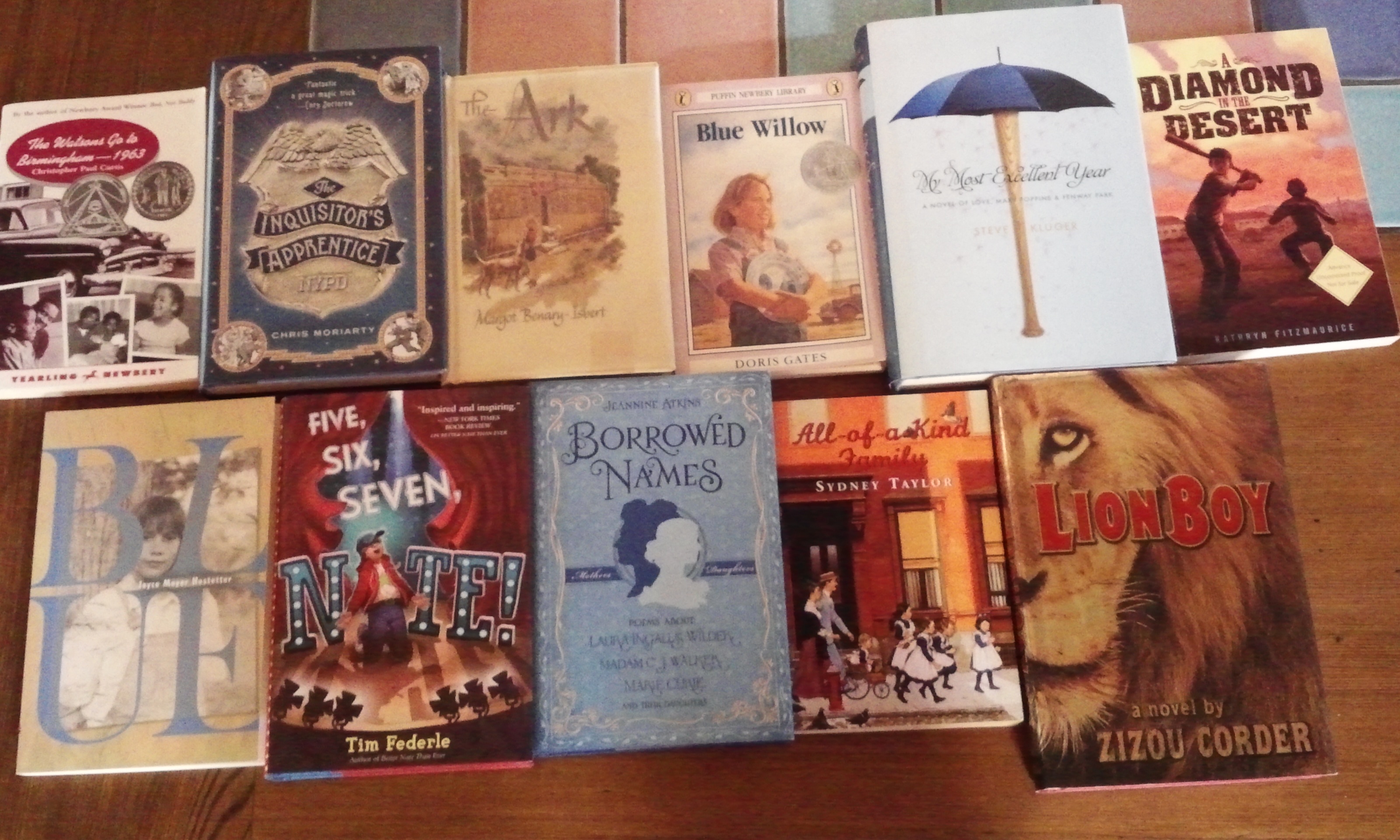
And from me, because the only really good intentions are the ones with which you follow through, the list of books I put on hold at the library today, all from the longer list of titles I’ve been building from those #WeNeedDiverseBooks posts.

Posted in Uncategorized

We Need Diverse Books…and What We Can Do About It

I’ve been kind of blue all day. It started with me reading all these sharp, short, and clever posts at #WeNeedDiverseBooks and knowing I wanted to jump in, but having this weird feeling that I…shouldn’t. All right, I’m risking showing off a few neuroses here, and I’m going to keep this part of the post short because this is so not about my worries, but I want to share because, well…it’s possible others are having some of these feelings, too. So, basically, my initial self-centered responses were a mix of:

  • I have been very lucky in terms of not having my identity attacked, ignored or dismissed–so lucky that I have no real stories to share.
  • As a  child, I wasn’t looking for other Jews/Jewish atheists in stories; I was looking for other insecure girls who escaped the world by curling up alone with a book. And I found plenty of those. So I basically got to spend my youth recognizing myself over and over and over in books. Again, lucky.
  • When I went to look at my shelves, I was hit with some guilt at the small number of books I had to include in the #WeNeedDiverseBooks photo I did post. Mixed in with recognition that most of the books I save on my shelf are favorites from my childhood and that, while I still believe them to be wonderful books, we are much further along now than we were then in showing the entire, real world in stories. We still have a long way to go, yes, but we’re moving. And mixed in, also, with the happiness that I do have these particular books in my life.

!!Weneed

  • A sense, obviously left over from when I was like FIFTEEN?!, that I am somehow not cool enough to join in this fight. I know…whatever THAT’s about! But I think, again, it’s tied to my feeling of luck, of privilege, of having escaped that isolation of NOT seeing myself in my chosen world. For pete’s sake, there were certainly plenty of times I didn’t see myself in the real world around me, but I did–time and time again–choose books over that world, so, you know…it worked. Because books always told me there were others like me. So how could I step up to the plate and speak “for” others who weren’t given that experience?

And then I started reading a few more of the posts. The signs. Seeing and hearing about the kids. And, honestly, the blueness turned to waves of sorrow. Because, crap, what we’re still doing to children by not representing them in stories. What we did to their parents. Worse, still, what we’re doing to all of them by representing the world as some narrow little definition of peoplehood, of reality, of cool.

So I gave myself a shake and told myself to shake off my stupid, self-centered fretting and shift my attitude. It is my fight, because I care about children and I care about stories, and if you tell me the two are not inextricably connected, I will argue with you even after I lose my voice. So here’s my commitment to myself. I will…

  • Actively look for books that represent the real world, the whole world. I’ll start by building a list of those everyone is mentioning/showing in their WeNeedDiverseBooks posts.
  • Buy more of these books.
  • Check out more of these books from my library.
  • Put in requests for my library buy more of these books.
  • Talk about these books on my blog and via social networking.
  • Talk more.
  • Push myself to include diversity in my own stories. This means getting past the slight laziness about doing research and getting past the bigger fear that I will say something wrong, depict someone stereotypically, offend someone or hurt their feelings. And I will do my best to find Beta readers who can help me avoid/correct all those things.

I don’t know if it’s enough. I don’t know if these are the right steps. But I know I’m doing something.

Join me?

And in case you can’t see the titles in the photo, they are:

Posted in Uncategorized

Calling Mrs. Piggle-Wiggle

This weekend, I’ve started writing out very basic scene cards, in prep for doing my own kind of Nano-Y first draft of a MG novel.

I say kind of, and I say Nano-Y, because I doubt I’m going to get where I want to go in a month of writing, at least not if the temp job I have continues at a mostly full-time pace. I know there are writers out there who manage, and maybe I will be able to some day, but I’m allowing myself some gentle space as this all falls under a big life-transition umbrella for me, too. I also say kind of, because I’ve never DONE NaNo, so I don’t actually  know the process/guidelines. Instead, I’m basing the process on one I did a few years ago when I, yes, wrote a book in a week (150 pages of wonderful dreck in five days). I won’t be doing it in a week again, either. (For more information about the Book in a Week idea, see April Kihlstrom’s BIAW site. For more on NaNoWriMo, check out their main page.) And I’m starting by creating a very basic card in Scrivener for each scene.

Here’s the info I put on each scene card:

  • Protagonist’s Scene Goal: The ACTION they want to accomplish in this scene. The action part of it is important to me, because without reminding myself about it, I can easily end up in some nebulous sloshy place, a lot like when Milo stalls out in the Doldrums in The Phantom TollboothYes, character layers and theme are critical, but I’ve gotten so slogged down in those lately, in early drafts, that I’m trying to push them away for now. They’ll come out as I draft and they’ll deepen as I revise.
  • Obstacles: Some of these are from antagonists. (And I’m noting those specifically this time around. The last time I did this, I was really weak in the main antagonist’s story line and had to kluge it in. Which I think worked (no complaints about this in the rejections), but it was a lot of work. So I just want to keep the antagonist stuff further up front in my mind, even in this early dump. Other obstacles will come from the protagonist himself, some from his allies, and one or a few from the environment around him.
  • Response: The basics of what my hero does in reaction to the obstacles. This helps me make sure he fails, fails, fails for a while, the starts to gain strength and fight back with more power.
  • End Scene: The action/moment on which the scene ends. This was a huge help last time when I was trying to blast through from scene to scene, because it gave me a rolling momentum to keep going, keep going, keep going.

And that’s it. Just dipping back in to this method felt so good. I’ve gotten very bogged down in some mix of plotting and drafting in the last couple of years, at least on my longer projects. (Possibly one of the reasons I’ve fallen so in love with the picture book form.) Somehow this tangled mix of needing to just write and needing to know where I’m going was, I think, partially responsible for the historical YA ending up in a drawer for now. (The other responsible parts being the historical and the YA!) And then I’ve done a few false starts on the MG, which make me feel like the YA tangle is looming over me again.

So I want to do it differently. I want to step back to the process that worked so well for my last MG. While I’m not shooting for a whole first draft in a week this time, I am shooting for that same just keep swimming writing technique. The one where I don’t take a break at the end of a scene, but click on the next scene card and write more. The one where revision ideas about past scenes get scribbled on a sticky note and attached to the print out. The one where questions get tossed into Scrivener’s Notes section. The one where I use a LOT of brackets around phrases like [MAYBE A SAMURAI. MAYBE A MIME]. The one where I recognize and remember that THIS DRAFT IS AND SHOULD BE ABSOLUTE GARBAGE, and all the little changes I might even consider making will be totally irrelevant, because AT LEAST 99.99999999999994% of the words will disappear or change. Seriously, last time I did this, when I sat down to read through the first draft, I didn’t even get halfway through, because I realized almost instantly that I’d written my protagonist as an observer and given all the take-charge stuff to his sidekick. Who needed to stay a sidekick. So I started plotting and writing again, making sure I kept my hero active, active, active, and THAT became the so-much-better “first” draft I took through my critique group. And THAT flowed so much more smoothly and effectively, because the garbage came first.

I want that again.

So what does this all have to do with Mrs. Piggle-Wiggle? Well, mostly, she’s on my mind, because I was talking to a friend whose little girl has fallen in love with Amelia Bedelia, who for some reason makes me think of Mrs. Piggle-Wiggle. Maybe because, in my world, as goofy as Amelia is, she has huge doses more of common sense than do the people for whom she works. Kind of like Mrs. Piggle-Wiggle. And, today, I’m thinking of Mrs. PW because she had all those wonderful cures. Remember? “The Won’t-Pick-Up-Toys Cure.” “The Answer-Backer Cure.” “The Slow-Eater-Tiny-Bite-Taker-Cure.”

I think I need an Unsticker-To-It Cure. Oh, I’ll stick to my story. I’ve proved that to myself, in a good way, on these picture book revisions, as well as in a not-so-good way on the YA. What I need to stick to is this process, the rapid pacing, and the pushing through all the distractions and doubts.

So, you know, if one of you could turn to your partner and say, “What are you going to do with this child?!” and then go off to work and totally abandon the other one, who would then call a friend and says, “What am I going to do with this child,” and could listen when the friend says, “Call Mrs. Piggle-Wiggle. She can fix any child,”  well, this child would be very appreciative. Meanwhile, she’ll keep writing.

Posted in Uncategorized

Friday Five: Rollin, Rollin, Rollin…

Life does keep coming, doesn’t it.

Here’s what’s going on around here:

  • The Picture Book from Hell has regressed back to something gentler and kinder. I backed myself up to an earlier version I had actually kind of liked, and I’m working on a new pass at that. If the creek doesn’t rise, that will go off to the critique group this afternoon.
  • I’ve been looking for work, and a lovely temp job came my way a couple of weeks ago. I’m writing grants again and helping out with a little social media, and I get to work part of the time on-site and part of the time at home, which is a nice balance for now. I have to tell you, the shoot-up fix I’m getting of feeling efficient, productive, and effective is doing wonders for the old morale. I’m also getting back in touch with that feeling that compressed time is often a better place for me than too much leisure. I’m not getting to my writing every day, but the stories are staying in my head, and I am moving forward on stories. And I haven’t noticed any major life pieces falling through the cracks.
  • I’m getting to a stage in the picture-book revisions where I’m thinking there is time to look at the MG novel again. Many years ago, I did April Kihlstrom’s Book in a Week program, and it was an amazing way to get that horrible (yes, horrible) first draft down. That book went through many revisions and came to complete fruition. While it isn’t published (yet!), it has stuck with me as one of the most satisfactory writing experiences I’ve ever had. I don’t have an empty week in the foreseeable future, so I’m thinking about doing my own semi-Nano thing. This weekend, I’m going to take a look at the scene cards I already have in Scrivener and see about setting up a folder just for BIAW/Nano-y scene cars. For me, this means writing out a scene goal for the protagonist and the antagonist, listing obstacles and protagonist reactions, and then dropping in a line or two about how the ending will take us onto the next scene. Last time, this was enough for me to keep flipping through each scene card and just writing. I want to see if I can get there again on this book.
  • Yoga continues. It’s one of the things I promised myself I would not let go of when work came along, and so far I’m managing to keep that promise to myself. As the person who absolutely hated yoga for decades, I am constantly resurprised at how much I love it now. I can feel my body getting stronger and my mind getting calmer, and, heck, yes, I’m an addict. But when I was younger, the idea of heading to exercise after a whole day of work just always seemed more exhausting, and this past week, I find myself getting into the car at the end of the day and looking forward to getting to class. Yeah, and all brain growth and change stops in the twenties or thirties. Not.
  • It’s almost May, which means HS graduation is right around the corner. After that comes summer. And then we’ll be moving our son out to a dorm and watching him start the college life. There’s definitely a sense of mixed anticipation and tension in the air, but I think we’re doing okay. No heads have been bitten off, and everybody’s still talking to each other. And I’m not crying yet. But can I just say….really?

Ian

Happy Friday, everyone!