Posted in Critique Groups, Critiquing, Guest Blogger

Guest Post: Ruth Spiro on Multiple-Genre Critique Groups

Please welcome Ruth Spiro to my blog! Ruth writes for children, but critiques with writers of various genres. When I heard that, I asked her if she’d do a guest post about how that works for her and her critique partners. She said, “Sure!”  Thanks, Ruth. 🙂 Check out her guest post below (especially my favorite line: “I think it’s this flexibility that has helped us remain together through the ebb, flow, and evolution of our individual writing.”) And anyone else feel like we need to ask Bev for her lemon-squares recipe?


Ruth Spiro is the author of the picture book, Lester Fizz, Bubble-Gum Artist (Dutton).
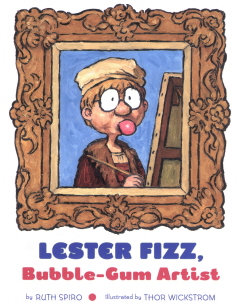
Before it was published, the manuscript was a winner in the Writer’s Digest 72nd Annual Writing Competition, and also won the Liam Callen Award for Best Overall Contest Entry in the Kay Snow Writing Contest, sponsored by the Willamette Writers in Oregon.

 Ruth’s articles and essays have appeared in FamilyFun, CHILD, Woman’s World, and The Writer. She’s a contributor to The Right Words at the Right Time: Your Turn, edited by Marlo Thomas, as well as Chicken Soup for the Child’s Soul, Chicken Soup for the Beach Lover’s Soul, and Chicken Soup for the Soul Christmas Collection.

 A frequent speaker at schools and conferences, Ruth lives with her family in suburban Chicago, IL. Her website is www.ruthspiro.com. This summer, she plans to lose fifteen pounds and start her own blog.

I found my critique group through a lucky turn of events. I’d just completed a writing class with author Carolyn Crimi, and she connected me with the group because she knew they had an opening. I’ve been with them for ten years now, though the original members have been together since the early 1990’s. I remember bringing my poem “Into the Rain” to the first meeting I attended. They suggested I add more of a story arc, which I did, and it later won the “Bedtime Stories” contest sponsored by Half-Price Books.

Our eight members are: 

 We meet in person once a month at a member’s home.  I know many critique groups work online, but this face-to-face interaction invites discussion, brainstorming and camaraderie – to me, a welcome balance to the solitude of writing.  We email our manuscripts to the group about a week before our meeting, giving us time to read each piece and note our comments. That way, we can get down to business and make the most of our time together. At any given meeting we’ll have 4-5 manuscripts to review; I can only remember one or two occasions when we had eight. Most importantly, we’ve found that Bev’s lemon squares, microwave popcorn, and vast quantities of chocolate are absolutely essential to the process.

Our group is unique in that we write in a variety of genres:  picture books, middle grade novels, YA, non-fiction, poetry… a little bit of everything.  I also write for publication outside the children’s market, and my critique group has willingly read my articles and essays for The Writer magazine, Chicken Soup for the Soul, and the SCBWI Bulletin, among others. They’ve reviewed my website text, school visit brochure… everything but my grocery list. (Which I’m sure they’d comment on, if I asked them to!) I think it’s this flexibility that has helped us remain together through the ebb, flow, and evolution of our individual writing.

I believe we all benefit from reading and critiquing work in a variety of genres. After all, the elements of story apply across the board, regardless of the length or intended audience. Characters, setting, voice… they all need to make sense and ring true. Even the attention to language and rhythm that’s so essential to a picture book can also be applied to a young adult novel. And poetry? It’s everywhere.

The main challenge our diversity presents is in the scheduling. We try to divide our meeting time equally for each manuscript submitted, but when one member brings a 500-word picture book and another has a 15-page novel chapter, it’s hard to do.

Still, I don’t think anyone ever feels that her manuscript hasn’t been given the attention it needed. On a few occasions, we’ve actually devoted an entire session to critiquing a complete novel; although we’d previously critiqued the individual chapters, a complete read-through can reveal issues with plot, continuity, character development, etc.  Plus, it’s great fun to see the finished result of a friend’s months, or years, of hard work!

 Which brings me to the reason why being a member of this group is a joy, and a privilege: I truly consider them my friends. While our main goal is to work together and make our writing the best it can be, we always take time at the beginning of our meetings to ask, “What’s new?” We share good news and not-so-good news about our writing and our personal lives. We’ve celebrated the births of books and babies, and given moral support during difficult times. When I told my group I’d be missing a few sessions because of an upcoming surgery, a few days later I opened my mailbox to find a gift certificate for a restaurant take-out service, so my family could order dinner during my recovery!

While we share the common interest of writing for children, we’re about as different as a group of eight women can be. Luckily, these differences work to our mutual advantage, as well.  The unique perspectives of a high school English teacher, website editor, writing instructor, social worker, zoology expert and fine artist contribute to the knowledge base from which we read and critique manuscripts. Best of all, we respect one another as writers, there’s no air of competition, and we feel comfortable being honest with each other, without repercussion. Discussions may get lively and sometimes we disagree, but at the end of the evening there are always hugs as we walk out the door. 

Posted in Critiquing

Critiquing: Your Brain is Talking–Listen.

In the talks I’m giving this month, I’m getting down to some basics about digging into a critique. I’m trying to give new critiquers some tools to get started with confidence and encourage critiquers who have been doing this for a while to stretch themselves.

And the first thing I’m telling people is to listen to themselves.

When you sit down to critique someone’s manuscript, the first thing you’re doing is reading. Okay, that may sound too basic, but this is where it all starts. You’re turning pages, you’re taking in the words, and you’re responding.

Let me say that last one again…You Are Responding.

When we start critiquing, we’re not always so sure we’ve got anything intelligent to say. Maybe nothing unintelligent, either! We read the manuscript, mention a few inconsistencies and commas, then pass the pages back with a smile and the comment that we “like it.”

The odds are, though, that we’ve read some pages, passages, or paragraphs that we didn’t actually like all that much. And we’ve ignored those bits. Maybe not intentionally; maybe we didn’t even notice that we had a bad feeling. We did, though, feel it.

As a critiquer, the first thing you have to do is pay attention to those feelings, to the emotional responses you’re having to your critique partner’s manuscript. You need to register when you’re feeling bored, or distracted, or irritated, or confused. And when you get one of those feelings, or any other response that pulls you out of that book, you need to STOP. Do not keep reading, do not turn more pages, do not collect $200.

Your responses mean something.

Figuring out what they need is another step, another blog post. Today, I want to remind you to pay attention to your feelings, your reactions. You are not just a writer; you are a reader. How old are you? How many years…decades…have you been reading books, talking about them, sharing out loud what you did and didn’t like about them. I’ll say it for you–a long time!

You have experience. You have skills. You are good at this. Yes, you may–as I said above–need to stretch yourself, push yourself past your critical-thinking comfort zone and dig more deeply into why. But don’t ever discount the responses you’re having as you read.

They’re real, and they’re important. Listen.

Posted in Critique Groups, Critiquing

What to Expect from a Critique

After a lovely week of talking about other authors, I thought it was time to come back to talking a bit about…you! This post is modified from a downloadable PDF (of the same title) available at my Critiquing tab above, that I wrote for writers who are considering hiring me for a professional critique. I think a lot of it’s true, though, for anyone getting critique feedback, especially if it’s a new experience. So enjoy and, remember, it’s worth the risk! (And thanks to Jordan Rosenfeld for the suggestion!)

If you have never been critiqued, you may not be completely prepared for the kind of feedback another writer can give you, or for the feelings their suggestions may cause in you. If you have experience being critiqued, receiving feedback from other writers, you are probably familiar with some of the feelings a critique can engender. You feel great when your critique partners tell you what you’ve done well, and you feel not-so-great when they point out what’s not yet working. Hopefully, you haven’t received a critique that made you feel hurt, or that made you wonder whether you should be writing.

You should.

You should also, though, be revising. And one of the best ways to do that, if not always the easiest, is to receive strong feedback from a critiquer.

When you receive a critique, you are hopefully getting a thorough, detailed set of feedback. This may include a page or more of overall comments, suggestions about the big elements of writing—things like plot and characterization in fiction, organization and voice in nonfiction. The critiquer may also make notes throughout the manuscript, pointing out specific places where they think you can do more work, passages they think illustrate the suggestions they’ve made in their overall critique, and—of course—any writing that they love.

When you look at these pages, you’re going to see a lot of comments. (This may be where that fear of red ink comes from!)Even if, logically, you know all those comments are there to help you, you may still feel overwhelmed. Sometimes very overwhelmed.

Try to remember a few things.

You are not the only person to ever have their work marked up this way. It happens to most writers. It happens to me all the time! You are allowed to start slowly. Take it a chapter at a time, work with the small changes you can say “yes” or “no” to, and let the other, bigger comments simmer in your brain as you work.

You don’t have to make all the changes at once. When I’m revising from a critique, I find it most helpful to pick one or two big things to work through in one revision, following the thread of changes through each scene, and watching how my story grows and improves as I work.

You are the author of this manuscript. I happily give you permission, here and now, to decide against putting in any of the suggested changes that you’re not happy with. (I also ask you, if the critiquer make a big point about something multiple times through the pages, to take a second look at those comments before making that decision. ☺)

You can do this. We send our words out with high expectations, and higher hopes. We know, in general terms, that we have more work to do, but—often—we don’t know or recognize, how much work that will be. Take your time. Be patient with yourself, and allow yourself to grow your writing along with your project. Every revision you do of your manuscript will bring it that much closer to being the book you want it to be.

Finally, remember that your critique partner is not (usually!) going to disappear after they send you the critique. They’re available  for questions—don’t hesitate to email them if you don’t understand something they’ve written, or if you’re feeling confused about where to go with the critique. They’re in your group because they want to help—ask for that help when you need it.

Posted in Critique Groups, Critiquing, Guest Blogger

Guest Interview: Wendy Martin on Critique Groups

Wendy Martin is the author of several children’s books, An Ordinary Girl, A Magical Child (2005, 2008), Aidan’s First Full Moon Circle (2008), and Watchers (2008). She is the illustrator of those three books as well as Rabbit’s Song (2009) by S.J. Tucker and Trudy Herring, and Smoky and the Feast of Mabon (2010) by Catherynne M. Valente.


Wendy has a deep commitment to children. Walking her talk, she applied for and completed training to be a Court Appointed Special Advocate (CASA) for children of the St. Louis Children’s Division Court foster care system. She was officially sworn into this volunteer position on Sept 11, 2008.

Wendy currently resides with her husband and daughter in eastern Missouri when she isn’t on the road giving workshops at festivals or visiting schools. She claims the dubious title of Perpetual Project Lady and does her best to keep the house clean and the cats fed.

Read on for an interview with Wendy, in which she discusses critiquing for writing and art.

BL: Can you give us a brief description of your critique group (online or in person, how many members, what they’re writing, how you found the group, how long you’ve been together)?

WM: I belong to two crit groups, one for writing and one for illustration. Both are on-line. The illustration group is very informal and is more of a support group than for aiming for publication, although we can ask for specific project feedback. It is a public Blogger site where members post solutions to weekly prompts. The group is morphing in terms of membership all the time since it is so informal but there are about a half dozen “regulars.” I think the goal is 25 active members. I received an invitation via email when the group was being formed about 3 years ago.

The other group is very structured. There are 5 members and we are about 6 months old. It is online and crits are submitted via email. Every sixth week we “meet” in a chat room to just talk about whatever catches our fancy and any changes we’d like to see in the crits. The group is genre specific to MG although our subject matter is all over the place. I believe I also received an email invite for this one, but I don’t remember.

BL: What do you think are the benefits of your groups?

WM: With the illustration group, the benefit is to meet a deadline on an ongoing basis and illustrating a topic or theme we hadn’t selected ourselves. All members are supposed to be working in water media, although some of the newer members are submitting computer-generated art. I’ve been meaning to question the mod about that.

In the writing group, for me, the biggest benefit is finding the flaws in my WIP and having suggestions on how to fix them to make a stronger story. The entire group is serious about finding a publisher for their manuscripts, so this is helpful since we all have a similar goal in mind.

BL: What’s the hardest part of being in a critique group, for you? What makes that part worthwhile?

WM: The hardest part for both groups is meeting the deadlines. I am better at it with the writing group since it is so structured and I know I will be getting as much feedback as I give. In the art group, it is sometimes discouraging not to receive any useful feedback because either no one comments or all the comments are along the lines of “That’s nice, I like it.”

BL: If a writer’s goal is publication, do you think participating in a critique group can help the writer toward that goal? How?

WM: To achieve publication one must perfect one’s craft. Whether that is writing or illustrating is irrelevant. There are certain things that separate the hobbyist from the professional and being in a crit group can push anyone past their comfort zones if they let it. Once a creator has left their comfort zone is when true creation comes. And that’s when publication becomes possible. The work you are submitting to publish has to be strong enough and unique enough to stand out from the crowd. Plus, the creator has to have a thick skin because rejection is a normal part of this business. There’s a lot of rejection, even for the people who achieve publication. Crit groups help to prepare people for the tougher aspects of the business by familiarizing writers and artists with criticism. Even a successful book will garner negative reviews. Everyone has an opinion and not all of them will be positive!

BL: What was the biggest surprise for you, about critique groups or the critique process, when you first started participating in a group?

WM: How often the groups didn’t work out or survive. Most groups I have joined or been invited to join petered out in less than six months. I often found that groups formed by newcomers rarely gave me any useful feedback. I have found that in order for a group to function fully, the members must be all at about the same place on their quest for publication.

Please answer the next questions quickly, without too much thinking time. 🙂

BL: Do you critique with: Red pen or NOT-red pen?

WM: Both.

BL: Favorite critiquing drink: Tea, coffee, or diet soda?

WM: Water.

BL: Do you prefer: Critiquing or being critiqued?

WM: Being critiqued. Love feedback.

BL: Who would you rather have run the house while you write/critique? Jeeves or Alice from The Brady Bunch?

WM: Alice

BL: Name one book that has blown you away in the last year.

WM: Wondrous Strange by Leslie Livingston.

Posted in Critique Groups, Critiquing, Uncategorized

Critique Groups: The Case (Okay, MY Case) for Reading Ahead

When I started writing The Writing & Critique Group Survival Guide, I knew I wanted to include some of the basics about how to actually run a strong group—the mechanics of it. If you’ve read my blog for a while, or if you know me in person, you may have figured out that I have some strong opinions. As much as I worked to achieve balance, I’m sure some of that shows up in the book.

Let’s just be nice to me for today, and call that voice. 🙂

Anyway, one of the steps I write about in The Survival Guide is critiquing a manuscript before the actual critique meeting. As I researched the book, and as I talked to more and more writers about their groups, I realized that many groups don’t do this. And most, if not all of those groups, are filled with happy critique partners who make progress with their manuscripts and grow their writing skills. Some groups just started out that way and have continued the pattern; others have thought things out and, because of busy lives and crowded schedules, need to contain their critiquing time to the hours alloted to the group’s meetings. “Extra” hours in the week need to be for writing. This all makes sense.

Still…

I’d like to make my case today for doing it the other way.

Here’s what I think you gain by reading submissions and preparing critiques ahead of time.

  • Time. Yes, it’s a trade-off; if you don’t use meeting time to read the submissions, you’ve got to find those minutes (hours!) some other place in your week. However, you get to spend more of the meeting time presenting those critiques to authors, brainstorming stories, and having idea-sparking discussions. Also, I’m a big advocate of writing up a thorough, detailed overview critique, and this is much harder to fit into the limited time you have at a meeting.
  • Focus. When you’re sharing a table with other critiquers, all shuffling pages and scribbling away, it can be awfully distracting.  I know many groups have someone read the piece out loud, often the author, but–again–I think it’s harder to look closely at the work when it’s being read to you. As someone pointed out once, a strong reader can make anything sound pretty good!
  • Depth. A strong critique takes thought. I know there are many readers who have great insight to a story as they read and who are capable of putting together helpful feedback quickly. I believe, though, that we can all do a better job of that if we have the leisure to sit with what we’re reading, to turn back pages and remind ourselves of what has come before, to look carefully for examples of strengths nad weaknesses in the text, to contemplate the best way to present an idea. If you’re trying to get in two or three reading and critiquing sessions during a meeting, I think that cuts short how much constructive feedback you can develop.
  • Simmering. I’m not sure what else to call this one, but it’s today’s word for that kind of thinking we all do after we’re finished reading a manuscript, or even a published book. The story or the characters or the theme stay with us after we turn the last page, and thoughts & ideas come to us in the hours and days afterward—as we cook dinner, while we take a shower, or—as one of my critique partner says—in the car on the way to the meeting. A critique improves with age, with a gap between the process of developing feedback and the act of delivering it.

Okay. There you have it. I’ve piled my arguments on one side of the scale. If you’re in a group that does it differently, try and look at this as a critique itself. Don’t dismiss my feedback out of hand. Take some time and think about it, bounce the idea around in your head for a while. If it sounds good, see what your group thinks–maybe they’ve all been wondering how to get a bit more time at the meetings, or maybe someone’s been feeling rushed trying to read as fast as everybody else.

And see what you think. 🙂

Posted in Critique Groups, Critiquing, Guest Blogger, Uncategorized

Guest Interview: PJ Hoover on Critiquing

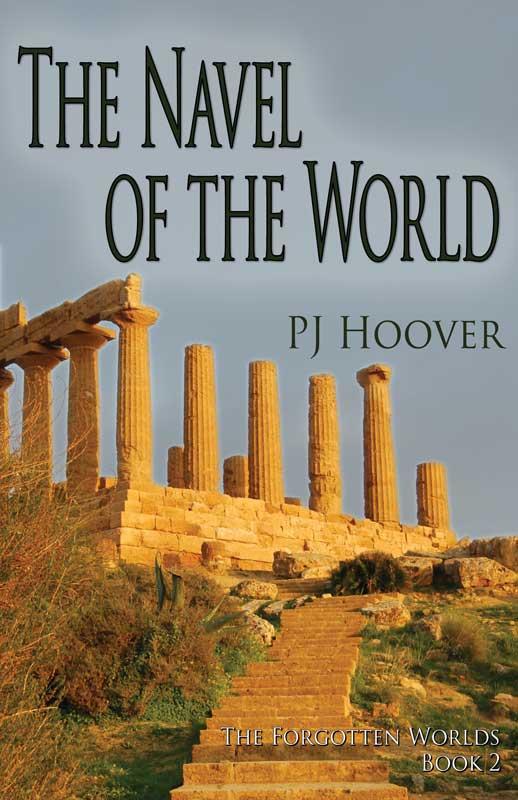
PJ Hoover is the author of The Forgotten Worlds Trilogy, a fun fantasy that takes its characters and readers into the world of Lemuria and Atlantis. The series includes The Emerald Tablet, The Navel of the World, and The Necropolis. (The last book will be released Fall, 2010.)          

PJ is also a wonderful blogger, with a positive energy that always warms and cheers me when I read her posts.


I asked PJ a few questions about her experience critiquing and how her critique group works. Read on for some great information. 

BL: Can you give us a brief description of your critique group (online or in person, how many members, what they’re writing, how you found the group, how long you’ve been together)?

PJH: Sure! My current critique group is more a group of online on-demand beta readers. I was previously part of a more formal critique group (20 pages each once a month, 8 members), but a few of us formed a side group to critique extra stuff like full manuscripts. I also contacted a few bloggers whose book reviews I was terribly impressed with to see if they would want to join. They did, and we soon found a nice solid group. Eventually, I dropped from the formal group to focus on the side group. So as for how long we’ve been together, it feels like forever, but in actuality it’s only been a year or so.

BL: Is your group genre-specific or do the members write in various genres? What do you think are the benefits of the kind of group you’re in?

PJH: Our group focuses on MG and YA novels. That’s not to say we wouldn’t read something in a different genre, but thus far the request hasn’t come. The novels are all sorts from fantasy to sci-fi to romantic comedy to historical. The benefits of sticking with MG and YA novels are that we are critiquing the genre we’re all writing in and thus get the added expertise of being familiar with the market while still seeing a variety of work.

BL: What’s the hardest part of being in a critique group, for you? What makes that part worthwhile?

PJH: There’s nothing hard about my current group J I’d say the hardest things in the past groups I’ve been in have ranged from personality conflicts to how long it takes to get through a manuscript. I’m not sure there is anything worthwhile about personality conflicts. I want to have my critique partners for the long haul, so making sure I’m working with people I respect and enjoy talking with is an enormous requirement for me.

BL: If a writer’s goal is publication, do you think participating in a critique group can help the writer toward that goal? How?

PJH: Yes! First off, getting work critiqued really helps us see our work more objectively. It’s so much easier for other people to see what needs to be improved in our work, and their critiques help us see this, too. In addition, critique groups are a fabulous source for networking and support. I consider my critique partners my friends and feel I could count on them for most anything.

BL: What was the biggest surprise for you, about critique groups or the critique process, when you first started participating in a group?

PJH: The biggest surprise to me has been how everyone sees things differently and how getting a variety of opinions can really give us a nice rounded picture of what needs to be improved in our work. Some critiquers may focus on plot while others may focus on character. And seeing as how both are important, getting that variety of opinions becomes essential.

Please answer the next questions quickly, without too much thinking time. 🙂

BL: Do you critique with: Red pen or NOT-red pen?

PJH: Highlighter

BL: Favorite critiquing drink: Tea, coffee, or diet soda?

PJH: COFFEE

BL: Do you prefer: Critiquing or being critiqued?

PJH: Being Critiqued

BL: Who would you rather have run the house while you write/critique? Jeeves or Alice from The Brady Bunch?

PJH: Alice—she did everything,

BL: Name one book that has blown you away in the last year.

PJH: Life As We Knew It, by Susan Beth Pfeffer

PJH: Thanks so much, Becky!

BL: Thanks to you, PJ!

Posted in Critique Groups, Critiquing

D is for Discussion

Life’s changing a bit around the old critique group lately. We added a new member lately, someone we’ve all known for years, but who we hadn’t gotten into the “formal” critique relationship with yet. May I just say that it’s going swimmingly.

Something’s happened since she’s joined us. I don’t know if it was just timing, or whether her coming along with her wonderful manuscript has sort of kicked us all in the you-know-what. Whatever the cause, at our last meeting, we all needed a chunk of time for critiquing or brainstorming.

And it was wonderful.

I hear writers worry about what will happen if everyone gets productive at the same time, how they’ll get all the critiquing done, whether they’ll be able to fit their critiques into the normal meeting time. And I don’t want to dismiss these worries. We probably had a total of something close to 100 pages, plus some plotting-thinking time scheduled in. We actually talked emailed ahead of time and agreed to add an extra half hour to the meeting. We also all walked in, got our hot drinks, sat down, and dug in. Because we wanted to fit everyone & everything in. We like this writing productivity, and we want to support it all we can.

Because here’s what happens. One of us starts out and reads our overall critique. The next one follows, and then the third. While each of us is reading, we’re pretty darned good about not interrupting, but if we get a real lightbulb moment, we politely ask for a moment and explain the thought. At the end, when we’ve gone around, the writer asks questions, throws out things she’s been thinking about, and we all chime in. And the individual critiques turn into a full-blown, multi-dimensional discussion. A conversation. A magical mix of back-and-forth interaction that creates its own set of new ideas.

Yes, critique time can cut into writing time. Yes, a group needs to be careful that everybody still feels like they’re making serious progress with their own work. But almost always, I find that the extra energy I put into reading pages and thinking deeply about them more than pays itself back with creativity, imagination, and an extra stimulation to run back & dig into my WIP again.

Try not to put too many limits on submissions in your group. Respect the amount of work everyone can do, but stay flexible and open to what a little extra work will bring you.

Posted in Critique Groups, Critiquing, Guest Blogger

Guest Post: Dawn Simon on Evolving with a Critique Group

This month, I’m starting a new feature at my blog. I’m invited writers to come and post about their critique stories. When I happened to see Dawn Simon mention at her blog, Plotting and Scheming, that she wanted to post sometime about evolving with her critique group, I quickly sent her a note, asking if she’d like to do that here. She very nicely agreed to do so, and to be my first guest poster about critiquing. (If you’d like to share your critique experiences at my blog, or be interviewed about your critique group, send me a note at beckylevine at ymail dot com!)

Read down for Dawn’s post, including a wonderful photo of her critique group! And don’t miss her wonderful reference to a writer’s “bunny trails.”

Dawn Simon swears that no more than five percent of her writing energy comes from the caffeine in Frappuccinos. She is a member of SCBWI and the Pacific Northwest Writers Association, and she has also been actively involved with Field’s End, a local writers’ community. Her manuscript PERFECT VISION was a finalist in the young adult category of the 2009 PNWA Literary Contest. She thinks kids are some of the coolest people, which explains her elementary teaching degree and her undying quest to write for teens. In addition to writing YA, she loves reading it, and she dreams of seeing her own books published someday. Soon.

Becky invited me to do a guest post here because of something I’d said at my blog when I’d touched on my own evolution in my critique group. The idea interested her so she flew me out first class so I could be here with you guys today! Okay, that’s a total lie—everything was done via email. This is my first time doing a guest post, so I’m all excited and acting immature about the whole thing. I’ll settle down now and get to my topic: My Evolution in Critique Group.

I’m fortunate to be in an author-led critique group with author Sheila Roberts at the helm. When we first came together, most of us had recently taken a class taught by Sheila. In the class, she’d given us weekly lessons as well as critiques on the first three chapters of our works in progress. Knowing we had a good thing going, we asked Sheila to take us beyond the first three chapters and lead us in a critique group. Lucky us—she agreed!

(Below–Dawn’s Group. Front Row, L to R: Sheila Roberts, Sarah Shepard. Back Row, L to R: Bev Young, Martha Schoemaker, and Dawn Simon.)

Since I knew everyone from one writing class or another, sharing my work for the first time wasn’t as scary as it could have been. I already had a completed manuscript, and I’d bring one chapter a week. In my mind, this was the “right” way for me to be in a critique group. I knew it might not be the right way for everyone, but it was for me.

When I read Stephen King’s ON WRITING, I totally related to his philosophy about writing the first draft with the door closed. Besides, I needed to know the first draft was all me. I imagined I’d see the novel as less of an accomplishment or that it somehow wouldn’t be as true to what was in my own mind and heart if I received input before I had a completed draft. I was open to revision. I just first needed this draft to exist.

Once I received feedback from Sheila, my other critique group members, and faculty members at conference manuscript consultations, my manuscript became better and tighter. Having Sheila was my biggest asset because she helped me apply what I’d learned in classes to my own work. The continuity was priceless.

It was a little more frightening when I started turning in chapters for a book that wasn’t already written. The other three ladies had been writing this way all along, but it was so new to me. By this point, we’d been together a while, our editing skills had improved, and critique group already felt like the safe place it was. But turning in chapters as I wrote them was different. It made me feel a little more vulnerable, like I was leading people I respected down an unknown path rather than walking them home the safe way.

Once things got rolling, I saw the benefits. I used to be prone to bunny trails: taking off in another direction, getting sidetracked with things I, as a novice writer, thought might be interesting to a reader or add color to my work. Turning in work as I went meant Sheila and the other ladies could cut me off before I wandered. This saved me time and, I think, trained me to focus.

An even bigger benefit was having the opportunity to discuss my ideas on a weekly basis, ideas that were on pages being handed in that week or that maybe hadn’t even been written yet. Another time saver. Plus, I felt less married to my original ideas. My new method was making me a better, more efficient writer.

* * *

Nowadays, I no longer think twice about turning in pages as I go. And since I’ve grown so much as a writer, my weekly chapters are way better than they used to be, even when I handed in pages from a completed manuscript. Trust makes this possible, and I think it’s an essential ingredient for a successful critique group. Also, there’s a comfort that comes with being together so long. It’s kind of like family that way. Knowing that the other people in my critique group are fully aware of my abilities (and vice versa) allows me to take chances. I can stretch myself, attempting to create something better or crash and burn trying without the fear of being judged.

There isn’t one right way to be in a critique group. Different things work for different people. I doubt Stephen King would disagree. I think the goal is to find the best way each of us works and to keep our minds open to ideas that can help us improve individually as writers.

Posted in Critique Groups, Critiquing, First Drafts, The Writing Path

Getting a 1st Draft Critiqued…Yes or No?

And of course, my answer is…it depends.

PJ Hoover, author of The Emerald Tablet, had this to say about her first drafts. It sounded very familiar, and it got me thinking.

I’m working on the first draft for my WIP and know, very firmly, that no eyes but mine shall see the actual words. I’ve finally realized that I have so much to figure out & understand about this story, that the draft is truly exploratory only. I chose this path, also, on my last book–the middle-grade mystery. That was the first draft I wrote via Book in a Week, the system I heard about from April Kihlstrom, and I was able to dive right into the second draft, with a lot more structure and a more active hero, and pass those chapters onto my critique group. At this point on my writing path, I’m just more aware of how rough these early stages truly are, and I have more confidence in my ability to do some of my own work with this mud clay I’m trying to shape.

For years, though, in my earlier writing and critiquing days, I did submit first-draft chapters to my critique group. There are days when I really miss doing things that way. And I think, depending on the writer, there are definite pluses to this kind of sharing.

  • You are not writing in a vacuum.
    When you are writing a first draft, it’s just you and the computer. While this can help you keep a flow going, it can also leave you with plenty of doubts and worries about the progress you’re making. Okay, the computer isn’t going to tell you that your plot line (what plot line?) is weak or that you’re wrong about how a circus tent smells. But neither is that computer going to reach out and give you a pat on the back, tell you that a character is getting interesting, or hand you some dark chocolate for getting all the way to Chapter 10. The support of a critique group can be just the encouragement a writer needs to…keep writing.
  • You have a “soft” deadline.
    A meeting every two weeks can be a great motivator. Sure, if a group’s critique schedule is too strongly enforced, that schedule can translate into nothing but pressure, which–if you’re like me–is about the greatest shut-down device ever invented. In a good group, though, a meeting on the calendar can be a reminder that you’re in this group because you want to write. Because you want to get some pages out. Two chapters a month for a year adds up to 24 chapters. Sounds like a first draft to me.
  • You may get some fodder for that learning curve.
    In a first draft, you think while you write. Well, there’s nothing to say that a few other people thinking about that writing has to be a bad thing. Yes, your critiquers must remember (and they will, because you’ll remind them!) that this is a FIRST draft. They need NOT to be marking commas or rewriting your description of the Cannes Film Festival that they just happened to visit last month. They can, however, talk to you about that hero you’re developing and make suggestions about his or her strengths and flaws. They can point out the places where you’ve written tension to make them crawl out of their skins and the places where…you haven’t. You can look at this comparison with pieces of your own work and start to grow a skill.

Obviously, when you’re writing and when you’re critiquing, you need to make the decision about what stage is right for you to share your work. You need to recognize whether a critique will frighten you off from your own story, stalling you out, or whether it will help you give weight and value to that story, providing a supportive audience that is not the black hole of your CPU. You need to be very careful about going back and revising too much from this early feedback, rather than using it to propel you forward.

However, I hear a lot of authors saying, however, never to show a first draft, never to get it critiqued.

And I say, well…never say “never.” Sometimes, it’s more than a little okay to say “yes.”

Posted in Contest, Critiquing, Memoir

Wednesday’s Winner…& a Memoir Teleseminar

Last week, I interviewed Laura Purdie Salas about the marketing she did for her picture book Stampede! Poems to Celebrate the Wild Side of School. I entered everybody who left a comment in a contest for Laura’s book. This morning, I crumpled up all the little pieces of paper and picked one out of the bowl.

And the winner is…JENNIFER BEASLEY!!!!!

Congratulations, Jennifer. Email me your snail mail address at beckylevine at ymail dot com, and I’ll get this wonderful book out to you ASAP.

And a heads up for any of you who are writing, or thinking about writing, a memoir. A week from Friday, I’ll be doing a teleseminar with Linda Joy Myers about critiquing memoir, over at the National Association of Memoir Writers (NAMW). You’ll find details here about getting in on the teleseminar.

Hope everyone’s writing week is going well!