Posted in Friday Five

Friday Five: Spring’s on its Way

I’ve been whining a bit lately about how all the early pollen around here is hitting my allergies hard. It hasn’t been that cold a winter for us, so I’m not in a super rush for the heat. And if you’ve read my blog for a while, or know me, you’ll know I’m not a gardener (Actually, imagine the furthest opposite possible from a gardener—that’s me!), so I’m not waiting for my flowers to bloom or my fruit trees to…fruit.

Anyway, all this seems fairly petty and narrow-minded when so many people are up to their eaves in snow. So, in celebration of Spring and in happy anticipation of the season, here are five things I like about spring.

1. Shorts and bare feet.

2. Scotch broom. I know–Scotch broom is one of the worst contributors to my allergies. I know—it’s not a native plant and it’s taken over. I know—I supposedly don’t care about flowers blooming. But there’s something about driving up our little road, lined with all this bright yellow, that’s just seriously cheerful.

3. Warm patches in the house where sunlight has streamed through the window and heated up the floor just enough.

4. The pull to put on my running shoes and head out for a slow, gentle jog on the creek trail.

5. The occasional madly-peeping, so-tiny-as-to-be-invisible frog (toad?) going at it outside a window.

All this is coming, and-yes-it makes the itchy eyes worth it. Hang on, everybody, the snow has to melt, and the skies have to clear. And with all this Winter wet, it’s going to be some kind of Spring!

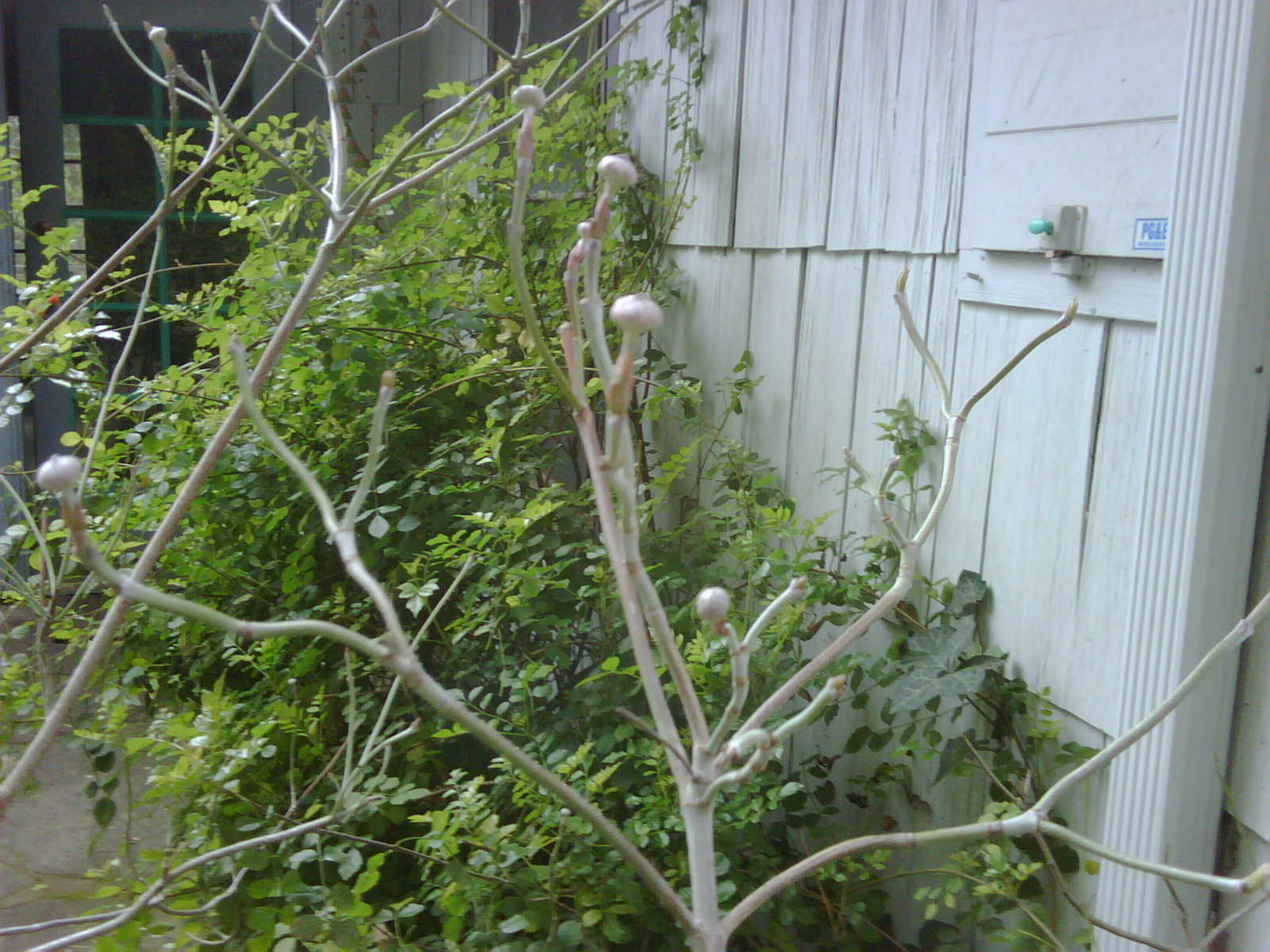
And just for a little, uplifting proof…this is our dogwood:

I know, it looks nothing like dogwoods back east, but this is what we get in California! Pretty bare, right?

Look closer. Yep, in a few weeks those buds will be little white flowers, and the rest of the branches will be covered in green leaves. Really!

Posted in Critique Groups, Critiquing, Uncategorized

Critique Groups: The Case (Okay, MY Case) for Reading Ahead

When I started writing The Writing & Critique Group Survival Guide, I knew I wanted to include some of the basics about how to actually run a strong group—the mechanics of it. If you’ve read my blog for a while, or if you know me in person, you may have figured out that I have some strong opinions. As much as I worked to achieve balance, I’m sure some of that shows up in the book.

Let’s just be nice to me for today, and call that voice. 🙂

Anyway, one of the steps I write about in The Survival Guide is critiquing a manuscript before the actual critique meeting. As I researched the book, and as I talked to more and more writers about their groups, I realized that many groups don’t do this. And most, if not all of those groups, are filled with happy critique partners who make progress with their manuscripts and grow their writing skills. Some groups just started out that way and have continued the pattern; others have thought things out and, because of busy lives and crowded schedules, need to contain their critiquing time to the hours alloted to the group’s meetings. “Extra” hours in the week need to be for writing. This all makes sense.

Still…

I’d like to make my case today for doing it the other way.

Here’s what I think you gain by reading submissions and preparing critiques ahead of time.

  • Time. Yes, it’s a trade-off; if you don’t use meeting time to read the submissions, you’ve got to find those minutes (hours!) some other place in your week. However, you get to spend more of the meeting time presenting those critiques to authors, brainstorming stories, and having idea-sparking discussions. Also, I’m a big advocate of writing up a thorough, detailed overview critique, and this is much harder to fit into the limited time you have at a meeting.
  • Focus. When you’re sharing a table with other critiquers, all shuffling pages and scribbling away, it can be awfully distracting.  I know many groups have someone read the piece out loud, often the author, but–again–I think it’s harder to look closely at the work when it’s being read to you. As someone pointed out once, a strong reader can make anything sound pretty good!
  • Depth. A strong critique takes thought. I know there are many readers who have great insight to a story as they read and who are capable of putting together helpful feedback quickly. I believe, though, that we can all do a better job of that if we have the leisure to sit with what we’re reading, to turn back pages and remind ourselves of what has come before, to look carefully for examples of strengths nad weaknesses in the text, to contemplate the best way to present an idea. If you’re trying to get in two or three reading and critiquing sessions during a meeting, I think that cuts short how much constructive feedback you can develop.
  • Simmering. I’m not sure what else to call this one, but it’s today’s word for that kind of thinking we all do after we’re finished reading a manuscript, or even a published book. The story or the characters or the theme stay with us after we turn the last page, and thoughts & ideas come to us in the hours and days afterward—as we cook dinner, while we take a shower, or—as one of my critique partner says—in the car on the way to the meeting. A critique improves with age, with a gap between the process of developing feedback and the act of delivering it.

Okay. There you have it. I’ve piled my arguments on one side of the scale. If you’re in a group that does it differently, try and look at this as a critique itself. Don’t dismiss my feedback out of hand. Take some time and think about it, bounce the idea around in your head for a while. If it sounds good, see what your group thinks–maybe they’ve all been wondering how to get a bit more time at the meetings, or maybe someone’s been feeling rushed trying to read as fast as everybody else.

And see what you think. 🙂

Posted in Picture Books, Revision

What’s Harder about Picture Books—#4,385

Okay, maybe I should have said “different” in the post title, instead of “harder.” As I work through my first picture-book attempt, I’m finding lots of things that do just qualify as different, and some that are actually easier than, oh, say, a historical novel. Did someone say *cough*, “Research?”

This week, though, I’m heading into some more revision, and I had a lightbulb moment about what exactly I’ve been struggling with.

When I revise a novel, I work in threads. Or chunks. Or arcs…however you want to describe it. Basically, if I know that a character’s arc isn’t strong enough, I’ll follow her story all the way through the book, tweaking her interactions with other characters, amping up her responses to events, making connections tighter and layers deeper. Or if I drop a new plot point in toward the end of the book, I go through and plant seeds for that point in earlier chapters, making sure (hopefully!) that they mesh well with the rest of the story. The nice thing about this is that it lets me pay attention to something specific and not bounce around as randomly as I would if I were just revising page-by-page with whatever I noticed not working.

The other nice thing is that I can spend some time around each of these threads. As I work, I do notice other things to play with on another revision pass, and I spend more time with my characters, themes, and voice–getting to know them all that much better. It’s not a fast process, but I think the hours are valuable and add to the quality of my project.

Here’s the thing about a picture book. Each “thread” has maybe a dozen sentences to it.  Even if I stare at each of those sentences and think (a la Winnie-the-Pooh) really hard about them, I’m not getting hours worth of revising time for any of them. I realized this was a problem, when I’d tried to revise about a half-page of text and hit overwhelmed. Because…yeah, I was trying to revise three character threads at once.         

I can’t DO that.

So, this week, I’ll be taking it a thread at a time. Which may sound easier, and–in terms of keeping my brain INSIDE my skull, will be. In terms of letting me dig into my story, though, really immerse myself in the characters and plot, I’m just not sure. Even if each revision thread goes quickly, I’m not sure that I can shift onto another and another that quickly. Still…if I spend a half hour or hour per thread each day, I should have another solid revision done by the end of the week, and that’s a goal I can live with.

How do you revise? And does it vary for you depending on the length (or other quality) of the manuscript?

Posted in Uncategorized

Friday Five: A Few from My First Playlist

Okay, I admit it. For the past year or so, when I saw other bloggers talking about the playlists, I was jealous. And maybe even a little cranky–with that I-don’t-get-it, out-of-the-loop feeling. I’ve never been able to write to music with lyrics, so I usually ended up putting on some classical music that I don’t REALLY like, or borrowing a few songs from my husband’s Pat Metheny collection. My favorite writing songs have been those of The McGarrigle Sisters, because–yes, there are lyrics, but they really blend with the music, and–you know–a lot of them are in French.

None of these pieces have been working for my WIP. I tried a few different things, including some Klezmer music, but hadn’t really hit the nail on the head. So I played around on Pandora a bit, and I realized I was suddenly writing to music. To strong music, with a nice, hard rock or blues beat in the background, and a powerful woman’s voice singing along. Think Cyndy Lauper. Somehow, this stuff is either connecting with my MC or–and I think this is actually it–pushing me out of my everyday self, to get closer to the voice my MC wants.

So, for today, five songs from my Caro’s Playlist:

1. Bury My Heart at Wounded Knee—Indigo Girls redo of Buffy Sainte-Marie song

2. You’re Aging Well—Dar Williams with a little Joan Baez thrown in

3. Sisters are Doin’ it for Themselves—Eurythmics

4. Message to Myself—Melissa Etheridge

5. Walk Your Walk—Deborah Coleman

If I were techy enough, I’d figure out how to link you all to the songs to get your morning revved up, but you’ll have to google them! The list will keep growing, I know, and will get stronger and stronger along with my MC.

And I won’t feel jealous anymore! 🙂

Posted in Getting Organized, Writing Goals

Don’t Drop that Chainsaw; Put it Gently Away for a While

My husband has this analogy (metaphor?) he uses frequently—juggling cats and chainsaws. I think, to him, this activity actually sounds like fun. To me, it’s just a great image for those days when you feel like you not only have too many balls in the air at once, but that most of them have claws and teeth, motorized and otherwise.

Yes, you do know the days I’m talking about.

It’s so easy, maybe too easy, to keep adding things to our calendars. To our lives. Books to read. Movies to see. Workshops to take. Fun trips with our families or friends. Writing projects.

Writing projects we really want to do.

And pretty soon, we’ve got chainsaws flying, along with a Siamese, a Tabby, and a Manx we sure hope started out without that tail. We only have two hands, but the sky is filled with a half-dozen felines, way too many bright-yellow power tools, and…watch out for that electrical cord!

The other morning (aka the wee hours of the night, just past midnight), I took one of those chainsaws from my list and turned it off. It was a project that, I hoped, was going to get me started on a new learning curve. As I lay awake, I had one of those moment of clarity that you really wish came to you at noon, or even dinnertime, but never do. I said to myself, “Oh, yes. And when, exactly, do you have time, right now, for a learning curve?” You can guess what I answered.

I didn’t lock the chainsaw away. I just wound up its cord neatly and tucked the whole thing into its plastic case, then latched it shut. And I put it on the shelf. Not too high–I can reach it easily. And those latches are so lightweight; I can flip them open any time I want.

Just not, you know, this month.

Guess what? I went back to sleep. Was there disappointment? Sure, a little. Was there relief? Oh, you bet. Because, by taking one of my chainsaws out of the air, I get to keep the others running and save all those kitties that I love so much. Nothing’s going to come crashing down around me, nothing’s going to hit me on the head, and nobody else is going to lose a tail.

What about you? Are you juggling just fine, catching flaming torches easily between your teeth? Or is there one item you want to take a second look at, catch it gently and see if maybe, just for a while, it doesn’t belong in your routine? We each run in our own personal circuses, and I toast your act—whether it’s tossing two beanbags back and forth, or catching swords as you ride bareback on a pink-feathered horse.

Just, if you’re waking up too many hours before dawn, consider sliding one of those swords into its scabbard. 🙂

Posted in Character

Valentine’s Day: Why I Love My Main Character

I got back into writing a new scene for my WIP this week, and fell in love all over again with my MC. For a quick, semi-random Valentine’s Day post, here’s why:

1. She is totally antsy. If she isn’t doing something, she’s not happy–she gets impatient and frustrated and just starts looking for something to dig into. This is SO different from me–I’m just happy finding another book to read. 🙂

2. She has power. She takes steps to be in charge of her own life and, frankly, she’s not against being in charge of other people’s lives, if she thinks they need her. She acts.

4. She’s smart. Probably academics-smart, too, but in the important way–clever. She can see what needs to be done and find a way to do it, even if she has to be sneakily cunning to get there. I LOVE her being sneaky.

4. She loves busy-ness and energy and crowds and noise. Again, me–I’d rather just curl up away from it all, with that book.

5. She loves her family. She wants to take care of them. She’s going to have to learn to take care of herself, though.

6. She’s got some BIG control issues. So does her mother. Can you just see the crash coming?

7. Most of all, what I love about her this week? Well, I’ve found that the best way for me to write a scene these days is to identify my MC’s goal and then look for obstacles to that goal. Well, she has such definite goals, that the obstacles are just popping out at me–in fact, she creates a good many of them herself. Does she back away from those obstacles? No, she does not. She’s strong, and she’s a fighter.

Little does she know how big the fight is going to get.

Are you in love with your MC? Why? Let’s hear what makes this Valentine’s Day special for you and your characters.

Posted in Research

Friday Five: What I Learned at the Library

Let’s go back a few years. Okay, a few decades, to the last time I did any substantive research at a library. Let’s call that year, oh…1985. University of Virginia. A beautiful library.

With card catalogs and books.

Basically, you looked through the catalog and then you went and looked through the book. I vaguely remember that they did have computers, and you could find and get a copy of a journal article or two, but I honestly can’t remember if I did that myself, or if those computers were only for the librarians to get into.

The basic thing I’m saying here is that your resources were limited. It didn’t feel that way, it felt wonderful and exciting and like you were going down multiple paths to find out about your chosen subject.

Ha. 

The “me” that was doing research then had no clue about how many paths there were, or how far the spider webs of connective research could spread. Because, you know, the Internet was just a gleam in some ten-year-old’s eye back then. That’s just one of the many things I learned on my trip to San Jose’s Martin Luther King library this week. Here are a few others.

1. You are now allowed to bring food and drink into a library. Really! They even have a little cafe down on the first floor where you can buy it. Some floors only allow the drink, but, where I was working, it was all good.  And Numi Green Tea and a Cool Mint cliff bar make research a much happier thing.

2. Librarians are saints. Definitely. Here’s the thing, though–They’re really good at this research stuff. And they make it look pretty darned easy. Um…not. My best recommendation to you–if you sit down at the computer, and what you thought they told you to do just doesn’t work like it did for them, go back and ask for more help. If you can’t email or save the file you thought you’d be able to, go back and ask for more help. If you don’t know how to even start finding the books and articles on that list of autobiographies by women doctors, go back and…well, you get the point. Because they’ll keep helping you! Nicely. With smiles. And not an ounce of that “Are you an idiot, or what?” tone you’re so afraid of hearing.

3. You don’t need to bring any coins for the copy machine. I didn’t even see a copy machine. And you may very well not have to worry about paying for printed copies. You just…are you ready? EMAIL everything to yourself! (Okay, well, you go back and ask for help emailing everything to yourself!)

4. Libraries are still quiet, but they’re not painfully quiet, anymore. Remember, you already have sipping and munching noises. And you have the faint click of lots of people texting on their phones (yes, me, too). You even have a few faint voices of people *gasp* TALKING on their phones. Now I did venture up to the top floor to look for a few books, and that floor was labeled as a quiet zone, and it was…very quiet. But, you know, the quiet zone used to be the whole library.

5. This last thing I learned may be more about me than about the library, although they’re tied together. There is, for me, a quality of research I’ll call TMI. Yes, Too Much Information. I don’t know if my brain is hard-wired this way, or if it just needs to be stretched and retrained out of those card-catalog-to-book limits, but my synapses do not go happily along all the possibilities the Internet and Intranet offer. My visit felt a little bit like the computer was asking me over and over, with increasing impatience, “Is this what you need? Is this what you need?” And all I could say back was “I don’t know. I don’t know.”

There’s a tie-in here, somewhere, with the introvert-extravert definitions at Shrinking Violet Promotions (where an introvert may or may not be shy, but does get an energy-recharge from alone time; an extrovert gets that same research from interacting with other people). My visit to the library was not a recharge experience.

I’m not positive, but I think I found some resources that will help me with my story. I feel like I just dipped into things, and only the next couple of weeks of downloading and reading will tell me if I skimmed any gold off that surface. I’ll need to go back to the library, and I will go. I’m pretty sure I’ll get better at this each time I go.

But only, you know, because of #2.  🙂

Posted in Critique Groups, Critiquing, Guest Blogger, Uncategorized

Guest Interview: PJ Hoover on Critiquing

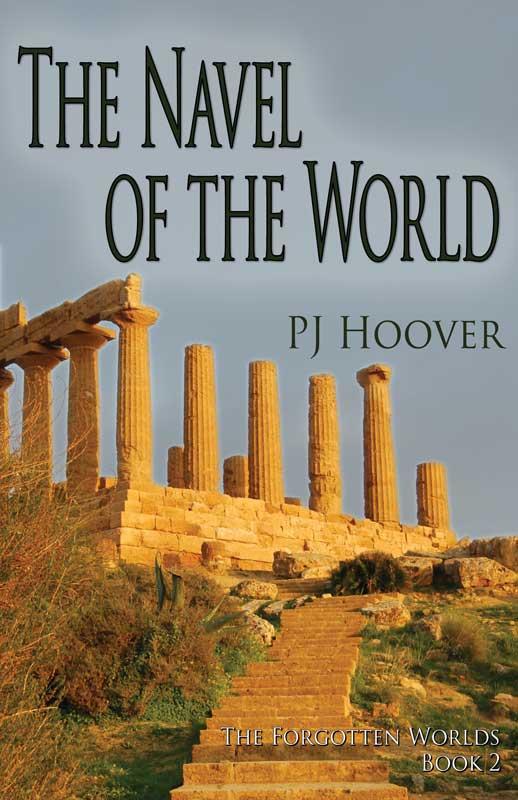
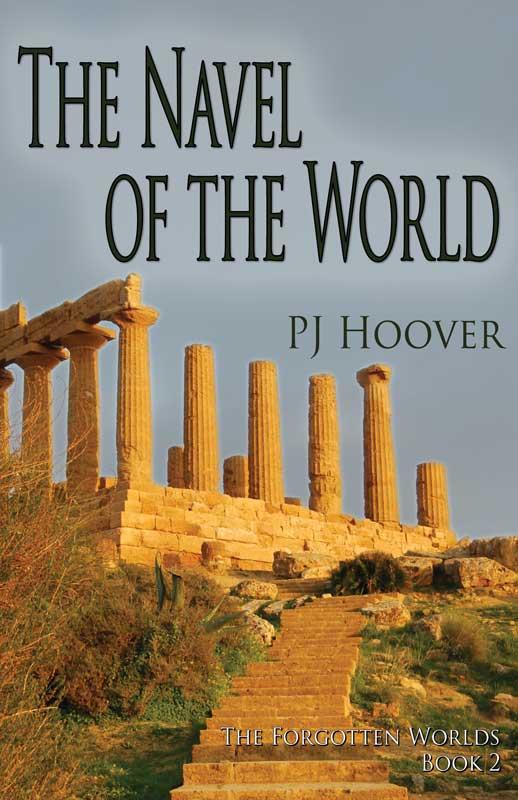
PJ Hoover is the author of The Forgotten Worlds Trilogy, a fun fantasy that takes its characters and readers into the world of Lemuria and Atlantis. The series includes The Emerald Tablet, The Navel of the World, and The Necropolis. (The last book will be released Fall, 2010.)          

PJ is also a wonderful blogger, with a positive energy that always warms and cheers me when I read her posts.


I asked PJ a few questions about her experience critiquing and how her critique group works. Read on for some great information. 

BL: Can you give us a brief description of your critique group (online or in person, how many members, what they’re writing, how you found the group, how long you’ve been together)?

PJH: Sure! My current critique group is more a group of online on-demand beta readers. I was previously part of a more formal critique group (20 pages each once a month, 8 members), but a few of us formed a side group to critique extra stuff like full manuscripts. I also contacted a few bloggers whose book reviews I was terribly impressed with to see if they would want to join. They did, and we soon found a nice solid group. Eventually, I dropped from the formal group to focus on the side group. So as for how long we’ve been together, it feels like forever, but in actuality it’s only been a year or so.

BL: Is your group genre-specific or do the members write in various genres? What do you think are the benefits of the kind of group you’re in?

PJH: Our group focuses on MG and YA novels. That’s not to say we wouldn’t read something in a different genre, but thus far the request hasn’t come. The novels are all sorts from fantasy to sci-fi to romantic comedy to historical. The benefits of sticking with MG and YA novels are that we are critiquing the genre we’re all writing in and thus get the added expertise of being familiar with the market while still seeing a variety of work.

BL: What’s the hardest part of being in a critique group, for you? What makes that part worthwhile?

PJH: There’s nothing hard about my current group J I’d say the hardest things in the past groups I’ve been in have ranged from personality conflicts to how long it takes to get through a manuscript. I’m not sure there is anything worthwhile about personality conflicts. I want to have my critique partners for the long haul, so making sure I’m working with people I respect and enjoy talking with is an enormous requirement for me.

BL: If a writer’s goal is publication, do you think participating in a critique group can help the writer toward that goal? How?

PJH: Yes! First off, getting work critiqued really helps us see our work more objectively. It’s so much easier for other people to see what needs to be improved in our work, and their critiques help us see this, too. In addition, critique groups are a fabulous source for networking and support. I consider my critique partners my friends and feel I could count on them for most anything.

BL: What was the biggest surprise for you, about critique groups or the critique process, when you first started participating in a group?

PJH: The biggest surprise to me has been how everyone sees things differently and how getting a variety of opinions can really give us a nice rounded picture of what needs to be improved in our work. Some critiquers may focus on plot while others may focus on character. And seeing as how both are important, getting that variety of opinions becomes essential.

Please answer the next questions quickly, without too much thinking time. 🙂

BL: Do you critique with: Red pen or NOT-red pen?

PJH: Highlighter

BL: Favorite critiquing drink: Tea, coffee, or diet soda?

PJH: COFFEE

BL: Do you prefer: Critiquing or being critiqued?

PJH: Being Critiqued

BL: Who would you rather have run the house while you write/critique? Jeeves or Alice from The Brady Bunch?

PJH: Alice—she did everything,

BL: Name one book that has blown you away in the last year.

PJH: Life As We Knew It, by Susan Beth Pfeffer

PJH: Thanks so much, Becky!

BL: Thanks to you, PJ!

Posted in Research, Uncategorized

True Confessions: When Research Gets Scary

Remember this photo?

I posted it sometime last year (?) to show how big my stack of research books was getting. Of course, that stack has grown since then, and let’s not even count the books that have come home from and gone back to the libraries.

I find research at once exciting, inspiring, and frustrating. I read so many pages, and–lots of times–I just find myself diving into the world my characters live in. I discover facts that make story connections leap into my brain, read about social and cultural trends that unfold personality layers and conflicts, and find beautiful little details that I can use for setting and atmosphere.

Other times, I can’t find what I want.

That’s what last week was like. I spent way too much time on the Internet, obviously googling all the WRONG terms. I browsed online, trying to find the right books to enlighten me. Can you say dead end? Picture Wile E. Coyote painting the “tunnel” on the rock, the Roadrunner zipping through, and Wile crashing absolutely into the stone. Yep.

So…I’m going to the library on Tuesday. My wonderful bookmobile librarian has helped me figure out that some of the stuff I need is at the San Jose State University library, which I can actually get access to with my San Jose REGULAR library card (they’re connected somehow, by one of those magic, wand-waving library affiliations). And she’s told me, kindly, but firmly, that I need to go there.

Now, I like libraries. I LOVE libraries. When I was little, my sisters and I were just like the kids in Edward Eager’s books, checking out our 10 books from the library, per week, and sharing them around so we’d have (wait, let me do the math) 30 books each to read. My school librarians were always friends, because, you know–they didn’t have to do an ounce of work to get me to read. (Although I do wonder what my 4th-6th grade librarian thought of me checking out Thomas Mann’s The Magic Mountain multiple times during those years. Secret? I thought it was a fantasy novel, but it was SO big, I never cracked the cover to find out the truth!) Libraries are cozy, warm, and–let’s face it–smell like paper and ink.

But library research? Um, not so much. I’ve done my share. In 10th grade, I wrote my nonfiction research paper about fairies (yes, really), and you can imagine that  took a bit of digging. I did my master’s orals on the Brontës and my thesis on Wuthering Heights. More digging.

I don’t [Insert appropriately whiny tone here.] like it, though. I find it…overwhelming. It’s like trying to solve an Agatha Christie mystery, without any assurance that Poirot will actually tell you what happened at the end. One reference leads to another, leads to another, leads to…you get the point. And even if you DO find the actual document you want, it won’t necessarily be a lovely memoir or well-written history book. It might be…an academic article! Or an original source that’s filled with numbers and statistics and data, all in someone’s charmingly scribbly, totally illegible cursive.

I know, you’re thinking…well, why the heck is she writing historical fiction. Oh, because this silly girl came to me, as I was reading about the 1913 Suffragist march on Washington, DC, and said, “I want to be at that march. I need to be at that march!” And now I’m in love with that girl, totally stuck with the belief that she’s right.

Which means, yes, I need to be at that library. I’m listening to all of you historical-fiction and history writers (Yes, you know who you are–stop looking over your shoulders to see if I’m talking to someone else!), and I’m going to put my worries in the hands of a librarian. I’ve blocked out all of school hours on Tuesday, and I’m driving to downtown San Jose, and I’ll have my notebook and my pencils and my questions and my open mind, and I’m going to put myself in the hands of a kind, supportive, technically-savvy librarian.

And, hopefully…

that painted black spot on the rock face will turn into a real tunnel for me, and I’ll come out the other side, with the details and atmosphere I need.  Wish me luck!
Posted in Critique Groups, Critiquing

D is for Discussion

Life’s changing a bit around the old critique group lately. We added a new member lately, someone we’ve all known for years, but who we hadn’t gotten into the “formal” critique relationship with yet. May I just say that it’s going swimmingly.

Something’s happened since she’s joined us. I don’t know if it was just timing, or whether her coming along with her wonderful manuscript has sort of kicked us all in the you-know-what. Whatever the cause, at our last meeting, we all needed a chunk of time for critiquing or brainstorming.

And it was wonderful.

I hear writers worry about what will happen if everyone gets productive at the same time, how they’ll get all the critiquing done, whether they’ll be able to fit their critiques into the normal meeting time. And I don’t want to dismiss these worries. We probably had a total of something close to 100 pages, plus some plotting-thinking time scheduled in. We actually talked emailed ahead of time and agreed to add an extra half hour to the meeting. We also all walked in, got our hot drinks, sat down, and dug in. Because we wanted to fit everyone & everything in. We like this writing productivity, and we want to support it all we can.

Because here’s what happens. One of us starts out and reads our overall critique. The next one follows, and then the third. While each of us is reading, we’re pretty darned good about not interrupting, but if we get a real lightbulb moment, we politely ask for a moment and explain the thought. At the end, when we’ve gone around, the writer asks questions, throws out things she’s been thinking about, and we all chime in. And the individual critiques turn into a full-blown, multi-dimensional discussion. A conversation. A magical mix of back-and-forth interaction that creates its own set of new ideas.

Yes, critique time can cut into writing time. Yes, a group needs to be careful that everybody still feels like they’re making serious progress with their own work. But almost always, I find that the extra energy I put into reading pages and thinking deeply about them more than pays itself back with creativity, imagination, and an extra stimulation to run back & dig into my WIP again.

Try not to put too many limits on submissions in your group. Respect the amount of work everyone can do, but stay flexible and open to what a little extra work will bring you.