Posted in Somebody Else Says, Writing Rituals

Somebody Else Says: Writing Rituals

I hear a lot of writers talk about their rituals–the process they go through every time they sit down to write, the steps they take before they put their fingers onto the keyboard.

I’ve never set anything up like this for myself. It helps me to have a cup of tea. This is probably mostly about giving my hands something to do while my mind is (hopefully) busy thinking. And I do need music, but it doesn’t seem to be connected in any way to the particular story I’m working on. It goes more with my mood–if I need something melodic in the background or something a little noisier to get my brain actually fired up. And, yes, probably Step #1 does need to be–for all of us–Shut Down the Internet, but I’m not quite there yet.

Anyway, I scanned around & came up with some links for us all to check out. I’d love to hear your rituals, too, in the comments!

When you are ready to write, do you just sit down and dig in? Or are there specific steps that help you warm up and alert your brain that it’s time to start?

Posted in First Drafts

I Need a Metaphor

Or maybe it’s an analogy. I’m not going to dig out the dictionary or the style guide to make sure. Besides, I’m guessing most of you are just as vague and blurry on the difference as me.

I’ve been working on my first draft for two days now. I’m up to page 27 in my nifty DRAFT 1 binder, which breaks down to five very short scenes. Very short. Which may be okay. Or not.

And I keep trying to think of that exact phrase, that perfect image that will show (not tell!) what this all feels like.

I’ve been searching for this metaphor analogy metaphor for years. As an editor, I would try to explain to clients what revision is like, that you’re taking this…something and pulling it apart, ripping it into pieces, putting it back together. When I started speaking at workshops, I found myself waving my arms around in the air, trying to draw, maybe, what this…whatever looked like, and why it was such a good way to actually start creating a novel. I’ve used these not-quite-there, close-but-no-cigar descriptions:

  • It’s like a lump of clay. Except you don’t just go out and buy it; you actually have to mix everything together until you’ve created the lump.
  • It’s like making Pytt i Panna, which is actually a kind of Swedish hash, but is also the phrase my husband uses to describe when his mother cooked by pretty much pulling leftovers out of the fridge and cooking them all together in one pot. Or maybe she wasn’t that random, but he sure is.
  • It’s kind of like that sculptor (Michelangelo? DaVinci? Someone else?) who said he didn’t carve the statue; he chipped away at the rock until the statue came out. Except it’s not really like that, it’s more like actually building or growing the rock in the first place.
  • And my all-time favorite, dug deep out of the ooh-gross file: It’s the “vomit draft.” Get everything out now and worry about cleaning it up later.

As you can see, none of these is exactly poetic. (Hey, maybe it was Aristotle who made the comment about the statue!) And none of them has that seamless beauty that you get when you truly hit the nail on the head. Instead of your thumb.

So I’m coming to you all. What do you call your first draft. (Keep it clean, please!) What analogy metaphorthingamabob do you use to explain what this feels like, this process of creating the gunk out of which you hope to create something…more? Please, share your thoughts in the comments. If I use your idea at a workshop or conference, I promise to give you an attribution. Okay, it may be something like, “One of the wonderful, brilliant people who read my blog told me….,” but I will definitely admit that someone sharper than me solved this dilemma!

Posted in Bravery, First Drafts

Back on the High Dive

As a child, I was pretty much a wimp. Adventure was something to read about, not to actually participate in. Every now and then, though, something would snap inside me, and I would decide that I was going to do…X.

When I was, oh, ten or twelve, X was the act of diving off the high dive in swimming lessons. We were required to jump off, but it was our choice if we wanted to dive. For most of the week, I climbed up that ladder, walked to the end of the board, and jumped. None of this did I do happily.

And then, toward the end of the week, I decided I was going in head first. As I climbed out of the pool after the last jump and walked briskly back to the other end, I stopped at the chain-link fence separating the pool from the parents. My mom always brought a book to swimming lessons (hey, we must be related!), and I made sure that I stopped, got her to pull her nose out of it, and promise that she would watch–all without telling her what I was going to do. Then up that ladder I went again.

Keep in mind, these were the days of required swimming caps for girls, even though–in the early seventies–my pixie cut was several inches shorter than most of the boys’ hair styles. And keep in mind that, when I dove off the low-board or the edge of the pool, I would “part” the water with my hands, then pull them down to my sides.

Off the high dive, of course, I parted the air and had my arms at my sides miles before I hit the water. With my head. That had a rubber swimming cap stretched tight across it.

Say it with me…OW!!!!

Probably needless to say, that was the last time I ever dove off anything more than a few inches away from the water.

About two years ago, I wrote a complete first draft of a middle-grade mystery. Today, that mystery is complete and would love to find its way into an agent or editor’s hands. Meanwhile, what am I doing? I’m back up on the first-draft diving board. The completed novel is a long, long way down. What’s it look like from up here?

  • There’s a little extra confidence, because I’ve done this once. I believe (usually) that I can do it again.
  • There’s a little extra worry, frankly, because I also know how much work is ahead of me.
  • There is some serious excitement. In 4-6 weeks, I will have created something new. It will be a mess, I’ll probably have had my share of  tight-swimming-cap headaches along the way, and I’ll be a long way off from a swan dive. But I’ll have added a new piece to the world.

Perhaps the best part. I am liking myself a whole lot right now. I remember this feeling from walking back along the pool, from saying, “Mom!!” half a dozen times in a progressively louder voice to make sure I had a witness, from knowing that I–the wimp–was going to do something big and brave. It’s a much happier place for me than standing on the sidelines watching all the other kids dive right in.

Today, let’s celebrate our courage. What are you doing this summer that might be pushing your usual limits, just a bit? Let us know, and we’ll all clap like crazy. Well, once you’ve got your swimming cap off and have taken a couple of aspirin. 🙂

Posted in First Drafts, Plot, Scenes

Keeping an Eye on the Carrot

This week, and this weekend, I’m plotting my WIP. I’m trying to get as far as I can before Monday, when I’ve promised myself I’ll start actually writing. Here’s what I’ve been working on the past few days. I say “based,” because over the years, I’ve come to realize what categories of info I need to focus on before I write.

st01

The table is based on Martha Alderson’s Scene Tracker, which you can see in her book, Blockbuster Plots,  or her other products. Of course, this plot session comes after a lot of research, working my way through Donald Maass’ Writing the Breakout Novel Workbook, and just…thinking. This is the chart, though, that I’ll use to move myself forward (I hope!) through the first draft.

In case you can’t read the headers, I at least think about these things for each scene:

  • Where and when the scene takes place
  • The main action(s) of the scene
  • The MC’s goal–her scene goal, what she wants to accomplish then and now
  • Any obstacles to that goal and who’s putting those obstacles in the MC’s path
  • What part of the backstory I should/could weave in
    This column is new for this book, because the past plays a huge part in the present, and I’m working hard not to just dump it in, but place it, in small drips, where it really belongs.
  • The “end hook”–how I visualize the scene ending, with a pull for the readers to turn the page
    This is another new column. Partially, this is to remind me about cliff-hangers, but it also helps me think about points of high conflict for each scene.
  • Any subplots I can bring into the scene
  • Theme/MC’s Direction toward or away from her goal. Theme is Martha’s column title, and I like to keep it in, because–even if I don’t get anywhere close to plotting in my theme, the column keeps it present in my mind where, hopefully, it simmers. I’ve included, in this same column, whether–by her actions–my MC is stepping toward or away from her goal. Somehow, in my mind, this has become connected with theme. We’ll see!

I let myself be pretty loose with this–it’s almost more of a brainstorming tool than an actual plotting chart. Some of the cells get seriously tall and skinny, as I dump random possibilities and connections into them. The thing to remember, hard as it can be, is that the goal here is almost a kind of anti-perfection. There is too much I don’t, and can’t know, until I start writing–until I’ve finished writing the first, and subsequent drafts. I want to use the info in this chart as a series of guideposts, not as a straight-jacketed path.

So, when I find myself worrying too much about whether my character would do this or that, what piece of history she’ll be interacting with, or even what the weather would be like, I focus on the carrot.  The one that’s dangling out in front of me, coaxing me to keep moving forward.

That carrot is that, the more quickly I plot, the more guideposts I’ll be giving myself, the more of that first mess of words I’ll be able to get onto the page, into the computer. I’ll be able to write my first draft with speed, energy, and excitement. And I’ll have room to make some of those magical discoveries as I go.

So, as you plot, keep an eye on your carrot, whatever it may be. Figure out what it is, get a picture in your mind, and write toward it.

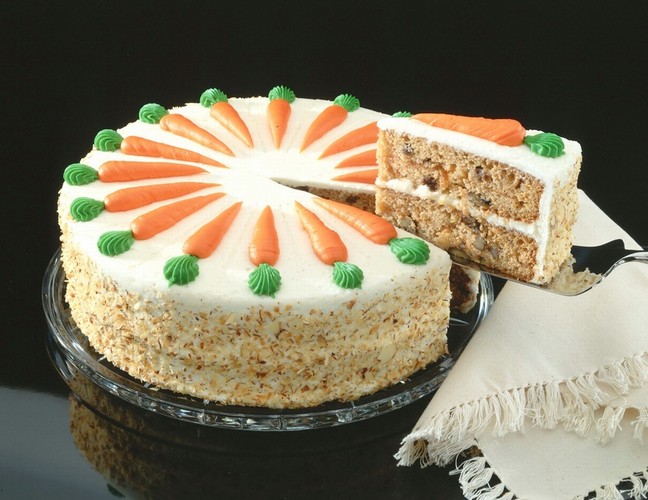
Mine, just so you know, looks a lot like this.

carcake

Posted in Blog Award

Some New Bloggy Links

Earlier this week, Shawna at WriterMomof5 sent me this blog award.

LovelyBlog


Shawna is one of the unexpected rewards I got from starting this new blog and getting out there on some social networking sites. She is sweet and funny and reading her blog is one of the treats of my week. So having this award come from her is just…cool!

I thought I’d combine passing this award on with giving you links to some of the newer blogs I’ve been following. Well, they’re not necessarily new to the blogosphere, but they’re new to me. In some of that free time we all have just laying around, take a few minutes and check these out–leave a comment and say, “Hi!”

  • Elana Roth is an agent with the Caren Johnson Literary Agency. I “found” her first on Twitter and have recently started reading her blog–enjoyable and informative.
    http://elanaroth.com/
  • Beth Revis cracks me up. Every time. She’s writing a SF YA that I so want to read. Beth’s also  a middle-school teacher, and you have to read her Today: In Class posts. She’s the teacher we all wish we’d had.
    http://bethrevis.blogspot.com/
  • Amy Butler Greenfield is History Maven. We hooked up somehow (I’m not sure if it’s a bad or good thing that I can never remember where or when these connections get started!) after I started blogging about my historical YA. Amy is dug into her own historical fiction, and I love her posts (and comments) about history, writing, and life.
    http://historymaven.livejournal.com/
  • Joyce Moyer Hostetter is another history writer, and the author of several historical novels for children. Joyce is incredibly supportive and her posts about research and writing and talking to kids about her stories are hugely motivational for me!
    http://moyer-girl.livejournal.com/
  • Sara Zarr is, for me, the epitome of the thinking writer. Her posts are intelligent and speak clearly and concisely of the process and the art and the struggle.
    http://sarazarr.livejournal.com

I’m passing the Lovely award on to all these bloggers and hope you’ll add them to your own lists of very readables!

Posted in The Writing Path, Uncategorized, Writing Projects

Sampling: Getting Started with a New Writing Form

For years, I did two kinds of writing. During the day, I wrote software documentation. At night, my alter ego came out (or, too often, just went to bed), and I worked on the mystery I’d been writing for years. Then, life–with its twisty-turny surprises rearranged things, and I stopped being a technical writer and switched over to writing a middle-grade mystery.

Among other things.

I’m in my forties. It took me a while, but I finally realized that “I can’t…” and “I don’t know how to…” are not phrases I want coming out of my mouth too often. Or making their way very far into my brain. I’d rather say “sure,” at least to myself, then go off and learn something new. Like writing a picture book. And writing some biography and history for early elementary-school kids.

Which is probably why I find myself doing a lot of what I call “sampling” this year.

Sampling is what I call the start of my learning process, each time I decide to check out a new form of writing. It’s really just a fancy word for reading, but reading of a very concentrated and purposeful sort. Here are the basic steps:

  • Find out if there are specific examples of the form that you should look at.

    This usually comes into play when you’re writing for a publishers that has a set format, or reading-level, they want you to match. These biography and history books I’ve been looking at come with recommendations for books I should read, before I start writing.

  • Hit the library or bookstore and get a stack of books, either the recommended books or books that fit into the genre you’re exploring. Look for award winners and books that just catch your eye.  

    Pros and cons: The library has due dates, which can mean a structured schedule for you to follow or some hefty late fees! The bookstore costs more (unless those late fees really start to add up), but you get a few resources that you can hang onto for as long as you need and that you can refer back to as often as you need.

  • Read.

    If you’re working in a longer genre–novels or full-length memoirs, you will obviously need to do this over time. If you’re checking out some shorter forms, like me, try to set aside a chunk of time to read through all your books at once. Things like language and structure will seep into your more quickly, I believe, if you read without interruption.

  • Take some notes on the commonalities you’re seeing in the books.

    I noticed today that the biographies I was reading all started with an active sentence about the subject, things like: Daniel flung the ax into the stump. May dropped the last of the blueberries into her basket. Character and action, in an immediate scene.

    In the picture books I’ve been sampling, I’ve seen how short a time we have to set up the start of the story, and how many more words are given to the end crisis and resolution. I’ve found out that the pacing of the mini-problems each picture-book hero must face can be rapid—like a ping-pong battle, or slower—like a lilting folk song.

    When I was reading magazine articles, as research for The Writing & Critique Group Survival Guide, I was amazed at how few words the author had to spare for a hook. Oh, sure, I’d been told that, but I hadn’t seen it.

Where did I first learn this technique? From a creative writing teacher? From a workshop? Nope. I started doing this when I was a new technical writer, when I had an introduction to write and had to say something clear and (hopefully) intelligent about a product I knew very little about. I went to the shelves and pulled off other manuals and read through their opening lines, focusing on what that other writer had pulled out to highlight and what they’d left out as unimportant. I scanned the length of the passages and checked out the voice the author had used.

I sampled.

I know, believe me, that a novel–a picture book, a biography, a magazine article–none of these are software manuals. And I know that truly learning a genre takes much longer than a few hours trying to pull a recognizable structure out of a few pages of words. I also know, though, that that structure is a must-learn, no matter what type of writing you’re trying out. We’re not playing copycat; we’re not working to a formula. We’re learning to get the feel of the thing, both in our brains and coming out the tips of our fingers onto the keyboard.

We’re taking one of the many necessary steps to go forward into something new.

Posted in Revising

Revision: Trickling in the Last Bits

Yesterday, I sent off my revisions of The Writing & Critique Group Survival Guide to my editor. You may now join me in doing the dance of joy.

snoopy2

I’m happy with the revision. My editor made wonderful suggestions anywhere he thought I should make a change, and it was so great to get the feeling that we’re on the same track with what we want for this book.

But…

That’s not what this post is about. While I was working through the revision, I was thinking about how tricky, but fun, this later stage of writing a book can be. (Oddly enough, as I get ready to write a first draft of my new novel!). On the one hand, it’s tough, almost frightening to look at making even more changes to a book on which you’ve worked so hard to get so far. On the flip side, it is an amazing thing to see how much difference a few words here, and a few more there, can make to tightening a story into something full and polished.

For this revision, I was working with the editor’s suggestions. When I revise fiction, I have feedback from my critique group and those “final” ideas I’ve come up with myself. There’s a character who needs one more layer. Or a plot thread needs to be brought closer to the top of the story. I’m not using this one setting well enough. When I’m at this point, I ask myself (and hopefully answer!) three questions:

  • What?
  • Where?
  • How much?

The What?is what do I need to add? For some reason, at this point, really near being “done,” it’s almost always adding. Mabye I’m good at cutting, or maybe I’m too good, but it’s usually something more I need to put on the page, not less. Do I need to show a certain personality trait more frequently, or more intensely? Should I  connect a subplot to the main plot in another place or two? Is it time to reveal just a little more background info I thought I didn’t need?

Where? is, probably obviously, where in the book do I make this change? Again, I seem to have a usual pattern–I rarely get away with changing things in only one place. Usually, I read through the book (Yes, I will read through the WHOLE book to follow a specific plot thread or the development of one character), and find two or three places to drop a little something in, or highlight something a little more strongly.

How much?  is the biggie for me. Or, I should say, the not-biggie. When I was editing, I was almost afraid to ask a client to add something to the book. When I talked about the need to give a better sense of what a house looked like, or asked the writer to show a character getting more angry, I always found myself holding up my index finger and thumb together—that universal symbol for just this much.  If I didn’t emphasize how few words I thought the paragraph or scene needed, I’d see the author’s eyes light up, and when I saw the project again, there’d often be whole new blocks of text–stretches of sentences and paragraphs with added material.

It’s natural. We don’t always trust ourselves or the power that is contained in a few words, in a single word. Even knowing all this, I faced this last revision with some nervousness. There were a couple of bigger ideas that I needed to highlight more in the book, and I’d left them for last, while I got the smaller, easier changes out of the way. I had, in the back of my mind, the idea that there was a lot of new writing for me to do.

Wrong. A lot of new writing would have been wrong. I added a sentence here, a phrase there, and–honestly–a single word over there. That was it. Just enough to tie things together and make the necessary connections for the reader (and for me!)

As I said, I’m just setting out to write the first draft of my historical YA novel. I’m miles away from this kind of revision on that book. Right now, I’m trying to cope with the idea of all the thousands of actions and events and thoughts I’ll be putting on the page.

I know, though, that at some point, I’ll come back to this close-to-done stage. And, once again, I’ll need to trickle the last changes in lightly, and trust that each, small word will do its job.
Posted in Memoir, The Beginning, Writing Goals, Writing Projects

Matilda Butler’s Interview with Me

Matilda Butler is a teacher (and student!) of memoir. She’s the co-publisher of Rosie’s Daughtersa collection of memoir pieces by women born during WWII. She has as many shelves of women’s memoirs in her library as I do children’s books–maybe more! I first met Matilda at the last East of Eden writers conference, and–when I was developing the memoir chapter in The Writing & Critique Group Survival Guide, I asked her if I could pick her brain about things writers should be thinking about. She was kind, generous, and incredibly helpful. And she asked me if I’d do an interview with her for her Memoir Moments at http://womensmemoirs.com.

Matilda just put up the interview, so if you’d like to take a listen (Yes, it’s in AUDIO!), hop over to the post here.

Posted in Writing Conferences, Writing Goals

How to Pick a Writing Conference

I’m getting close to finishing up revisions on The Writing & Critique Group Survival Guide. I’m not sure what the next stage in the editing process will be, but I know it’s going to be time for me to start thinking about promotion.

May I just say…Yikes!

No, actually, I’m looking forward to it. One of my favorite things to do is go to writing conferences, and I love giving workshops. With the book out, I’ll be able to focus those workshops on this soapbox of mine and, hopefully, help other writers find their way into critiquing with supportive, productive groups.

Anyway, as I scan the calendar and sites like http://writing.shawguides.com/, I’m realizing that conference season is starting up again. There just don’t seem to be as many during the winter, and it’s a nice hopeful sign of spring that they’re popping up again. A lot of them. And I started thinking about how we writers–never overflowing with tons of extra time or money–can pick the conference (or conferences) that are the best for us.

light-bulb-brain-teaser

Blog post!

Really, the most important thing you can think about, before deciding where to go, is your goal for the conference. Do you just want to hang out with some writers, take a few good workshops, and–let’s face it–get away for a day or two? These are all fantastic reasons. They’re not necessarily, though, reasons to spend a lot of money or travel a great distance. Smaller, nearby conferences can give you all these things, often with a price tag that lets you…go to another conference!

Are you hoping to learn more about the publishing industry in general? Do you want to hear experts talk about how to get an agent or editor, to find out about promotion and social-networking tools? Are you looking for the best way to focus your writing time and energy? You may want to find a conference that has a larger number of agents and editors as presenters. Check the schedule to see if there will be an agent and/or editor panel, or a panel of published writers discussing their paths. You may have to travel a bit further to this kind of conference, maybe to a middle-sized or large city. If you’re still working within a budget (who isn’t?!), a one-day conference with these kinds of sessions may be best-suited to your needs, rather than one that covers a whole weekend, or several days. You’ll save money not just on the conference, but also on lodging and meals, and–as long as there are presenters talking about the information you need–you’ll increase your knowledge and understanding without decreasing your bank account quite as much.

Is the conference running a contest you want to enter? While a contest-win may or may not help you get published, it’s a great detail to put into a query letter or mention in a pitch. Does the conference offer you the chance to get a critique of your manuscript? This is an opportunity to get some good, straightforward feedback about your work, and it means someone will be reading the first few pages of your book. This is a good thing. 🙂

Is there an agent or editor to whom you want to pitch your book. If you have a “home” in mind for your book, and you want to pitch your project face-to-face, you’ll need to find out which conferences this agent or editor will be attending. Check their website and google their name with “conference.” Again, if you get this focused on a specific conference, you may end up paying a bit more to get there. I have a few caveats to offer about this route. I’m not sure other writers or publishing professionals will agree with these, and they’re based on my gut feelings, not any facts I’ve learned, but think about them as you go about scheduling your conference year.

  • Research that agent or editor really well before you decide to travel across miles, even states, to pitch to them. Of course, you can’t be 100% sure who you want for your book without talking with the person, but don’t go at this casually. If you make the trip and then find out that agent is no longer representing your genre, you’re going to be disappointed. And probably a bit frustrated with yourself.
  • Finish your book. Revise your book. Revise it again. (I could go on!) If that agent or editor requests a partial or full manuscript, you want to be able to walk calmly out of the pitch room, find a quiet place, and do the dance of joy. You don’t want that dance tainted by worries about how fast you can finish the book or about whether it’s really ready to submit.
  • Read through the conference brochure or website to see whether there are other reasons for you to attend, other than the chance to meet this agent or editor. Do you see workshops that look interesting, writers you think you can learn from? If the agent or editor doesn’t accept your pitch, or you decide they’re not a good fit for your project, will you still be able to find something at the conference that makes you glad you went?

I am not sure that pitching directly to an agent or editor increases your chances that they’ll represent or publish your book. I do think the in-person meet may give you higher odds that they’ll ask for a partial to read, but a good query letter may have just as strong a chance of achieving that.

I’m not saying that a trip to meet an agent or editor isn’t the way to go. I’ve done it myself, and I know many stories in which this was the first step to an author’s being represented and published. The excitement and joy those authors experience seems proof that it was the right choice for them, the right path to take. Just don’t push your common sense and judgement aside. Don’t put all your financial or emotional eggs in this one-conference basket. Weigh the options, look fully at the possibilities, and make the decision that your gut says is the best.

Conferences are two things–they’re a pleasure and they’re a tool. This very minute, as we speak, other writers are out there, organizing venues and caterers, choosing hotels and conference centers…all for us! Browse around and give one (or three) a spin. And enjoy yourself!